
Stove and Fireplace Installation
By law, an employed craftsperson must be paid at least €23.74 an hour.
The Order sets the minimum an employed craftsperson must be paid, not what a contractor charges you.
Workplace Relations Commission, S.I. 620/2024, 1 August 2026
Need a stove fitted? Post your job on ShamFix for free and get quotes from local stove fitters — wood burning and multi-fuel stoves, log burners, fireplaces and flue installation. Compare profiles and choose who to hire.
Stove and fireplace installation: this category is busy and nearly empty
Demand for stove and fireplace installation on ShamFix is high, and at most one provider is listed.
What stove and fireplace installation costs in Ireland
| Rate | Range | Note | Estimate |
|---|---|---|---|
| Statutory minimum, craftsperson pay | €23.74 | Per hour. Category craftsperson, second phase of S.I. 620/2024. | |
| Statutory minimum, general operative (Category A) | €23.03 | Per hour. | |
| Employer PRSI on top of that pay | 11.25% | 11.25% until 30 September 2026, rising to 11.40% from 1 October 2026. Employer PRSI, Class A, national rate for 2026 (Revenue / Department of Social Protection) | |
| VAT on construction services | 13.5% | Reduced VAT rate on construction services, Revenue Commissioners | |
| Contractor charge-out, per tradesperson | €45–€75 | Before VAT. | Estimate |
Source: Workplace Relations Commission, S.I. 620/2024, 1 August 2026. Figures as of 1 August 2026.
The Order sets the minimum an employed craftsperson must be paid, not what a contractor charges you. VAT on construction services is 13.5% and is added on top of the quoted labour and materials.
Rows marked as estimates are aggregate market estimates, not sourced figures.
What moves the price
- The price of a stove or fireplace installation in Ireland moves with a few practical things.
- Volume is one: a small inset room heater is a different job from a large freestanding stove with a back boiler.
- Access matters: a chimney that can be swept and lined from a ladder is easier than one that needs scaffolding, a roof platform, or a hatch cut into a ceiling.
- Condition matters: an old chimney with loose render, a damaged gather, or a blocked flue adds work before the appliance goes in.
- Materials matter: the flue liner, the register plate, the stove pipe, the hearth slab, and the fire cement are all part of the quote, and the customer may supply the stove or ask the installer to supply it.
- The type of fuel also changes the flue requirements, and a gas fire needs a different set of checks from a solid fuel stove.
- Ask for the quote to list the appliance, the flue components, the labour, and any making good separately, so you can see what you are paying for.
How long stove and fireplace installation takes
A straightforward stove installation in a house with a sound chimney and good access can be done in a day, and sometimes two if a liner is being fitted and the hearth needs work. A fireplace insert or a full fireplace replacement often takes longer because the opening has to be adjusted and the surround refitted. If scaffolding is needed, or if the chimney has to be rebuilt above the roof line, the job can run to several days. The visit usually happens within a week or two of first contact, depending on the time of year, and the installation itself is often booked a few weeks after the quote is accepted. Autumn and early winter are the busiest months for stove and fireplace work in Ireland, so if you want the job done before the cold weather, it is worth starting the conversation in late summer. Ask the installer for a realistic start date in writing, and ask what could move it.
What to ask before you hire
- 01Ask for a written quote that separates the appliance, the flue and liner, the labour, and any making good.
- 02Ask whether VAT is included and at what rate, because a quote that looks lower may be quoted without VAT.
- 03Ask who is responsible for tidying up and removing old appliances, packaging, and rubble, and where the waste will go.
- 04Ask if the installer carries insurance, and ask to see the certificate for the work they are quoting.
- 05Where the job involves a gas connection, ask for the RGI registration number for the gas work, and check it against the RGI register yourself.
- 06Ask which professional body they are a member of for solid fuel work, and ask for references from similar installations in your county.
- 07Ask whether the quote includes a carbon monoxide alarm and a notice plate, and ask what happens if the flue needs extra work once the chimney is opened up.
- 08Ask how long the quote is valid and whether the price can change.
Stove and fireplace installation guides
All guides →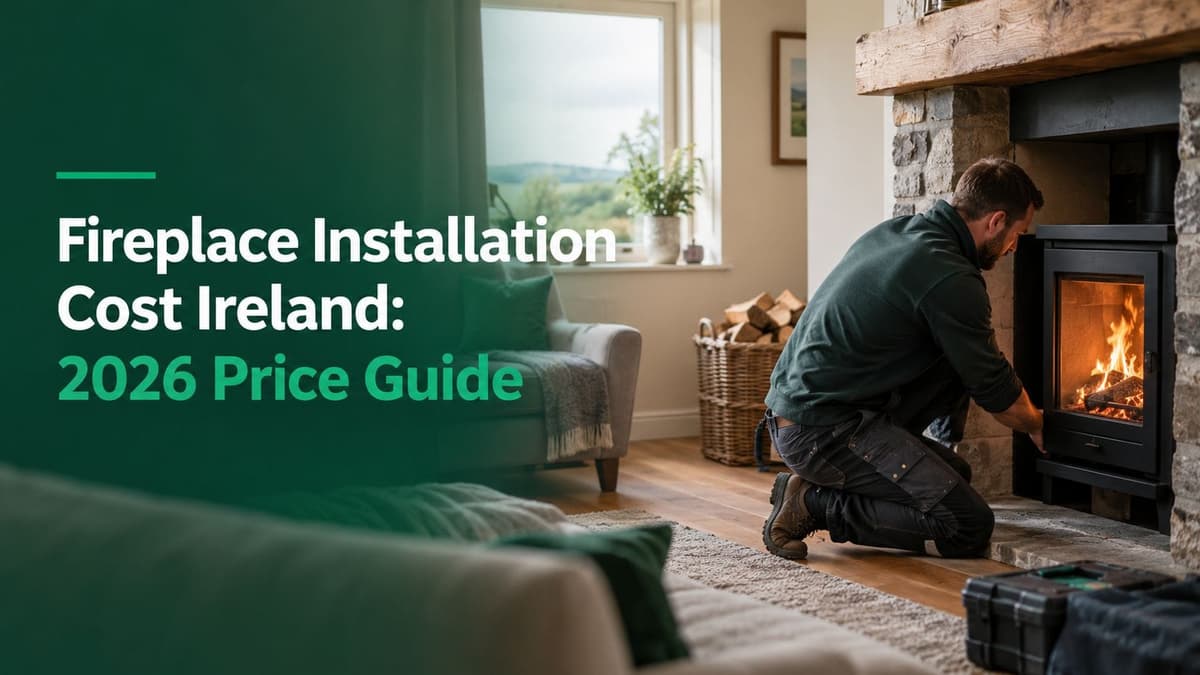
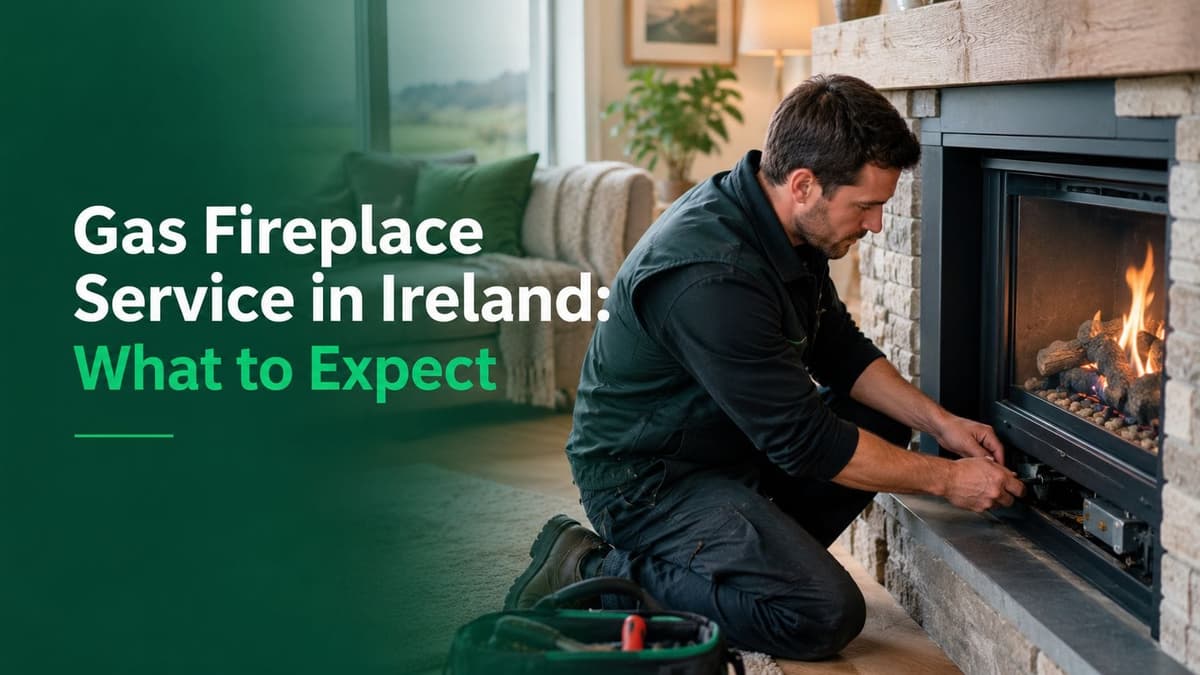




Explore other service categories that might interest you:
Stove and fireplace installation in Ireland
Wood-burning and multi-fuel stoves are common in rural Ireland and in older town houses, from Donegal and Mayo to Kerry and the midlands. Installation needs to meet Part J of the Building Regulations, which covers flues, hearths and air supply, and an older chimney often needs a liner first. National solid fuel rules restrict smoky coal and wet wood, so many people choose Ecodesign stoves that burn dry wood or approved fuels. Most installs are booked from August to November, before the heating season, so plan ahead. When posting, say whether you have a working chimney, the room size, the fuel you plan to burn, and whether you want a back boiler connected to the heating.
Common stove and fireplace jobs
- Wood-burning stove installation
- Multi-fuel stove fitting into an open fireplace
- Chimney liner installation
- Boiler stove connected to central heating
- Twin-wall flue for homes without a chimney
- Hearth and surround installation
- Stove removal and replacement
- Stove service, rope and glass replacement
- Chimney sweeping and inspection
- Inset or cassette stove fitting
Stove and fireplace installation questions people ask
Do I need a liner when installing a stove in an old chimney?
In most cases, a liner is needed because an old chimney is rarely the right size or condition for a modern stove. A liner controls the flue draught and keeps tar and moisture away from the masonry. The installer will check the chimney during the visit and tell you whether a flexible liner, a rigid liner, or a different flue arrangement is suitable for your appliance and fuel.
How much clearance does a stove need from a wall or fireplace?
The clearance depends on the stove model and the material behind it. Each appliance has a manufacturer's minimum distance to combustible materials, and that distance is often larger than people expect. A heat shield or a non-combustible board can reduce the gap in some cases. Ask the installer to show you the manufacturer's instructions for the exact model before the hearth is built.
Can I install a gas fire myself if I am handy?
No, gas work in Ireland must be carried out by a registered gas installer. If the job involves a gas connection, ask for the RGI registration number for that gas work and check it on the RGI register. A gas fire also needs proper ventilation and a flue test. The installer will confirm the appliance is suitable for the flue and the room before commissioning it.
What is a carbon monoxide alarm and do I need one with a stove?
A carbon monoxide alarm is a small device that sounds if the gas builds up in the room. It is strongly recommended wherever a solid fuel or gas appliance is installed, and building practice in Ireland expects one. The installer should fit an alarm as part of the job and show you how to test it. Ask where it will be placed relative to the stove.
How long does a stove installation take from quote to finished job?
A simple installation is often a day or two on site, but the wait between accepting the quote and starting work can be several weeks, especially in autumn. If a liner, a new hearth, or chimney repairs are needed, add more time. Ask the installer for a start date and a finish date in writing, and ask what could delay the work.
Does a fireplace installation need planning permission in Ireland?
Most internal stove and fireplace installations do not need planning permission, but there are exceptions. A new external flue, a change to the outside of a protected structure, or work in a rental property can bring other rules into play. Ask the installer what is typical for your county, and check with your local authority if the property is listed or in a conservation area.
Offer stove and fireplace installation on ShamFix
This listing is for stove and fireplace installation work in Ireland. Register so customers posting in this category can find your profile.
Register as a providerNeed stove and fireplace installation in Ireland?
Post a stove and fireplace installation task. Your task stays open for 30 days. Providers registered in this category can see it.
Post a stove and fireplace installation taskNo obligation to hire.Posting a task on ShamFix costs nothing today.