How Often to Cut Grass in Ireland: A Homeowner Guide
Weekly in strong growth, less often in cold or dry spells — a practical mowing schedule guide for Irish domestic lawns, new lawns and wet ground.
/7 min read
How often to cut grass in Ireland comes down to one question: how fast the lawn is growing. Through the main growing season most domestic lawns need a cut about once a week; in spring and autumn that usually eases to once every two to three weeks, and during cold spells, drought or waterlogged ground the right answer is often not to cut at all. Conditions on the day, the age of the lawn and the kind of sward matter far more than a fixed calendar, and the sections below work through each of those in turn.
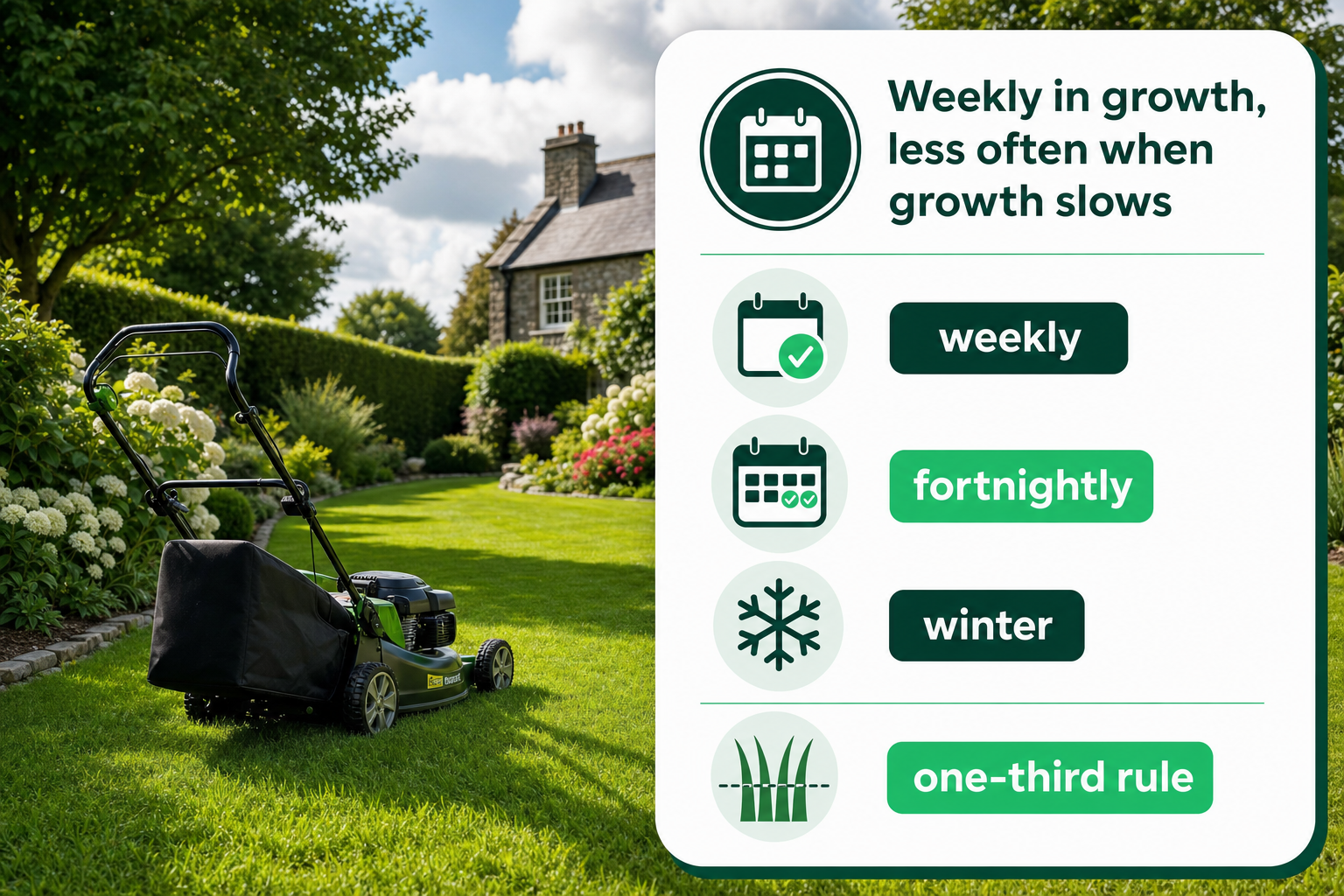
Weekly in growth, less often when growth slows
The most useful habit is to judge the lawn rather than the date. When grass is growing strongly — mild, damp weather, long daylight — a weekly cut keeps on top of it. As growth eases in spring and autumn, a fortnightly cut is usually plenty, and through the depths of winter most lawns can be left alone entirely.
Two habits make that rhythm easier to hold:
The one-third rule. Aim never to remove more than roughly a third of the blade length in a single cut. If the lawn has got away from you, bring it back over two or three passes on separate days rather than scalping it in one go.
Cut for the season. A slightly higher setting is kinder to grass in cool or stressful conditions, while a shorter, tidier cut suits the middle of the growing season.
A sharp blade matters as much as the interval. A blunt blade tears the leaf rather than slicing it, leaving ragged tips that make a lawn look tired even straight after cutting.
A season-by-season rhythm for Irish lawns
Spring. Leave the first cut until the ground has firmed up and the grass has genuinely started growing, rather than being triggered by one mild week. Take that first cut high, clear the clippings, and stay fortnightly until growth takes off.
Early summer. This is the weekly stretch. In a mild, damp spell a lawn can look shaggy five or six days after a cut, and a seven-day rhythm keeps it even.
Late summer. Growth usually eases, particularly after a dry spell, so the interval can stretch. Move between weekly and fortnightly as conditions change rather than sticking to a date.
Autumn. Fortnightly is typical, then every two to three weeks as the weather cools. Keeping the last cuts slightly higher helps a lawn go into winter in good order.
Winter. Mowing is normally unnecessary. A mild, dry day and firm ground can justify one high cut to tidy an untidy lawn; cutting soft, wet ground does a great deal of harm.
New lawns versus established lawns
A newly sown lawn should not be cut until the grass has grown enough to need it and the ground is firm enough to walk on without leaving marks. That first cut should be taken high, with a sharp blade, on a dry day, and clippings lifted gently rather than raked out. For the rest of the first season a young lawn is usually cut less often than an established one — closer to every ten days to a fortnight than weekly — with the height kept generous until the sward thickens up.
Newly laid turf follows a similar pattern. Give it time to root before the first cut; if the turf lifts when walked on, it is not ready. Once rooted, treat it like a young sown lawn: infrequent, high cuts first, then a gradual move towards a normal schedule.
An established lawn is far more forgiving. It can take a weekly cut through the growing season and recovers quickly from a missed week. The real risk with an established lawn is not frequency but severity: repeatedly cutting too short thins the grass and opens the door to moss and weeds, which then take more work than the mowing ever did.
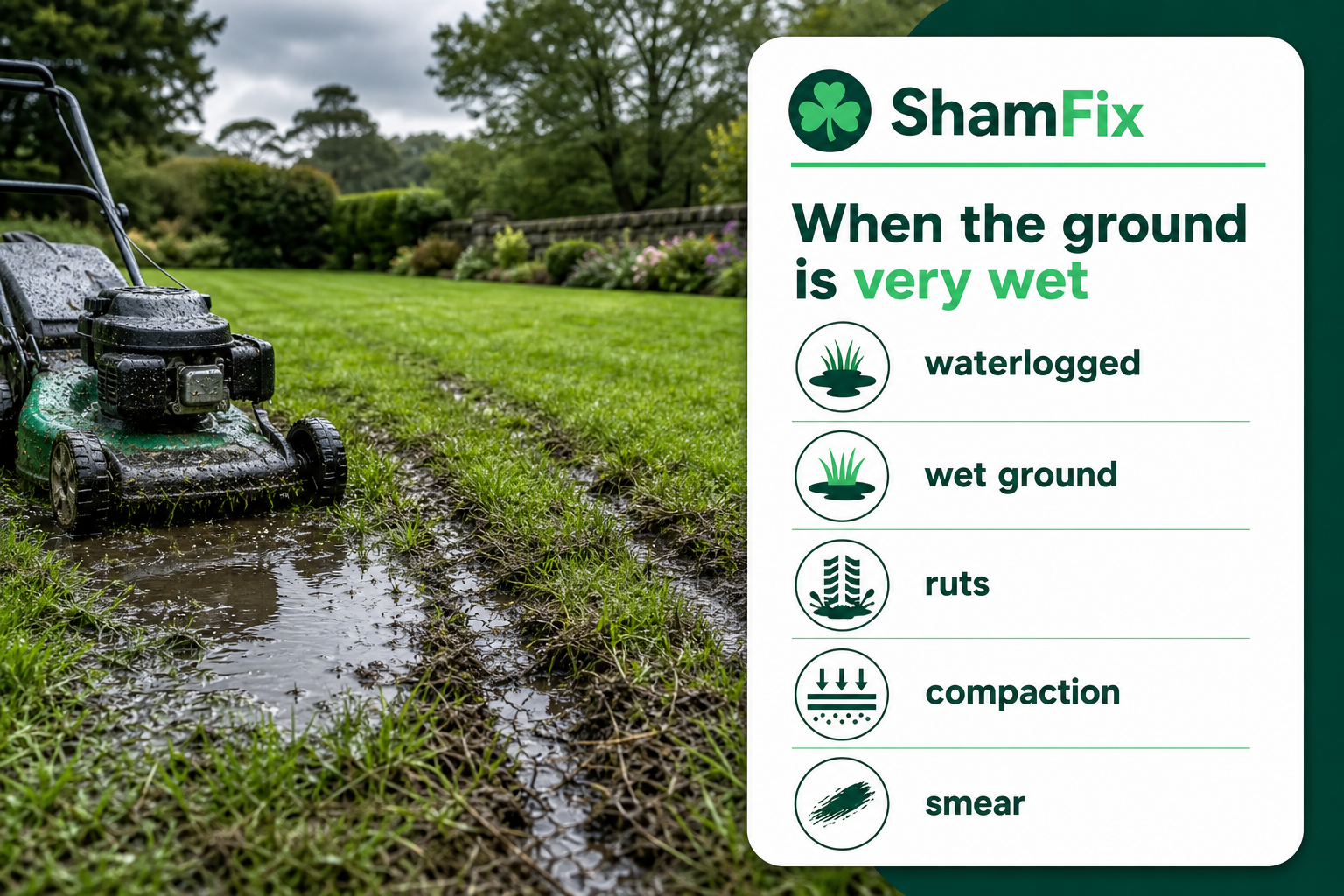
When the ground is very wet
Waterlogged ground is the one condition where the correct answer is not today. Mowing soft ground does several kinds of damage at once: the wheels leave ruts that persist for months, the soil beneath them is compacted, and the blade smears wet soil and clippings across the surface. On heavy ground that can undo a season of good work in an afternoon.
A merely damp lawn can be cut, but raise the height and expect a less tidy finish. Collect the clippings rather than leaving them, because wet clippings clump, smother the grass underneath and encourage disease. If a wet spell has pushed the lawn well past the one-third rule, bring it back gradually once conditions improve rather than trying to catch up in one heroic cut.
During drought and dry spells
In a genuine dry spell growth slows, and a lawn may turn brown and stop growing altogether. It will recover when rain returns. Cutting dormant or drought-stressed grass is wasted effort and does real harm: the grass cannot replace the leaf it loses, and a low cut exposes the crowns.
During a dry spell, either stop cutting altogether or keep to a high, occasional cut to tidy seed heads and keep the lawn presentable. Once rain returns and new growth appears, wait until the lawn is genuinely moving again, resume at a higher height, and work back to the normal rhythm.
What Irish domestic lawns need in practice
Most Irish domestic lawns are small, often enclosed, and sit in a mild, damp climate that favours grass growth for much of the year. Growth tends to be steady rather than dramatic, which means a missed week shows up quickly — but it also means a lawn recovers well from a slightly longer interval.
Shelter and shade change the schedule more than most people expect. A lawn in a shaded, slow-drying corner stays wetter for longer, grows more slowly, and should be cut less often and higher than an open lawn in the same garden, or it will turn thin and mossy. Lawns on heavy, poorly draining ground need far more patience after rain than lawns on lighter soil.
The mix of grasses matters too. Fine-leaved lawns kept for a tidy finish generally want a closer, more regular cut through the growing season, while rougher or mixed swards put on growth in flushes and can be left longer between cuts. After a feed, growth responds quickly and the interval usually needs to shorten for a few weeks.
Consistency beats intensity. A lawn kept on a steady weekly-to-fortnightly rhythm through the growing season needs far less corrective work than one cut hard every few weeks, and it stays denser, which is the best defence against moss and weeds.
Leaving a strip unmown for pollinators
If there is room, leaving part of the lawn — a strip along a boundary or an awkward corner — uncut through the growing season is a simple, low-effort addition to a garden. Longer grass gives shelter and food to insects, and the benefit is strongest where the patch is left undisturbed rather than repeatedly trimmed. Keep the main lawn on its normal schedule and let the strip do its own thing; the contrast reads as deliberate rather than neglected.
Signs the lawn needs cutting
Rather than counting days, watch for these:
Footprints or a flattened path stay visible after walking across the lawn.
Blades are noticeably longer than at the last cut and are bending rather than standing.
Seed heads are showing.
The lawn looks untidy from the house, even before looking closely.
Growth has reached the point where one cut would remove more than about a third of the blade.
Clippings from the previous cut are still visible on the surface.
Getting help with grass cutting
Mowing a large or awkward lawn every week through the growing season is a commitment, and it is one of the jobs Irish homeowners most often hand over. Posting a job and listing on ShamFix is free, and there is no commission; a subscription is planned for the future. A homeowner sets out the lawn size and the access, and local tradespeople respond.
It is worth being clear about how the site works. ShamFix itself does not check or certify tradespeople, and profiles are filled in by the tradespeople themselves, so homeowners should check any registrations themselves and read reviews before agreeing to work.
Usually not. Growth is slow enough through winter that most Irish lawns can be left uncut from late autumn until early spring. If a mild, dry spell produces visible growth and the ground is firm, a single high cut is fine — but keep off soft, wet ground.
Should grass be cut when the ground is wet?
Not if it is waterlogged. Ruts, compaction and smeared clippings do lasting damage. If the lawn is only damp, cut at a higher setting and collect the clippings.
How often should a new lawn be cut?
Less often than an established lawn for the first season — often every ten days to a fortnight once it is ready for its first cut, and always at a higher setting.
What happens if the grass gets too long between cuts?
It becomes harder to bring back neatly, and a single severe cut stresses the lawn. Cut it back over two or three sessions instead, raising the height as you go.
Can a week be skipped?
Yes, particularly in spring, autumn or a dry spell. For most domestic lawns the practical rhythm is weekly in strong growth and fortnightly or less once growth eases.