
Chimney Sweep Near You in Ireland
Chimney cleaning, inspection and repair in Ireland covers the sweeping of flues, the examination of the chimney stack and flue liner, and the repair of defects such as cracked flaunching, damaged pots, failed mortar joints, and blocked or deteriorated liners. A chimney that draws poorly, smokes back into the room, or has visible damage to the stack often needs attention before the heating season. This job is not limited to one trade: a sweep may handle cleaning and basic inspection, while a builder or roofer may carry out repairs to the stack, flashing, or crown. Because the work depends on what is found on site, a firm price usually follows a visit. The customer describes the property, the number of flues, and any known issues, then arranges for the professional to assess the chimney before a written quote is issued.
On ShamFix, you can browse provider profiles by county and contact them directly, or post a task describing what you need. Your task stays open for 30 days. Providers registered in this category can see it. Posting a task on ShamFix costs nothing today. When you contact a professional directly, ask which professional body they are a member of, and request a written scope of work that covers sweeping, inspection, and any repairs to the stack, flashing, or crown. For repairs, ask whether the work includes replacing damaged pots, re-pointing mortar joints, or renewing the flaunching, and whether a camera inspection of the flue liner is part of the service. In counties like Cork, Galway, or Wicklow, where exposed chimneys take the worst of the weather, it is worth asking how they handle access and whether they use a chimney camera to check for cracks or blockages. A clear written quote should separate cleaning, inspection, and repair so you can see what each part of the job involves.
What shapes the price of chimney cleaning, inspection and repair
- The price of chimney cleaning, inspection and repair in Ireland is shaped by several factors that are assessed on site.
- Volume matters: a single flue in a bungalow is a different job from multiple flues in a three-storey house.
- Access is often the largest variable: a chimney on a low roof may be reached from a ladder, while a tall stack, a steep pitch, or a chimney on a terraced house may require a tower, scaffold, or a platform, all of which add labour and time.
- Condition drives the scope: light soot and a routine sweep is one thing, but heavy creosote, a blocked flue, a dislodged liner, or a bird's nest can turn a simple clean into a repair job.
- Materials also count: replacing a pot, repointing with lime mortar, fitting a cowl, or installing a new liner involves different costs, and the customer may need to choose between a basic cowl and a more robust stainless steel terminal.
- The number of storeys, the age of the property, and whether the chimney serves an open fire, a stove, or a boiler all influence the final figure.
- No two chimneys are identical, so a written quote after a visit is the reliable way to compare prices.
How long chimney cleaning, inspection and repair takes
A straightforward chimney sweep and visual inspection typically takes one to two hours on site, depending on access and the number of flues. If a camera inspection or smoke test is included, allow an extra hour. Repair work varies widely: repointing a stack or replacing a pot might be a half-day job, while relining a flue or rebuilding a chimney crown can take one to three days. Weather plays a significant role in Ireland, as rain and wind can stop work at height, so a roofer or builder may need to reschedule. In quiet periods, a sweep can often attend within a week or two, but during the autumn rush before winter, waits of three to four weeks are common. For repairs, expect a longer lead time, especially if scaffolding is required or if the contractor needs to order a liner or specialist parts. The customer should ask for a realistic start date and a completion estimate in writing. If the chimney is in use, plan the work for a time when the fire or stove is off and the flue has cooled. Always confirm whether the contractor will need access to the roof from inside or outside, and whether any furniture needs to be moved beforehand.
What to ask before you hire
- 01Before work begins, ask for a written quote that itemises labour, materials, and any access equipment.
- 02Ask whether VAT is included and at what rate.
- 03Ask for a copy of the contractor's insurance, including public liability, and check that it covers work at height.
- 04Ask which professional body they are a member of, and whether they hold a current certificate for chimney sweeping or repair.
- 05Ask who will tidy up afterwards: will they remove soot, debris, and any old mortar, and will they protect floors and furnishings?
- 06Ask whether the price includes a camera inspection or a smoke test, and whether you will receive a report or certificate after the work.
- 07Ask if they will need power or water, and whether they will dispose of waste.
- 08For repairs, ask what materials they will use and whether they will match existing mortar or pots.
- 09Confirm the start date, the expected duration, and how they will communicate if weather delays the job.
- 10Finally, ask for the name of the person who will carry out the work and whether they will be on site for the full job.
Chimney cleaning, inspection and repair guides
All guides →

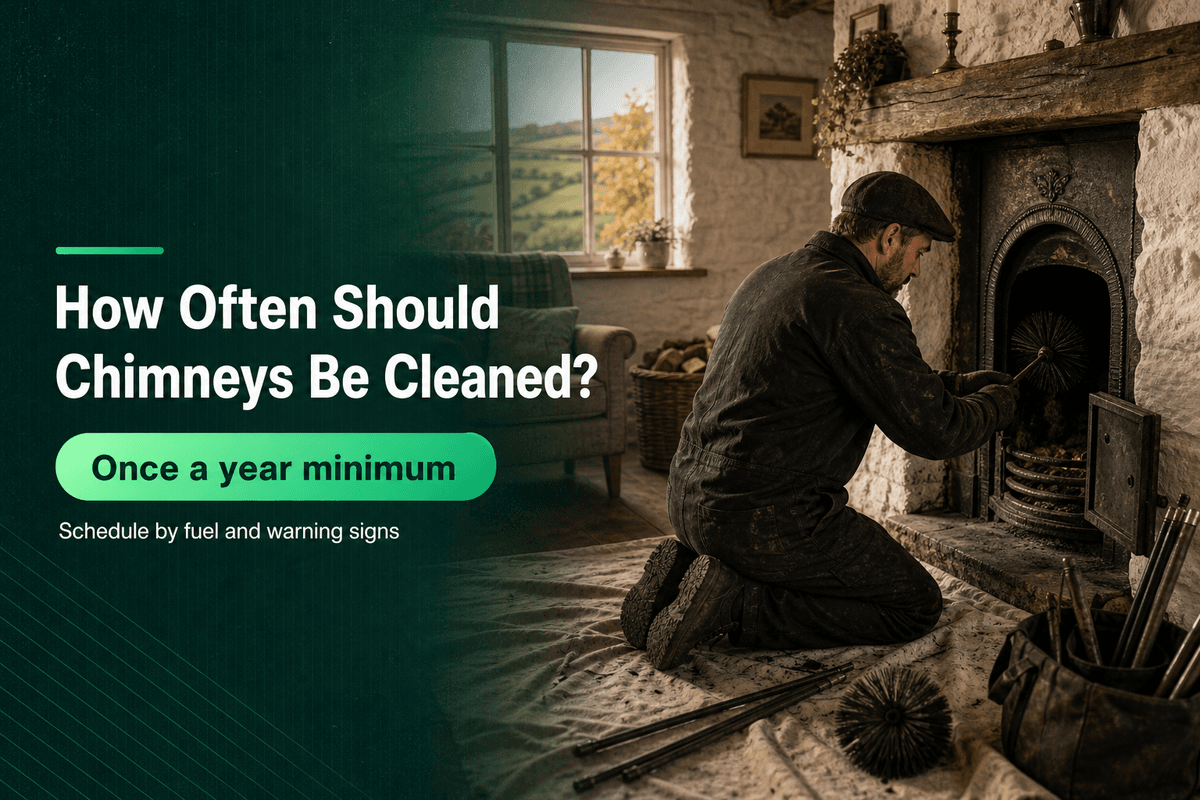 How Often Should Chimneys Be Cleaned? An Irish G
uide by Fuel
7 min read
 Curtain Rail Keeps Falling Down? Fix It Properly
10 min read
Explore other service categories that might interest you:
Chimney sweeping in Ireland
Open fires and stoves are still common in Irish homes, from Leitrim farmhouses to Dublin terraces, and most sweeps recommend a sweep at least once a year, ideally before the heating season starts in autumn. Since national solid fuel rules came in, smoky coal and wet wood are restricted, and burning dry, approved fuel reduces soot and tar build-up. Sweeps clear soot, remove bird nests, check draw with a smoke test and can spot cracked pots, loose flashing or a damaged liner. Fit a carbon monoxide alarm in any room with a fuel-burning appliance. Prices depend on the number of flues and access.
Chimney jobs you can book
- Annual chimney sweep before winter
- Stove flue cleaning
- Bird nest removal from a chimney
- Smoke test and draw check
- CCTV chimney inspection
- Chimney cowl or bird guard fitting
- Chimney liner installation
- Chimney pot and flaunching repair
- Leaking chimney flashing repair
- Chimney capping for an unused fireplace
Chimney sweep and repairs: FAQs
How often should a chimney be swept?
Most sweeps recommend at least once a year, and more often if you burn wood heavily or use the fire every day.
When is the best time to book a sweep?
Late summer or early autumn, before the heating season. Sweeps get busy once the weather turns cold.
Can a sweep remove a bird nest?
Yes. Jackdaws often nest in Irish chimneys, and a sweep can clear the nest and fit a cowl or guard to stop it happening again.
Do I need a carbon monoxide alarm?
Fitting a carbon monoxide alarm in any room with a fire or stove is strongly recommended, and is required for new appliance installations under the Building Regulations.
How much does a chimney sweep cost?
It depends on the number of flues, access and any extra work like repairs or cowls. Post your task on ShamFix to compare quotes.
Chimney cleaning, inspection and repair questions people ask
How often should a chimney be cleaned in Ireland?
A chimney serving an open fire or solid fuel stove should be swept at least once a year, and twice a year if it is used daily. A gas or oil flue may need less frequent sweeping but still requires an annual inspection. Regular cleaning reduces the risk of chimney fires and improves draw.
What are the signs that a chimney needs repair?
Signs include smoke coming back into the room, a smell of soot or tar, damp patches on the chimney breast, loose or missing mortar on the stack, and visible cracks in the flaunching or pots. A camera inspection can reveal internal damage. Any of these should prompt a professional assessment before the next heating season.
Can a chimney be cleaned without accessing the roof?
Yes, many sweeps clean from the bottom using rods and a vacuum, but a full inspection of the stack and pots usually requires roof access. If the chimney is on a steep or high roof, the contractor may need a tower or scaffold. The method depends on the flue type and the reason for the visit.
How long does a chimney repair take?
Minor repairs such as repointing a small area or replacing a single pot can be completed in a few hours. More extensive work, like relining a flue or rebuilding the top of a stack, may take one to three days. Weather and access can extend the timeline, so ask for a clear schedule.
Does chimney cleaning create a lot of dust?
Professional sweeps use industrial vacuums and dust sheets to contain soot and debris. Some dust may still settle, but a careful contractor will protect the surrounding area. Ask beforehand how they plan to manage dust, especially if the fireplace is in a living room with carpets or soft furnishings.
What should I do to prepare for a chimney sweep?
Clear the area around the fireplace, remove ornaments from the mantelpiece, and move furniture away from the hearth. If possible, cover nearby surfaces with old sheets. Ensure the contractor has clear access to the chimney breast and, if needed, to the roof. Keep children and pets away from the work area.
Need chimney cleaning, inspection and repair in Ireland?
Post a chimney cleaning, inspection and repair task. Your task stays open for 30 days. Providers registered in this category can see it.
Post a chimney cleaning, inspection and repair taskNo obligation to hire.Offer chimney cleaning, inspection and repair on ShamFix
This listing is for chimney cleaning, inspection and repair work in Ireland. Register so customers posting in this category can find your profile.
Register as a providerPosting a task on ShamFix costs nothing today.