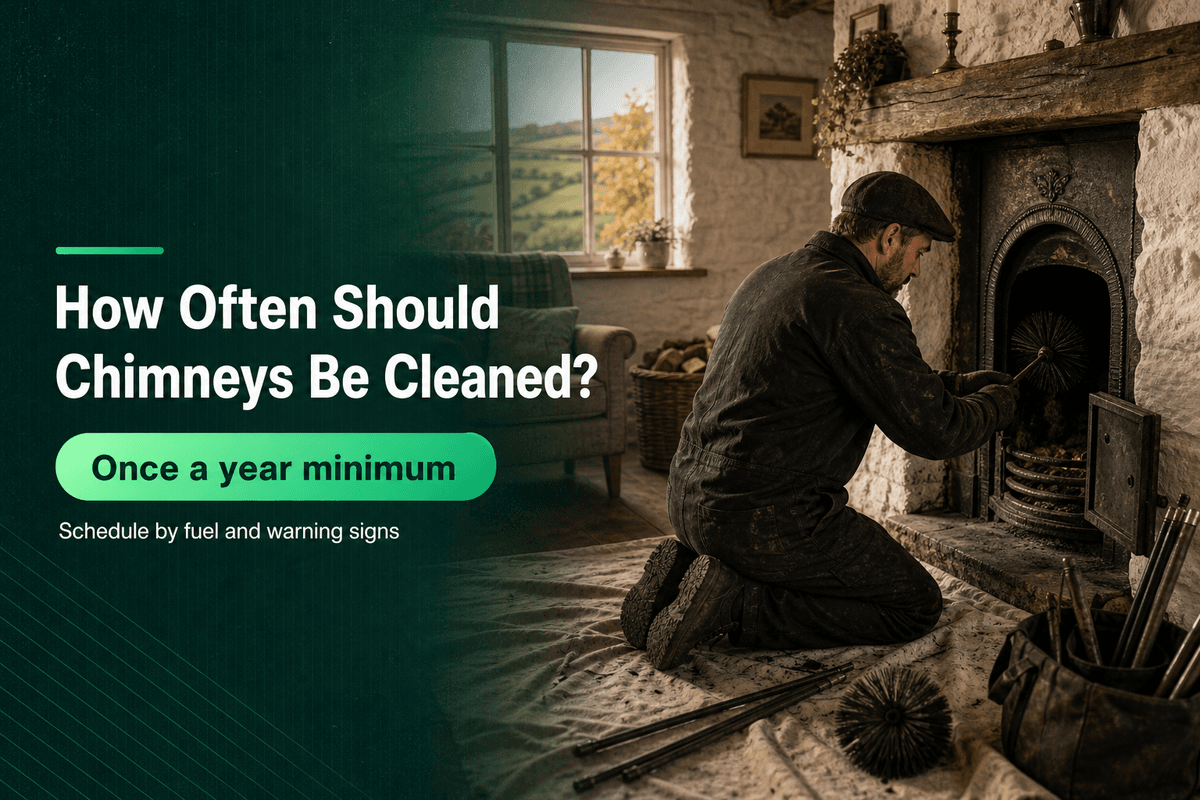
How Often Should Chimneys Be Cleaned? An Irish Guide by Fuel
Wood fires need sweeping four times a year, coal twice and smokeless fuel once. See the Irish schedule by fuel, the warning signs and when to book.
/7 min read
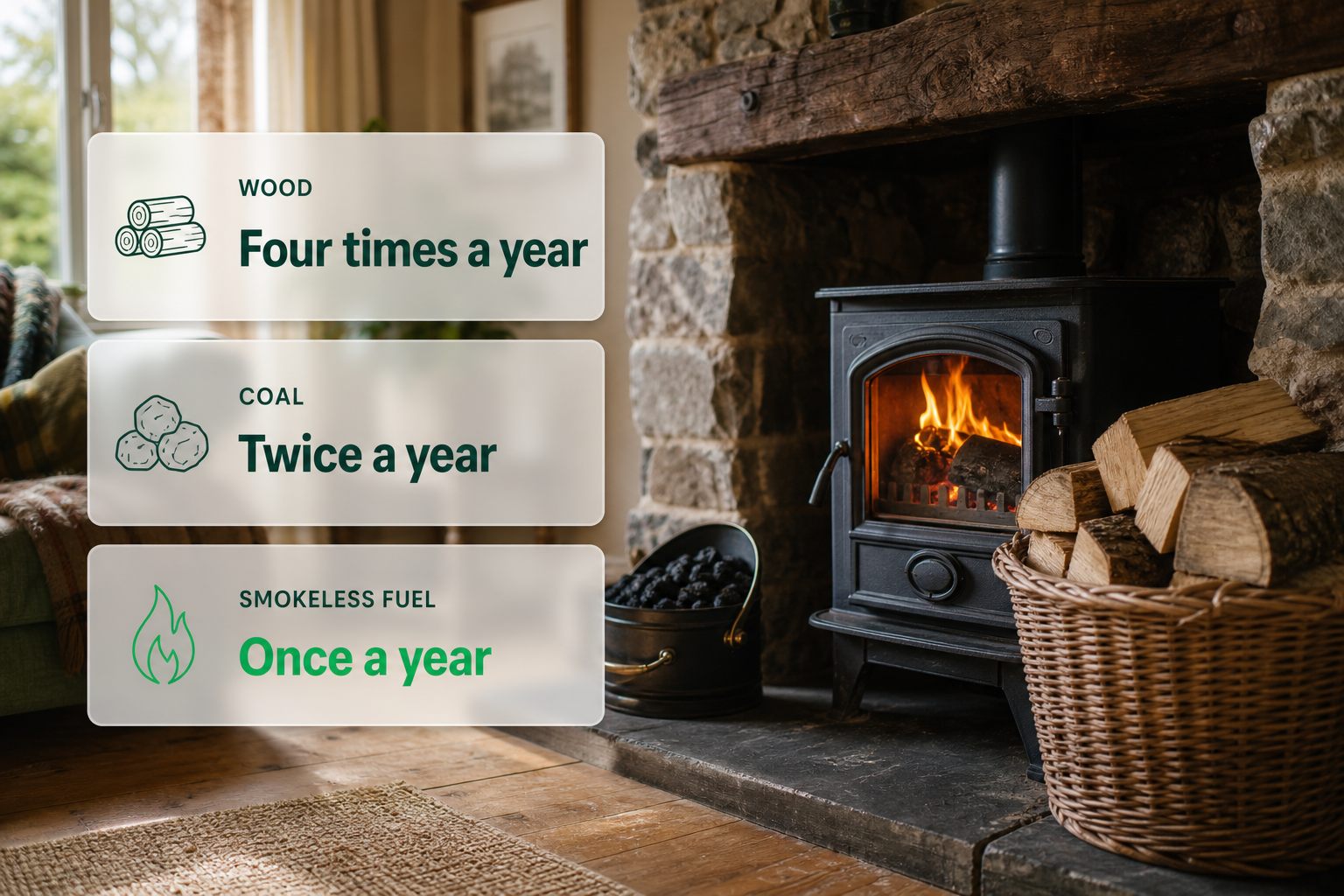
How often a chimney should be cleaned in Ireland depends on what is burned in it. Government fire-safety guidance sets out a simple rule of thumb: a wood-burning fire needs sweeping four times a year, a coal fire twice a year, a fire on smokeless solid fuel once a year, oil and gas appliances once a year as part of the boiler service, and a stove as often as its supplier recommends, according to the Department of Housing, Local Government and Heritage. Whatever the fuel, once a year is the minimum, and the best time for that sweep is just before the heating season. A household that wants the flue swept before the cold weather can post the job as chimney cleaning and inspection and compare replies from local sweeps.
How often to sweep a chimney, by fuel
Fuel or appliance
How often to sweep
Open fire burning wood
Four times a year
Open fire burning coal
Twice a year
Open fire burning smokeless solid fuel
Once a year
Oil-fired appliance
Once a year, during the boiler service
Gas fire or gas appliance
Once a year, during the boiler service
Stove
As recommended by the stove supplier
The table is a starting point rather than a ceiling. Wood produces the most deposits of the common fuels, which is why it sits at the top, and coal leaves more soot than manufactured smokeless fuel. A household that mixes fuels, for example coal in the evenings and logs at the weekend, should follow the schedule for the dirtiest fuel it burns.
Dublin City Council puts the baseline the same way: clean the chimney at least once a year, and more often depending on the fuel type. Its advice is also to burn only approved coal, approved fuels and seasoned, dried wood, since what goes into the grate decides how quickly the flue fills up.
What makes a chimney need sweeping more often
Wet or unseasoned wood. Freshly cut logs hold a lot of water. They burn cooler and smokier, and the smoke condenses in the flue as sticky tar and creosote rather than dry soot. A wood burner fed on damp logs can need a sweep well before the quarterly interval.
Heavy daily use. A fire lit every evening from October to April does far more work than one lit at Christmas and a few weekends. The fuel schedule assumes normal winter use; a fire that is the main heat source for the house sits at the frequent end of the range.
Open fire or closed stove. An open fire draws a lot of cold room air up the chimney and the smoke cools quickly, which encourages deposits. A modern stove burns more completely, but a stove that is regularly turned down low overnight smoulders and can coat its flue liner quickly. The supplier's guidance for the specific model is the one to follow.
A flue that has stood unused. A chimney that has not been lit for a year or more can hold a bird nest, fallen debris or crumbled mortar. It should be swept and checked before the first fire of the season, whatever the usual schedule says.
Burning the wrong things. Household rubbish, treated or painted timber and packaging leave corrosive deposits. Dublin City Council notes that burning rubbish or treated or varnished wood damages a chimney over time.
When to book the sweep
The single most useful sweep is the one just before the burning season, so late summer or early autumn is the time to book, before sweeps fill their diaries in October and November. Kilkenny County Council recommends a clean at the start of the cold weather and a second in the new year, which suits any household burning coal or wood regularly.
For an oil or gas appliance the timing is simpler: the flue check is part of the annual boiler service, so the two are booked together. For a stove, the supplier's recommended interval decides it, and many households pair it with the start of the season in the same way.
Kilkenny County Council also points out that there is no substitute for a sweep's brush. Chemical cleaning logs and powders can loosen some deposits, but they do not remove a bird nest, check the flue or clear a blockage.
Signs a chimney needs sweeping now
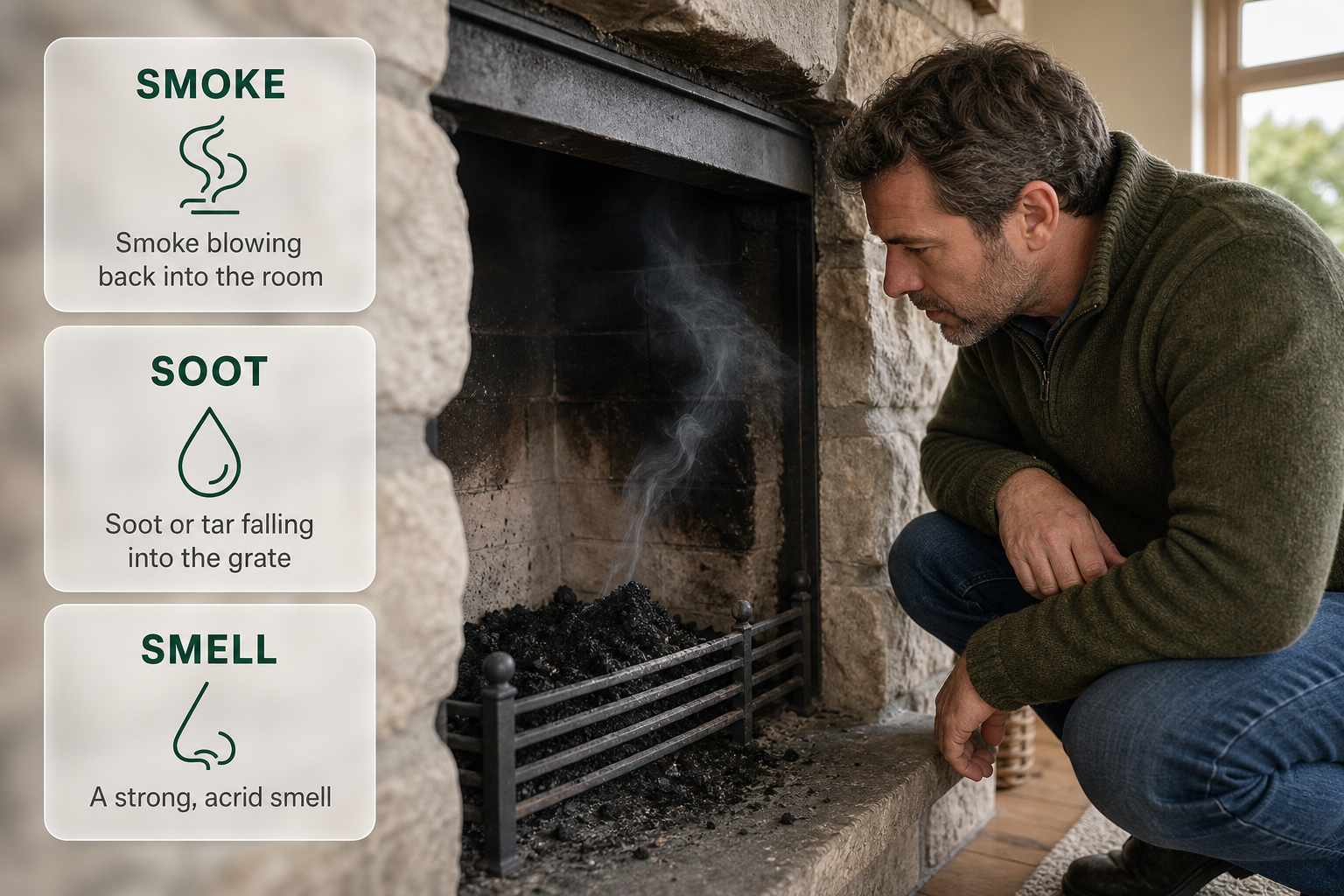
Some chimneys need attention before their scheduled sweep. The common warning signs are:
Smoke blowing back into the room when the fire is lit, or a fire that is slow to catch and draws badly.
Soot or flakes of tar falling into the grate or onto the hearth.
A strong, acrid smell from the fireplace, especially on damp days when the fire is out.
Black staining around the fireplace opening or on the chimney breast.
Birds or debris, such as twigs, nesting material or the sound of birds in the flue.
A roaring or crackling sound in the chimney while the fire is lit, which can mean a chimney fire has started; in that case the fire brigade should be called on 999 or 112.
Any of the first five is a reason to stop using the fire and book a sweep rather than wait for the usual date.
What a chimney sweep checks besides cleaning
A sweep's visit is also the cheapest inspection a chimney gets. While sweeping, a sweep will usually:
check that the flue is clear from the fireplace to the pot, often with a smoke test afterwards to confirm the draw;
look for bird nests and debris and remove them;
check the condition of the fireplace, the throat and, where visible, the flue liner;
note deteriorating mortar joints or cracks that could let smoke and heat escape into the brickwork, voids or the attic, a risk Dublin City Council highlights;
check the cowl or bird guard on the pot, where one is fitted.
It is worth asking the sweep for a visual inspection of the flue and a short note of anything that needs a builder or stove installer to look at. Cracks, a damaged liner or a loose pot are not things a sweep's brush fixes. Sweeping prices are covered in the guide to chimney cleaning cost; the main point here is that one sweep a season is far cheaper than repairing a flue damaged by a chimney fire.
Carbon monoxide: why sweeping and an alarm both matter
A blocked or partly blocked flue does not only raise the risk of a chimney fire. It can push carbon monoxide back into the room. The HSE advises making sure all chimneys and flues are swept regularly and fitting a carbon monoxide alarm in each room with an appliance that burns gas, oil, coal or wood. It also stresses that an alarm is not a substitute for maintaining and servicing those appliances.
The two work together. Regular sweeping keeps the flue clear, and the alarm is the warning if something goes wrong between sweeps, such as a nest built in spring or a liner that cracks mid-season. Alarms should be tested regularly and replaced at the end of the life stated by the manufacturer.
Booking a chimney sweep
Chimney sweeping sits within wider home services, and comparing two or three replies for the same job is the easiest way to see what is included. On ShamFix posting a job and listing is free and there is no commission, and a subscription is planned for the future. ShamFix does not check or certify tradespeople and profiles are filled in by tradespeople themselves, so ask about experience and insurance and read reviews before booking anyone. When posting, say what fuel is burned, how often the fire is used, whether it is an open fire or a stove, and when the chimney was last swept.
FAQ
Does a chimney need sweeping if the fire is only used a few times a year?
Yes, at least once a year. Even occasional fires leave soot, and a chimney that is rarely used is more likely to collect a bird nest or debris between uses. The annual sweep is best done just before the first fire of the season.
Is a stove chimney swept as often as an open fire?
Not necessarily. The government guidance is to sweep a stove as often as the supplier recommends, because the interval depends on the stove and the flue liner. A stove burning wood or regularly run low and slow will usually need more frequent sweeping than one burning smokeless fuel hot.
Do gas fires need the chimney swept?
A gas fire or other gas appliance should have its flue checked once a year, and the guidance links this to the annual boiler service. The person servicing the appliance confirms whether the flue needs sweeping.
Can chimney cleaning logs replace a sweep?
No. Cleaning logs and powders may loosen some deposits, but Kilkenny County Council's advice is that there is no substitute for a sweep's brush. They do not remove nests or blockages and do not include any check of the flue.
What is the best month to have a chimney swept in Ireland?
Late summer or early autumn, before the heating season starts. Sweeps are busiest from October, so booking earlier makes it easier to get a date, and households burning coal or wood regularly can book a second sweep in the new year.