Cleaning a headstone safely comes down to water, a soft brush and patience: soak the stone, work gently in small circles with plain water, rinse thoroughly, and let it dry before judging the result. Most family memorials in Ireland come up well with that routine once or twice a year, with no bleach, acid or pressure washer anywhere near them. Stones that lean, crack, crumble or carry fragile painted, gilded or lead lettering are a different matter, and grave cleaning and maintenance of that kind is best handed to someone who knows the stone.
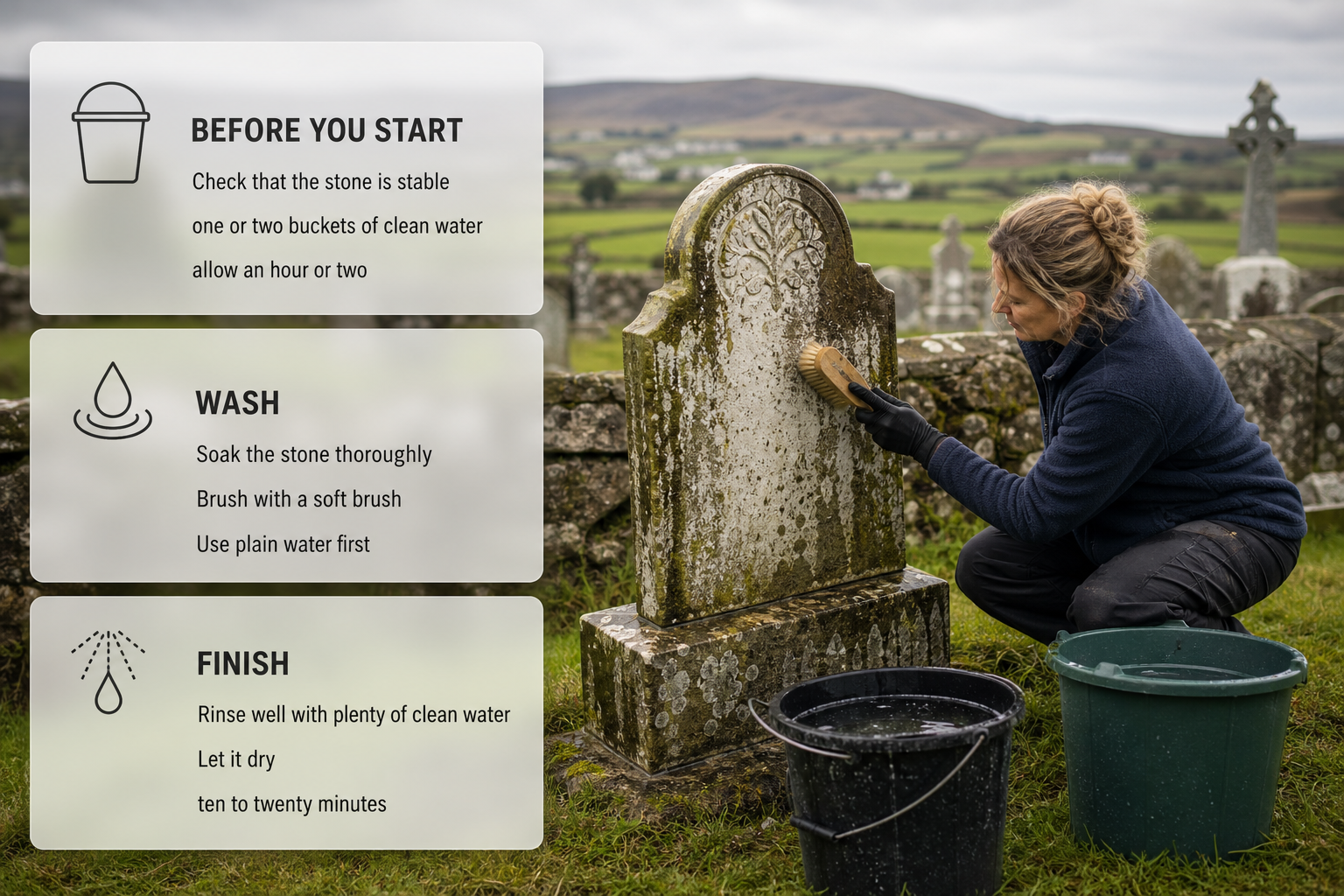
How to clean a headstone, step by step
Gather everything before starting: one or two buckets of clean water, a soft nylon or natural-bristle brush, a plastic scraper or a wooden stick for moss sitting in the letters, and household gloves. Eye protection is worth having if the brushing happens above shoulder height, and a hose or watering can helps where the burial ground has a tap. Work on a mild, dry day and allow an hour or two rather than rushing.
Check that the stone is stable before touching it. Rest a hand on the top edge and press very lightly, then look along the base, the joints and the face. If the stone rocks, leans noticeably, has open cracks, a powdery or flaking surface, or lettering that shifts when pressed, stop there. Cleaning will not cure any of those problems and can bring a stone down or snap a piece off it. A light knock with a knuckle also tells you something: a hollow, dull sound or a crumbling edge means leave it for a specialist.
Soak the stone thoroughly with clean water. Pour or spray water over the whole face, from the top down the sides to the base, and let it stand for a few minutes so the soiling softens. Two buckets is enough for most headstones — one for washing, one kept clean for the final rinse. Never begin brushing a dry stone; dry grit under the bristles acts like sandpaper. Where growth is heavy, re-wet the stone and leave it for ten to twenty minutes before brushing.
Brush with a soft brush, working in small circles. Keep the brush wet and dip it often, and work section by section, starting low and moving upwards, so dirty water runs over stone that is already wet and does not leave streaks. Do not lean weight into the brush; let the bristles and the water do the work. A plastic scraper or a wooden stick lifts moss out of incised letters, and a fingernail is gentler still — metal tools chip the edges of cut letters and leave permanent bright scratches.
Use plain water first, and only add soap if it is needed. Water alone removes most bird droppings, algae film and general dirt. If a stubborn film remains, put a few drops of pH-neutral soap into a bucket of water — a few drops, not a squirt — and wash with that. Anything stronger, and any household cleaner, risks staining or etching the stone.
Rinse well with plenty of clean water. Tip the clean bucket over the whole stone, working from the top down, and repeat until the water running off is as clear as the water going on. Soap or dirty water left on the surface dries into a dull film and can feed new growth, so the rinse matters as much as the wash. Rinse the surrounding kerb too, so no suds settle around the plot.
Let it dry and judge the result on a dry day. A wet headstone always looks darker than it will once it dries, so the true result appears an hour or two later. Expect some staining, especially from lichen, to fade over the following months rather than lift on the day.
Painted, gilded or lead lettering is the exception to everything above: do not scrub it. Wash around it with water and let the water carry the dirt away, keeping the brush off the lettering itself, and stop altogether if the paint or gold is lifting.
What to avoid
- Bleach and household cleaners. Far too strong for memorial stone, and they leave residues that stain and encourage growth.
- Vinegar, acids and descalers. Limestone and marble are acid-sensitive and will etch and pit.
- Wire brushes, scouring pads, wire wool and sandpaper. They cut into the surface and remove the tooled finish permanently.
- Metal tools such as chisels, screwdrivers and knives, which chip letter edges and scratch polished faces.
- Pressure washers. The force drives water into joints, blasts out pointing and can lift lettering, gilding or lead, so a bucket and a soft brush are always the safer route.
- Dry brushing and dry scraping. Dust carries stone particles away, and lichen tears off flakes of stone with it.
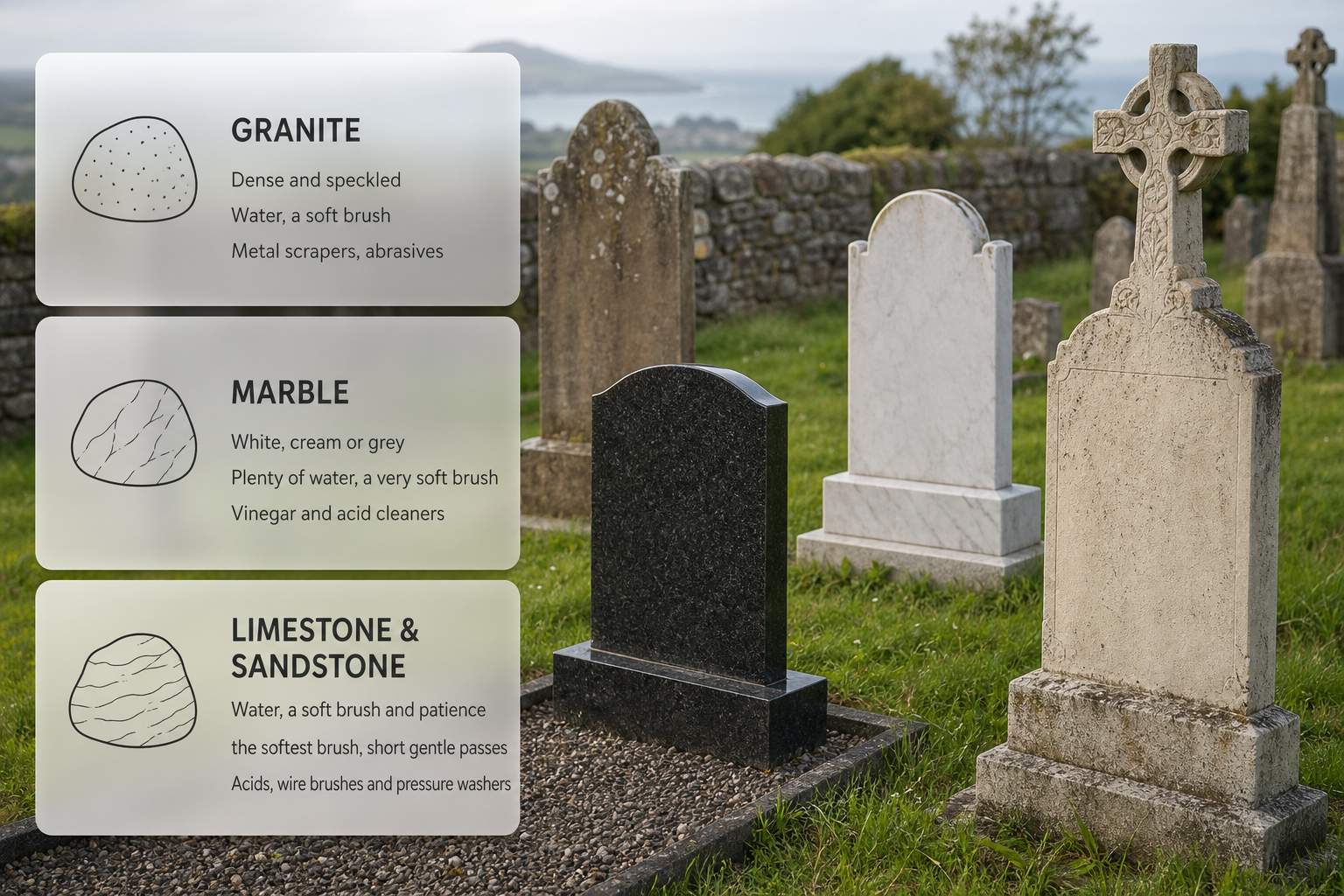
How cleaning differs by stone type
Irish headstones are mostly granite, marble, limestone or sandstone, and the softer the stone, the lighter the touch. A short soak and a gentle brush suit all four; the differences lie in what each stone tolerates.
| Stone | How to recognise it | What is safe | What to avoid |
|---|---|---|---|
| Granite | Dense and speckled, grey, black, pink or red, often polished | Water, a soft brush, pH-neutral soap if needed | Metal scrapers, abrasives and strong cleaners that dull the polish |
| Marble | White, cream or grey, often veined and smooth, sometimes with lead lettering | Plenty of water, a very soft brush, pH-neutral soap | Vinegar and acid cleaners, abrasive pads, scrubbing lead lettering |
| Limestone | Pale grey, cream or honey-coloured with an even texture and fossil flecks | Water, a soft brush and patience | Acids, wire brushes and pressure washers |
| Sandstone | Buff, brown, red or grey, grainy and sometimes visibly layered | Water, the softest brush, short gentle passes | Harsh chemicals, heavy scrubbing and dry brushing |
Lichen, moss and stubborn staining
Lichen and moss are living growth, and the trick is to soften them rather than tear them off. Soak the affected area, leave it for ten to twenty minutes, soak it again, then lift the growth gently with a plastic scraper or a wooden stick. Picking at dry lichen pulls away flakes of stone with it and leaves pale scars that never quite blend back in.
Accept that part of the job happens after you leave. Lichen leaves a residue in the pores of the stone that fades over months of weathering rather than coming off on the day, and growth returns over time on any headstone in a damp, shaded burial ground. On older stones the lichen is often part of the character of the memorial, and a light trim around the lettering is a better aim than a bare surface.