Fortnightly suits most Irish homes, weekly suits busy families and monthly suits a small, tidy household — here's how to pick a schedule.
/8 min read
For most Irish homes a cleaner comes either weekly or fortnightly, and fortnightly is the most common arrangement. A weekly visit suits a busy family home where floors, bathrooms and the kitchen never quite keep up, while a monthly visit is usually enough for a small, tidy home with one or two adults. Households arranging regular home cleaning set the frequency themselves and can adjust it once a routine settles.
How often a cleaner usually comes in Ireland
Fortnightly is the standard rhythm. It is frequent enough that the home never drifts into the state that needs a full reset, and it keeps the monthly outlay steady. Weekly suits houses with children, pets or a lot of footfall, where dust, hair and crumbs reappear long before the next visit is due. Monthly suits one or two adults in a flat or a small house who stay on top of clutter themselves and mainly want the bathrooms, kitchen and floors done properly.
The useful test is simple: the gap between visits should be shorter than the time it takes for the home to look tired again.
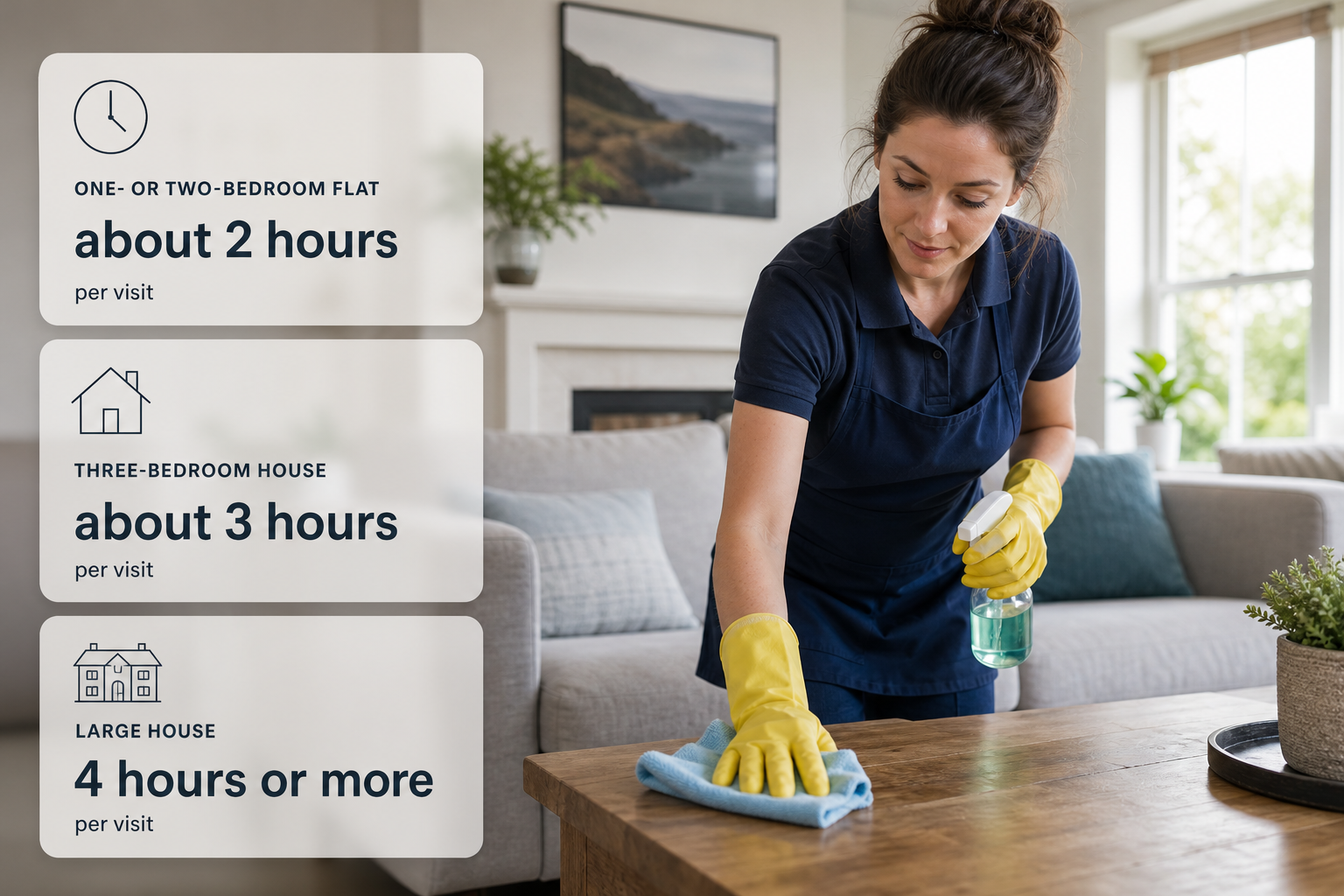
Visit length matters as much as frequency, because a cleaner booked for too few hours spends the whole visit on the worst of the work and never reaches the rest. As a rough guide, a one- or two-bedroom flat takes about two hours, a three-bedroom house about three hours, and a large house four hours or more. Most cleaners work to a two-hour minimum per visit, so a very small flat pays for two hours whether or not the work fills them.
The same house usually needs the longer end of its range on a fortnightly schedule, because two weeks of dust and floor traffic take longer to clear than one. A household that keeps the same frequency but adds hours often gets a better result than one that adds a second visit and splits the same hours across both.
Which frequency suits which household
Household type
Suggested frequency
Typical hours per visit
Why
Single person or couple in a flat
Monthly, or fortnightly when both work long hours
About 2 hours
Small floor area, one bathroom and a compact kitchen
Couple in a house
Fortnightly
About 3 hours
Stairs, hallways and a second bathroom need regular attention
Family with young children
Weekly
3 hours or more
Kitchen, floors and bathrooms take constant wear
Home with dogs or cats
Weekly, or fortnightly with extra floor time
3 hours or more
Pet hair, muddy paws and odours build up faster than dust alone
Someone with allergies
Weekly where possible, fortnightly at a minimum
About 3 hours
Frequent removal of settled dust and dander keeps levels lower
Busy professionals rarely home
Fortnightly
About 3 hours
Little mess is made, but dust settles and bathrooms still need work
These are starting points rather than fixed rules. A couple in a house who travel most weeks may find monthly is plenty, while a family with toddlers and a dog may need weekly plus a longer slot.
Signs the current frequency is wrong
Three signals show up again and again. Dust and pet hair are back within a few days of a visit. The cleaner spends the entire visit catching up and never reaches the detail work. The bathrooms never quite reach a clean state and look dull again by the next visit.
Other warnings are quieter. The visit regularly overruns, so the last job on the list is always left undone. The household spends its own evenings tidying before the cleaner arrives, which defeats the purpose of paying for help. Mats and hall floors feel gritty within a couple of days of a winter visit, when mud and damp are at their worst.
When two or more of these apply, the fix depends on which one dominates. If the home looks tired within days, step up the frequency — monthly to fortnightly, or fortnightly to weekly. If the cleaner never gets through the list, add hours to the existing visit first.
Why the first visit is longer, and why a deep clean first pays off
A first regular visit is often booked at double the usual length, because the cleaner is resetting rather than maintaining: limescale in the bathroom, grease in the kitchen, skirting boards, window interiors and the areas under furniture all take time the first time round. After that reset, an ordinary visit is maintenance, so a shorter slot and a lighter frequency both become realistic.
A one-off deep clean before regular visits is the same idea bought as a separate job. It suits a home that has not been professionally cleaned in years, a house coming out of a renovation, or a household returning after a long absence. A deep clean also sits alongside the other cleaning services a home might arrange, and it can be booked weeks before a regular schedule starts so that the first fortnightly visit is not swallowed up by backlog.
Ten to fifteen minutes a day keeps a lighter schedule working
The biggest factor in whether a monthly or fortnightly schedule holds up is what happens between visits. Ten to fifteen minutes a day is enough: dishes cleared before bed, a wipe over the kitchen worktops and hob, a quick pass over the bathroom sink and taps, a broom or vacuum down the hall and kitchen floor, bins emptied, mats shaken, and surfaces cleared so the cleaner can clean them rather than move things around.
Ten minutes a day adds up to roughly two hours across a fortnight, which is about the length of an extra visit. Households that do this often find a lighter schedule works perfectly well, and the cleaner's time goes on the jobs that need skill — bathrooms, kitchen, floors — instead of on tidying.
Seasonal changes in an Irish home
Irish weather shifts the balance through the year. From October to March, wet boots and wet dogs bring grit, mud and damp into halls and kitchens, so floors take noticeably more time and the same house may need the longer end of its range. Darker days and closed windows also let dust and damp build up, and a short airing helps more than an extra visit.
Spring and the weeks before visitors call for a different response: a one-off deeper clean rather than a permanent change of frequency. That is the moment to book window interiors, skirting, under-furniture work and the oven, then return to the normal rhythm.
Trialling a frequency for a month
Pick a frequency, run it for a month, and judge it on the evening before the next visit. If the home still feels acceptable at that point, the schedule is right. If it feels bad several days earlier, the frequency is too low. If the cleaner finishes with time to spare on a regular basis, it may be too high.
Change one step at a time. Monthly to fortnightly, or fortnightly to weekly, is a big enough jump for one month. It also helps to check whether the household is adding hours where the work actually is: a home that needs more time on floors and bathrooms does not always need more visits.
FAQ
Is weekly cleaning too often for a two-bedroom flat?
Usually it is only too often if very little changes between visits. A flat of that size takes about two hours, so weekly is reasonable for a household that works long hours and eats at home often, but a fortnightly or monthly visit plus ten minutes a day often produces the same result. The evening before the visit is the honest test.
Do homes with pets need more visits or more hours?
More hours is usually the better answer. Pet hair and muddy paws are concentrated on floors, mats and soft furnishings, so a weekly visit with a longer floor block often beats two shorter visits that never get past the hall. Households with two or more animals may still find weekly is the only frequency that holds.
Can the frequency be changed later?
Yes, and it usually is. Many households start fortnightly, then move up or down after a few months once they know how the home behaves. Telling the cleaner in good time and one step at a time keeps the change manageable for both sides.
Should a renter arrange a different schedule from an owner?
Renters can book exactly the same frequencies as owners, and regular cleaning during a tenancy is a household decision like any other. The end-of-tenancy clean is a separate one-off job rather than part of the regular schedule, so it is worth planning as its own booking.
Does the schedule need to change in summer?
Often it relaxes rather than tightens. Doors and windows are open more, which reduces stale air but lets in pollen and dust, while outdoor shoes bring less mud than in winter. Most homes keep the same frequency and use the spring for a one-off deep clean instead.
Arranging a cleaner
Posting a job and listing it on ShamFix is free and there is no commission, and a subscription is planned for the future. ShamFix does not check or certify tradespeople, and profiles are filled in by tradespeople themselves, so homeowners should check registrations themselves and read reviews before agreeing a schedule.