What to Expect From a Cleaner: An Irish Home Guide
What a regular home cleaner does, what is normally excluded, and how to agree tasks, supplies, keys and access before the first visit.
/9 min read
Booking a regular home cleaner in Ireland usually means agreeing a recurring set of indoor tasks — vacuuming, mopping, dusting, kitchen surfaces, bathrooms and a light general tidy — carried out on a set day each week, fortnight or month. Deep cleaning, the inside of appliances, and specialist or outdoor work normally sit outside that routine. The arrangement works best when both sides put in writing what is included, what is not, and how regular domestic cleaning will be handled in the home.
What a regular home cleaner normally does
The core of a regular visit is upkeep: keeping the rooms that are used every day at a steady standard rather than restoring them from a poor condition. In most Irish homes the time is spent roughly as follows.
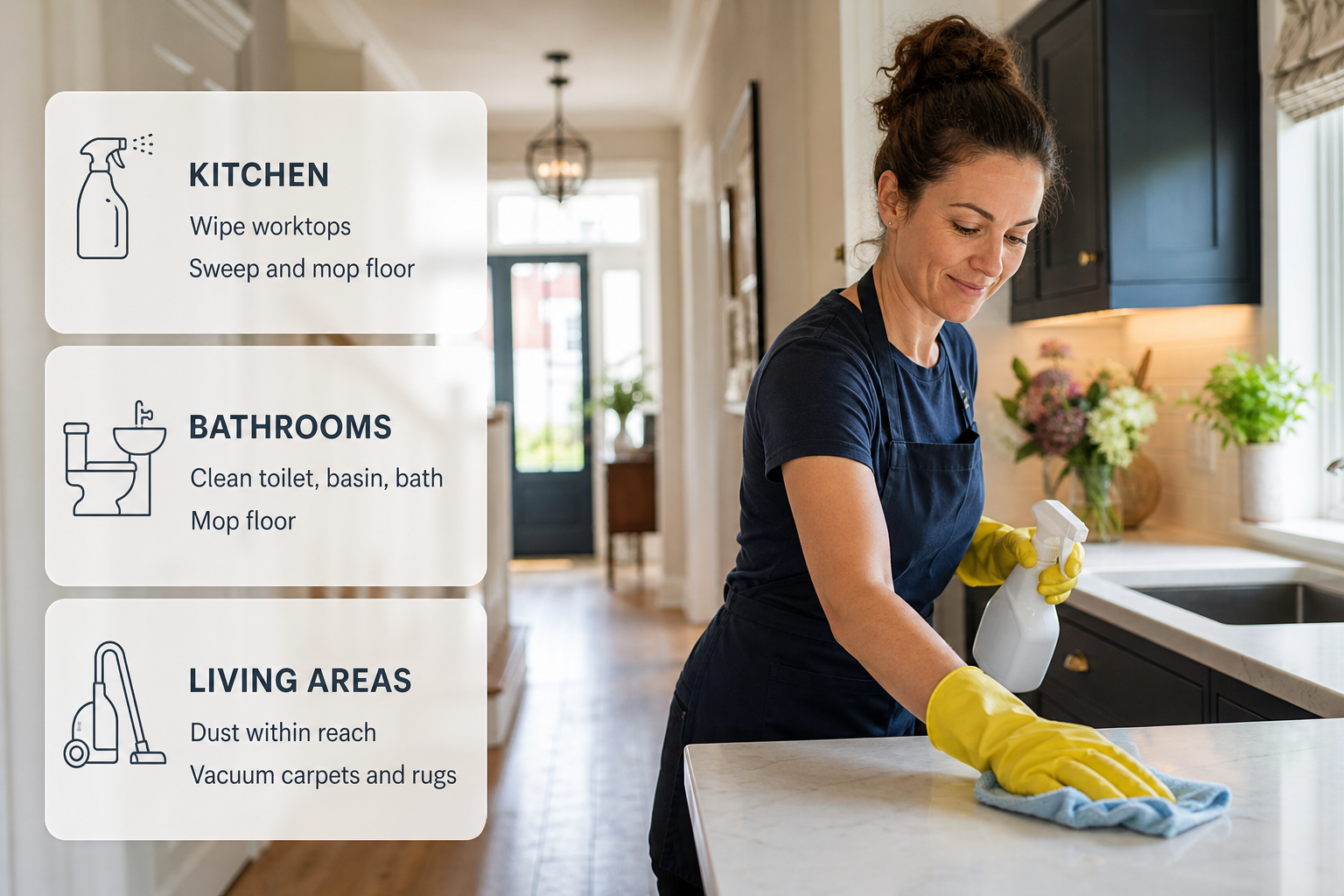
Kitchen: wiping worktops, splashback, hob and appliance exteriors, cleaning the sink and drainer, wiping cupboard fronts within reach, cleaning the inside of the microwave if agreed, emptying the bin, sweeping and mopping the floor.
Bathrooms: cleaning and disinfecting the toilet, basin, bath, shower tray and screen, wiping mirrors, cleaning tiles within reach, emptying the bin and mopping the floor.
Bedrooms and living rooms: dusting shelves, windowsills, skirting and light switches within reach, making beds or changing bed linen if agreed, vacuuming carpets and rugs, and mopping or vacuuming hard floors.
Hall, stairs and landing: vacuuming the stairs, wiping handrails and banisters, and cleaning the entrance floor.
Throughout: removing cobwebs within reach, emptying small bins and replacing liners, and a limited tidy of items left out on surfaces.
How much of that list actually gets done depends on the size of the house, the number of bathrooms, whether there are pets, and the condition of the home at the start. It is worth agreeing priorities rather than a vague list: if the booked time cannot cover everything in one visit, both sides should decide which rooms are done every time and which rotate.
What is normally not included
A standard regular clean does not include work that is restorative, specialist or unusually time-consuming. The usual exclusions are oven interiors, extractor hoods and filters, heavy limescale on shower glass, mould treatment, grout scrubbing, the inside of windows above ground level, exterior windows, blinds and curtains, upholstery and carpet shampooing, and moving heavy furniture. Garden work, garage and loft clear-outs, pet waste, pest or biohazard situations, and any task needing a ladder are also outside a normal visit. Neither is a cleaner a childminder, pet sitter or errand runner, even if they are in the house at the same time.
None of this reflects poorly on the cleaner. These jobs need different equipment, more time or specific training, and they are normally quoted separately or handled by a specialist provider. Naming them up front avoids awkwardness on the day.
Regular clean versus deep clean
A regular clean maintains a standard; a deep clean resets it. Deep cleaning typically covers the inside of the oven and cupboards, behind and under movable furniture, door frames, skirting throughout, limescale and build-up on tiles and glass, and the inside of windows. Prices are in deep cleaning prices. Homeowners who need that kind of reset sometimes book other cleaning services instead of, or alongside, a regular visit.
Many households start with one deeper visit and then move onto a routine schedule, and that is a sensible way to begin. If a home has not been cleaned professionally for a long time, the first regular visit will usually take longer than later ones, so either allow extra time at the start or accept that the first visit or two will focus on the worst areas.
Preparing the home before each visit
Preparation is the single biggest factor in how much cleaning actually happens. A visit is for cleaning, not tidying, so the more the cleaner has to move before reaching a surface, the less time is spent cleaning it.
Clear worktops, stairs and floors of clothes, toys, paperwork, cables, bags and pet bowls.
Wash up or stack dishes and clear the draining board; washing up is normally not part of the clean unless it has been agreed.
Put personal items, medication, cash, jewellery and documents away before the cleaner arrives.
Decide where pets will be while the visit is under way and close off any gates or doors that should stay shut.
Leave out any product that should be used, and leave a short note for anything delicate, such as a waxed table, an untreated stone worktop or a piece of furniture that should not be moved.
Ventilate rooms if possible, and arrange parking or visitor access in advance for apartments and estates with controlled entry.
Who supplies the products and equipment
There are two common arrangements, and either works well once it is agreed in writing. In the first, the householder supplies everything: general-purpose cleaner, bathroom cleaner, glass cleaner, floor cleaner, cloths, mop, bucket, vacuum and bin bags. This is usually the better choice where there are allergies in the house or where surfaces need particular care, such as natural stone, sealed timber or acrylic baths, because the householder knows what is safe.
In the second, the cleaner brings a standard kit, and the householder provides water, power, a place to store the equipment between visits, and the bin bags or consumables that run out. Agree who replaces vacuum bags and filters, whether the household vacuum may be used or whether the cleaner prefers to bring their own, which products must never be used, who empties the final bin, and where the wheelie bin is kept.
Access, keys and alarms
Access is where good intentions most often go wrong. The options are being at home, letting the cleaner in and leaving, a key safe or coded lock box, a trusted neighbour or building manager, or a smart lock with a code that can be changed afterwards. A key left under a mat, plant pot or meter box is a false economy and should be avoided.
If a key is handed over, write down who holds it, agree what happens if it is lost, and agree that keys are returned when the arrangement ends. A short written receipt for any key is a reasonable request on both sides, and it is worth checking whether the household insurance policy has any condition about key holders. Alarm codes should be changed whenever the arrangement or the people involved change. Tenants and apartment owners should check the building's rules on visitor access before promising anything.
Pets, valuables and boundaries
Tell the cleaner about pets before the first visit, including nervous animals, rescue dogs and how they react to a vacuum cleaner. Agree whether the pet stays in a particular room or outdoors, that gates and external doors stay closed, and that treats are not given. Some cleaners are not comfortable working around large or anxious dogs, and that is better discussed than discovered.
Put jewellery, watches, cash, medication, small electronics and personal papers away. Many cleaners prefer not to work around exposed cash, because it protects both sides. Agree which rooms are off limits, whether furniture may be moved, and what should never be lifted by one person alone. House rules on smoking, music and phone calls are easy to agree politely at the start. If there are indoor cameras, disclose them: it is fair, and it builds the trust the whole arrangement depends on.
Scheduling, frequency and notice
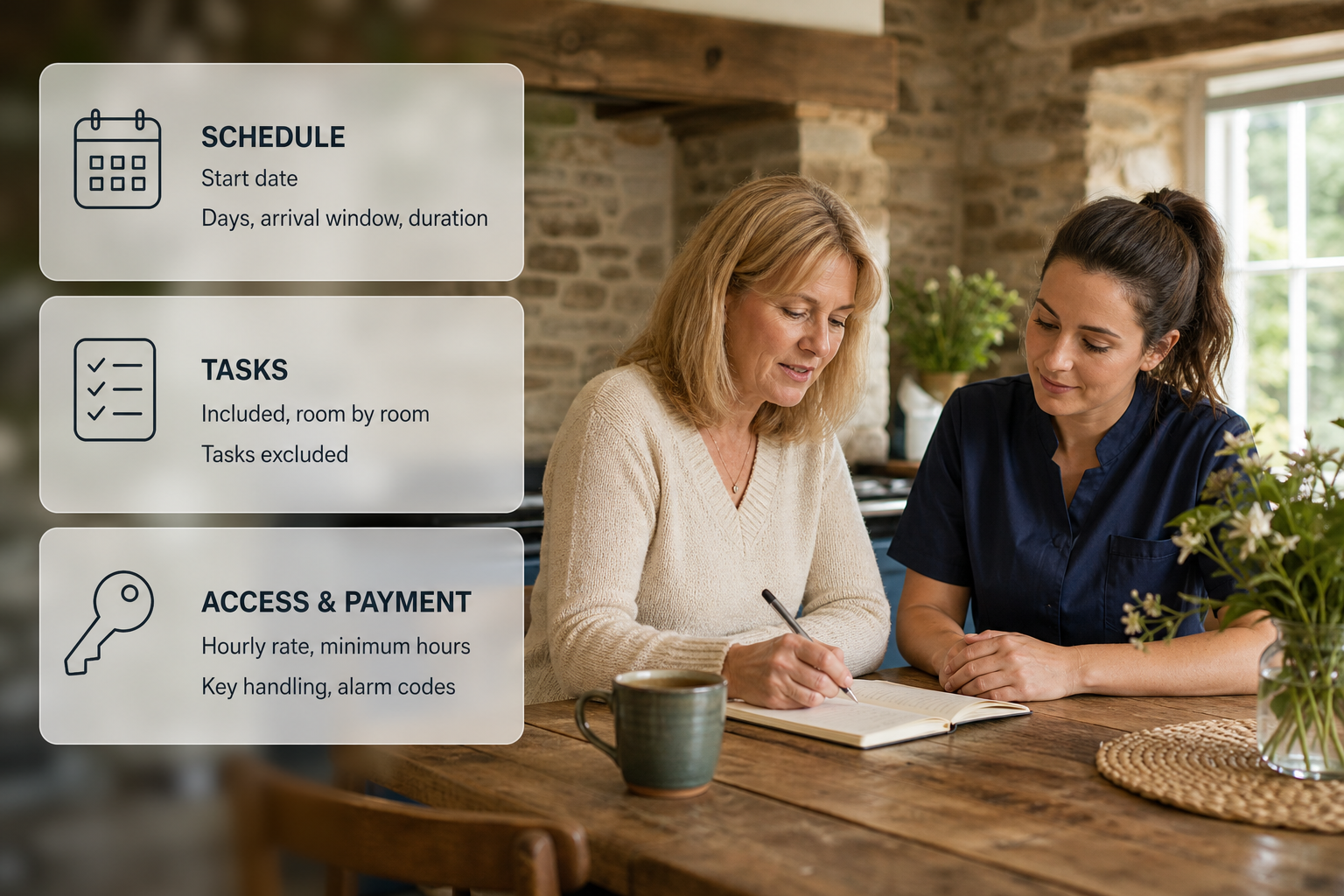
Weekly, fortnightly and monthly visits are the common arrangements in Ireland, and the right rhythm usually depends on the size of the household, pets and how much time is spent at home. Agree the day, the arrival window and the expected length of the visit, along with a notice period for changes on both sides, how holidays and bank holidays are handled, what happens if the cleaner cannot attend, and how and when payment is made.
Hourly rates in broad terms
As an aggregate Irish market estimate, hourly rates for a domestic cleaner in Ireland fall roughly between €16 and €28 an hour, with the figure quoted depending on the region, how many hours are booked at a time, travel involved, whether products and equipment are supplied, and whether the visit is a one-off or a standing arrangement. A fuller breakdown is in how much does a cleaner cost.
What to agree in writing
A short written summary, even a message that both sides confirm, prevents most disputes. It should cover:
Names, contact details, address and start date.
Days, arrival window and expected duration of each visit.
Frequency, notice period for changes, and arrangements for holidays or illness.
Tasks included, room by room, and tasks excluded.
Who supplies products and equipment, and any product that must not be used.
Hourly rate, minimum hours, and how and when payment is made.
Key handling, key return, alarm codes and who else has access.
Pets, children, off-limit rooms and any indoor cameras.
How breakages or damage are reported and discussed.
How the arrangement ends, on either side, and with how much notice.
Two points are worth confirming rather than assuming. Whether a cleaner works as an independent self-employed person or in another capacity affects tax, PRSI and insurance, and the bodies that decide those questions are Revenue for tax matters and the Workplace Relations Commission for employment status, so the householder should confirm the position with them before the arrangement starts. Keeping the agreed list in writing also means that any shortfall later can be raised against a clear record of what was promised, rather than against a memory of the conversation.
Getting started
Posting a job and listing on ShamFix is free and there is no commission; a subscription is planned for the future. ShamFix does not check or certify tradespeople, and profiles are filled in by tradespeople themselves, so homeowners should check registrations themselves and read reviews before agreeing to anything. Homeowners can set out the rooms, frequency, supplies and access arrangements on ShamFix, and cleaners who cover the area can respond with their own terms.
FAQ
Should the homeowner be at home during the clean?
It is not necessary, and many households are at work while the clean happens. Being present for the first visit is still useful, because it lets both sides walk through priorities, product preferences and off-limit rooms in person. After that, the arrangement works best when access has been agreed clearly and the same routine is followed each time.
Is tidying the same as cleaning?
They are different jobs, and confusing them is the most common reason a visit feels disappointing. Cleaning covers surfaces, floors, sanitary ware and appliance exteriors, while tidying means putting away clothes, toys, paperwork and dishes so those surfaces can be reached. If a household wants both, that should be stated and allowed for in the time booked.
What happens if the cleaner is sick, on holidays or needs to cancel?
This should be settled before the first visit, not on the morning it happens. Agree how much notice is expected, whether the visit is rearranged or skipped, and whether anyone else will cover. Keeping a simple record of dates and any missed visits makes it much easier to sort out payment at the end of the month.
What should be done if something is damaged during a clean?
Note the damage on the day, take photographs, and raise it calmly with the cleaner rather than waiting. Most problems are sorted out between the two sides once the facts are clear, and a written agreement that describes how damage is reported makes that conversation easier. A dated record of the item and the visit is useful if the matter needs to be taken further.
Is a trial period a good idea?
Starting with one visit or a short run of visits is a sensible way to test the routine before committing to a long-standing schedule. It gives both sides a chance to see how long the work really takes and whether the tasks, products and access arrangements suit. If it goes well, the frequency and rate can then be confirmed in writing for the longer term.