
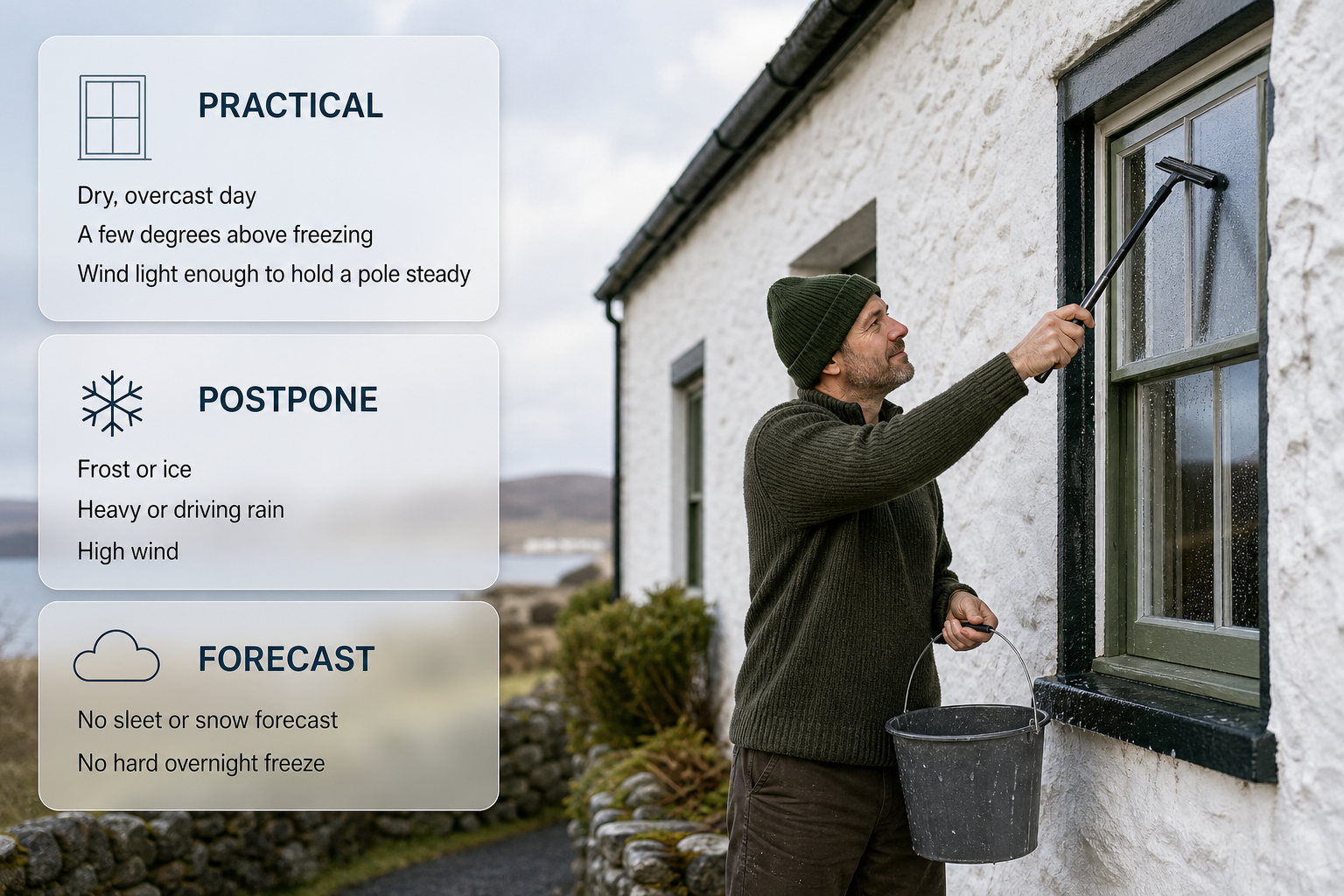
Window cleaning in winter is practical on dry, mild days when the glass is not frosted, the wind is light and rain is not on the way, and it should be postponed in frost, icy surfaces, heavy rain and high winds. Interior glass does not depend on the weather and can be cleaned at any time, but exterior panes are another matter, because a slip on a frozen path or an unsteady pole in a gust can cause real injury and damage frames that would otherwise be fine. Where the outside panes sit above the ground floor, or can only be reached by leaning out or climbing, the sensible choice is to arrange local window cleaning rather than attempt the job from a ladder.
When winter window cleaning is practical and when to postpone
The good conditions in winter are narrow, but they do occur: a dry, overcast day with the air a few degrees above freezing, no sleet or snow forecast for the next few hours, and wind light enough to hold a pole steady. On a day like that the glass is safe to wash, and there is enough warmth left in the air for the water to run off and the pane to dry before the temperature falls again in the evening.
The weather to postpone work in:
- Frost or ice on the glass, frames or sills, because water freezes in the squeegee channel and leaves smears; if the pane is already iced, the ice should be left to thaw on its own, and hot water poured on cold glass is a classic way to crack it.
- Frost, ice or wet leaves on the ground, because even where the glass is clear the footing may not be, and a path in shade can stay slippery long after the air has warmed.
- Heavy or driving rain, because rain-spotted glass dries with spots and rain running down a dirty frame carries grime into the seals and sill channels.
- High wind, because gusts make ladders, step stools and extension poles unpredictable, and an open window can be caught and slammed.
- Sleet, snow or a hard overnight freeze in the forecast, because there is no point washing a pane that will be covered or frozen again within hours.
If the job is not urgent, waiting for a mild, dry spell is better than forcing it; winter dirt builds slowly, and one well-timed clean does more good than three rushed ones.
How often windows need cleaning in winter
Exterior glass in winter needs attention far less often than in summer, because growth slows, pollen disappears and rain does much of the rinsing, so the sensible approach is to catch a dry, mild spell rather than follow a fixed schedule. Interior glass is different: shorter days mean more hours with the lights on, more cooking and more heating indoors, so inside panes pick up fingerprints, kitchen film and condensation marks and are usually worth a light wipe every few weeks.
How to clean windows safely in winter
The method barely changes with the season (the full routine is in how to clean windows streak free), but cold weather narrows the margins.
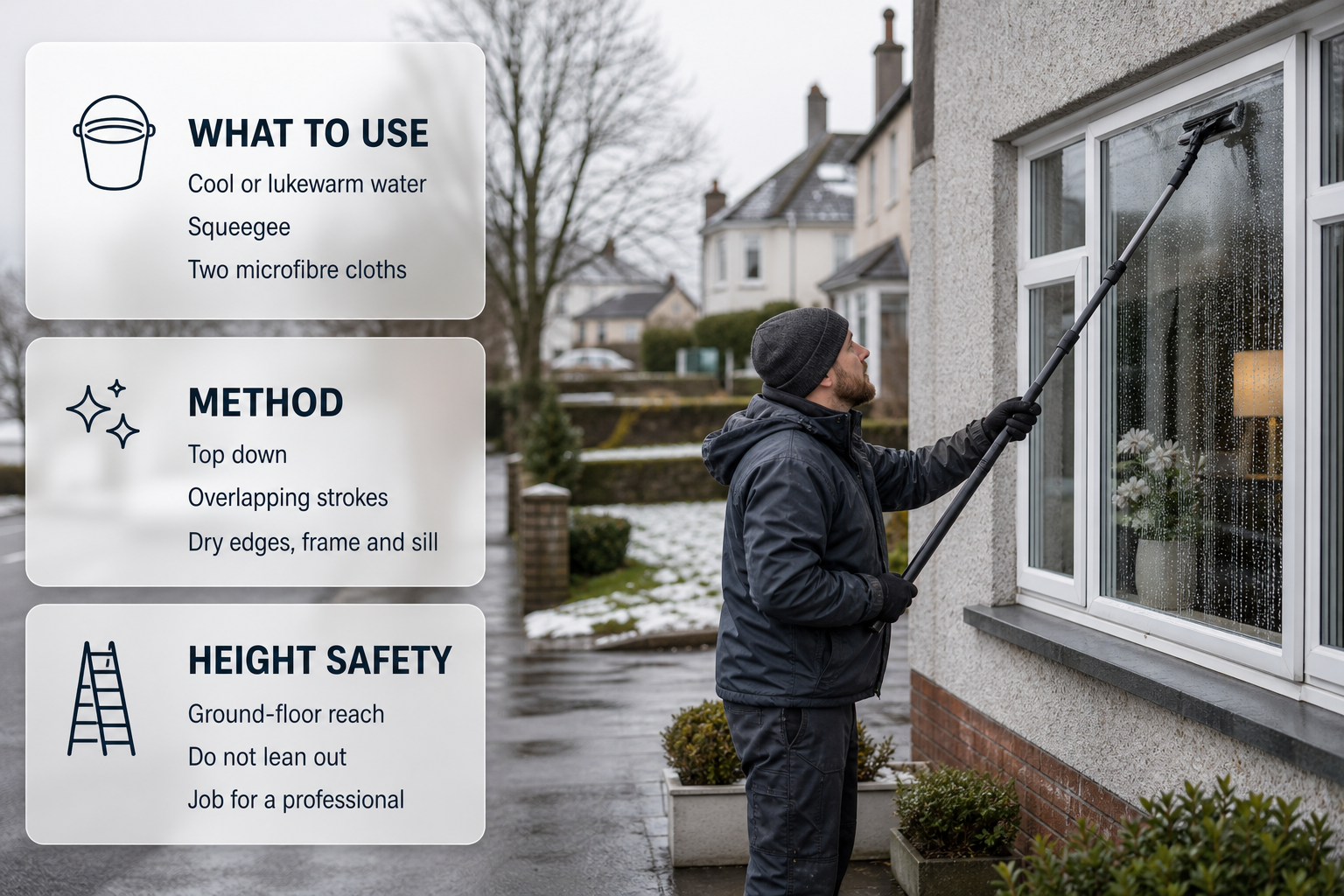
What to use: a bucket of cool or lukewarm water, a few drops of mild washing-up liquid or a dedicated glass cleaner, a squeegee and two microfibre cloths, a soft brush for frames and sills, and an extension pole for ground-floor reach. Gloves protect hands from cold water and from cleaning products, and eye protection matters when a chemical cleaner is used, especially overhead; cleaning products should never be mixed together.
How to apply it: work a pane at a time, from the top down. Wet the glass with the soapy cloth or pole, squeegee in overlapping strokes, and wipe the blade on the drying cloth after each pass so dirt does not go back onto the glass. Soapy water should not be left to dry on the pane, because on a cold, breezy day it skins over quickly and the film that remains is hard to shift. Finish by drying the edges, the frame and the sill, so no water sits in the channel where it can freeze later.
A few winter cautions: use water that is warm rather than hot; avoid washing when the glass itself is very cold and the water begins to bead and stiffen; and do not clean an upstairs pane from the outside by leaning out of an open window, which is how most household falls happen.
Ladders deserve their own warning. Even a short ladder on a frosted or wet path, a gravel drive or a timber deck is unstable, and in winter the ground stays cold and greasy in shaded spots. Homeowners should not climb onto a roof, stand on a sill, stretch sideways from a ladder or work one-handed at height. If the glass cannot be reached safely from inside or from the ground with a pole, it is a job for a professional with the right access equipment.