Wash with mild soapy water, squeegee in overlapping strokes and dry the blade after every pass for glass that dries clear, inside and out.
/8 min read
The quickest way to streak-free glass is to wash the pane with a mild soapy solution, pull a clean squeegee blade down it in overlapping strokes, and wipe the blade dry after every pass. Most streaks come from a blade dragging dirty water back across the glass, from a pane that dried in direct sun before it was finished, or from frames and edges that were dealt with last. The kit is small — a bucket, a squeegee and a couple of microfibre cloths — and the same sequence works on both sides of an Irish house.
The streak-free method, step by step
Work on one pane at a time, top to bottom, and keep each stage short so nothing dries on the glass before it is lifted off.
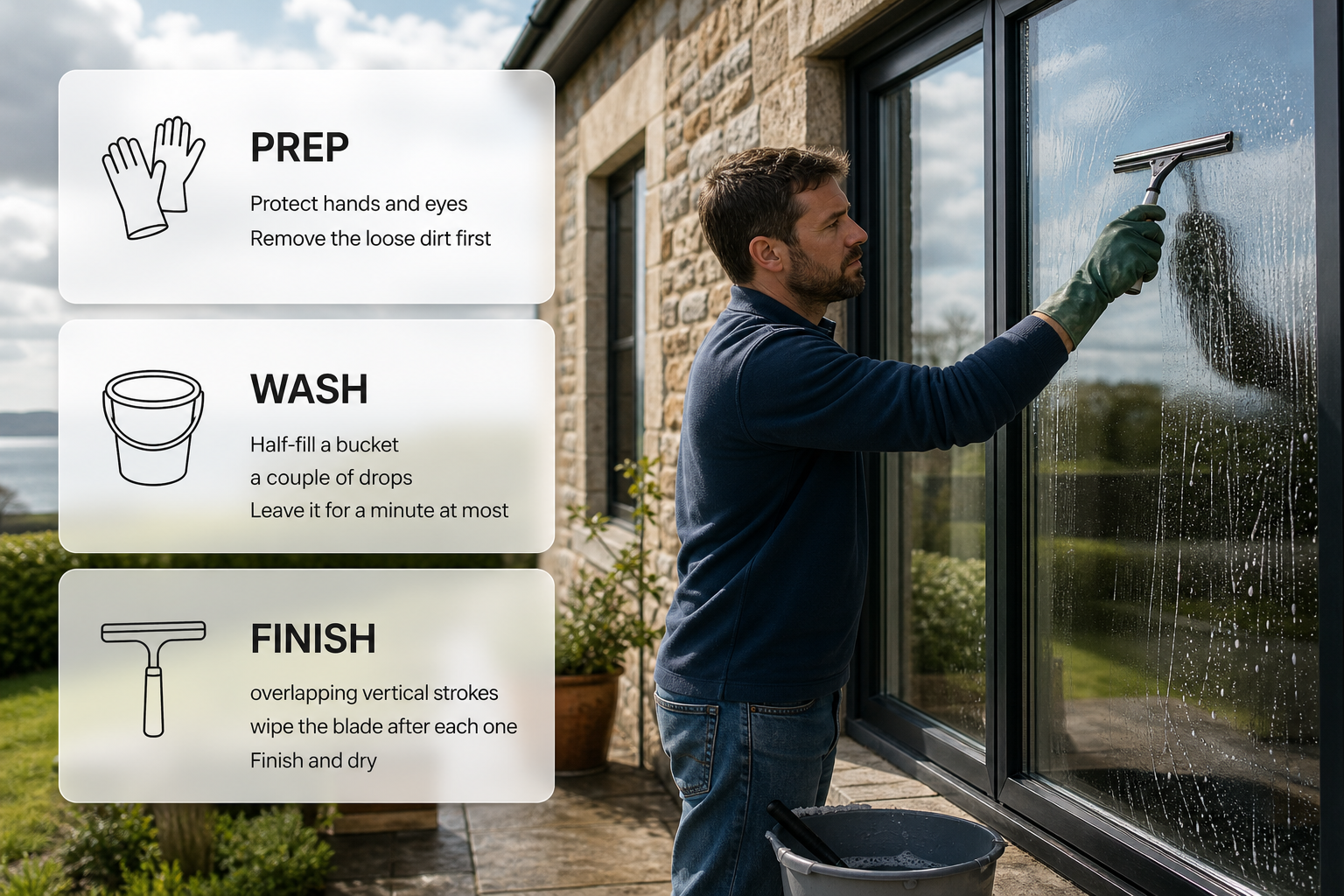
Protect hands and eyes. Rubber gloves keep soapy water and diluted vinegar off the skin. Eye protection matters when scrubbing above head height or using any diluted acid on mineral marks, and a dust mask is sensible where a dusty pane will throw up debris.
Remove the loose dirt first. Rinse the glass with plain warm water, or brush it down with a wet cloth, so grit, pollen and dust come off before anything is rubbed across the surface. Dry brushing a gritty pane is how fine scratches appear.
Mix the solution. Half-fill a bucket with warm water and add a couple of drops of washing-up liquid. More soap is not better: excess foam dries into a film and is a common cause of a cloudy finish.
Wash the whole pane. Soak a microfibre cloth or applicator and wash from the top down, finishing on the edges and corners. Stay out of direct sunlight, or move to the shaded side of the house, because a warm pane dries the solution before the squeegee reaches it.
Leave it for a minute at most. That is long enough to loosen fingerprints and cooking film, and short enough that the solution has not begun to dry.
Pull the squeegee. Start in a top corner with a horizontal pass across the head of the window, wipe the blade on a cloth, then pull overlapping vertical strokes down the pane, cleaning the blade after each one. Do not lift the blade mid-stroke.
Finish and dry. Wipe the outer edge, the corners and the last few centimetres with a dry, lint-free microfibre, then dry the frame and sill so water cannot run back down onto clean glass.
Where a window is too high, too awkward or too heavily soiled for a safe DIY attempt, a local window cleaning service can take it on.
Tools that do the work
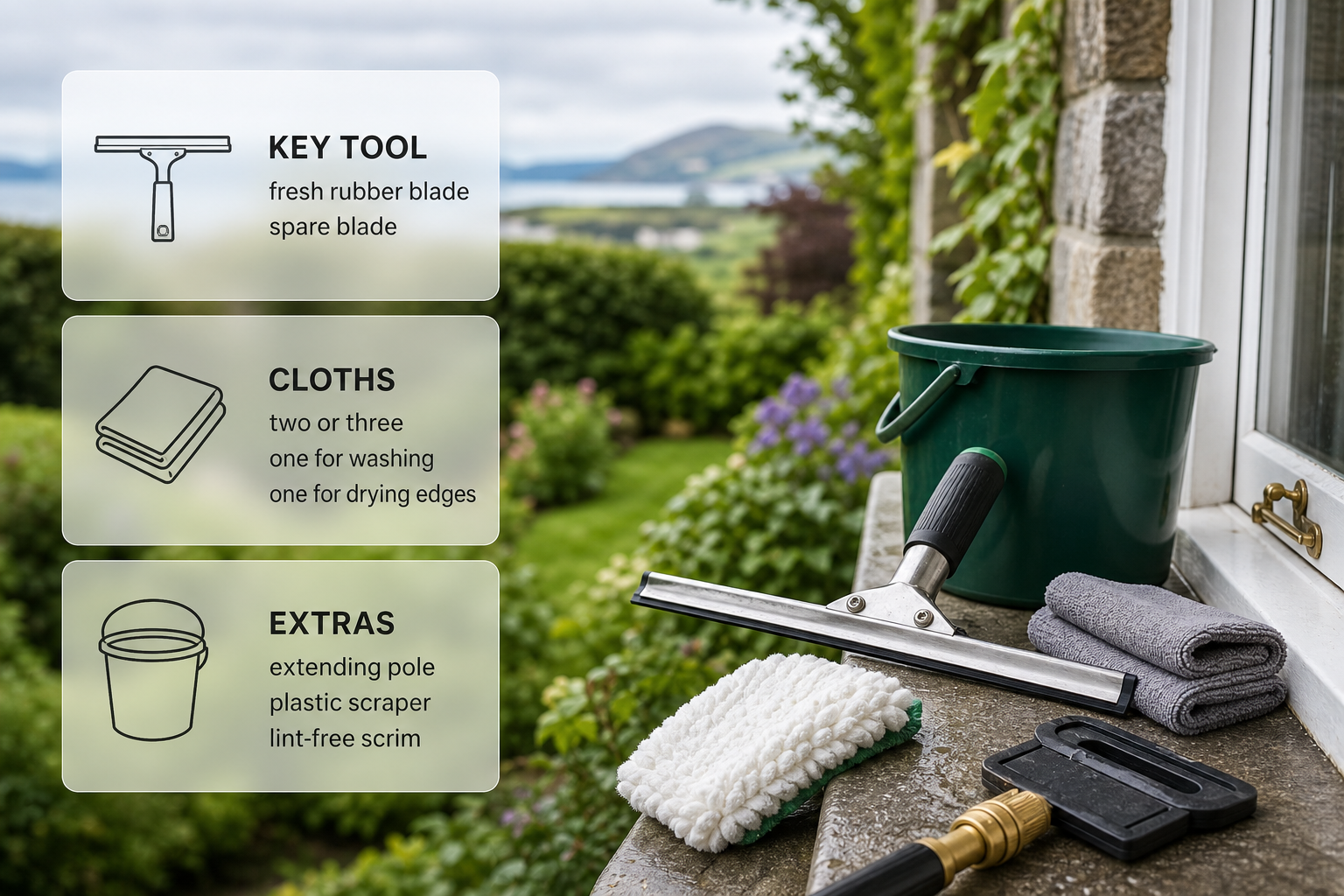
A squeegee with a fresh rubber blade is the single most useful item, and a spare blade in the drawer saves a job. Microfibre cloths earn their place if there are two or three of them: one for washing, one for drying edges, and one kept dry for frames. A lint-free scrim or glass cloth gives the same finish on the final buff. A bucket, an extending pole for ground-floor exterior glass, and a plastic scraper for paint spots and raised mineral deposits complete the set. Paper towels, kitchen roll and newspaper all leave lint or ink behind, abrasive pads and steel wool scratch glass, and any cloth that has held furniture polish will smear a greasy film over a pane that was previously clean.
A simple cleaning solution
Warm water with a couple of drops of washing-up liquid handles everyday dirt, and a slightly stronger mix — still only a few drops — suits kitchen glass carrying a greasy film. Diluted white vinegar helps with hard-water marks. Never mix vinegar or any other acid with bleach, keep ammonia-based cleaners away from tinted or film-coated glass, and keep vinegar off natural stone sills and bare metal frames, which it dulls. Rinse and dry the glass after any acidic wipe so no residue is left to dry on the surface.
Indoors and outdoors need different treatment
Indoor panes collect cooking film, fingerprints and condensation along the bottom rail, and the drips from a squeegee land on sills, so a folded cloth laid along the sill first saves a second clean-up. Outdoor glass carries rain film, pollen and, on the coast, wind-blown salt, which is why outside frames should be wiped before the outside glass rather than after. Ground-floor exterior panes can usually be finished from standing height with a squeegee and pole, while upper exterior glass needs the precautions set out further down.
How often windows need cleaning in Irish weather
Mild, damp weather and long spells of rain mean glass stays wet and dried rain spots build up, while sheltered inland homes hold a clean finish for far longer than exposed coastal ones where salt and sand land on the panes. Exposed houses need attention several times as often, and always after a storm. Pollen season in late spring and early summer is the other peak, because a green film settles quickly on outside glass and bakes on in any sunny spell. The practical test is simple: if the glass looks dull from inside on a bright day, it is due.
Frames, seals and edges
Grime lives on frames, and cleaning the glass first simply pushes it back on. Wipe frames and sills with soapy water and dry them thoroughly, run a dry cloth along the rubber seal, and clear the drainage slots at the bottom of the frame with an old soft brush so rainwater can escape instead of pooling. Never use the glass blade on uPVC or painted timber, and treat cracked or perished seals as a repair rather than a cleaning job. Windows are only one part of a spring clean, and the wider cleaning services category covers the rest of the house.
Hard water and mineral marks
Tap water in many parts of Ireland is hard, so droplets left to dry leave a ring of minerals that ordinary soap will not shift. Soak a cloth in diluted white vinegar, press it against the mark, leave it for a minute or two, then wipe, rinse and dry the area. A plastic scraper used at a shallow angle lifts raised deposits, whereas a metal blade or steel wool will scratch the glass and any coating on it. Prevention is easier than removal: squeegee rather than let water dry, and always dry the bottom edge where water pools.
Very dirty glass and post-build residue
Glass that has been through a building or renovation job should have the grit rinsed off first and will usually need the same mild solution applied more than once, because a stronger mix does not shift cement or plaster film any faster. Dried cement, plaster and paint overspray that have bonded to the surface need a specialist scraper or a professional, since force on coated glass causes permanent damage.
Upstairs windows and ladders
Height raises the risk, and most first-floor glass can be reached from the ground with an extending pole and a squeegee, which removes the ladder from the job altogether. A ladder is for someone who is confident on it, on firm and level ground, in calm weather, with another person nearby and three points of contact kept at all times, and the reader should confirm current safety guidance before starting — the Health and Safety Authority publishes guidance on working at height. Anything above a standard first floor, or over a hard surface, is better handed over.
Does purified water matter more than good technique?
For a household job, technique matters more. Pure or filtered water helps because it leaves no minerals behind when it dries, which is why professional cleaners who rinse and walk away rely on it, but a homeowner who squeegees properly and dries the edges will beat poor technique with perfect water every time. Anyone in a hard-water area who wants a belt-and-braces finish can make the final rinse with filtered or softened water.
Handing over awkward, high or heavily soiled windows
Some windows are simply not a safe DIY job: roof windows, glazing above a conservatory, tall gable ends, or panes carrying years of mineral staining. Typical prices are in how much window cleaning costs. Posting a job and listing on ShamFix is free and there is no commission, and a subscription is planned for the future. ShamFix does not check or certify tradespeople, and profiles are filled in by tradespeople themselves, so homeowners should check registrations themselves and read reviews before hiring. A job can be posted on ShamFix to see who responds.
FAQ
Why do streaks appear straight after squeegeeing?
A blade with a nick or a worn edge leaves a thin line of water behind on every stroke, and that line dries into a streak. Too much washing-up liquid has the same effect, because the leftover film dries cloudy rather than clear. Check the rubber edge by eye before starting, replace it when it feels rough, and use fewer drops of soap than feels right.
Can a microfibre cloth alone give a streak-free finish?
On lightly dusty indoor glass, a damp microfibre followed immediately by a dry one can work well, provided the second cloth is genuinely dry and the buffing is done before the water evaporates. Once there is a greasy kitchen film or outdoor grime, a cloth alone just spreads it around, and washing followed by a squeegee gives the better result. The dry-buff step is what removes the last of the haze.
Is vinegar safe on window seals and frames?
Diluted white vinegar is fine as a short contact treatment on glass, but neat vinegar left sitting on rubber seals dries them out over time and can dull natural stone or bare metal. Keep it on the pane, wipe the frame afterwards with plain soapy water, and rinse the glass so no acidic residue remains. Seals are best cleaned with the same mild solution used on the glass.
How can glass be kept clean for longer?
Dry the bottom edge of every pane, because that is where water collects and spots first. Clean frames, sills and drainage slots so the next shower of rain does not carry dirt down over the glass, and avoid cleaning outside panes on a windy day during pollen season. A quick buff of the outside glass after heavy weather also delays the next full clean.