
A windscreen chip in Cork can often be repaired in about 30 minutes for roughly €50 to €60 if it's smaller than a €2 coin, which can avoid a much more expensive full replacement. Damage near the edge or in the driver's direct line of sight follows stricter rules, so a chip that looks minor at first glance may still need a new windscreen.
That's the situation many Cork drivers find themselves in after hearing the sharp tap of a stone on the N25, the South Ring, or a rural back road on the way home. The first question isn't technical. It's practical. Is this a quick fix, or is it about to turn into a much bigger bill?
Local search results often don't help much. Most pages list phone numbers and replacement services, but they don't clearly explain when a chip can still be safely repaired under Irish rules, what makes one chip eligible and another a replacement, or how newer cars with cameras and sensors complicate the decision. Cork's damp, changeable weather also makes delay a bad gamble, because a chip that looks stable today can spread after a cold, wet spell.
Drivers who need broader roadside and on-the-go car help can also get a sense of what mobile vehicle services involve in this guide to mobile mechanics in Ireland and what to expect.
That Small Chip on Your Windscreen What to Do Next
A typical Cork windscreen problem starts the same way. A lorry passes, loose grit lifts, there's a sharp crack against the glass, and then a driver spends the next set of lights trying to work out whether that little mark is only cosmetic or the start of a full replacement job.
That uncertainty matters because windscreen damage rarely stays frozen in time. Cork roads add constant vibration through potholes, rough patches and uneven surfaces, while damp weather lets water and road film sit in the impact point. Then a cold morning, a blast of heat from the demister, or even strong sun after rain can add enough thermal stress to make the damage run.
A chip that is repairable today can become a replacement job after a cold, wet week of normal Cork driving.
The immediate job is simple. Check whether the damage is a chip or a crack, avoid sudden temperature changes on the glass, and get it assessed quickly. Rural roads, roadworks, freshly dressed surfaces, trucks on the main routes, winter grit and poor surfaces are all common causes of windscreen damage around Cork, so the issue isn't unusual. What matters is acting before a minor impact point spreads.
A useful way to think about Windscreen Repair Cork is this. The critical question isn't who has the nearest phone number. It's whether the glass still meets the repair rules, whether the repair will be safe in the driver's sightline, and whether a newer vehicle with driver-assistance cameras may need more than a simple resin fill.
Repair or Replace The Rules for Cork Drivers
Autoglass Ireland's repair guidance
Irish rules are clear once they're stated plainly. A chip is usually repairable only if it's no larger than a €2 coin, it sits more than 7cm from the edge of the windscreen, and if it falls within the driver's primary vision zone it must be no larger than 10mm. These limits are the standard applied across the Irish auto-glass trade.
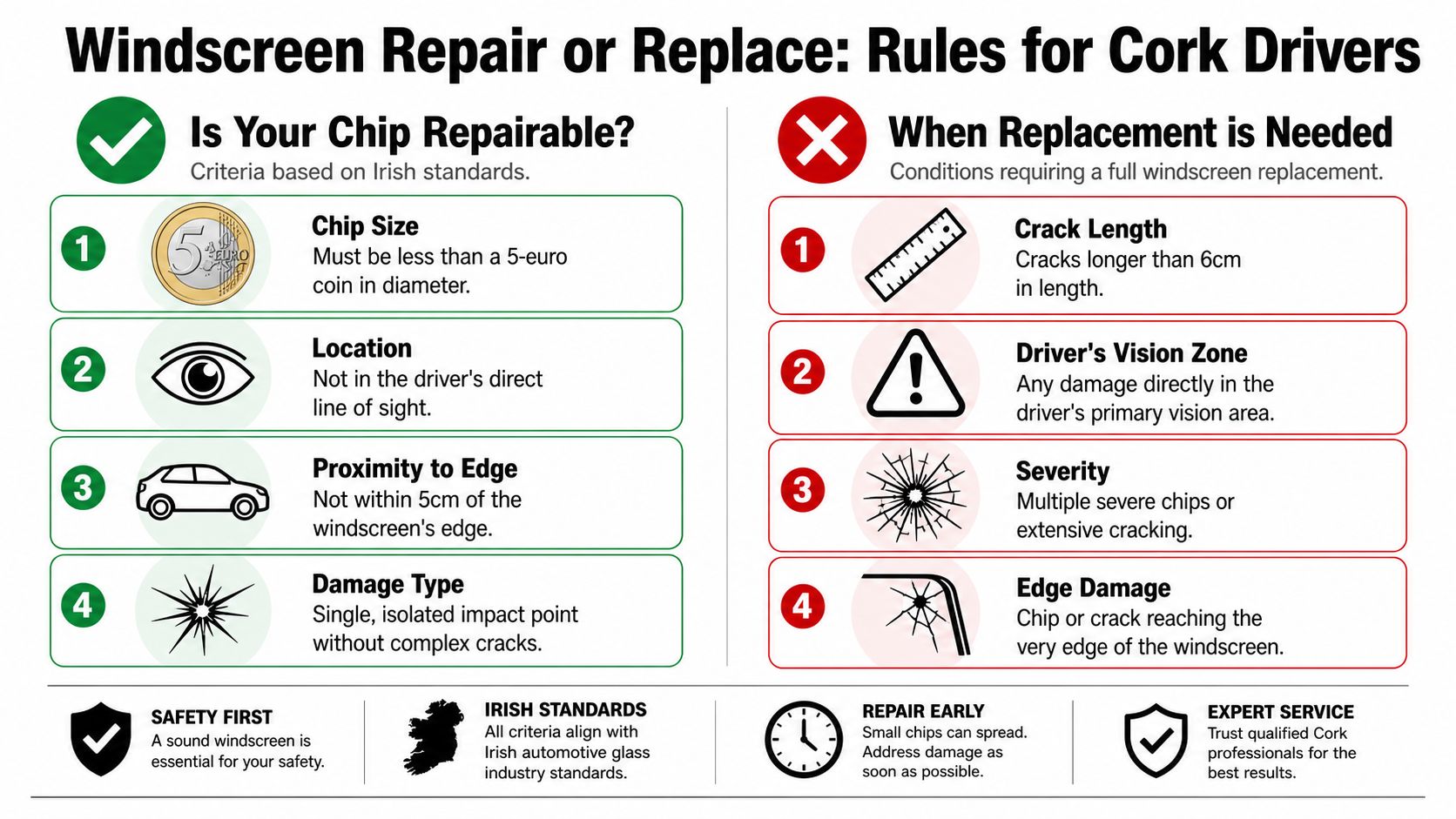
The three checks that matter
The first check is size. If the damage is small and contained, there's a realistic chance resin can restore strength and improve visibility. Once the impact is beyond the accepted size limit, the odds shift towards replacement.
The second check is location. The edge zone matters more than many drivers realise.
Practical rule: If a chip sits within 7cm of the windscreen edge, it shouldn't be repaired. That outer area carries higher stress, so the bond from cured resin isn't considered safe enough there.
The third check is type of damage. A stone chip is one thing. A true crack is another. Under the Irish guidance used by major providers, a crack means replacement rather than chip repair.
Why Cork weather makes delay expensive
Cork's weather is hard on damaged glass. Damp air and road spray contaminate the impact point. Cold mornings and warm heaters create sudden temperature differences through the laminated glass. Add ordinary road vibration and a small chip can spread across the screen far faster than most motorists expect.
That's why waiting to “see if it gets worse” often works against the driver. It often does get worse, and once it becomes a crack or moves outside the repair rules, the cheaper option is gone.
Modern vehicles add another layer. Many newer cars have ADAS, including lane-keep assistance and autonomous braking systems that rely on cameras mounted at the windscreen. Even when the visible damage looks modest, the glass may still require replacement rather than repair if the location or the vehicle system means the camera setup could be affected. Public materials from many local providers don't explain that point clearly, which leaves drivers surprised when a seemingly small chip turns into a replacement and recalibration conversation.
Windscreen Damage Assessment Repair vs Replacement
| Damage Characteristic | Repair Usually Possible | Replacement Likely Required |
|---|---|---|
| Small isolated chip | Yes, if it remains within Irish size and location rules | No, unless other risk factors apply |
| Damage near edge | Rarely | Yes |
| Damage in driver's primary vision zone | Only if very small | Often |
| Spreading crack | No | Yes |
| Multiple impact points | Sometimes, if each still qualifies | More likely if damage is extensive |
| Vehicle with camera-based ADAS near affected area | Sometimes | Often depends on system and glass requirements |
How a Windscreen Chip Is Repaired
A proper chip repair is a controlled resin process, not a quick cosmetic dab. When it's done correctly, the technician is trying to remove trapped air, fill the internal break pattern, and cure the resin so the glass regains strength and clearer optics.
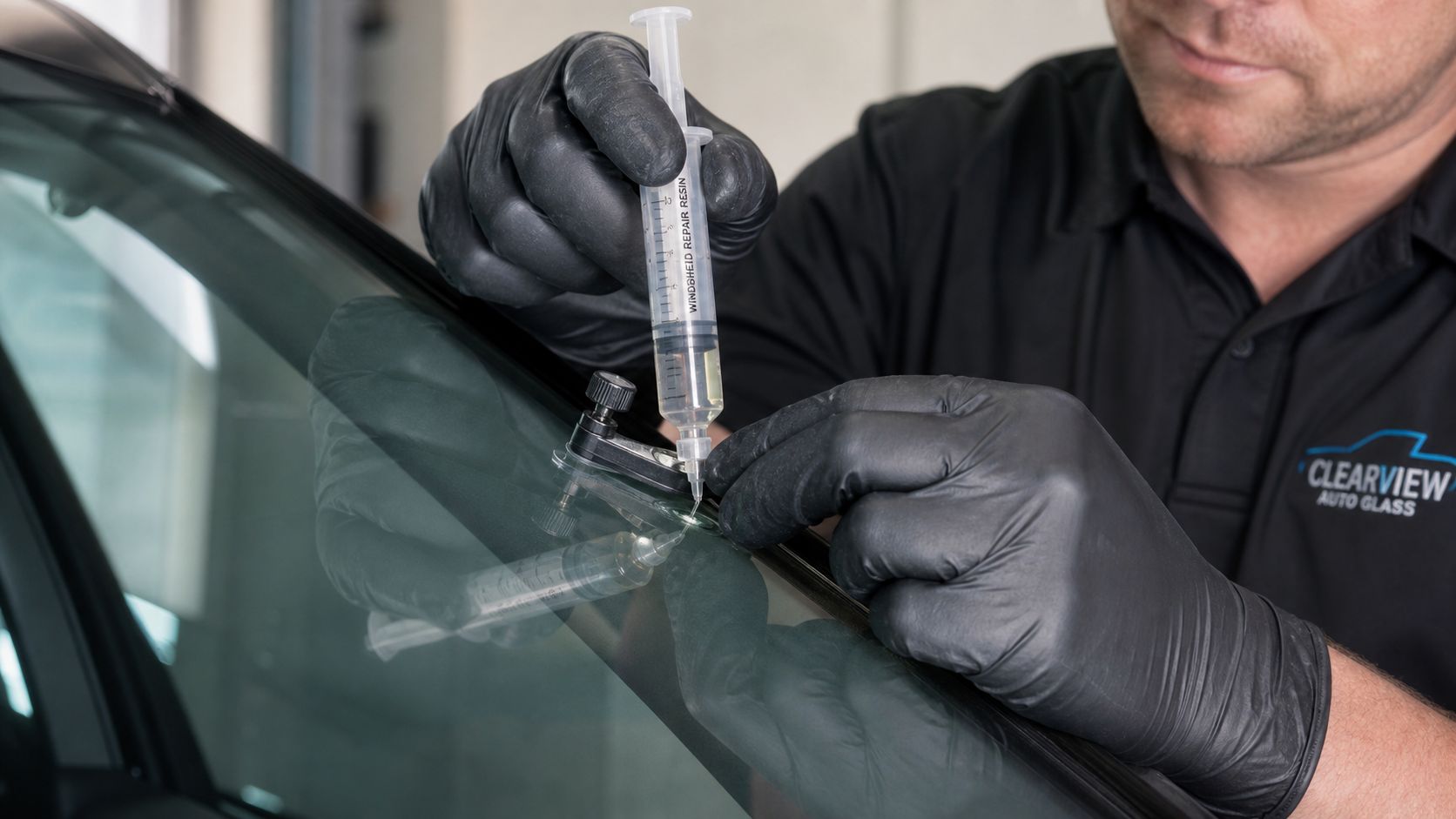
What the technician is actually doing
First, the damaged spot is cleaned and checked for moisture, grit and contamination. If dirt or water stays inside the chip, the resin can't bond cleanly and the finish will usually remain more visible.
Next comes the injector setup. The rubber tip on the resin tube has to form a complete vacuum seal against the glass. That seal creates the pressure difference needed to draw low-viscosity resin into the chip cavity. If the seal fails, air gets in and the repair can leave a visible star pattern with weaker structural results.
The resin isn't squirted in once and left there. Standard practice is to hold the resin under pressure for several minutes and then repeat the injection cycle so the crack network is fully saturated. That step matters because residual air pockets reduce the optical match between the glass and resin, which is why poor repairs often stay visibly cloudy or distorted.
Drivers looking for the service itself can compare local options under ShamFix's windscreen repair category.
What a proper repair should look like
After filling, the resin is cured with ultraviolet light, typically 5 to 10 minutes of direct UV from sunlight or a UV lamp, so the resin reaches its proper hardness and adhesion.
A successful repair doesn't make every chip disappear completely. That's not the right standard. The right standard is that the chip is stabilised, the risk of spreading is reduced, and the finished mark is far less intrusive than the original break.
The goal of repair is to stop movement in the glass and restore strength, not to make damage vanish without a trace.