
Roof repairs in Ireland usually cost €500 to €1,100 for replacing a few slipped slates or tiles and €700 to €2,000 for finding and fixing a leak, as an aggregate Irish market estimate including VAT and typical access. Ridge repairs, lead flashing and valleys usually cost €600 to €2,500, flat roof repairs €800 to €3,500, and larger storm damage €900 to €4,000 or more. A small repair that a roofer can reach from a roof ladder can cost as little as €150 to €350, but once scaffolding or a cherry picker is needed, access can cost as much as the repair itself. Homeowners who need a roof repaired can post the job under roofing services and compare quotes from local roofers.
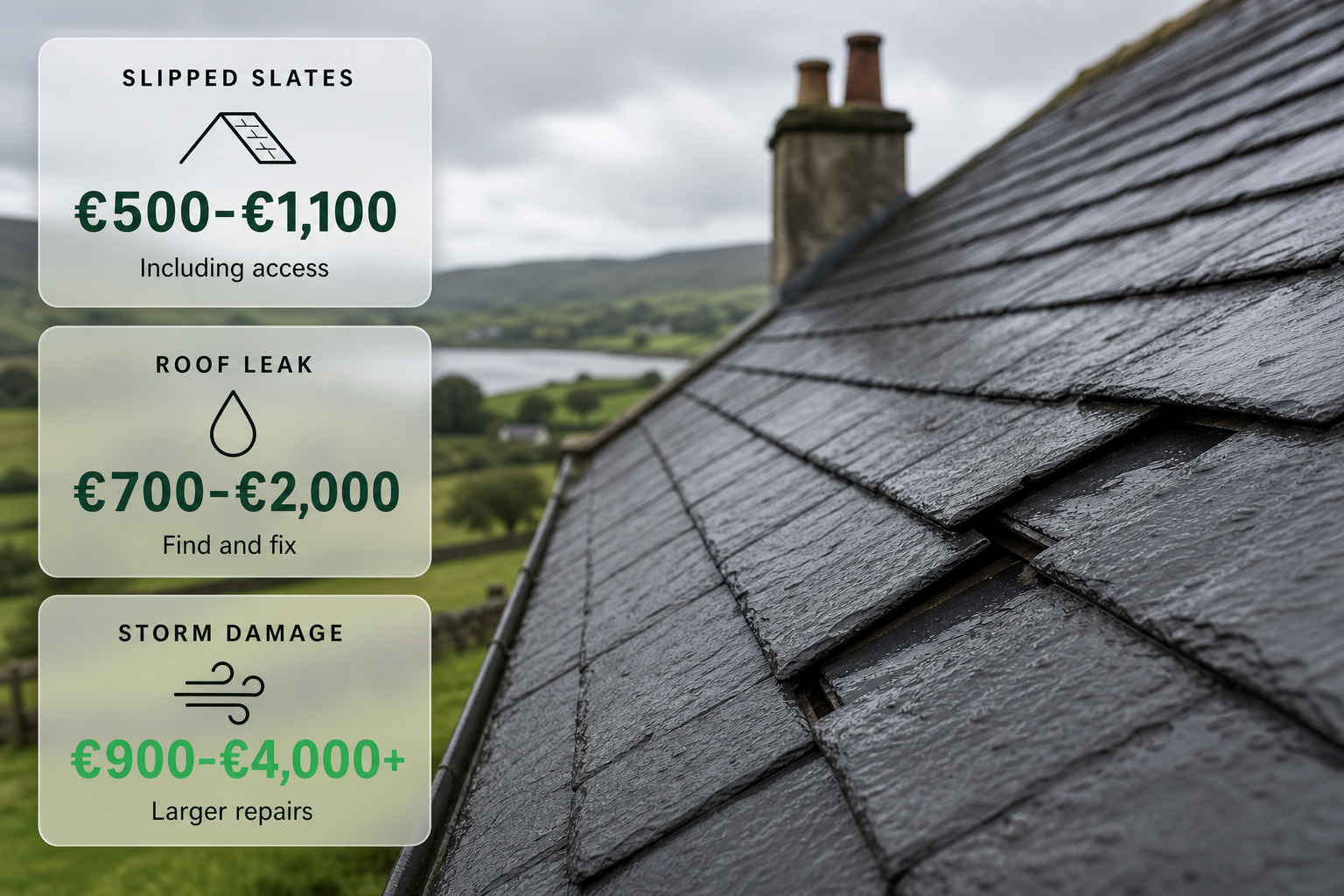
Roof repair prices at a glance
The figures below are an aggregate Irish market estimate, VAT included, for a typical house. Unless stated otherwise, they include the usual access for the job.
| Repair | Typical price |
|---|---|
| Roof inspection and report | €100–€250 |
| Emergency make-safe or tarpaulin after a storm | €200–€500 |
| One or two slates or tiles, reachable from a roof ladder | €150–€350 |
| Replacing a few slipped or broken slates or tiles | €500–€1,100 |
| Finding and fixing a leak | €700–€2,000 |
| Repointing or replacing the ridge, or fitting a dry ridge system | €600–€2,000 |
| Replacing lead flashing around a chimney | €800–€2,500 |
| Renewing a lead or GRP valley | €800–€2,500 |
| Flat roof patch repair | €300–€800 |
| Flat roof repair, larger area | €800–€3,500 |
| Storm damage repair | €900–€4,000+ |
| Cherry picker, per day, if priced separately | €250–€500 |
| Scaffolding for a two-storey house, if priced separately | €600–€1,500 |
Some roofers price the repair and the access separately, others give one figure. When comparing quotes, it matters which way they are written. For example, the cost of chimney repair for new lead flashing is about €400 to €1,200 for the work alone, which becomes €800 to €2,500 once scaffolding or a cherry picker is added.
A worked example: after a winter storm, a bungalow in Mayo has six slipped slates, a loose section of ridge and a damp patch on a bedroom ceiling. A roofer puts a tarpaulin over the area the same day for €250 to €400. The following week, replacing the slates costs €500 to €1,100 and rebedding the loose ridge section €300 to €700, using a cherry picker already included in the price. The total comes to roughly €1,050 to €2,200. If the damage was caused by the storm and the home is insured, the claim would normally be paid less the policy excess.
What affects the price
- Access. Height, roof pitch, and whether a cherry picker can reach the spot or scaffolding is needed.
- Roof covering. Natural slate, concrete tile, clay tile and flat roofs all need different materials and skills. Matching old slates or tiles can take time.
- Hidden damage. Rotten battens, perished felt or rusted nails are only found once slates are lifted.
- Urgency. Emergency call-outs after named storms cost more, and roofers are often booked out for weeks.
- Location. Dublin and the larger cities are usually dearer, and remote addresses can carry a travel charge.
Common roof repairs explained
Slipped or broken slates and tiles. Wind, frost and rusted nails loosen slates. A few can be replaced individually, but if slates keep slipping across the roof, the nails may be failing everywhere.
Leaks. Water often travels along rafters or felt before showing on a ceiling, so the stain is rarely right under the hole. Finding the source can take longer than fixing it.
Ridge and hips. Mortar-bedded ridge tiles crack and loosen over time. A dry ridge system uses mechanical fixings instead of mortar and needs less maintenance.
Flashing and valleys. Lead or GRP sheets seal the joints around chimneys, walls, rooflights and where two roof slopes meet. When they split or lift, water gets straight into the roof.
Flat roofs. Felt and older flat roofs blister, crack and pond water. Small areas can be patched; larger failures usually mean re-covering the roof.
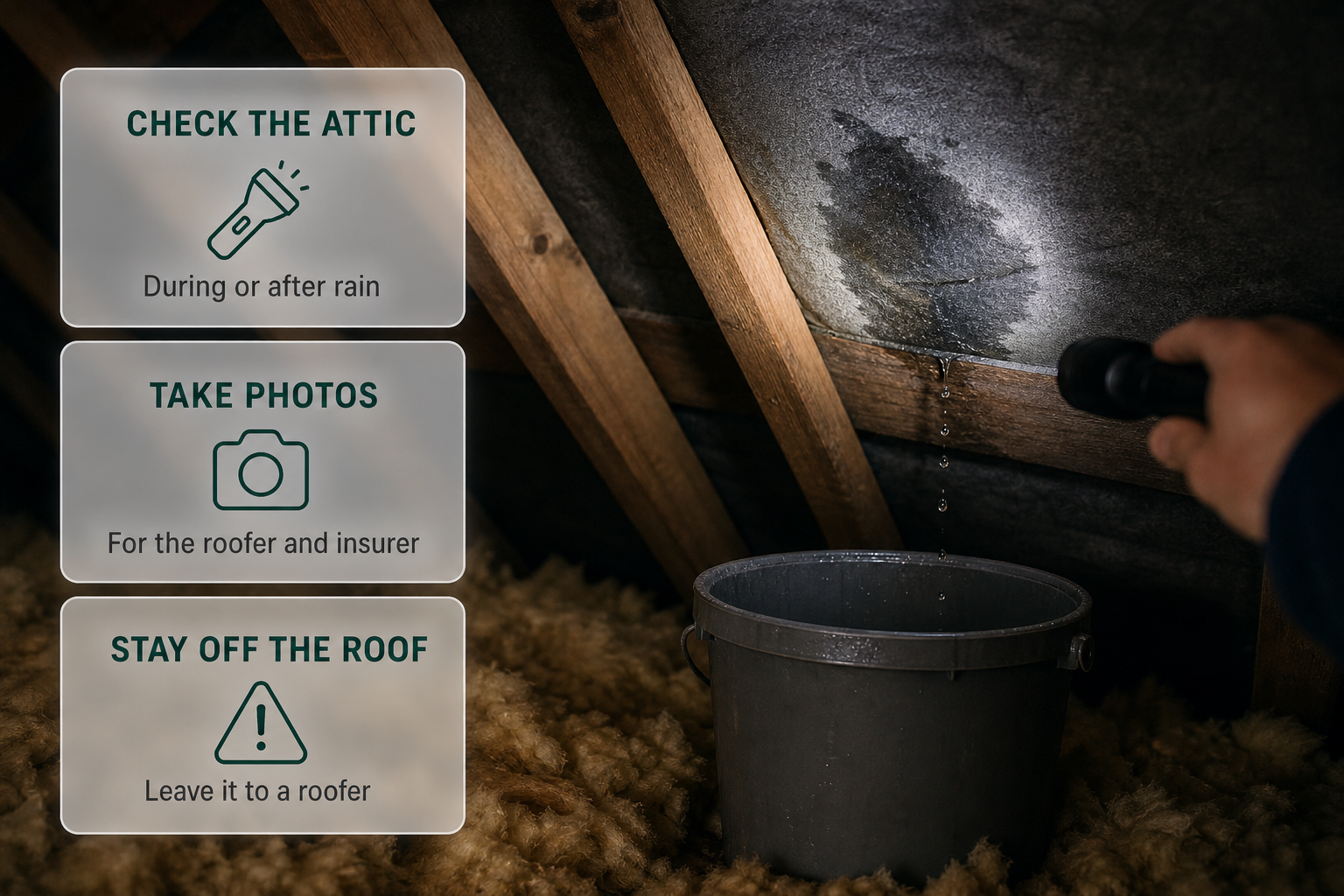
How to find a roof leak
From inside the house, a householder can safely:
- check the attic during or just after rain with a torch, looking for drips, wet timber or daylight through the roof;
- look for stains around the chimney breast, rooflights and soil pipes;
- put a bucket under any drip and move stored items away from wet areas;
- take photos of the damage and note when it started.
Climbing onto the roof to look is not recommended. Wet slates, moss and wind make roofs dangerous even for experienced people.
Repair or replace?
Repairs are usually the right answer when the damage is in one area and the rest of the roof is sound. Replacement becomes better value when repairs keep coming back in different places, when slates slip one after another because the nails have rusted, when the old felt under the slates has perished, or when the roof sags between rafters. The cost of a new roof explains replacement prices and when they make sense.