
Chimney repairs in Ireland range from €200 to €450 for replacing a single chimney pot to €3,000 to €7,000 or more for rebuilding a whole stack, as an aggregate Irish market estimate including VAT. The most common jobs after winter storms are new lead flashing around the base of the chimney at €400 to €1,200, repointing the stack at €500 to €1,500 and repairing the cement flaunching around the pots at €300 to €800. Access is often the biggest extra: scaffolding or a cherry picker usually adds €250 to €1,200, which is why it pays to have several chimney and roof jobs done on the same visit. Homeowners who need a chimney checked or repaired can post the job under roofing services and compare quotes from local roofers.
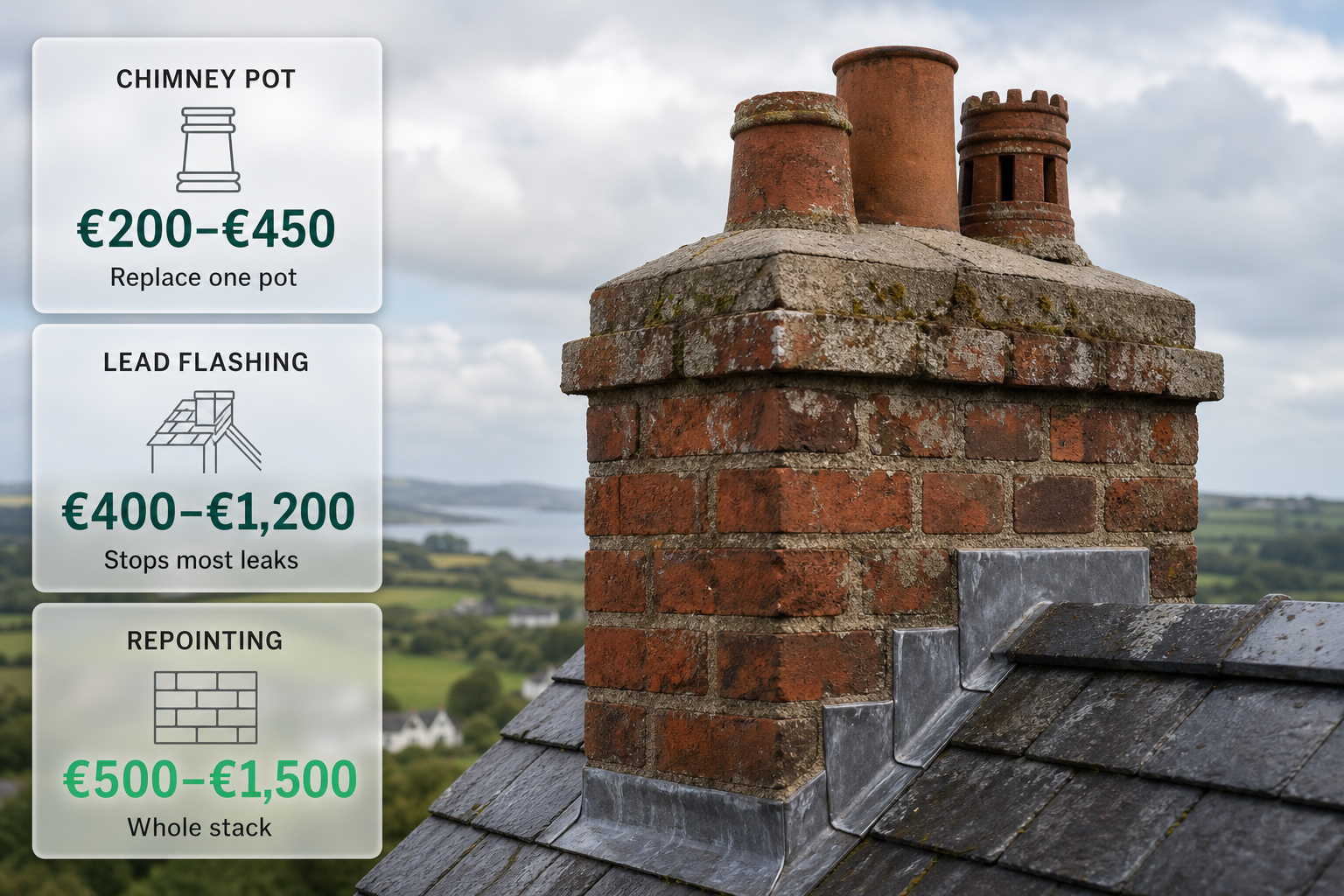
Chimney repair prices at a glance
The figures below are an aggregate Irish market estimate, VAT included, for a typical chimney on a two-storey house.
| Job | Typical price |
|---|---|
| Chimney inspection, from a ladder or drone | €100–€200 |
| Emergency storm call-out to make safe | €150–€300 |
| Replacing one chimney pot | €200–€450 |
| Fitting a cowl or bird guard | €80–€200 |
| Repairing the flaunching (cement top) | €300–€800 |
| Repointing the chimney stack | €500–€1,500 |
| New lead flashing around the chimney | €400–€1,200 |
| Fitting a flexible flue liner | €1,000–€2,500 |
| Rebuilding the top of the stack | €1,500–€4,000 |
| Rebuilding the whole stack above the roof | €3,000–€7,000+ |
| Removing a redundant stack and making good the roof | €1,500–€4,000 |
| Scaffolding or cherry picker, if not included | €250–€1,200 |
Prices are higher for tall stacks, steep or slated roofs, terraced houses where scaffolding has to go over a neighbour's roof, and anything listed as a protected structure, where like-for-like materials are needed.
A worked example: during a winter storm, a chimney pot on a semi-detached house in Galway is loosened and water starts to stain the bedroom ceiling under the stack. A roofer finds cracked flaunching and lead flashing that has lifted. Access with a cherry picker costs about €300 to €500, re-bedding the pot and new flaunching €300 to €600, and new lead flashing €400 to €900. The total comes to roughly €1,000 to €2,000. If the stack also needs repointing, doing it while the access is already there adds €500 to €1,000 rather than paying for access twice.
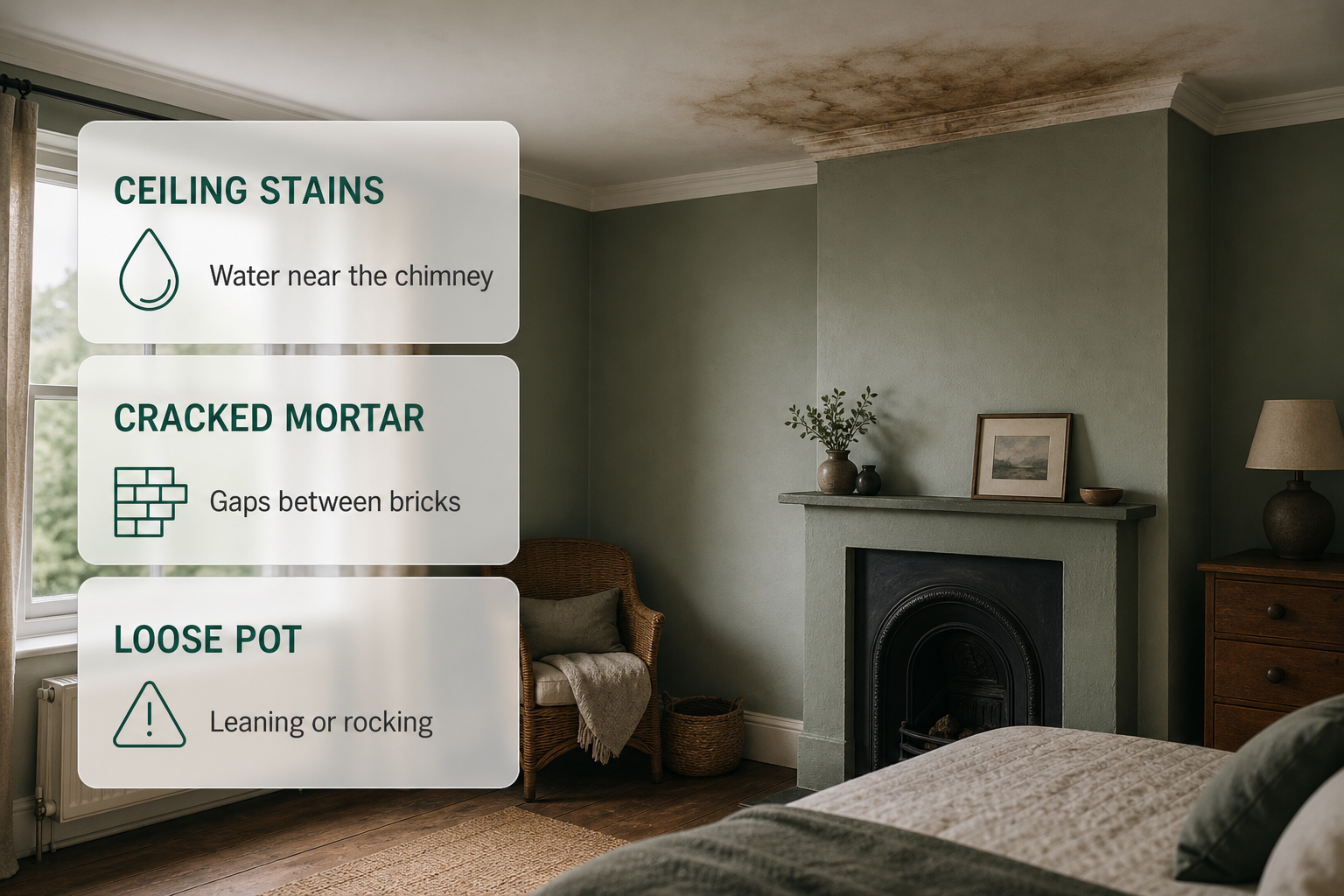
Signs a chimney needs repair
- Water stains on ceilings or walls near the chimney breast, especially after heavy rain.
- Cracked or missing mortar between the bricks or stones of the stack.
- A chimney pot that leans, rocks in the wind or has fallen.
- Cracked flaunching, the cement layer the pots are set into.
- Lead flashing that has lifted, split or slipped away from the stack.
- A stack that leans or bulges, visible from the street.
- Damp patches, crumbling plaster or a musty smell around a fireplace.
- Pieces of brick, mortar or pot found in the gutter or on the ground.
A chimney that is leaning or dropping debris is a safety risk to people below and should be checked straight away.
Common chimney repairs explained
Flashing. Lead flashing seals the joint between the chimney and the roof. When it lifts or cracks, rain runs down the inside of the stack and into the house. Replacing it is one of the most common causes of a chimney repair bill.
Flaunching. The sloped cement around the base of the pots sheds rain off the top of the stack. Once it cracks, water gets into the brickwork and freezes, which loosens the pots.
Repointing. Mortar joints wear out over decades of wind and rain. Raking out and repointing the stack keeps water out and stops bricks from coming loose.
Pots, cowls and bird guards. A cowl or bird guard keeps out rain, birds and nesting material. Disused chimneys can be capped with a ventilated cap, which keeps rain out but still lets the flue breathe and avoids damp.
Liners. An old clay or brick flue can crack inside. A flexible stainless steel liner is often fitted when a stove is installed or when smoke leaks into rooms.
Rebuilding. A stack that is badly cracked, leaning or crumbling may need to be taken down to roof level and rebuilt.
Safety: chimneys and carbon monoxide
A damaged or blocked chimney is not only a source of leaks. According to carbonmonoxide.ie, the awareness site run by Gas Networks Ireland, chimneys should be swept once a year and kept clear at all times, because they can become blocked over time, including by nesting birds. It also advises fitting a carbon monoxide alarm that complies with the European Standard EN 50291 in every room with a fuel-burning appliance. A basic alarm costs about €20 to €30.
Any chimney that serves a fire or stove should be swept and checked before the heating season, and again after repair work on the flue. The cost of chimney cleaning is small compared with the cost of a blocked or damaged flue.