An Irish household can do everything “right” and still see a larger electricity bill if it focuses only on switching appliances off. The more useful question is often when electricity is being used, as well as how much. A shower, immersion heater, tumble dryer or oven used during an expensive peak period can affect the bill differently from the same load scheduled for a cheaper period.
Electricity use also reflects the home itself. Poor insulation, draughts and badly timed heating can make electric systems work harder, while a smart meter can show which appliances are driving consumption. The practical approach is to start with no-cost habits, then improve controls, examine the tariff, and only afterwards consider larger fabric upgrades.
Why Saving Electricity Matters More in Irish Homes Today
A typical evening in an Irish home can include several high-demand activities at once. One person may be showering, another may be cooking, the tumble dryer may be running and an immersion heater may still be following an all-day schedule. Each decision affects the household bill, but together those decisions also form part of Ireland's wider electricity demand.
SEAI reports that electricity represented 22.4% of Ireland's energy consumption in 2023, while total electricity demand increased by 1.24 TWh that year. The residential sector accounted for 25.6% of electricity demand, compared with 20.1% for data centres, according to SEAI's Energy in Ireland data. Household action isn't the whole solution, but it is a meaningful part of a system-wide challenge.

Why timing matters as well as consumption
SEAI recorded that 44.3% of gross electricity supply came from natural gas and 33.7% came from wind in 2023. Reducing unnecessary demand can lower exposure to gas-driven generation and help the grid use renewable electricity more effectively.
That doesn't mean every household needs to monitor the grid constantly. It means a home can make better choices by identifying flexible loads, avoiding unnecessary standby use and using heating controls properly. A dishwasher or washing machine can often run at a more suitable time, while lighting and devices that aren't needed can be switched off.
The household pattern has changed over time. SEAI says residential electricity consumption peaked in 2008, declined between 2008 and 2014, and then rose each year until reaching a new peak in 2022. The practical lesson is straightforward: how to save electricity at home in Ireland starts with understanding the home's actual pattern, not copying a generic list of appliance tips.
Quick Behaviour Changes That Cut kWh Without Spending
The easiest starting point is a walk through the house after the evening routine has finished. Look for devices that remain powered despite not being needed, lights left on in empty rooms and appliances that have become part of an automatic all-day habit.
SEAI recommends switching off appliances at night and when nobody is at home. It also advises switching off a computer if it won't be used for more than an hour, turning off lights when leaving a room and replacing failed bulbs with energy-efficient LED lights, as set out in its Irish household energy-saving tips.
Start at the television and desk
A switched power strip behind the television unit can group the television, soundbar, games console and streaming equipment. The switch should remain accessible, so the devices can be turned off together rather than left in standby.
The same arrangement works at a desk. A monitor, speakers, printer and chargers can share a power strip, while a laptop that won't be used for a while can be shut down rather than left running. Chargers don't need to remain plugged in once the device is full.
A useful room-by-room check looks like this:
Living room: Turn off entertainment equipment at the wall when it isn't needed.
Kitchen: Avoid leaving small appliances powered when they have no active function.
Bedrooms: Switch off lamps and chargers before sleep.
Home office: Shut down computers during longer breaks and use one switched strip for accessories.
Hallways and bathrooms: Turn lights off as soon as the space is empty.
Break the all-day immersion habit
An immersion heater can become an invisible background load when its schedule is never reviewed. A timer can limit heating to the periods when hot water is needed, but the control should be set around the household's routine rather than left to run continuously.
This is also a good point to check the washing machine, dishwasher and tumble dryer. The aim isn't to avoid using them. It's to stop them running automatically when the load could wait, particularly if the home later moves to a time-of-use tariff.
Practical rule: Remove waste first. A device that's switched off doesn't need a more complicated control system.
Heating and Hot Water Controls That Lower Electricity Use
Heating controls determine how long equipment runs and how much comfort the home receives from each unit of energy. Small changes can prevent a living area from being overheated while bedrooms, hallways and unused rooms receive more heat than necessary.
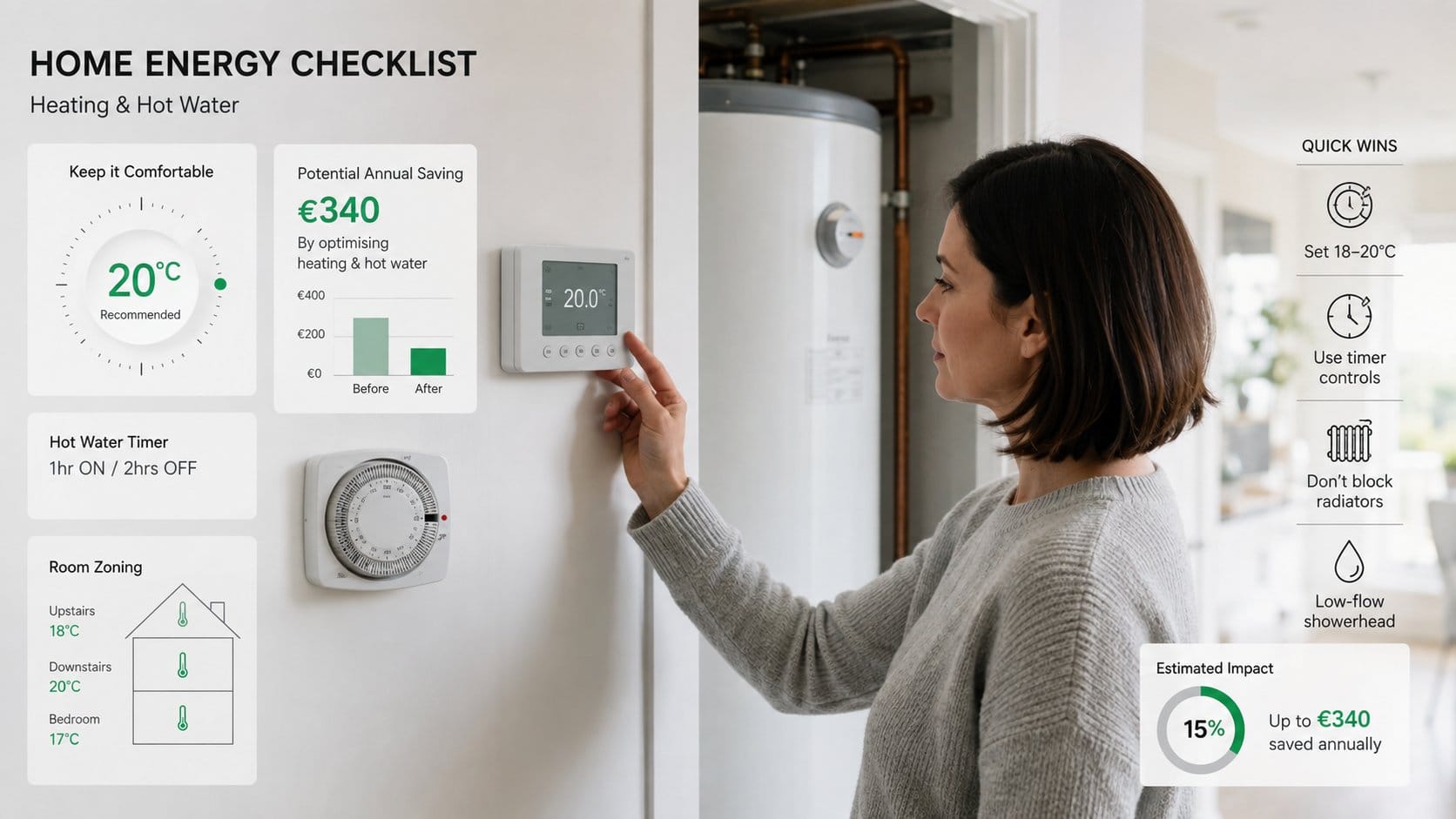
SEAI recommends a thermostat setting of 20°C for living areas, with hallways and bedrooms ideally between 15°C and 18°C. It also recommends setting the hot-water cylinder thermostat to no higher than 60°C, and turning heating on about 30 minutes before it's needed and off at least 30 minutes before it's no longer needed, according to SEAI's smart-living guidance.
Set heating for occupied periods
A timer should reflect when people are in the home, rather than keeping heating active from morning until bedtime. Separate room controls can prevent a hallway or spare bedroom from receiving the same heat as the main living space.
The correct setting depends on the system. A homeowner with an unfamiliar programmer, cylinder thermostat or zoning arrangement may benefit from advice from a qualified plumber. Guidance on choosing a suitable professional is available in this guide to finding a good plumber in Ireland.
Treat the immersion as a scheduled load
The immersion heater deserves particular attention because it can heat water long before anyone needs it. A basic timer or suitable smart control can create one or two short heating windows that match showers, washing and other hot-water use.
The control should be installed safely and used within the limits of the system. A smart plug isn't automatically suitable for every high-load appliance, so the manufacturer's instructions and electrical safety requirements matter. Where wiring or fixed electrical work is involved, a properly qualified electrician should handle the work.
The same principle applies to showers. A shower timer can make hot-water use more deliberate, while a cylinder thermostat should be checked rather than adjusted casually. Lowering settings below safe operating guidance isn't a sensible saving measure.
Using Your Smart Meter and Tariff to Save at the Right Time
A smart meter becomes useful when it changes a decision. Instead of looking only at total consumption, a household can examine which loads are flexible and move them away from expensive periods where the tariff makes that worthwhile.
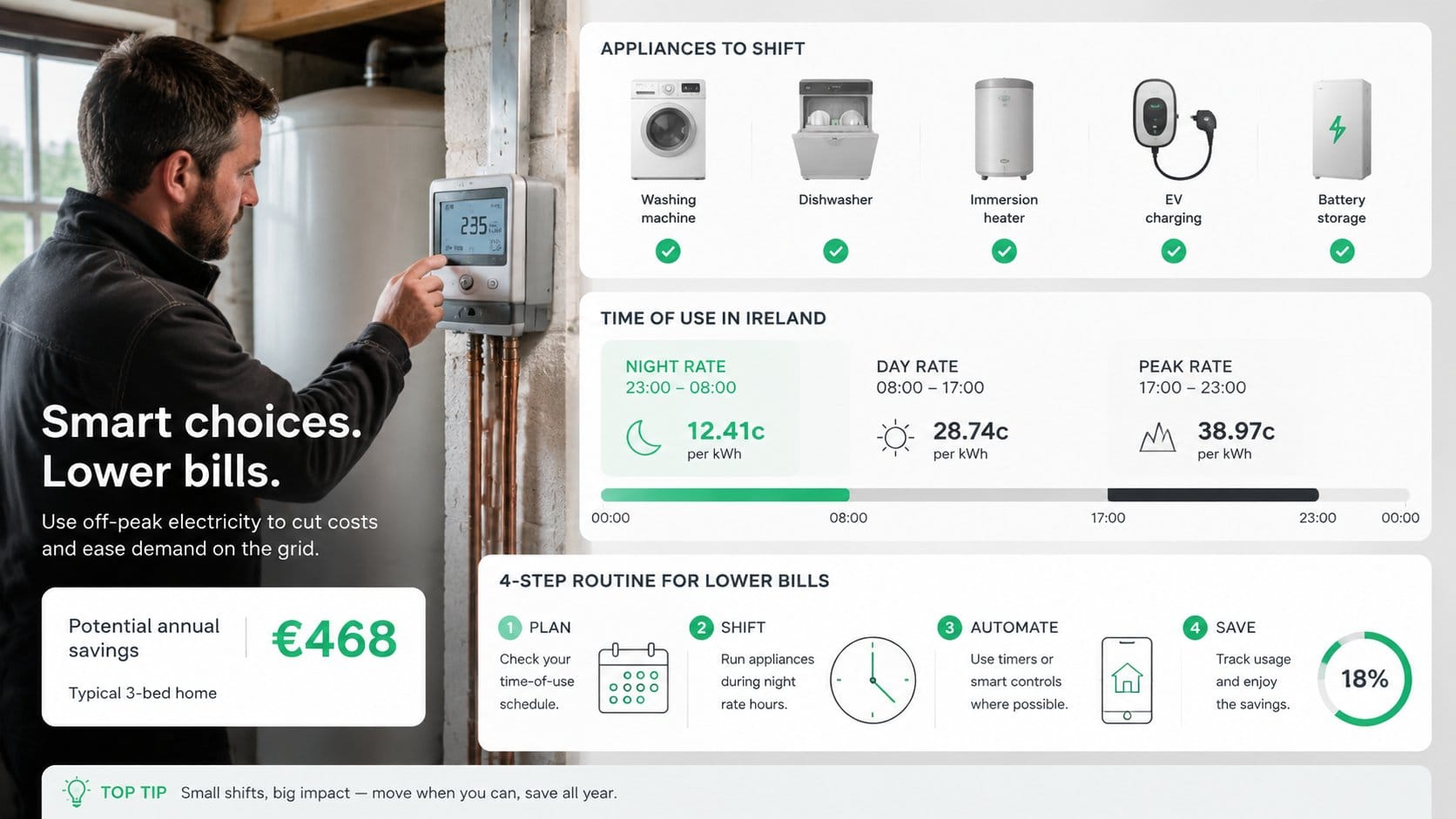
SEAI advises moving high-energy loads away from peak hours, typically 5pm to 7pm, with particular attention to showers, hobs, ovens and tumble dryers. A home can apply the same reasoning to dishwashers, washing machines and electric-vehicle charging, provided the appliance and tariff support the schedule, and households on a night-rate tariff can often make better use of the 11pm to 8am window where that suits the appliance and routine, according to SEAI's smart-living guidance.
Build a simple load-shifting routine
Start by identifying the largest loads that don't need to run immediately. A washing machine can often be delayed, a dishwasher can run later and EV charging can be scheduled for a suitable off-peak window. Showers and cooking are less flexible, but some households can still avoid concentrating every high-use activity in the same period.
A practical sequence is:
Check the tariff: Confirm the supplier's peak, day, night or dynamic periods rather than relying on a generic timetable.
List flexible loads: Include laundry, dishwashing, drying, immersion heating and EV charging.
Schedule the largest loads: Moving one substantial load may matter more than changing several small habits.
Check the result: Compare smart-meter readings or the supplier's app over comparable billing periods.
Tariff choice matters because Irish prices can vary considerably between plans. A 2026 price index lists average electricity at 36.59c/kWh, while the cheapest 10% of tariffs are listed at 13.44c/kWh and the most expensive 10% at 50.51c/kWh, as shown in Selectra Ireland's energy price index. These figures describe tariff differences, not a guaranteed saving for every household, and standing charges, discounts and conditions must also be checked.
The rate alone isn't enough. A cheaper night period only helps if the household can move meaningful consumption into it without creating inconvenience or safety problems.
Timing beats guesswork: A smart meter shows the pattern. The tariff tells the household whether changing that pattern is financially worthwhile.
Insulation Draught Proofing and When a Home Energy Assessment Pays Off
A draughty home can feel cold even when the heating is running. That often leads occupants to extend heating periods, increase settings or rely on portable electric heaters, which can raise electricity use without solving the underlying comfort problem.
Draught-proofing around doors and windows is a sensible first check. Look for obvious gaps around frames, letterboxes and doors, but don't block designed ventilation openings. A home needs adequate ventilation, particularly in rooms where moisture is produced.
Match the improvement to the cause
Draught-proofing deals with uncontrolled air movement. Insulation deals with heat passing through the building fabric. Heating controls deal with the timing and temperature of energy use. These measures interact, so a single upgrade may not address the main source of waste.
A home's BER and construction type can help put consumption into context. CSO data for 2024 recorded median metered residential electricity consumption of 3,246 kWh, compared with 3,174 kWh in 2023, an increase of 2%, as reported in CSO metered electricity consumption data. The same CSO analysis found that A/B-rated homes using electricity for main space heating averaged 39 kWh per square metre, compared with 68 kWh per square metre for D/E-rated homes.
Those figures aren't a target for every property. A detached house, apartment, older cottage and recently upgraded home have different shapes, systems and occupancy patterns. They do show why comparing a home only with a national average can lead to poor decisions.
Use an assessment before major spending
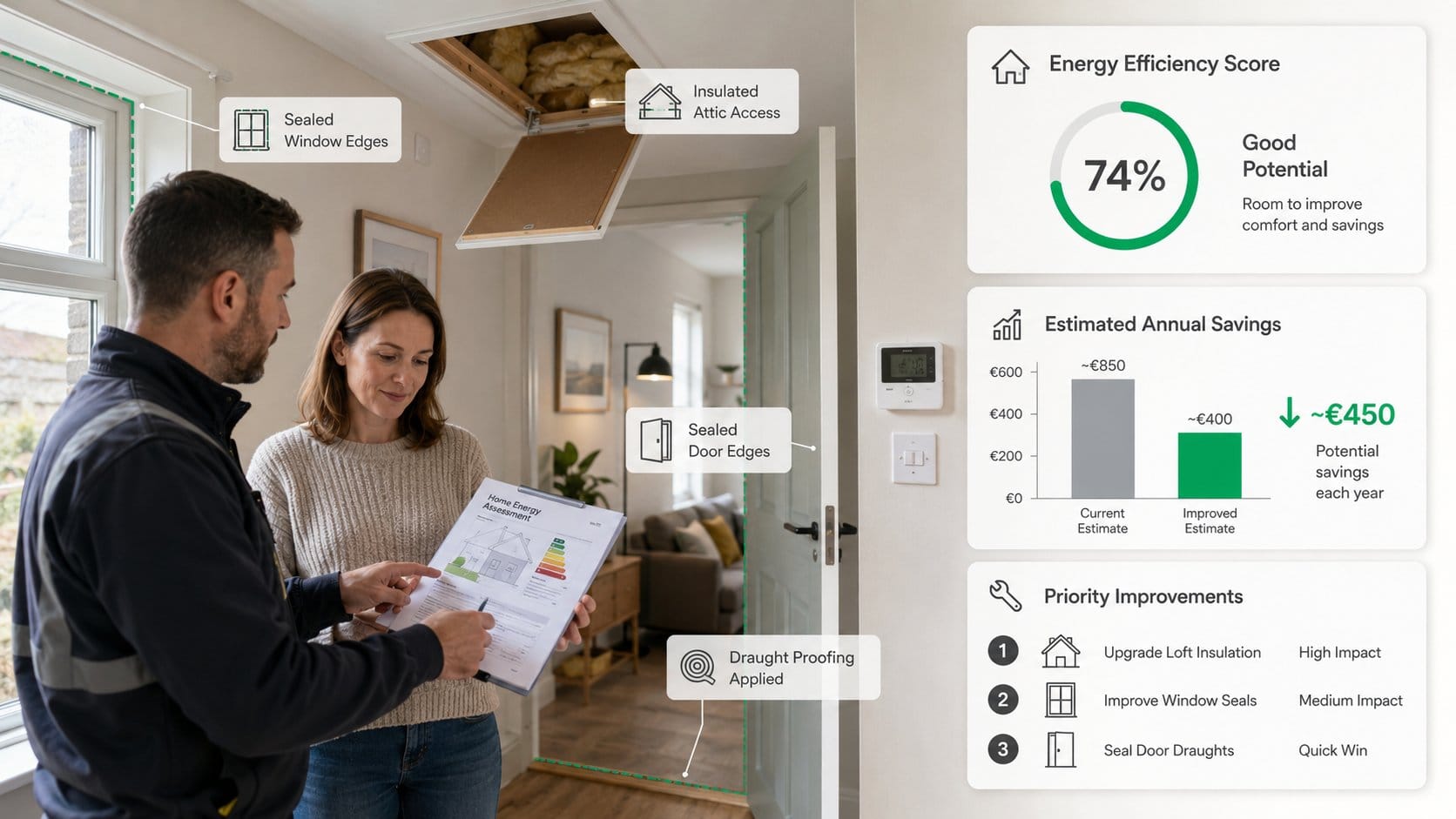
SEAI's Home Energy Assessment provides a BER assessment, a full technical report and a heat-pump suitability analysis. SEAI says the assessment grant is €350 against a typical assessment fee of €600, reducing the effective upfront cost to €250, as explained in its Home Energy Assessment guidance.
The report is designed to identify the upgrades needed to reach B2 or better and rank measures by impact. It also considers building fabric, comfort and estimated bill reduction, which helps prevent the common mistake of installing one measure without checking how it affects the rest of the home.
A sensible decision rule is:
Choose draught checks first when there are obvious gaps, rattling doors or cold air entering around frames.
Consider insulation work when the BER, survey or visible construction points to heat loss through the attic, walls or floors.
Commission an assessment before larger retrofit spending, a heating-system change or a heat-pump decision.
The lowest quote may not be the lowest whole-home cost if it excludes preparation, making good or related fabric work. A written scope should state exactly what the homeowner is paying for.
Your Prioritised Plan to Reduce Electricity Bills This Year
The most reliable plan starts with actions that cost nothing and produces evidence before money is spent. A household should first observe its consumption, then remove waste, then decide whether controls, tariff changes or fabric improvements offer the clearest next step.
A practical order of work
First, remove unnecessary use. Switch off devices at night, use power strips for groups of electronics, turn off lights in empty rooms and stop computers running during long periods of inactivity.
Next, set the controls. Review heating timers, room temperatures, the hot-water thermostat, the fridge setting and the immersion schedule. The objective is not to use less heat. It's to provide heat and hot water at the times they're needed.
Then, shift flexible loads. Use smart-meter information to identify whether showers, cooking, drying, laundry, dishwashing or EV charging are concentrated during expensive periods. Move the largest practical loads first and check the supplier's app afterwards.
Finally, address the building. Draught-proofing can help with obvious gaps, while insulation and larger heating decisions deserve a whole-home view. A BER-linked assessment is more useful than choosing upgrades based only on a neighbour's house or a generic appliance list.
Electrification also needs careful judgement. An electric device can use a noticeable amount of electricity while still forming part of a better long-term home-energy strategy than continued fossil-fuel heating. The right choice depends on the property, controls, fabric, tariff and heating system, not on the appliance's electricity use in isolation.
Irish homeowners should check that any advice, grant and tariff information applies to the Republic of Ireland before acting.
A local provider can help with a specific control, electrical job, plumbing issue or retrofit task. ShamFix is an Ireland-only marketplace connecting homeowners with independent local tradespeople, with reputation built through two-sided customer and provider reviews rather than platform verification.
ShamFix connects homeowners with local tradespeople across the Republic of Ireland for home-energy-related work, including plumbing, electrical and retrofit services. Visit ShamFix to describe the job and explore available local providers for the next practical step.