A fresh pet accident is a blotting job, not a scrubbing job: press absorbent cloths onto the patch straight away, lift what remains with a mild solution, treat the smell and dry the area fully. A dried or set-in stain needs slow rehydration in small sections rather than a flood of water. Where a mark has been heat-set, has sat for weeks, or the smell returns after several days of correct treatment, household methods rarely finish the job, and arranging local carpet and upholstery cleaning is the more realistic route.
Blot, lift, deodorise and dry: a fresh accident
Gather the kit before starting: disposable gloves, eye protection if anything will be sprayed, a dust mask when sprinkling powder, plain white absorbent cloths or thick paper towels, a bowl of cool water, mild unperfumed liquid detergent, a plastic scraper or the back of a spoon, a bin bag for used cloths, and a fan. Keep the animal out of the room and work in good light, wearing the gloves throughout.
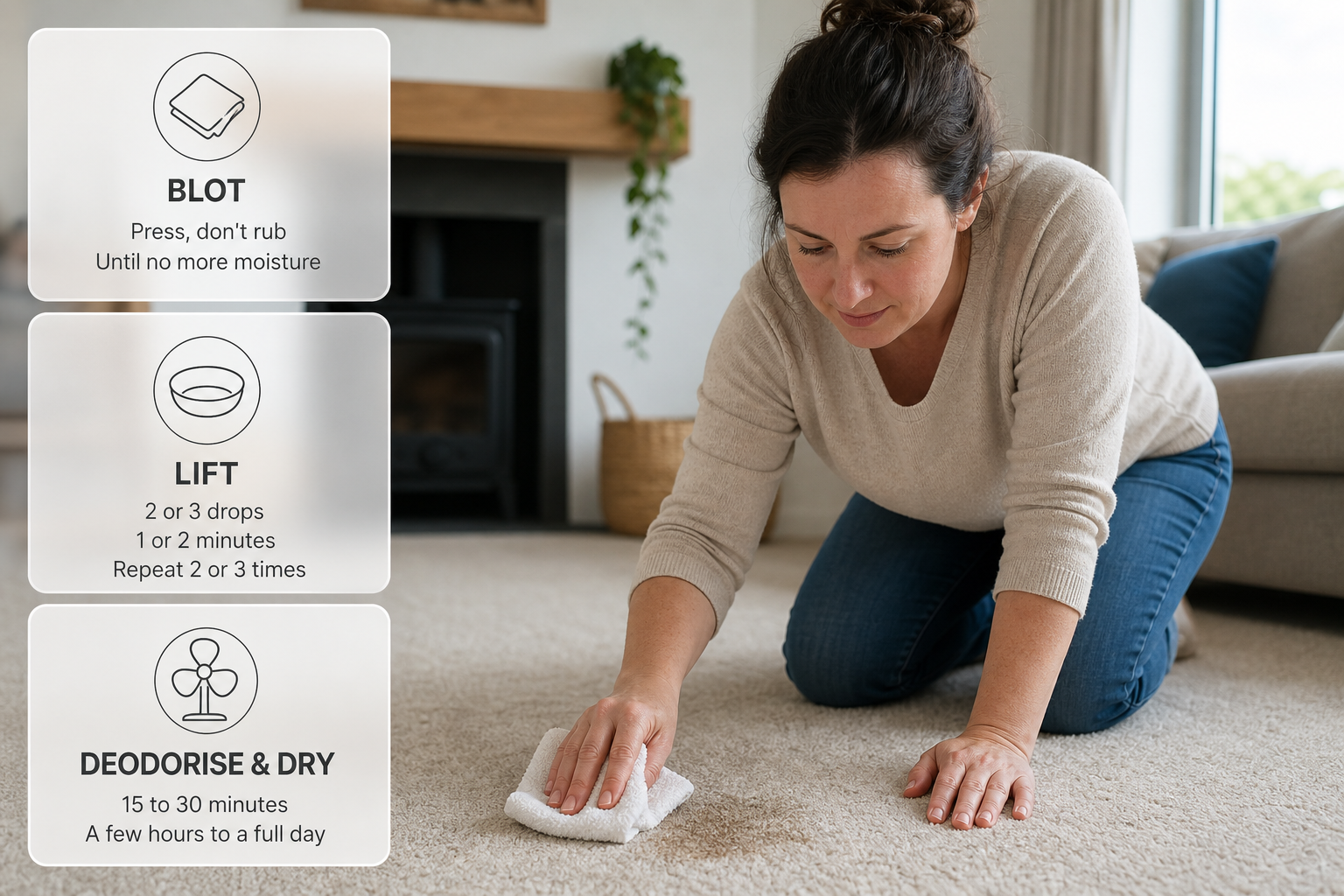
Blot rather than rub. Press a folded cloth onto the wet patch, hold it for a few seconds so liquid transfers into the fabric, then replace it as soon as it is saturated and repeat until no more moisture comes up. Blotting draws liquid out of the pile; rubbing pushes it sideways and downwards into the backing.
Lift the residue. Add two or three drops of the detergent to a bowl of cool water, dab a little onto the area with a clean cloth, and leave it for a minute or two so it can dissolve the residue instead of being scrubbed at. Blot again with a fresh cloth, repeat two or three times, and finish with a clean, dry blot.
Deodorise. Sprinkle a thin, even layer of baking soda over the area while it is still slightly damp, leave it for fifteen to thirty minutes, then vacuum it up once dry. The Environmental Protection Agency describes baking soda as an odour eliminator and notes that it is also good used dry to lift stains from carpets (EPA).
Dry the area completely. Lay dry towels over the spot, weight them down and leave them for a few hours, swapping them for fresh ones when they feel damp, then finish with airflow: a fan on a low setting and an open window. Keep foot traffic and furniture off the area until the carpet feels dry to the touch, which can take a few hours and sometimes a full day in a cool, closed room.
What not to do on a pet stain
Never scrub. Rubbing abrades the tufts, frays the pile and drives liquid deeper into the backing and underlay, where it is far harder to reach. A stubborn mark means residue sits below the surface, not that more force is needed.
Never use heat. Hot water, steam, an iron or a hairdryer can set the stain and cook odour into the backing. Damp carpet should be air-dried, not warmed.
Never flood the carpet. Water that passes through the backing soaks the underlay and the floor beneath, and that is where lingering smells and backing damage begin.
Never reach for bleach or strong alkaline cleaners, especially on wool, and never mix products together hoping two will work faster than one. The EPA's advice for the home notes that everyday products used for cleaning can be hazardous to people and the environment (EPA), so the mildest product that does the job is the better starting point. Ammonia-based cleaners are also best avoided on pet spots, and air fresheners or scented powders only mask the problem and make it harder to judge whether a treatment has worked.
Dried and set-in stains: rehydrate in stages
A stain found days later, or one that has already been treated and dried, needs a gentler approach than a fresh puddle. Vacuum loose residue from the dry area first, then use the dry baking soda lift described above on any crusted mark.
Rehydrate slowly. Dampen a clean cloth with cool water rather than pouring water onto the carpet, press it over the mark and leave it in place for fifteen to thirty minutes to soften what has bonded to the fibre. Lift the cloth and blot with a dry one. Work on one small section at a time so the surrounding carpet stays dry, follow with the mild detergent solution, blot, and dry thoroughly before deciding whether to repeat. Coming back on a later day almost always gives a better result than one long soaking session.
Two limits are worth knowing. Dye marks from colourings in food or treats can leave a faint shadow even after careful treatment. Where a mark keeps returning as the carpet dries, residue is being drawn up from below the pile, which stronger chemicals will not shift; that is usually the point at which homeowners start comparing cleaning services rather than buying another bottle of solution.
Protecting the pile, the backing and the underlay
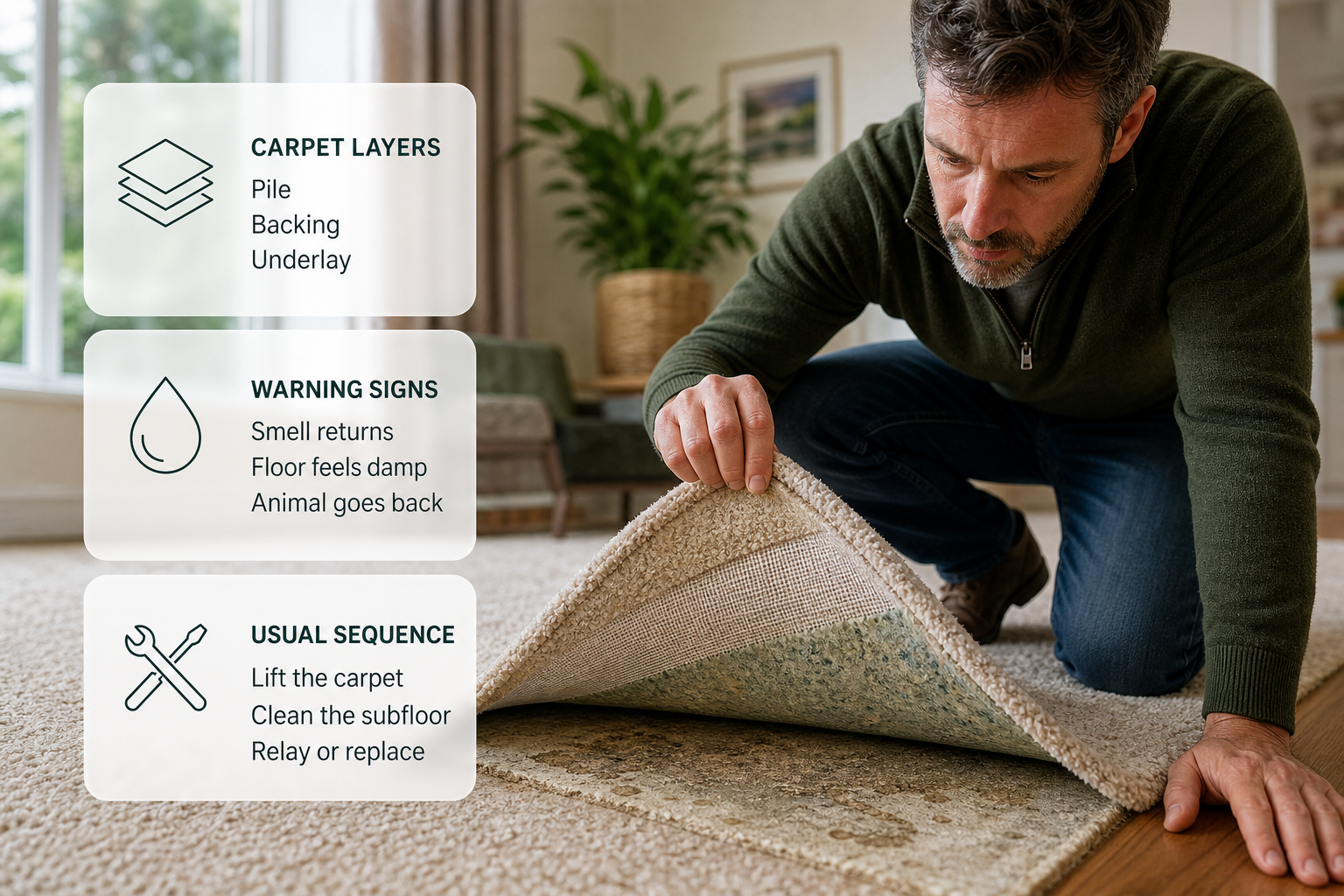
Carpet is a layered structure: tufts looped through a primary backing, a secondary backing for stability, then underlay and the subfloor. Most of the damage homeowners cause happens in those lower layers, because moisture that reaches them is hard to remove.
Keep moisture to a minimum and always finish with a dry blot. Carpet that stays damp for long periods is the starting point for mildew and for smells that return on warm days, and prolonged wetting puts more strain on backings and adhesives than on the fibres themselves. Test any product on a hidden patch first, inside a wardrobe or behind a door, and let it dry fully before judging the result, since carpet looks different wet and dry and a colour change may show up only afterwards.
Underlay absorbs liquid just as readily as it absorbs pressure. Urine travels through the backing and then spreads sideways, so the affected area is often larger than the patch visible on the surface, and the subfloor underneath can hold both moisture and odour. Signs that the underlay may need replacing rather than cleaning include a smell that returns shortly after a thorough treatment, visible staining or a strong smell when a corner of the carpet is lifted, an animal that keeps going back to the same place, and a floor beneath that feels damp or looks marked. Where that is the case, the sequence usually involves lifting the carpet, dealing with the contaminated underlay, cleaning the subfloor and then relaying or replacing the carpet. Whether the subfloor itself needs repair is a question for the flooring or carpet professional who inspects it. In a rented home, get the landlord's agreement before anything is lifted.