How to Remove Mould From a Bathroom Ceiling Safely
Small patches of bathroom ceiling mould can be wiped away safely by hand — here is how to clean it, stop it returning and when to get help.
/8 min read
Mould on a bathroom ceiling is usually a surface problem that a homeowner can clear by hand: air the room, put on gloves and eye protection, wipe the growth away with a damp cloth and a mild cleaner, then dry the ceiling completely. Before starting, take a few minutes to work out whether the moisture is condensation from showers or water finding its way in from above, because that answer decides whether the cleaning lasts or the growth is back within weeks. Where the mould covers a wide area or keeps returning, deep cleaning of the bathroom is the practical next step, alongside a fix for the water that is feeding it.
How to remove mould from a bathroom ceiling
The method below suits small, surface growth on a painted ceiling. Work in daylight, take your time and stop if the paint starts lifting.
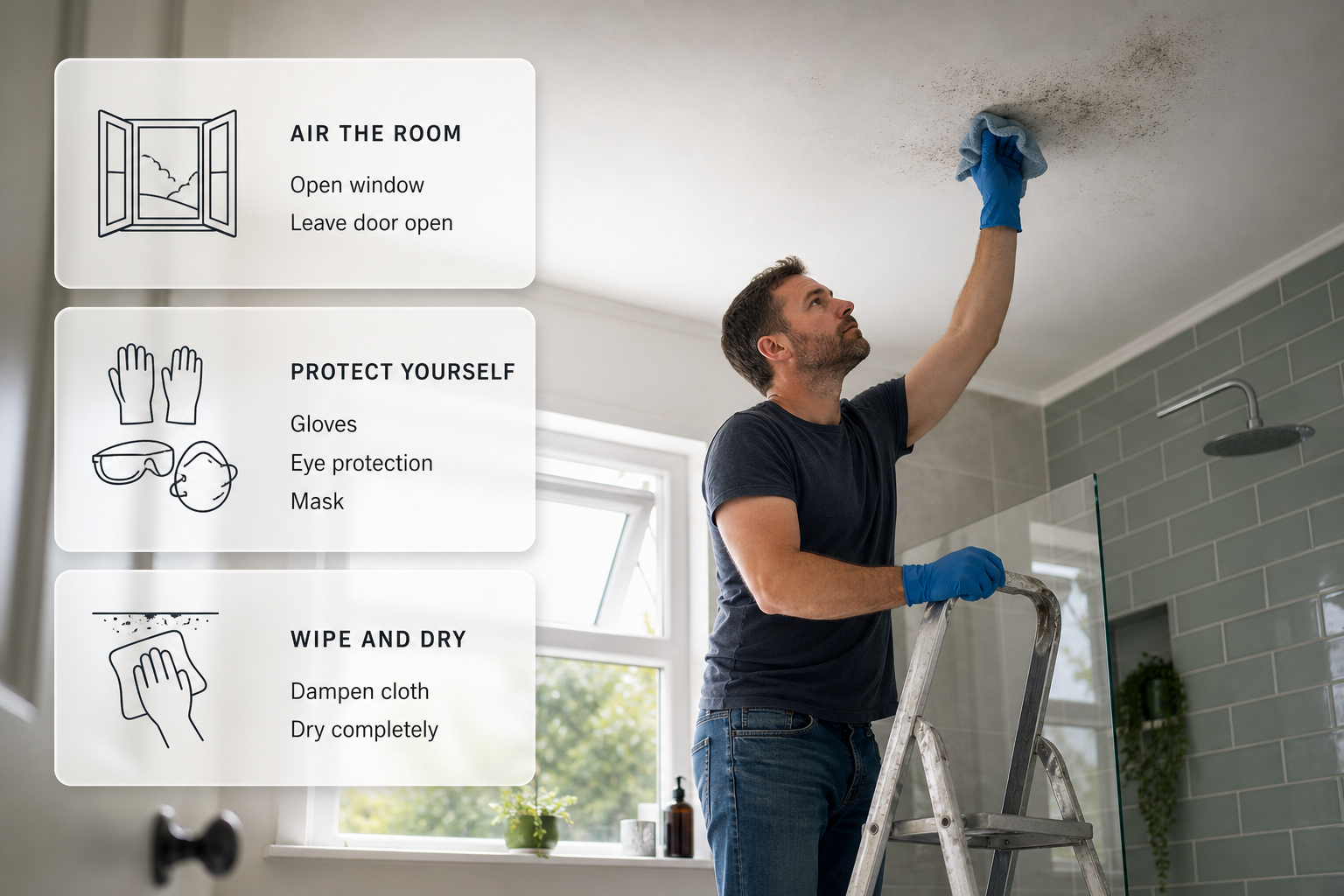
Air the room first. Open the window and leave the bathroom door open so air moves through the space. Working in a closed, steamy room makes the surface slower to dry and the job harder on your lungs.
Protect yourself. Rubber gloves, eye protection and a mask. Disturbing growth on a ceiling lifts fine particles into the air, and you are working directly underneath it. Wear washable old clothes or an apron.
Get safe access. Use a step ladder or a small platform, never a chair, a box or a bath edge. Stand square to the ceiling and move the ladder along as you work rather than overreaching to one side.
Spray the cloth, not the ceiling. Dampen a soft cloth or sponge with warm water and a small amount of mild detergent, or a cleaner intended for painted bathroom surfaces. Spraying straight at a ceiling causes run marks down the walls and can soften the paint film.
Wipe rather than scrub. Work in sections about an arm's length wide and move along the ceiling in a steady line. Light pressure lifts surface growth; hard scrubbing takes the paint with it. Rinse the cloth often and change the water as soon as it turns cloudy.
Leave a cleaner to work for the time its label states. Then wipe it off rather than letting it dry in place. If you are using more than one product, never mix them in the same bucket or bottle.
Rinse and dry. Go over the whole ceiling with a clean damp cloth, then dry it with a dry cloth or towel. Leave the window open until the ceiling is properly dry, not just dry at the edges.
Deal with what you used. Bag single-use cloths and bin them, and wash reusable cloths on a hot cycle apart from other laundry.
Check the ceiling again about a week later. A faint shadow is usually staining left behind in the paint; fresh fuzzy growth means moisture is still arriving and the cause needs attention rather than another clean.
Is it condensation or a leak?
The pattern of the growth tells you a lot before you spend an evening on a ladder.
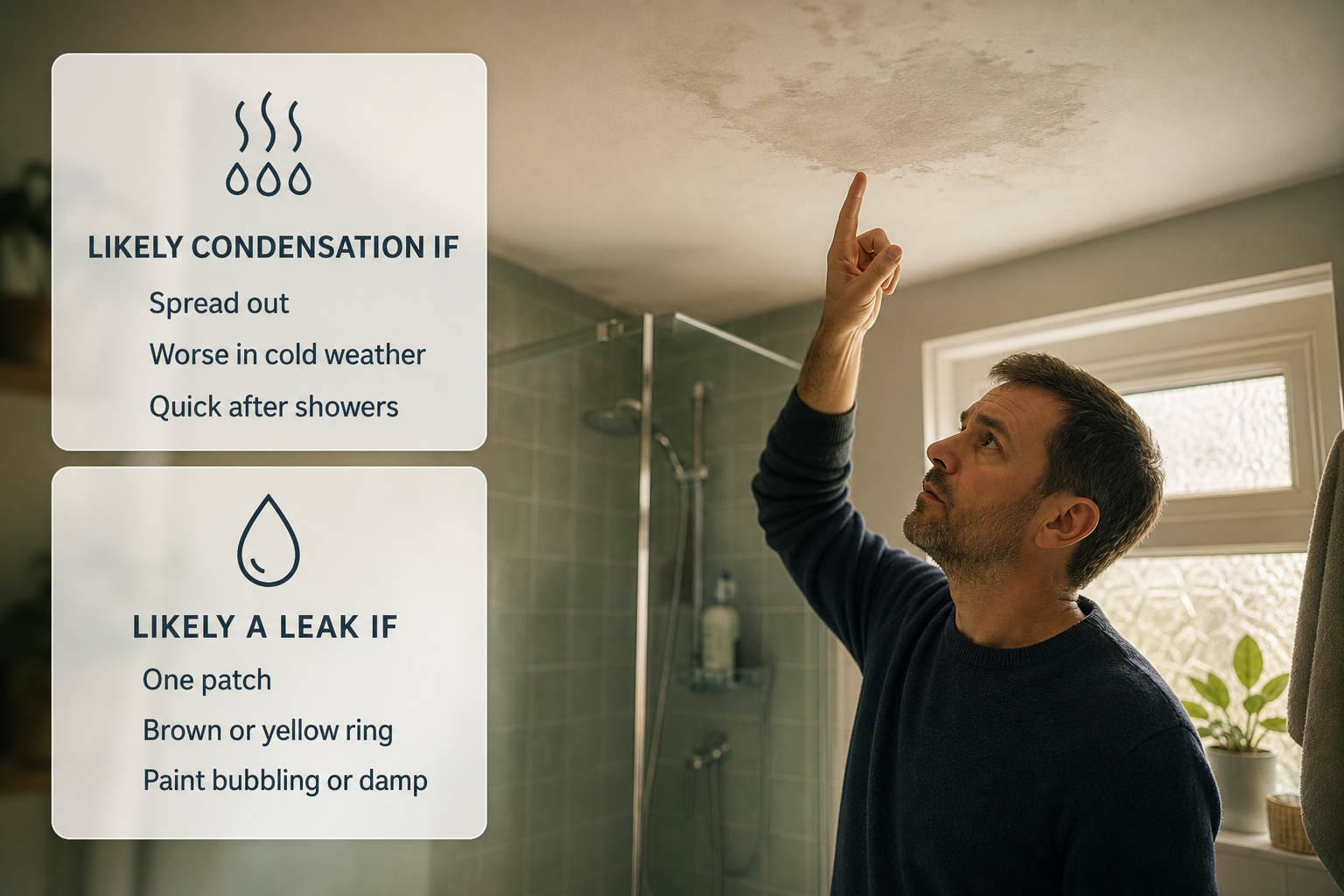
It is likely condensation if the growth is spread out across the ceiling rather than sitting in one patch, it is worse in cold weather, it comes back quickly after showers, and the surface feels cool and clammy. Corners and the line where the ceiling meets an outside wall are the first places to show it, because those are the coldest spots and the hardest for air to reach.
It is likely a leak or other water getting in if the mould sits in one defined patch, often with a brown or yellow ring around it, if the paint is bubbling, flaking or sagging, if the ceiling feels damp even when the shower has not been used, or if the patch grows after heavy rain. Water running in a line or under a pipe run also points to a leak rather than steam.
Simple checks before you clean: look at the ceiling directly above the shower, check the sealant and grout around the shower tray, bath and any pipe where it passes through the ceiling, and check whether the extractor duct actually leads outside rather than ending in the attic. If you have safe access to the space above, look for staining on timbers, drips, or damp patches under the roof. Cleaning a ceiling that is being fed by a leak simply gives the mould a clean surface to grow back on.
Which cleaners are safe on a painted bathroom ceiling
Painted ceilings are more delicate than tiles. Stick to a mild detergent in warm water, or a bathroom cleaner labelled for painted surfaces, and follow the dilution and contact time on the label. Test any new product on a small, out-of-the-way patch first, and rinse it off fully so no residue is left sitting on the paint.
Avoid abrasive powders, scouring pads and wire brushes, which dull the finish and give mould a rougher surface to cling to. Avoid leaving undiluted bleach sitting on a painted ceiling and avoid solvent-heavy products, both of which can lift or discolour the paint. Never mix cleaning products together, and keep the ceiling damp rather than soaked so water does not run down the walls.
One piece of advice is easy to overlook: mould on a ceiling should not be removed with a brush or a vacuum cleaner, as Waterford City and County Council advises against both. Lift the growth with a damp cloth instead, and bin the cloth afterwards.
When bathroom ceiling mould is a job for a professional
Most surface mould on a painted ceiling is manageable at home. It is time to bring in help when:
the mould returns within weeks of cleaning, even though the room is ventilated;
it covers a large area, spreading across the whole ceiling or down the walls;
the paint is bubbling, the ceiling feels soft, or a stain keeps growing;
there is a persistent musty smell in the room even when it is dry;
growth appears in the attic, on roof timbers or above the bathroom;
the extractor fan no longer pulls air, or the ducting is blocked or ends in the attic.
Order of work matters. Find and fix the water source first, then clean. A plumber deals with pipework and waste, a roofer with tiles, flashing and roof spaces, and an electrician or ventilation specialist with a fan that has stopped extracting. Where several trades are involved, a homeowner can post the job on ShamFix, which lists work under cleaning services and other categories. Posting a job and listing on ShamFix is free and no commission is taken; a subscription is planned for the future. ShamFix does not check or certify tradespeople, and profiles are filled in by tradespeople themselves, so it is worth checking any registrations that apply and reading reviews before hiring.
Stopping the mould coming back
Cleaning is only half the job. To help prevent mould spores, the HSE advises keeping the home dry and well ventilated, and using an extractor fan or opening a window when showering or cooking (HSE). In a busy Irish bathroom, that comes down to routine: run the extractor for the whole shower and for a while afterwards, then open the window or leave the door open so the room dries out. Wipe or squeegee the walls and the ceiling area closest to the shower, and hang wet towels to dry rather than leaving them in a heap. Avoid drying laundry in the bathroom, keep the room warm enough in winter that surfaces do not stay cold, and check the fan grille and duct for dust build-up. Once the ceiling is clean and fully dry, a paint intended for bathrooms gives a more washable surface than standard emulsion.
Mould on a bathroom ceiling in a rented home
In general terms, tenants look after day-to-day ventilation and the cleaning of light surface mould, and landlords handle repairs to the building itself, including leaks and ventilation that has stopped working. Report damp or mould in writing as soon as you notice it, with the date, photographs and what you have already done about ventilation, and keep a copy. If a repair is not carried out, it is sensible to keep that record going and to take advice on the options available rather than stopping rent payments. Do not repaint a ceiling or carry out repairs yourself without agreeing it first, since that can complicate a later repair.
Getting help with a ceiling that keeps growing mould
A ceiling that has been cleaned, ventilated and dried and still grows mould is telling you something about the building rather than the cleaning. On ShamFix, posting a job is free and no commission is charged, and a subscription is planned for the future. Homeowners can compare responses, ask what the cause is believed to be and how the moisture will be dealt with, and then decide who to hire. More about how the marketplace works is on ShamFix.
FAQ
Can I paint over mould on a bathroom ceiling?
No. Painting over live growth seals it in, and the mould works back through the new coat, wasting both the paint and the effort. Clean the ceiling, let it dry completely, deal with whatever is feeding the moisture, and only then repaint. If a stain remains after cleaning, a stain-blocking primer under the topcoat stops the shadow showing through.
Why does mould keep returning in the same corner?
Corners and the join between the ceiling and an outside wall are the coldest, least ventilated parts of the surface, so moisture settles there first. If the fan is weak, ducted into the attic or simply never switched on, that corner never dries out. A slow leak can also show up in one spot, so a patch that returns in exactly the same place deserves a look above the ceiling rather than another clean.
How can I tell whether the extractor fan is doing anything?
Switch it on and hold a sheet of tissue against the grille; if air is being pulled through, the tissue should stay in place. Check outside whether air is coming out of the external vent, or whether the duct ends in the attic. A fan that hums but moves no air, or a duct packed with dust and lint, is doing nothing at all for the ceiling.
Who should I contact about a ceiling that keeps leaking?
If the pattern points to water from above, the source has to be found before any cleaning will hold. Pipework and waste are a plumber's work, tiles, flashing and roof spaces are a roofer's, and a fan that no longer extracts is a job for an electrician or ventilation specialist. Cleaning first and asking questions later usually means cleaning the same ceiling twice.
How long should I wait before deciding the cleaning has worked?
Give it a week or two, keeping the room ventilated as normal in the meantime. If only a faint shadow remains, that is staining in the paint rather than live growth. If fresh fuzzy patches appear in that time, treat it as a moisture problem rather than a cleaning problem and get the cause looked at before the mould spreads further.
Work through safe checks — filter, vent, condenser, settings, power and reset — then book appliance repair or, for fixed wiring faults, an electrician.