A lot of Limerick homeowners look at the driveway one wet morning and realise the problem isn't just cosmetic anymore. The patio has gone green, the path feels slick underfoot, and the wall that looked fine last summer now has dark algae streaks running down it. In a damp western county, that buildup happens fast, and once moss and algae get a hold, ordinary hosing rarely touches it.
That's where proper power washing comes in. Done well, it lifts grime, improves grip underfoot, and restores the original colour of hard surfaces. Done badly, it can stripe concrete, loosen jointing sand, shred timber fibres, and force dirty runoff into places it shouldn't go.
This guide is for homeowners trying to make sensible decisions about Power Washing Limerick jobs. It covers what the service is, what surfaces respond well, how charges are usually worked out in Ireland, what precautions matter on the day, and how to judge whether a contractor sounds competent before any machine is switched on.
Your Guide to Power Washing in Limerick
Limerick properties deal with a stubborn mix of rain, shade, organic growth, and everyday dirt. That combination shows up first on horizontal surfaces. Driveways darken, paving joints fill with green growth, and north-facing walls often hold moisture for long enough that algae comes back even after a basic clean.
For most homes, the issue starts with appearance and ends with safety. A patio that looks neglected can also become slippery. A driveway covered in moss doesn't just drag down kerb appeal. It can turn into a maintenance problem that gets harder to fix if it's left too long.
Homeowners looking around the county for local options can start with power washing services in County Limerick. That helps frame what's available locally, but the more important part is understanding what to ask before booking anyone.
What a homeowner needs to know first
A useful quote should match the property, not rely on guesswork. The key things that shape the job are:
- Surface type: Concrete, block paving, tarmac, brick, render, and decking all need different pressure and nozzle control.
- Level of buildup: Light dirt is one thing. Moss, lichen, black algae, and ingrained staining need a more deliberate approach.
- Drainage and runoff: Water has to go somewhere. On Irish urban sites, that matters.
- Aftercare: Some surfaces need re-sanding, spot treatment, or a gentler return clean later on.
Practical rule: If a contractor talks only about “blasting it clean” and asks nothing about the surface, that's not a good sign.
The best results usually come from matching the method to the material. That sounds obvious, but it's where many bad jobs begin. Good exterior cleaning is less about brute force and more about choosing the right pressure, nozzle distance, and cleaning sequence.
Understanding Power Washing vs Pressure Washing
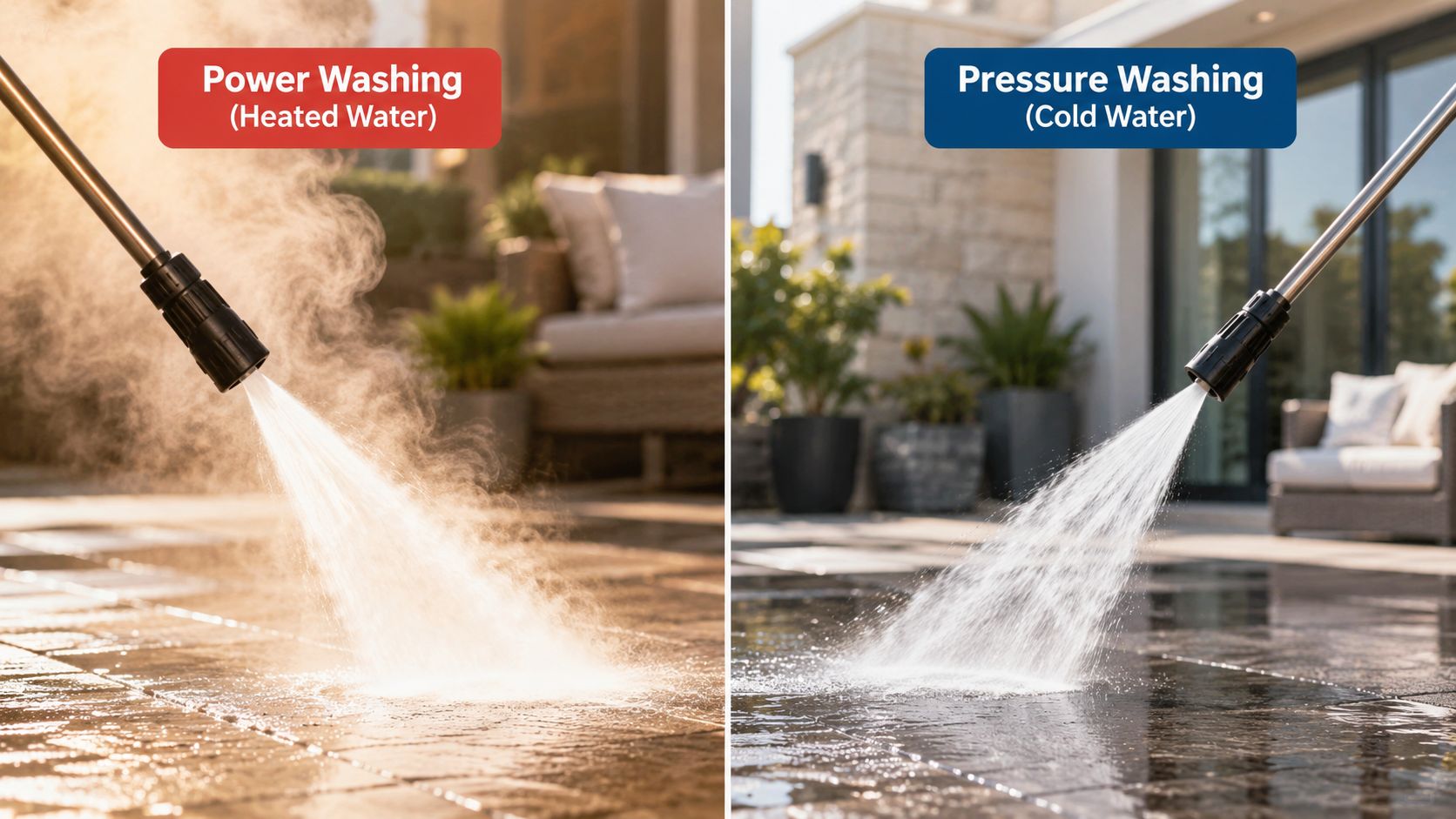
Most homeowners use the two terms as if they mean the same thing. In everyday conversation, that's common enough. In practice, there is a difference.
Pressure washing usually means cold water delivered at pressure. Power washing technically refers to pressured water with heat. The added heat helps break down greasy contamination and can improve cleaning on some heavily soiled exterior surfaces. For many domestic jobs around Limerick, what matters most isn't the label. It's whether the operator uses the right machine setup for the surface and the type of growth being removed.
Why the distinction matters in Limerick
In Limerick, the main enemy on outdoor hard surfaces isn't usually grease. It's biological growth. Moss, algae, and lichen hold on because damp conditions suit them. That's why low-powered domestic machines often disappoint. They may remove the top colour but leave the root of the problem in the surface texture.
this power washing guidance for Irish conditions
Domestic machines often disappoint here for a simple reason: they lift the surface colour but leave the growth rooted in the texture of the paving, so it returns within months. Professional-grade output, matched to a sound surface, is what clears entrenched moss and algae, but pressure alone isn't the answer, and on softer materials it's the problem.
What actually works on site
A strong result comes from combining pressure with technique. On a typical domestic job, that often means:
| Cleaning element | What it does | Where it matters |
|---|---|---|
| Adequate pressure | Breaks through surface growth | Concrete, brick, block paving |
| Correct nozzle and fan angle | Prevents striping and gouging | Driveways, patios, paths |
| Consistent working distance | Keeps finish even | Large open areas |
| Controlled passes | Avoids patchy results | Decorative paving and brick |
The machine matters, but the operator matters more. A poor operator with a powerful washer can damage a surface faster than a careful operator with the right setup.
For homeowners, the practical takeaway is simple. Ask what method is planned for the exact surface being cleaned. If the answer is vague, the result usually is too.
Which Surfaces Benefit and What Are the Risks
The surfaces that respond best to power washing in Limerick are the ones that are hard, stable, and already structurally sound. That usually includes concrete driveways, tarmac in suitable condition, paved patios, slabbed paths, brick and blockwork walls, and other hard-standing areas where moss, algae, lichen, and ground-in dirt build up over time.
These surfaces benefit because they can usually tolerate a stronger cleaning approach when the operator adjusts the pressure and keeps the lance moving correctly. On a good job, the difference is obvious. Original colour returns, joints look cleaner, and the whole area stops looking damp and tired even when the weather is grey.
Best candidates for a full wash
For most homes, these are the straightforward jobs:
- Concrete driveways: Strong candidate for deep cleaning if the slab is sound and not already spalling.
- Block paving and paving slabs: Very common in Irish gardens and front drives. These often clean up well, though the joints may need attention afterwards.
- Brick and block walls: Useful for algae streaks and grime, provided the pointing is in good condition.
- Paths and yard areas: Especially worthwhile where the surface has become slippery.
A homeowner comparing options for driveways and paving services should still ask whether the provider plans a surface cleaner, lance work, post-treatment, or re-sanding where relevant. “Driveway cleaning” can mean very different standards of finish.
Where damage happens
Problems start when people assume every exterior surface should be treated like concrete. It shouldn't.
Timber decking often needs lower pressure or an entirely gentler cleaning method because aggressive washing can raise fibres, splinter boards, and leave an uneven finish. Older pointing, especially on brick or stone, can be washed out if the jet is too direct. Painted render can peel or scar. Sandstone and other softer masonry can lose their face if handled roughly.
Watch point: If a surface is already crumbling, flaking, or delaminating, water pressure won't fix it. It will usually reveal more of the defect.
A quick risk check before booking
A sensible homeowner should look for these warning signs before any quote is accepted:
- Loose joints or missing mortar: High pressure can widen the damage.
- Paint failure: Pressure may lift more coating than expected.
- Old or weathered timber: A full wash can leave a furry surface that then needs more remedial work.
- Cracked render or fragile decorative finishes: Better suited to soft washing or manual treatment.
A proper contractor should ask about all of that. If they don't, the homeowner has to.
Estimating Power Washing Costs in Limerick
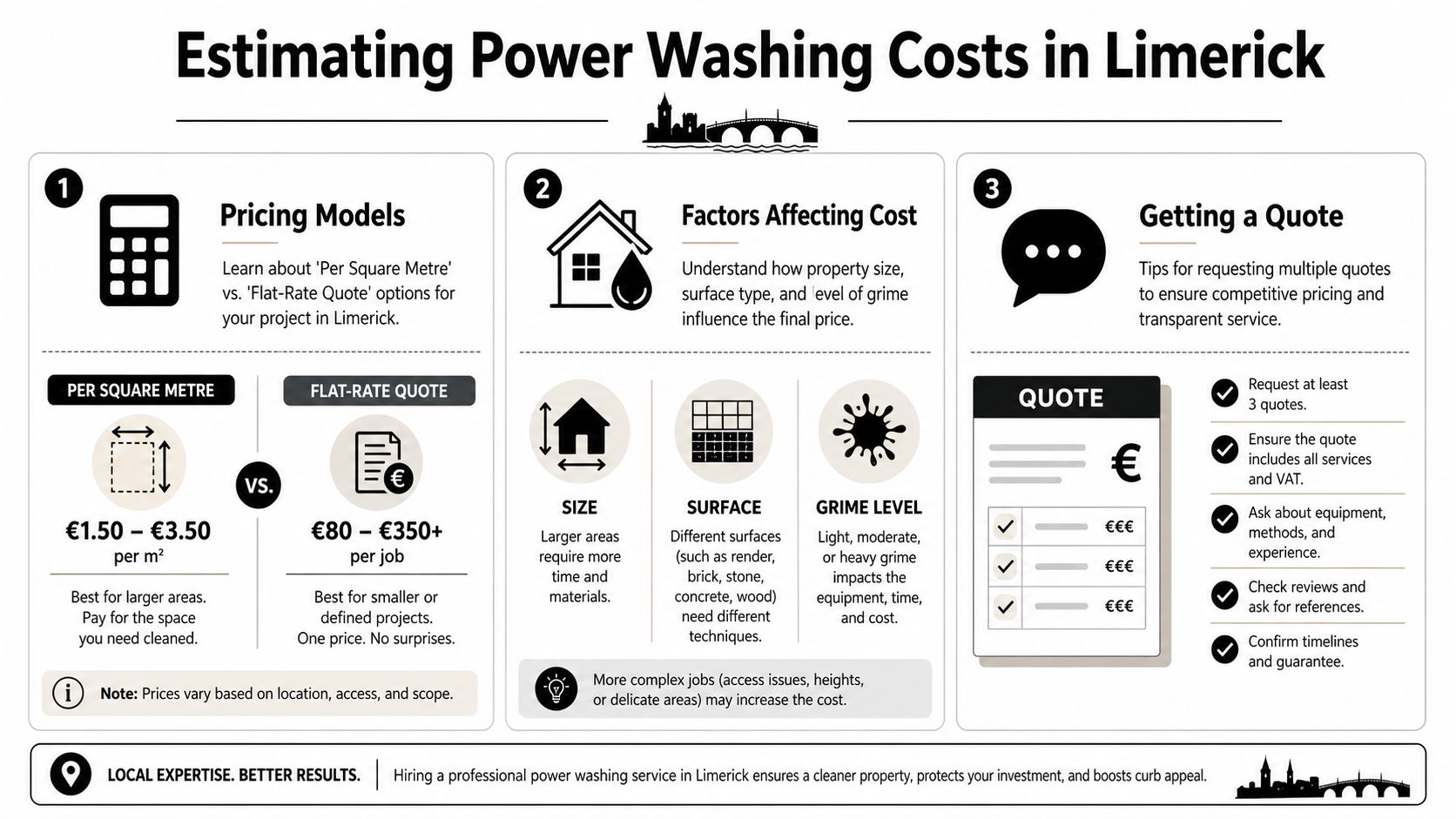
Pricing for power washing in Ireland is usually more practical than formulaic. Most contractors charge by the square metre or provide a flat rate for the whole job once they've seen the area. Some smaller call-outs may be priced hourly, but homeowners shouldn't expect a strict hourly model for every driveway or patio clean.
That approach makes sense. A small area with severe black growth, poor access, and awkward drainage can take more work than a larger open driveway that only needs a maintenance wash.
What shapes the quote
The final figure usually depends on a cluster of factors rather than one headline rate.
| Cost factor | Why it changes the price |
|---|---|
| Area size | Larger spaces take longer and use more water and labour |
| Surface type | Some materials need slower, more careful cleaning |
| Soiling level | Heavy moss and algae need more passes and more cleanup |
| Access | Long hose runs, tight side entrances, or no nearby water supply add difficulty |
| Extras | Re-sanding block paving or applying sealant changes the scope |
A driveway that looks simple from the gate can become more involved once the condition of joints, edging, and runoff routes are considered. That's why itemised quotes matter. Homeowners should be able to see whether they're paying for basic washing only, or for a more complete finish.
Realistic market context in western Ireland
There isn't a single standard public price list for Limerick power washing, but the wider Irish market gives useful context. Exterior cleaning is commonly quoted at roughly €2.50 to €8 per square metre, putting a small path or patio around €60 to €100, and a larger driveway anywhere from €200 to €400 or more. Where an hourly rate is used, it typically sits around €40 to €60. Treat that as a rough benchmark rather than a target: condition and access move the number more than area alone.
A low quote often leaves out the parts that matter most on paving. Cleanup, re-sanding, stain treatment, and proper edging work take time.
How to compare quotes properly
When reviewing estimates, the most useful questions are practical:
- What exactly is included: Washing only, or also moss treatment, edging, and final rinse-down?
- Is jointing sand included if block paving is cleaned: If not, the surface may look good briefly and perform poorly later.
- What water access is needed: Some jobs depend on the homeowner providing a workable outdoor supply.
- How is runoff handled: Especially important on urban sites where water can move toward public drains.
The right quote isn't just a number. It's the one that makes clear what result the homeowner is buying.
How to Find a Trusted Local Provider
Hiring well matters more in power washing than many homeowners realise. The wrong operator can leave visible lines across concrete, scar brick faces, blow out weak mortar, or create a mess around drains, windows, and neighbouring property. The right operator leaves the place cleaner without turning a maintenance job into a repair bill.
The first checks are old-fashioned and still useful. Ask for public liability insurance, ask whether they've worked on the same surface type before, and ask for a written quote that separates the cleaning itself from any extras. If the property has fragile pointing, painted render, delicate planting, or awkward shared boundaries, mention that early.

Golden Pages listings for pressure washing in Limerick County
A small local market changes the search
County Limerick is a compact market for this trade, so the same names tend to come up repeatedly. That makes it more important to compare professionalism than to book the first person with a machine.
What to ask before saying yes
Good screening questions are simple and direct:
- Have they cleaned this surface before: Concrete is not timber, and block paving is not painted render.
- Will they inspect the area first: A proper quote should reflect the actual condition.
- Do they explain risks openly: Competent contractors usually mention what they won't clean aggressively.
- Can they describe their process clearly: Pre-treatment, wash, rinse, cleanup, and any aftercare should be easy to understand.
A useful answer sounds specific. A weak answer sounds generic.
If the contractor can't explain how they'll protect windows, soft joints, plants, and runoff paths, the homeowner should assume those details haven't been thought through.
Judging trust without relying on sales talk
Trust in home services doesn't come from slogans. It comes from evidence, clarity, and consistency. Homeowners should look for recent reviews, signs that the contractor has handled similar properties, and a willingness to put the scope in writing.
That same principle applies on platforms. ShamFix is an Ireland-only marketplace, founded in 2025. It serves the Republic of Ireland and works on a subscription-based provider model with no commission according to ShamFix's Bark alternative page.
The important trust point is how reputation works. ShamFix says trust is built through a real two-sided review system, where providers and customers rate and review each other after completed work, as outlined on ShamFix's blog about alternatives in Ireland. It does not vet, verify, or check provider documents. Providers list their own credentials and remain responsible for their own registrations.
That distinction matters. For regulated Irish trades, customers should confirm registration directly with the authority. ShamFix's own retrofit guidance notes that RGI applies to gas work, Safe Electric applies to electrical installations, and SEAI registration is specifically required where a provider undertakes grant-funded retrofit work, though not for private retrofit work, as stated in ShamFix's article on retrofit installers in Ireland.
Power washing itself isn't one of those regulated registrations, but the lesson holds. A homeowner should still check what the contractor claims, ask for insurance details, and compare reviews carefully. Those ready to post a job can use ShamFix to place a task, but the same screening standards should apply whether the contractor is found online, by referral, or through a directory.
Frequently Asked Questions for Your Project
Most of the stress around power washing happens just before the job starts. The contractor is due, the weather looks uncertain, and the homeowner suddenly remembers the patio furniture, the dog, the side gate, and the flower bed beside the wall that's about to be cleaned.
A bit of preparation makes the day run better and reduces the chance of avoidable damage or disputes.
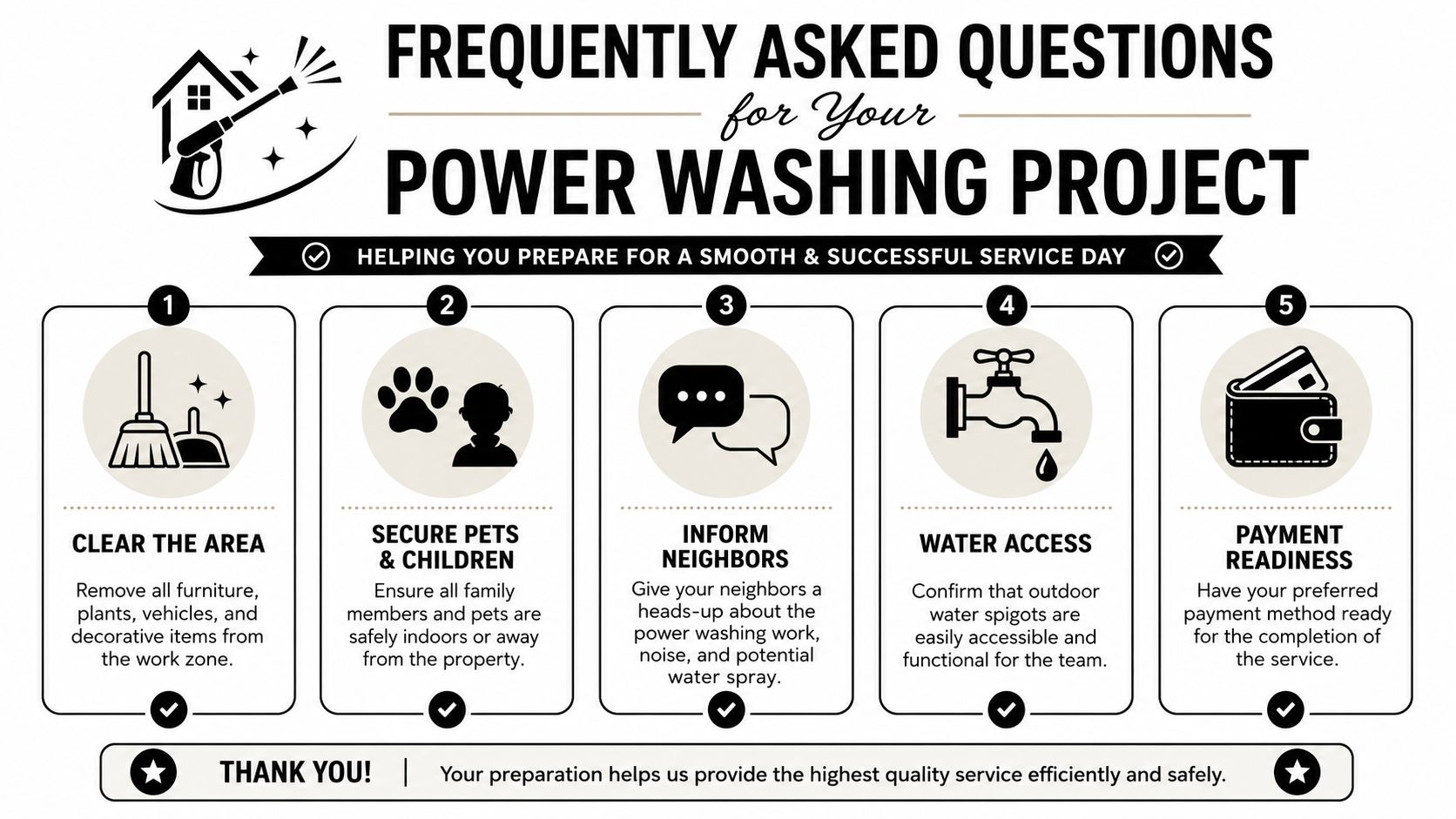
How should the property be prepared
A homeowner should aim to leave the work area clear and accessible.
- Move obstacles early: Cars, bins, garden furniture, planters, toys, and loose decorative items should be taken out of the spray zone.
- Shut windows and doors: Especially near patios, paths, and walls being washed.
- Provide water access: If the contractor needs an outside tap, make sure it works and is easy to reach.
- Warn the household: Children and pets should be kept away from active work areas.
Shared driveways and close boundaries are common in parts of Limerick, so a quick word with neighbours is also sensible.
Neighbours usually don't mind the job. They mind the surprise.
What precautions should a professional take
A competent exterior cleaner should protect the property around the area being washed, not just focus on the surface itself.
Key precautions include:
- Pre-wetting and covering nearby plants: Then rinsing off any splashes afterwards.
- Controlling detergent and dirty runoff: So it doesn't reach ponds, public drains, or a neighbour's property.
- Keeping high pressure away from weak points: Windows, soft pointing, painted render, and sealed joints all need care.
- Managing overspray and noise: Particularly on narrow sites and boundary walls.
In urban settings, runoff management matters. Professional operators should think about where the dirty water is travelling before they begin.
What should a finished job look like
A typical good result is easier to describe in plain terms.
A driveway that started mossy and green-black should look closer to its original colour. Patio slabs should appear brighter and more even. Grout lines or paving joints should look cleaner. Brick or render affected by algae should lose the dark streaking that made the wall look permanently damp.
That doesn't mean every old stain disappears. Some marks are permanent, and some surfaces reveal age once the dirt has gone. A trustworthy contractor should say that upfront.
How are charges usually calculated
In Ireland, power-washing work is commonly priced by the square metre or as a flat per-job quote after the area is seen. Small jobs can still be charged hourly, but that isn't the only model.
The best approach for homeowners is to request an itemised quote based on:
- Actual area
- Surface type
- How heavy the soiling is
- Access and water supply
- Any extras such as re-sanding or sealing
That makes comparison easier and reduces confusion later.
Homeowners looking for local help can explore ShamFix, an Ireland-only marketplace founded in 2025. It connects customers with local providers across the Republic of Ireland. Trust on the platform comes from two-sided reviews and ratings after completed jobs, not from platform vetting. For providers, listing is free and there's no commission; a subscription is planned for the future.