Post Construction Cleaning Equipment: A Homeowner's Guide
A HEPA wet/dry vacuum, damp cloths and FFP3 protection cover most renovation dust — what to buy, what to hire, and when to call in help.
/10 min read
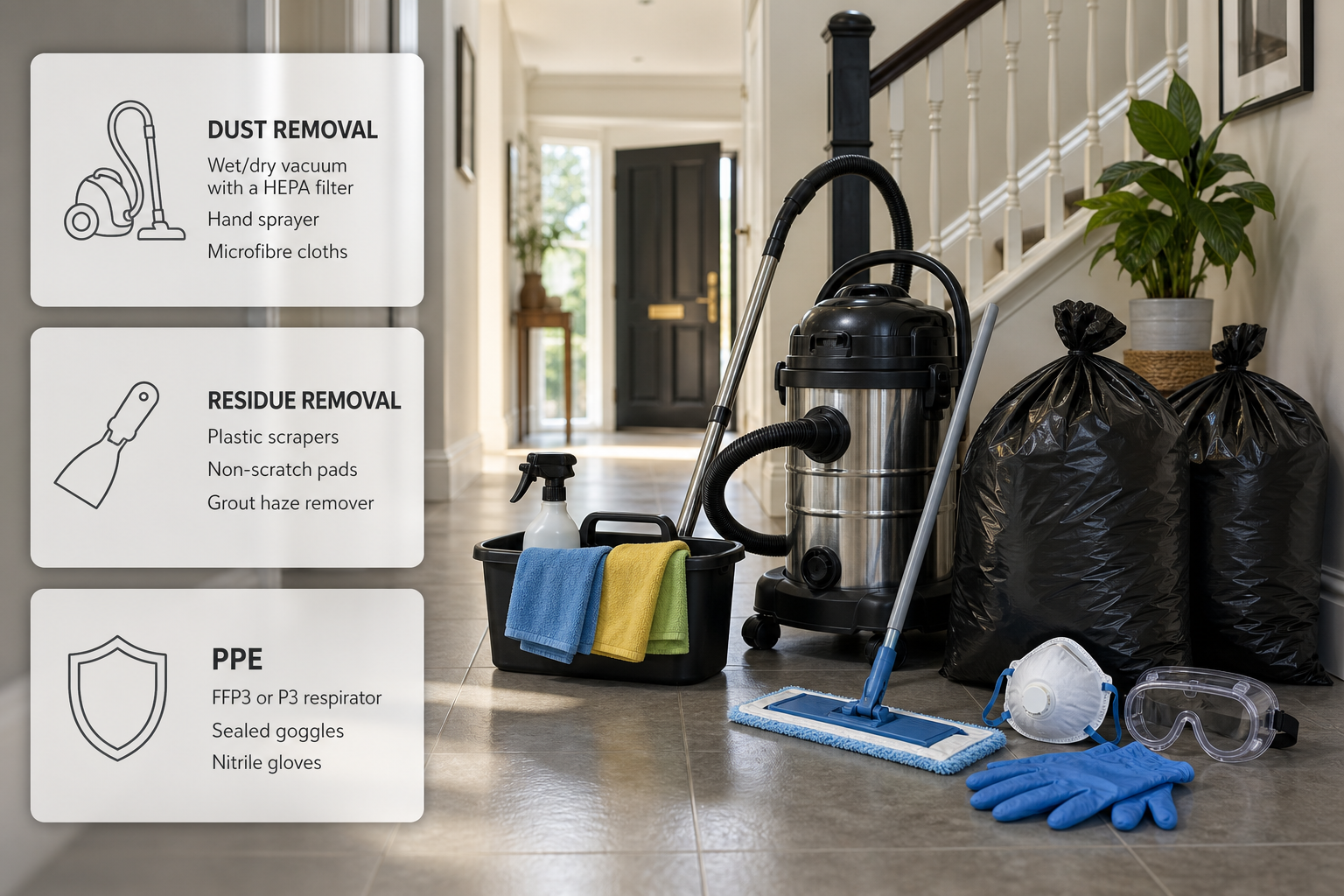
Post construction cleaning equipment for an Irish home falls into five groups: dust removal, residue removal, floor care, waste handling and personal protective equipment. The core kit is a wet/dry vacuum with a HEPA filter, a hand sprayer for dampening dust, microfibre cloths, plastic scrapers, a flat mop with a two-bucket set-up, heavy-duty sacks, and an FFP3 or P3 respirator with sealed goggles and nitrile gloves. One room after a small job can be handled with that list; a whole-house refurbishment is usually the point at which hiring machines, or booking a post-construction cleaning team to finish the work, becomes the better decision.
The essential equipment list, by job
Grouping kit by the type of work, rather than by room, is how most homeowners end up buying it.
Job
Core equipment
What it is for
Dust removal
Wet/dry vacuum with a HEPA filter, brush and crevice tools, hand sprayer, microfibre cloths, tack cloths
Lifting fine dust from floors, sills, skirting, frames and door tops before it is moved around
Keeping dust out of lungs and eyes, and off skin and clothing
Every item earns its place in one of two ways: it captures dust instead of moving it, or it protects a surface or a person. Anything that only pushes dust into the air — a leaf blower, a dry brush on a dry floor, a domestic vacuum with a paper bag — makes the work harder and less healthy.
Dust removal: capturing fine dust instead of moving it
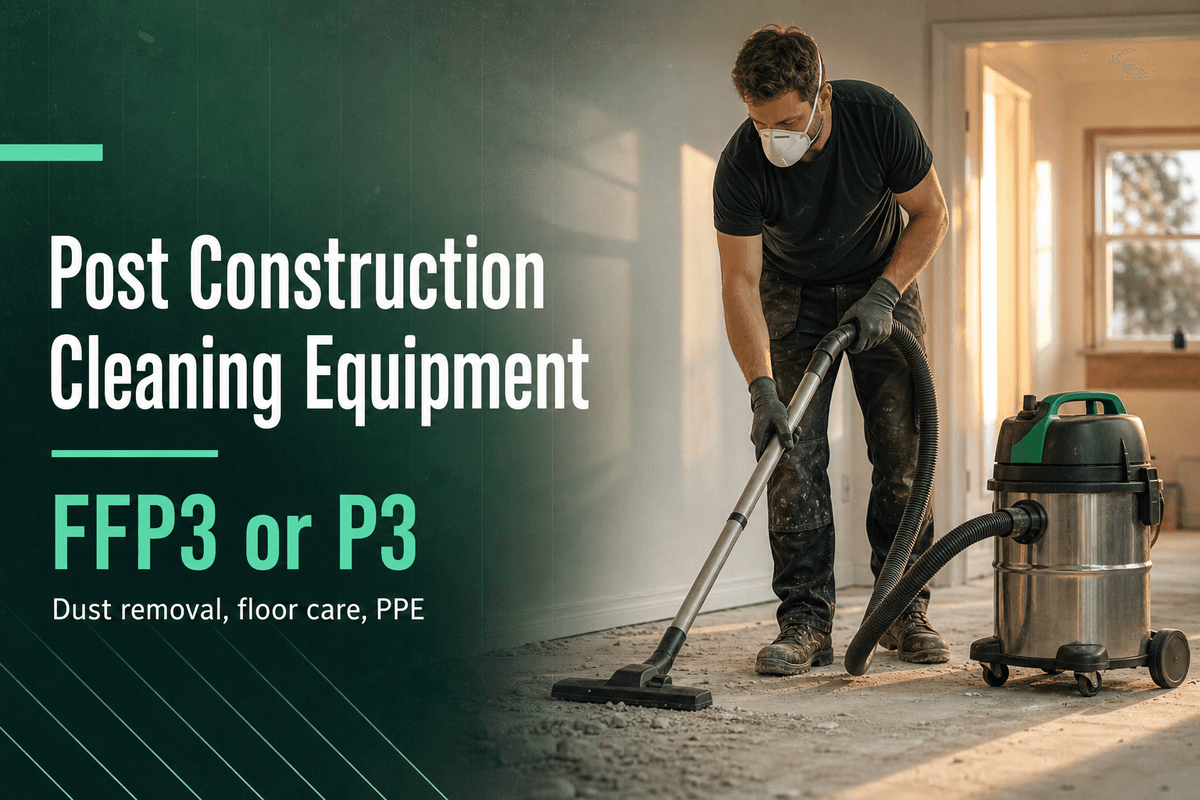
Plaster, filler and sanding dust behaves differently from household dirt. It is light, it settles slowly, it re-floats as soon as something disturbs it, and it travels into rooms that were closed off. The Health and Safety Authority advises using wet/dry vacuums with a HEPA filter and dampening down areas before cleaning (Health and Safety Authority).
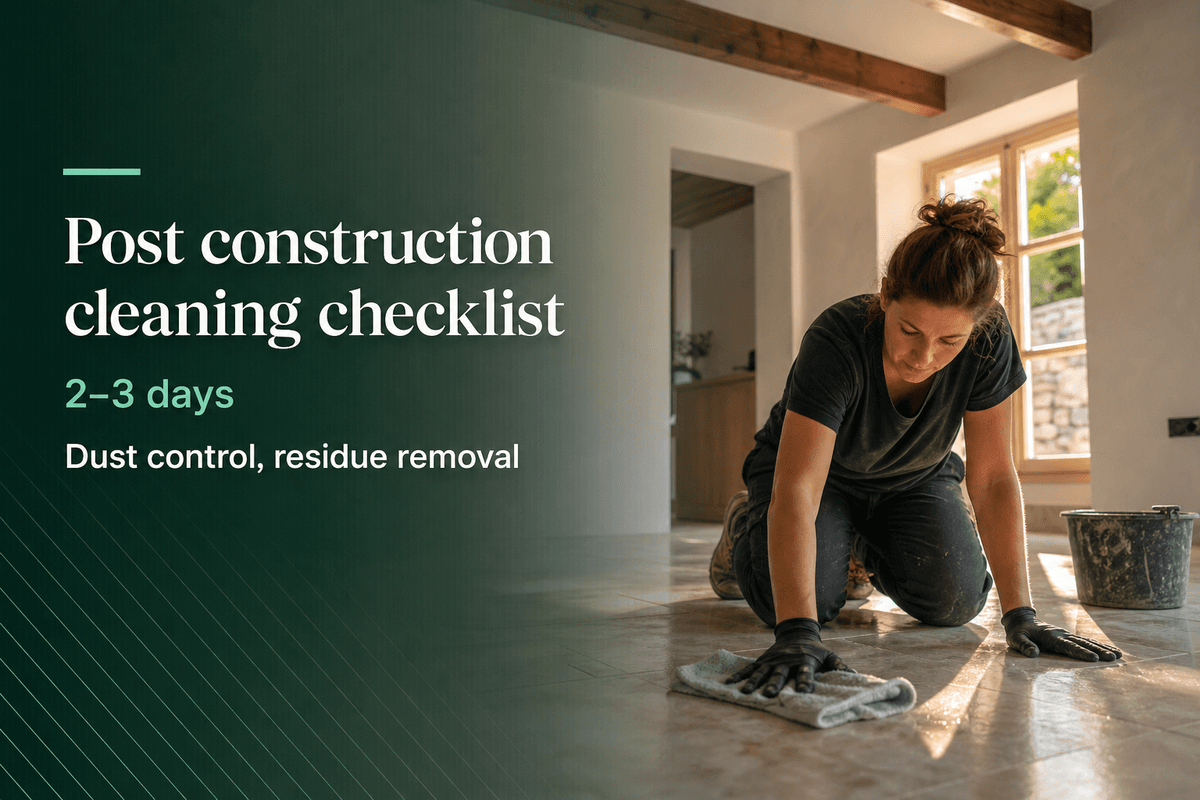
In practice that means one vacuum kept for dusty work, fitted with the correct filter and bag, and a hand sprayer filled with clean water. A fine mist over skirting, sills and shelving holds dust down long enough for a cloth to pick it up. Work from the top of the room downwards — ceilings, coves, door tops, window heads, sills, skirting — and leave floors until last. A folded damp microfibre cloth holds a surprising amount of dust; turn it as it loads, rinse it in a bucket, and change the water when it turns grey. Do a first pass as soon as the dusty work stops and a second pass later, once what is still in the air has come down. Empty the vacuum outdoors, seal the bag, and never dry-sweep fine dust with a broom.
Cleaning plaster dust off fresh paint and finished floors
Freshly painted walls and joinery stay soft for a while after they look dry. Dust sitting on them can be lifted with a barely damp cloth, but scrubbing, abrasive pads and solvents can mark a film that has not fully cured. Check the paint manufacturer's guidance on curing before using anything stronger than water with a little mild detergent, and test in a hidden spot first.
Floors need the opposite sequence to a normal mop. Plaster and filler dust smears when it gets wet and dries back as a chalky haze, so a wet mop on the first pass spreads it into the joints. Vacuum first, then go over the floor with a barely damp microfibre head and a pH-neutral cleaner, then dry it with a clean cloth. Change the water often rather than carrying grey water around the room.
Residue removal: paint spots, adhesive and grout haze
Water-based paint spots soften after a few minutes under warm water and mild detergent, then lift with a plastic scraper held at a shallow angle. Metal blades scratch tile, glass and enamel, so keep them out of the kit. Cured solvent-based paint on glass or tile may need a solvent-based remover dabbed onto the spot rather than over the surrounding finish, used with ventilation, gloves and eye protection and strictly per the label. Adhesive left by tape, labels and protective film comes away with a dedicated adhesive remover, or with warm soapy water and patience. Grout haze on new tiles responds to a haze remover worked in with a nylon brush and then rinsed thoroughly. Test haze removers on an offcut first, because acid-based products etch some natural stone and attack some sealants, and never mix cleaning products, particularly anything containing bleach with an acidic remover.
Floor care: protecting the finish while other work continues
A two-bucket set-up, one for clean water and one for rinse water, is the single biggest upgrade to any floor clean. A pH-neutral cleaner suits most sealed floors, and a microfibre flat mop lifts dust and film with far less water than a string mop. Wring the head until it is barely damp, never leave standing water at seams, and dry the surface afterwards. Steam is useful on tiles but should be kept away from timber, laminate edges and unsealed stone, and the flooring manufacturer's care instructions always take priority. Cardboard runners and felt pads under furniture protect the finish on days when trades are still moving through the house. Where a clean needs equipment a household does not own, or a finish too delicate to risk, the wider range of home cleaning services covers everything from one room to a full house.
Waste handling: rubble, dust and site waste
Keep dusty waste away from clean recyclables, bag rubble in sturdy sacks instead of feeding it loose into a general bin, double-bag fine dust so it cannot escape in the van, and keep bags dry and closed until collection. Burning timber, packaging or offcuts is not an option. What is accepted, how it must be presented and where it can be brought vary between areas and change over time, so confirm current disposal steps with the local authority or the waste provider before loading a trailer or ordering a skip, and ask the local authority about any permission needed for a skip standing on a public road.
PPE: silica dust and why a nuisance mask is not enough
Cutting, grinding, chasing, drilling and sanding masonry, concrete, tiles and some screeds release respirable crystalline silica, the fine fraction that reaches deep into the lungs, which is why dust control matters more than dust visibility. Where a task generates it, the Health and Safety Authority advises respirators marked FFP3 or P3 (Health and Safety Authority). Ordinary nuisance dust masks are not protective devices and do not meet basic health and safety requirements (Health and Safety Authority).
Fit decides whether that protection works. Check the seal before each use, stay clean-shaven where the mask meets the face, replace a mask once it is damp, soiled or has been reused too often, and store it in a bag rather than on a windowsill. Sealed goggles beat safety glasses when dust is fine, nitrile gloves save hands from solvents and grout, and disposable coveralls changed before getting into the car stop dust travelling home.
One room or a whole house: scaling the kit
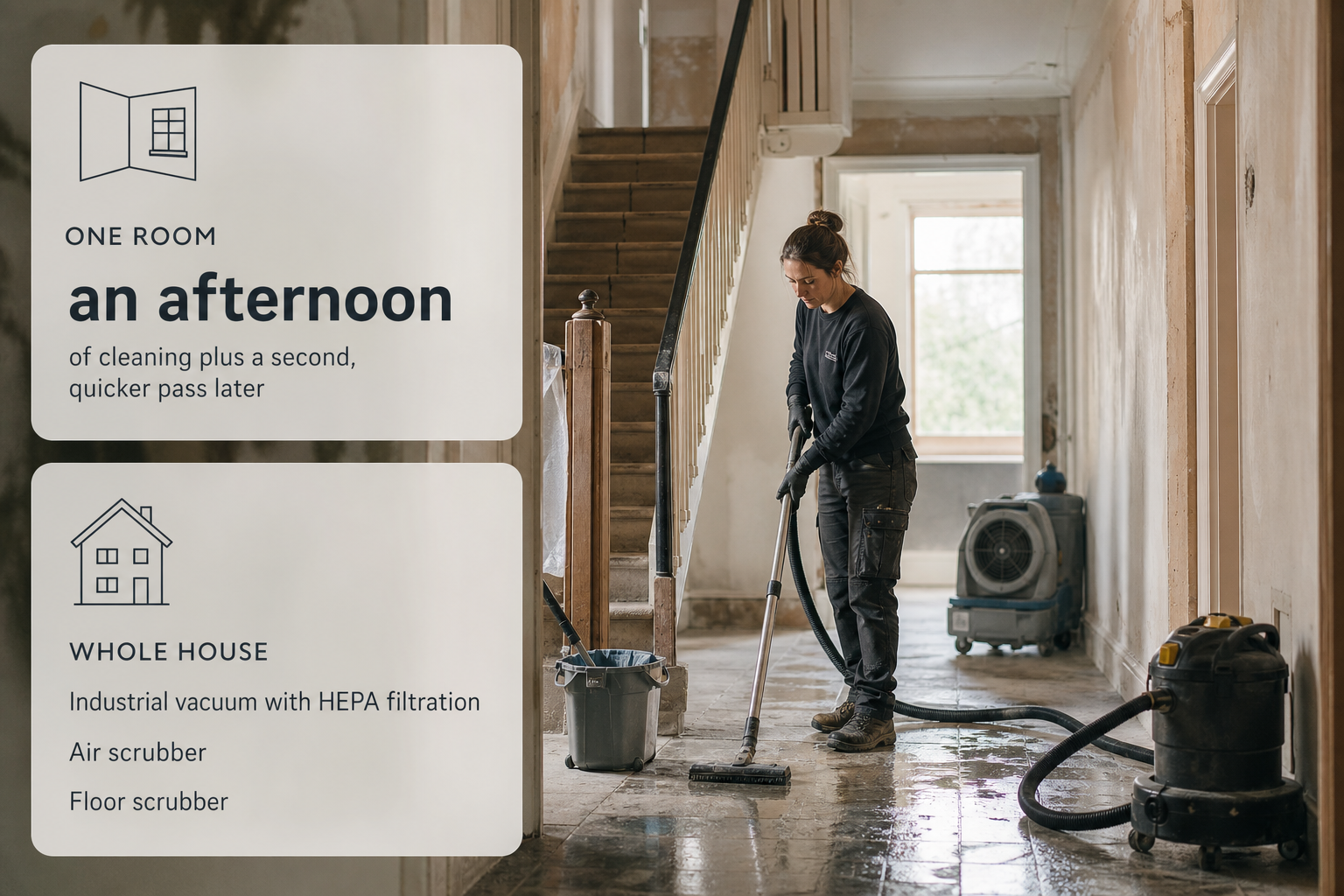
For one room, a small wet/dry vacuum, a hand sprayer, buckets, a stack of microfibre cloths, a couple of scrapers, a flat mop, a step ladder and a roll of heavy-duty sacks will do the job. Expect an afternoon of cleaning plus a second, quicker pass later.
A whole house is a different exercise. A larger industrial vacuum with HEPA filtration, an air scrubber running in the dustiest room, a floor scrubber for large tiled areas, extension poles for high ceilings and more cloths than feels reasonable all shorten the work. Access matters as much as power: a loaded machine is heavy on stairs, long leads need routing away from wet floors and doorways, and bags and rubble need somewhere out of the way to sit. Plan the order of rooms so dusty work finishes before clean rooms are opened up, and keep doors closed behind you.
Buy or hire for short jobs and larger renovations
Buying makes sense for anything that will be used again: microfibre cloths and mop heads, buckets, a hand sprayer, plastic scrapers, a soft brush and dustpan, tack cloths, nitrile gloves, sealed goggles, a respirator, heavy-duty sacks, felt pads, runners and a solid step ladder.
Hiring makes sense for machines that are heavy, power-hungry or needed for a single weekend: an industrial wet/dry vacuum with HEPA filtration for a large floor area or heavy dust, an air scrubber, a floor scrubber, a steam cleaner for grout and tiles, or a long-reach vacuum for high ceilings. Before hiring, confirm the filtration rating, that the correct bags and filters are included, the power supply and lead requirements, the machine's weight, and whether it must be returned emptied of dust and clean, because hired units are usually inspected on return.
When to call in a professional post-construction cleaner
A specialist clean tends to be the better call when more than a couple of rooms are affected, when the work involved cutting concrete, block, brick or tile, when dust has settled into ductwork, radiators, blinds, spray-finished joinery or fitted carpets, when finishes are new enough to be damaged by an over-enthusiastic DIY clean, when someone in the house has asthma or another respiratory condition, or when there is a deadline such as a move-in date or a sale.
Homeowners who would rather hand the work over can post the job on ShamFix. Posting a job and listing on ShamFix is free and there is no commission, and a subscription is planned for the future. ShamFix does not check or certify tradespeople and profiles are filled in by tradespeople themselves, so it is worth checking registrations and reading reviews before hiring.
FAQ
Can a household vacuum be used for plaster dust?
It is a false economy. Fine renovation dust passes through ordinary bags and filters and blows back into the room, and it clogs filters quickly enough to shorten the life of a domestic machine. A wet/dry unit with a HEPA filter, the correct bags and a hose that reaches into corners does the job in fewer passes, and it can also handle the small amounts of water that appear around sinks and showers.
How do you stop dust spreading to rooms that were not worked on?
Keep doors closed and roll a damp towel along the threshold of the room being cleaned. Move cushions, throws and rugs out before sanding starts, because fabric holds dust and releases it long afterwards, and switch off extract fans while cutting is under way so dust is not drawn through the house, then ventilate once the work stops.
Is a steam cleaner useful after building work?
It is excellent on tiled floors, grout lines and glass, and it loosens adhesive residue without solvents. Keep it away from timber and laminate, particularly at seams, and away from unsealed natural stone and freshly painted surfaces. Check the flooring manufacturer's care guidance first, because some finishes are damaged by heat and moisture even when they look well sealed.
What should be checked before hiring a cleaning machine?
Confirm the filtration rating and whether filters and bags are supplied, the power supply and lead length needed, the weight of the machine and any stairs on the route, and the condition it must be returned in. Ask how the machine handles fine dust specifically, because a workshop vacuum sold for shavings and swarf is not automatically suited to plaster dust.
Are tack cloths worth using on new joinery?
Yes, for the final pass on skirting, architraves and door tops, where a damp cloth would leave water marks and a dry one would only shift the dust around. Keep them in a sealed bag between uses, because an open tack cloth picks up grit from the air and drags it across the surface. Do not use them on paint that has not cured.