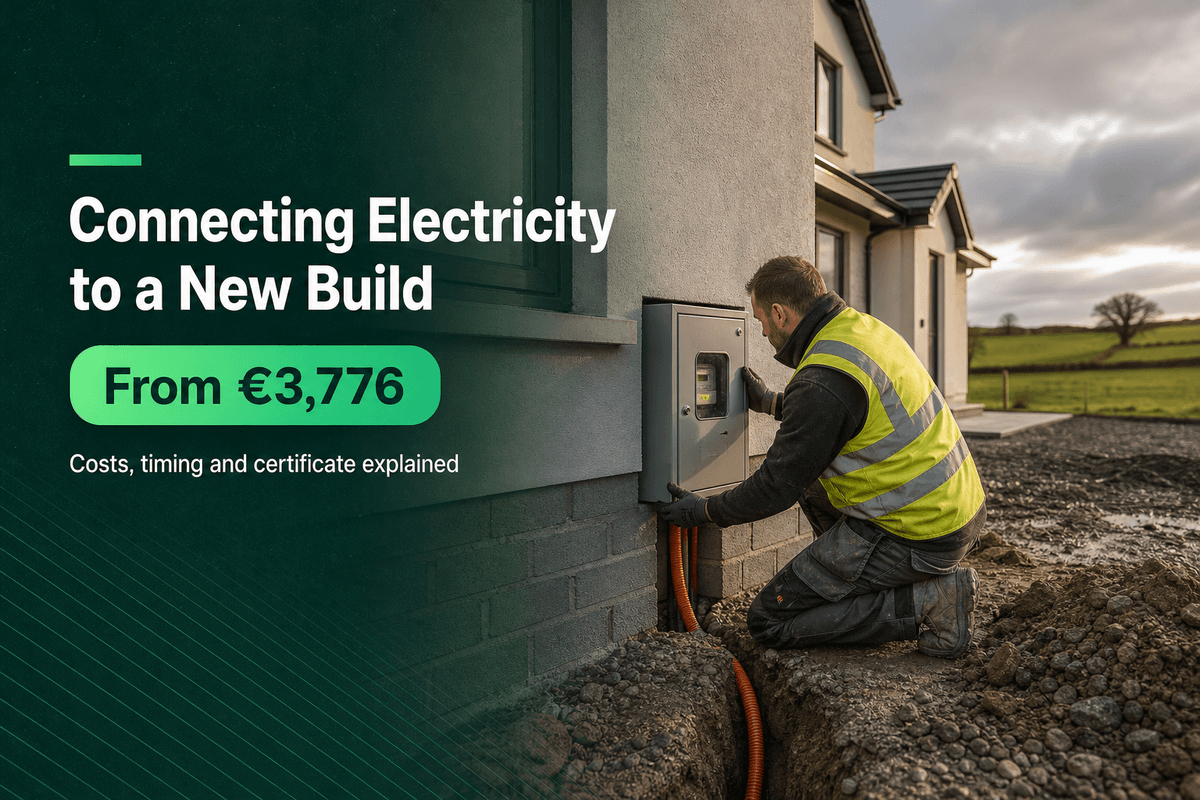
Connecting electricity to a new build in Ireland costs a typical €3,776 for a single standard domestic connection from ESB Networks, or €5,112 for a single enhanced 16 kVA connection, according to ESB Networks. That charge covers the network side: the cable from the public network to the meter cabinet on the house. On top of it the homeowner pays an electrical contractor for the meter cabinet, the duct from the site boundary, the wiring inside the house and the completion certificate, which as an aggregate Irish market estimate adds roughly €700 to €2,500 for the connection-related work alone, before the house wiring itself. Self-builders who need a registered electrician for that side of the job can post it under electrical services and compare quotes.
The cost of a new electricity connection at a glance
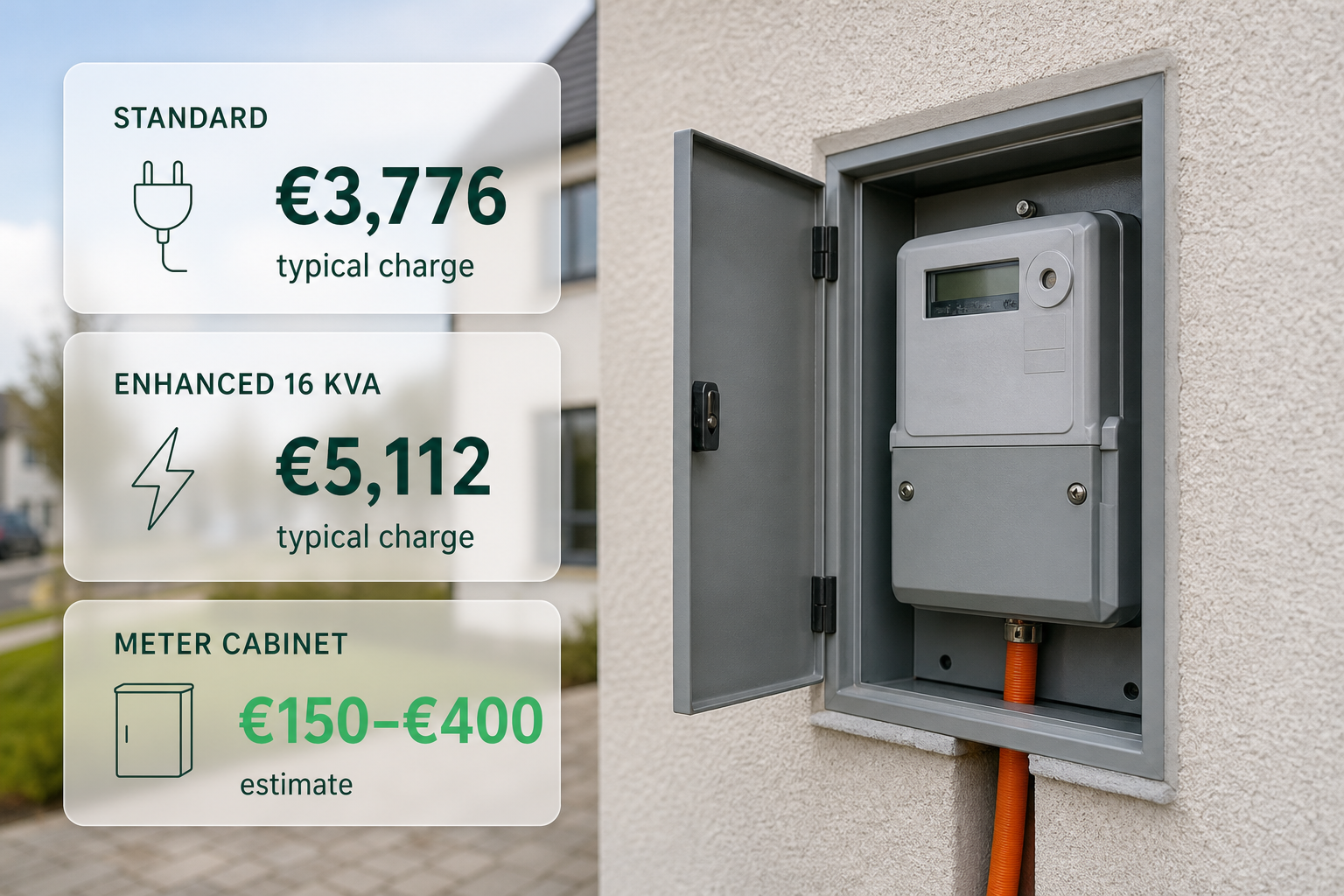
The ESB Networks figures below are its published typical charges for a single house. The contractor lines are an aggregate Irish market estimate, VAT included, and vary with the site and the house.
| Item | Who it is paid to | Typical price |
|---|---|---|
| Standard single domestic connection | ESB Networks | €3,776 typical charge |
| Enhanced single domestic connection (16 kVA) | ESB Networks | €5,112 typical charge |
| Meter cabinet, supplied and fitted in the wall | Electrical contractor or builder | €150–€400 |
| Trench and duct from the boundary to the meter cabinet | Groundworker or builder | €300–€1,500 |
| Testing and completion certificate | Electrical contractor | €200–€500, often included in the wiring price |
| Full wiring of a new three-bed house, with consumer unit | Electrical contractor | €7,000–€14,000 |
| Registering with an electricity supplier | Supplier | No charge to sign up |
The ESB Networks charge is the one most self-builders underestimate, because it is paid months before the house is finished and is not part of the electrician's quote. ESB Networks sets its charges and can quote a different figure where the site is unusual, for example a long distance from the nearest network or where the local network needs reinforcement, so the quotation it issues for the specific site is the figure to budget against.
Standard or enhanced connection: which one a new build needs
A standard connection suits a typical house with ordinary cooking, heating and appliance loads. The enhanced connection, at 16 kVA, gives the house more capacity, and is the one to look at when the design includes several large electrical loads running at the same time:
- A heat pump as the main heating system, which most new builds now have to meet the energy performance rules.
- An electric vehicle charger, now or planned for later.
- Electric showers, an induction hob and an electric oven used at the same time as the heating.
- A large house, or one with a home office, workshop or garden room on the same supply.
The choice is made on the load and connection capacity form that the electrical contractor completes for the application, so it is worth agreeing with the electrician early which appliances the house will have. Paying for an enhanced connection at the start usually costs less than upgrading the connection later, but there is no point paying for capacity the house will not use.
What ESB Networks needs before it can quote
ESB Networks lists what goes with a new domestic connection application:
- A site plan showing where the house sits on the site and where the meter cabinet will be.
- An Ordnance Survey map marking the site.
- ITM or GPS coordinates for the site.
- A load and connection capacity form, completed by the electrical contractor, which sets out the expected load of the house.
ESB Networks says it aims to issue a quotation within 15 business days of receiving a complete application. Missing documents are the most common reason the clock does not start, so having the electrician fill in the load form at the same time as the plans are gathered saves weeks.
When to apply and how long a connection takes
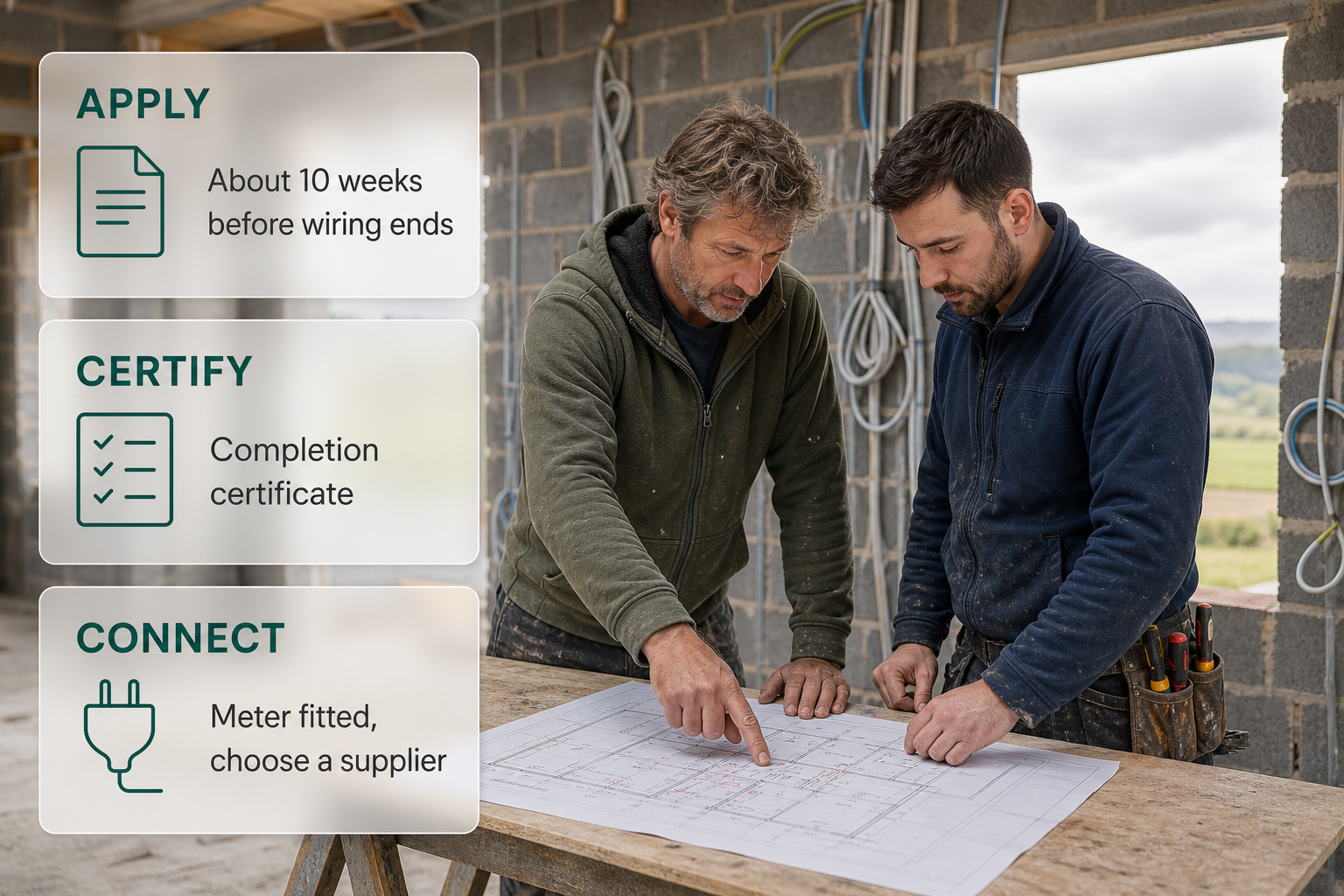
Timing is the part that catches self-builders out. The ESB Networks connection process advises applying and paying about 10 weeks before the electrical installation in the house is due to be finished. Its target is to complete the connection within 60 business days of the quotation being accepted and paid, and it notes that delays can happen.
The steps run in this order:
- Apply with the documents above.
- Receive the quotation and connection agreement, which arrive by post.
- Accept and pay, online or by bank transfer.
- Have the duct laid from the boundary to the meter cabinet to the ESB Networks specification, and confirm it is complete.
- Send the electrical completion certificate once the house wiring is finished and certified.
- ESB Networks connects the house and fits the meter. Its stated aim is to connect within about two weeks of receiving the certificate, provided the duct is in place, any wayleaves are agreed and no network reinforcement is needed.
- Register with an electricity supplier, using the meter point reference number (MPRN). ESB Networks sends an email reminder, and the house has no live supply for billing until a supplier is chosen.
On a typical self-build that means applying while the roof is going on or shortly after, not when the kitchen is being fitted. Leaving it late is how houses end up finished, inspected and still without power.