
Heat pumps in Ireland should be serviced once a year, usually before winter, and published Irish price guides put a standard annual heat pump service at roughly €100 to €300. If the unit is already in a house and not a fresh install, that's the rhythm to stick to.
The awkward truth is that many only think about it when the system starts sounding odd or the house feels a bit flat on heat. That's the wrong time to be scrambling for an engineer.
A heat pump service in Ireland is a once-a-year job for most homes, and the smartest booking window is late summer or early autumn. A homeowner can post the job on ShamFix to get quotes from local heat pump technicians, or browse the heat pump service directory as local coverage grows.

How Often to Service a Heat Pump in Ireland
The clean answer is once a year. SEAI's guidance says heat pumps need a planned maintenance schedule with daily and weekly checks plus annual maintenance, and it also says refrigerant-gas systems may need annual checks by a certified contractor under F-gas rules SEAI operation and maintenance guide.
Book it before the cold weather bites
Late summer or early autumn is the sensible slot. That's when the engineer can catch issues while the system is still in a calmer operating mode, before everybody in the county is trying to book the same service call the first week the temperature drops.
A pre-season visit also gives a cleaner diagnostic picture. If a refrigerant issue, airflow problem, or control fault is lurking, it's usually easier to spot before the house is leaning on the heat pump every hour of the day.
Practical rule: if the unit hasn't been looked at in a year, don't wait for frost to make the call for you.
Newer installs sometimes come with a two-year installer warranty that includes scheduled checks, so the early years may already have visits arranged. After that, the owner needs to keep the calendar honest. SEAI-backed reporting also says installed base growth in existing Irish homes is still running, so more households are moving from first-year comfort to long-term upkeep EGC Ireland country update.
Why the timing matters
A heat pump service is cheap compared with a January breakdown. When the system is struggling and the house is already cold, the call-out becomes more stressful, and often more expensive, because the technician is no longer just checking and cleaning, they're chasing a fault under pressure.
A planned annual visit is the better bet. It keeps the system in shape, keeps paperwork tidy, and avoids the panic-booking scramble that always seems to happen at the worst moment.
What an Annual Heat Pump Service Includes
A proper annual heat pump service is a working visit, not a quick glance and a signature. The HPA Ireland Heat Pumps Code of Practice sets out the baseline, starting with visible damage, correct operation, controls, and safety devices, then moving into cleaning and testing. That is the baseline a homeowner should expect.
The indoor unit work
Inside the house, the technician should inspect the unit, clean the filters, check electrical connections, and look for fault codes on the controller. They should also check the condensate side of the system and make sure drains, pumps, and visible pipework are not blocked or acting oddly.
Then come the readings. Operating temperatures, pressure checks, and any signs that the system is tracking the manufacturer's expected performance should be logged. Those figures matter because they become the reference point for next year, and they make fault-finding much faster if something starts to drift.
The outdoor unit work
Outside, the job is more physical. The engineer should inspect the outdoor unit for damage, clean the condenser coil as needed, check contactors, watch for noise and vibration, and make sure air paths are clear. The checklist also covers electrical connections, filter and strainer cleaning, and checking for signs that the refrigerant side is behaving normally.
A decent visit usually includes defrost checks and a look at the expansion vessel where fitted. That is the kind of detail that separates a real service from a token visit.
A homeowner should ask for the logged readings in writing at the end. That small bit of paperwork is what stops next year's visit becoming guesswork.
If the unit is badly clogged, if access is awkward, or if the engineer finds a fault, the job stops being a simple service and starts drifting into repair territory. That is where quotes start to diverge. One price covers inspection and routine cleaning, another covers extra labour, parts, or diagnosis because the system is already telling on itself.
A straightforward single-unit service usually takes about an hour to an hour and a half on site. If the engineer barely opens a panel, the job probably was not thorough enough.
| Heat Pump Service Price Bands in Ireland | What's Included | Typical Trigger |
|---|---|---|
| Lower band | Inspection, filter cleaning, basic checks, controller review | Straightforward access, no faults, no extra parts |
| Middle band | Standard annual service with VAT, travel, and a routine clean | Typical domestic visit on a healthy system |
| Upper band | Extra units, deeper cleaning, or a fault found during the visit | Neglected equipment, awkward access, or a repair being added |

Typical Cost of Heat Pump Service in Ireland
Irish price guides put a normal annual heat pump service in the roughly €100 to €300 band, and that is a fair working range for a domestic job in Ireland. Selectra Ireland puts the figure at €100 to €250 per year Selectra Ireland heat pump service guide, while other service pages go higher once the visit covers more labour or a deeper clean.
What the money is actually buying
At the lower end, you are paying for a straightforward annual check on a system that is easy to reach and behaving itself. That usually means inspection, filter cleaning, pressure checks, controller review, leak testing, and a look at the outdoor unit.
Once the quote moves into the middle of the range, you are usually paying for the bits that make the day longer. Travel, VAT, and a routine clean are the usual extras, and VAT on home servicing and maintenance is 13.5%, so it should be spelled out in the quote instead of buried in a round number.
The jump above the normal annual band is where homeowners should ask what changed. Extra indoor units, a grimy outdoor coil, awkward access, or a fault that needs diagnosis can all push the bill up. That is not a simple service anymore, it is a bigger job.
What should not be folded into a service
A refrigerant top-up or leak repair is not part of a routine service. If a quote rolls regassing into the annual visit, the paperwork is muddy or the job is really two separate visits being sold together.
Regional differences matter too. Dublin and Cork often sit toward the higher end, while rural jobs can pick up a travel charge on top. That does not make the quote wrong. It just means you should ask exactly what is included before you agree to the call-out.
Simple test: if the quote sits well below the usual range, something is probably missing.
Compare like with like. Ask for the annual inspection, cleaning, VAT, and any likely extras to be listed separately. The cheapest quote is often the one that leaves out the part you will pay for later.
Choosing a Qualified Heat Pump Technician
If you are booking a heat pump service, the first thing to check is whether the technician can prove they are qualified for the work they are doing. A homeowner should ask for the F-Gas certificate number up front, then check that it matches the person turning up. If there is any hesitation, move on.
For an Irish homeowner, the quote should also show who is doing the job and what paperwork comes with it. SEAI registration can matter for grant installation work, but that is a separate question from a routine service visit.
What to ask before booking
Ask for the full quote in writing. It should spell out the service scope, the price, and whether VAT at 13.5% is included. If the price is vague, or the call is sold as “we'll have a look”, expect the final bill to change once the technician is on site.
Ask how they record the certificate details too. A proper technician will know their own registration number and should have no problem showing proof.
Red flags on the day
Service work and repair work are not the same job. A service covers cleaning, checking, and measuring. A repair starts when the technician finds a fault, a leak, or a failed part, and that is where quotes diverge.
That is the bit homeowners get caught on. The cheap quote often covers only the basic visit, then the cost appears once the engineer starts diagnosing a problem. Ask what happens if the unit needs a part, extra labour, or a separate return visit.
The good ones are straightforward. They say what is included, they tell you what will trigger extra cost, and they do not leave you guessing while the tools are already out.
Red flag: if the price only makes sense after the visit, the quote was never clear enough.
Local recommendation still matters. Neighbours with the same brand often know which technicians turn up on time, explain the readings, and leave the area tidy.

Simple Checks Homeowners Can Do Between Services
The best between-visit work is boring and regular. Clean or vacuum the filters every few months during the heating season, especially if the house has pets, dust, or a unit that's running hard. A dirty filter is one of the easiest things to miss and one of the easiest things to fix.
Keep the outdoor unit breathing
Walk outside and keep the unit clear of leaves, grass cuttings, and clutter. The fan needs space, not a pile of wet debris pressed against the grille, and the unit should never be boxed in because airflow matters.
The controller deserves a glance too. If fault codes are showing, or the system seems to be taking much longer to heat than usual, that's worth a call before the problem gets bigger.
Listen and watch for change
Noise is a useful warning. Grinding, banging, or repeated clicking outside the normal defrost cycle is not “just how it sounds now.” It's a sign someone should inspect it.
The condensate line also deserves attention in winter. If the drip stops when the weather is cold, it may be frozen or blocked. That's the kind of thing that can often be sorted early if someone notices it quickly.
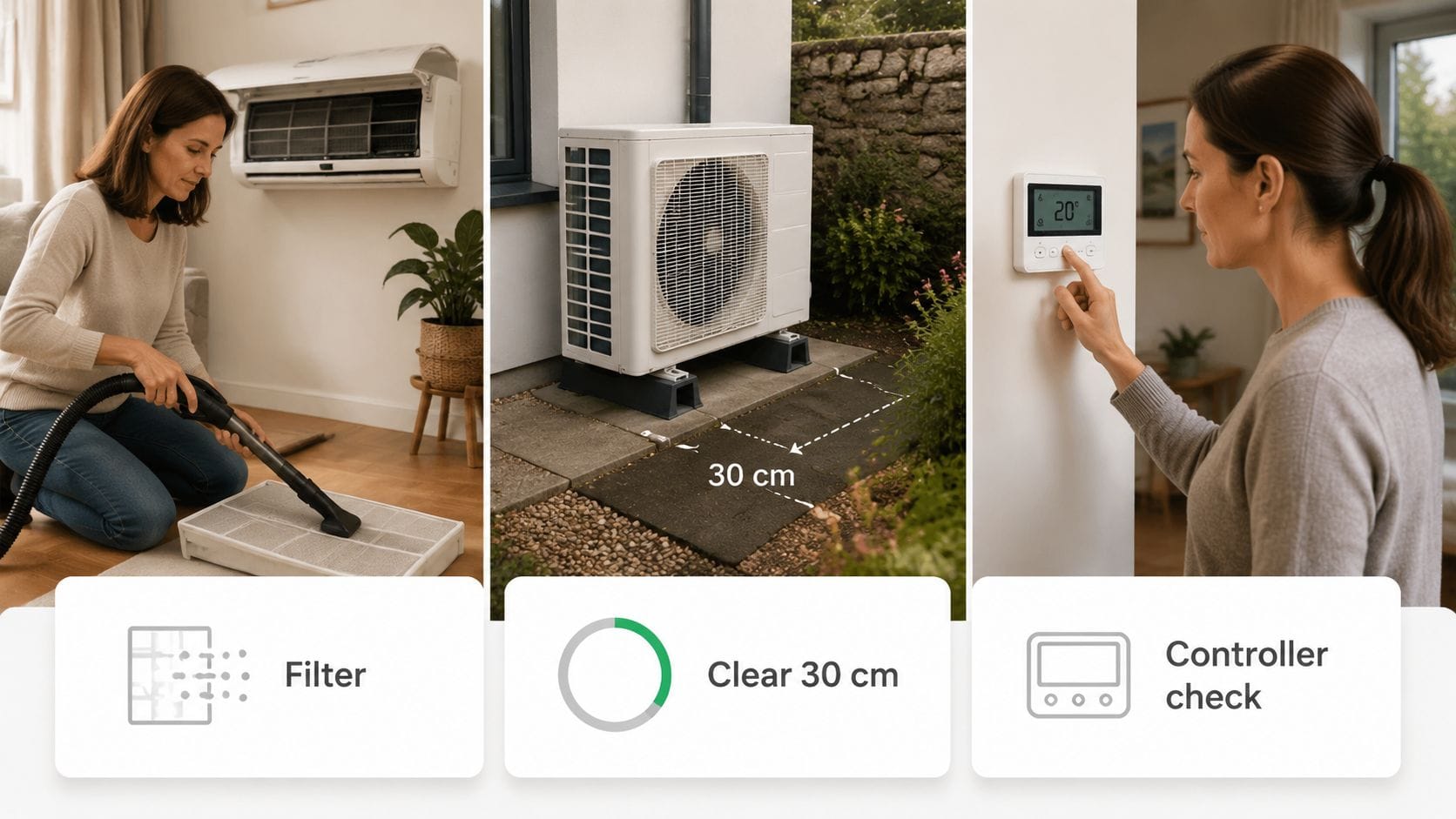
Anything involving the sealed refrigerant circuit, terminals, or compressor stays with the technician. Irish refrigerant work needs the right registration, and DIY electrical tinkering is a bad way to discover a warranty problem.
Service Call or Repair Visit
A service call and a repair call are different jobs, and the bill should show that from the start. If a quote only makes sense after the engineer adds extras, it was never clear enough. A homeowner might book a heat pump service because the system will not start, and the technician then finds a failed expansion valve. That is a repair, not a routine service, so the price should change with the job.
A proper annual service covers inspection, cleaning, and small adjustments on parts already in place. A repair starts when something has failed. A refrigerant leak, a burnt fan motor, or a compressor fault means the engineer is diagnosing a break and pricing the fix, not just carrying out maintenance.
Good technicians stop, explain the fault, and give a revised quote before ordering parts. If that does not happen, you are being asked to accept surprise spending after the fact, which is exactly what a written quote is supposed to avoid.
The clean split is simple. Dirt, access, settings, and routine checks belong to the service. Failed components belong to the repair. Keep that line clear and the invoice makes sense.
Are You a Heat Pump Technician in Ireland
Registered F-Gas technicians and heat pump contractors can use a local service directory to pick up residential jobs without spending all day chasing enquiries. Listing on ShamFix is free and there's no commission; a subscription is planned for the future.
That model suits service work, because homeowners usually want a local engineer who can handle annual checks, fault diagnosis, and follow-up repairs when needed. ShamFix routes the enquiry, and the technician decides what suits the calendar.
Create your provider profile to stay visible to local homeowners looking for heat pump servicing.