
A kitchen renovation in a 1990s semi often starts with a colour sample, then quickly turns into questions about damp, uneven floors, underfloor heating and the cost of fitting. A draughty bathroom in a coastal cottage brings a different set of concerns, particularly moisture, cleaning and safe footing. In both cases, the attractive tile is only one part of the decision.
For floor tiles in Ireland, the sensible order is room conditions first, tile appearance second. The homeowner needs to identify wet and dry zones, expected foot traffic, the existing subfloor and whether underfloor heating will sit below the finished surface. Solid concrete ground floors, suspended timber floors and older screeds can respond differently to moisture and temperature changes, so preparation matters as much as the tile itself.
The guide below links material choice with technical performance, fitting stages, installed cost and safe hiring. It also highlights an issue frequently missed in older homes. Vinyl floor tiles and the bitumen adhesive beneath them can contain asbestos, and the HSA (Health and Safety Authority) advises that asbestos-containing materials in older buildings should be identified before work that may disturb them. In practical terms, pre-2000 vinyl floor tiles and bitumen adhesive should be treated with caution, and the floor should be properly assessed before disturbance if asbestos is suspected.
Choosing Floor Tiles for Irish Homes
The first decision is not whether a room needs a stone effect, timber effect or plain finish. It's whether the floor will regularly meet water, grit, muddy footwear, spills, furniture movement or heavy foot traffic.
A kitchen-diner in a family home may need a hard-wearing, low-porosity surface that tolerates dropped food, tracked-in moisture and frequent cleaning. A bedroom has a lighter service demand, so a softer and lower-cost ceramic tile may be suitable if the substrate and product classification support floor use. A bathroom, utility room or entrance needs more attention to grip, drainage and cleaning than a dry sitting room.
Start with the room and subfloor
Before choosing a tile, the homeowner should record:
Moisture exposure: Separate consistently dry living areas from bathrooms, utility rooms, entrances and floors beside external doors.
Traffic level: Hallways and kitchens usually experience more movement than bedrooms.
Subfloor type: Identify whether the surface is concrete, screed, suspended timber or an existing tile layer.
Heating system: Confirm whether underfloor heating is present or planned, then check the tile and adhesive manufacturer's instructions.
Finished height: Allow for tile thickness, adhesive, thresholds, doors, appliances and adjoining floors.
The practical implication is simple. Product labels, technical sheets and declared performance should guide the purchase, not just the showroom display. Ireland's adopted standard, I.S. EN 14411:2016, covers ceramic tiles for internal and external flooring, including stairs. A homeowner should ask for the manufacturer's declaration to EN 14411 and check that the tile is classified for floors and suitable for the site conditions.
Home improvement guides Ireland can help organise the wider renovation, but the tile decision still depends on the individual room, substrate and installation system.
Comparing Porcelain, Ceramic and Natural Stone
Porcelain, ceramic and natural stone can all produce attractive floors, but they behave differently. Porcelain is generally the stronger choice for areas exposed to moisture and wear because it has very low water absorption. Ceramic can suit lighter-use rooms and may cost less. Natural stone provides variation and character, but it demands more care before, during and after installation.
In simple terms, porcelain is usually denser and less absorbent than standard ceramic, which is why it is often preferred for wetter and harder-wearing parts of the home. Ceramic can still work well in lower-demand rooms, but the specification needs closer checking.
| Property | Porcelain | Ceramic | Natural stone |
|---|---|---|---|
| Water absorption | Very low porosity, generally well suited to wet conditions | More absorbent, so product suitability needs closer checking | Varies by stone and finish, often needs protection |
| Hardness and wear | Hard-wearing and suitable for busy floors | Softer, better suited to lighter-use areas | Can be durable, but softness and marking vary |
| Maintenance | Usually straightforward, with grout and textured finishes still requiring care | Generally easy to clean when correctly glazed or finished | Sealing and periodic maintenance are commonly required |
| Formats and weight | Often available in large formats, which demand careful handling and a flatter base | Often lighter and easier to cut | Can be heavy and may require additional substrate assessment |
| Irish room fit | Kitchens, halls, bathrooms, entrances and some outdoor applications | Bedrooms and lower-wear indoor rooms, subject to floor classification | Living areas, kitchens or feature floors where maintenance is accepted |
| Main trade-off | Higher material and handling demands can apply | Lower cost can come with lower hardness and higher absorption | Character comes with sealing, preparation and care requirements |
Porcelain's low porosity makes it a sensible candidate for wetrooms, entrances and high-traffic kitchens. It also transfers heat effectively, making it commonly considered where underfloor heating is installed, although the manufacturer's heating, adhesive and grout instructions still control the specification.
Ceramic may be a reasonable choice for a bedroom or lightly used internal room. It shouldn't be selected solely because it looks similar to porcelain. The technical sheet must confirm that the product is intended for floor use, with suitable wear and slip characteristics.
Natural stone changes the maintenance routine. Many stone tiles need sealing before grouting, further sealing after installation and ongoing care to reduce staining. The substrate also needs to support the tile's weight and format. A homeowner choosing stone for a kitchen or hall should budget for preparation and maintenance, not only the purchase price.
Matching Tile Performance to Each Room
A floor tile should be chosen by exposure. The same finish that feels comfortable and easy to clean in a dry hallway may be unsuitable beside a shower, back door or utility sink.
Interpreting slip resistance
Irish tile guidance commonly uses the R-scale, from R9 through R13, to describe increasing slip resistance. R9 is generally associated with dry indoor areas, R10 is widely used for kitchens and general home use, and R11 is typically considered for wetrooms and outdoor areas. More textured, higher-grip surfaces can be harder to clean in domestic settings.
The Pendulum Test Value, or PTV, is a different measurement. Irish guidance identifies a wet PTV of 36 or above as a threshold to consider for a surface as installed and in final use conditions. The risk bands commonly used with PTV describe 0-24 as high slip risk, 25-35 as moderate and 36+ as low.
Practical rule: A dry living room can often prioritise comfort and cleanability, while a regularly wet floor needs declared high-grip performance and a compatible installation system.
For a wet-room renovation, the homeowner should ask for the tile's R rating and any available wet PTV, then confirm that the adhesive, grout, falls and waterproofing system match the room. In a utility room, tracked water and cleaning products make slip performance more relevant than in a bedroom. At a porch adjoining an external door, rain and grit increase the need for a durable, grippy surface, but the threshold and drainage detail must also prevent standing water.
Wear, porosity and heating
The PEI wear rating is used for glazed ceramic surfaces to indicate resistance to abrasion. A hallway or kitchen needs a floor product intended for regular foot traffic, while a bedroom can usually work with a lower-wear classification if the manufacturer permits floor use. The exact PEI level should come from the product documentation rather than a generic label.
Porosity matters where damp is persistent or traffic is high. Low-porosity porcelain is generally better suited to wet conditions than more absorbent ceramic, while unsealed natural stone needs particular care. Irish supplier guidance describes floor slip ratings from R9 to R13 and explains the progression from dry indoor use towards more demanding environments.
For a kitchen on a concrete slab with underfloor heating, the tile should be declared suitable for heated floors. The installer needs the system's maximum temperature, adhesive instructions, movement-joint requirements and commissioning procedure. Heating should not be treated as a reason to ignore substrate movement or curing.
How Professional Floor Tiling Works
A sound installation begins with a measured survey, not with opening a bag of adhesive. The tiler checks the room dimensions, thresholds, drains, junctions, existing finish, floor height and substrate condition. Loose boards, cracks, contamination and uneven areas need attention before the layout is finalised.
Survey, preparation and setting out
Preparation may involve cleaning, priming, screed repair, levelling compound, waterproofing or a decoupling layer. Over underfloor heating, a suitable decoupling membrane may help manage movement, but the selected system must follow the manufacturer's documentation. The installer should also confirm falls in wet areas and the finished level at doors and adjoining floors.
Setting out follows preparation. Key tiles are dry-laid so cuts can be balanced and narrow slivers kept away from prominent doorways or exposed edges. Large-format and rectified porcelain can demand a flatter substrate and careful handling. Back-buttering may be required to improve coverage, particularly where the tile format and substrate make full bedding important.
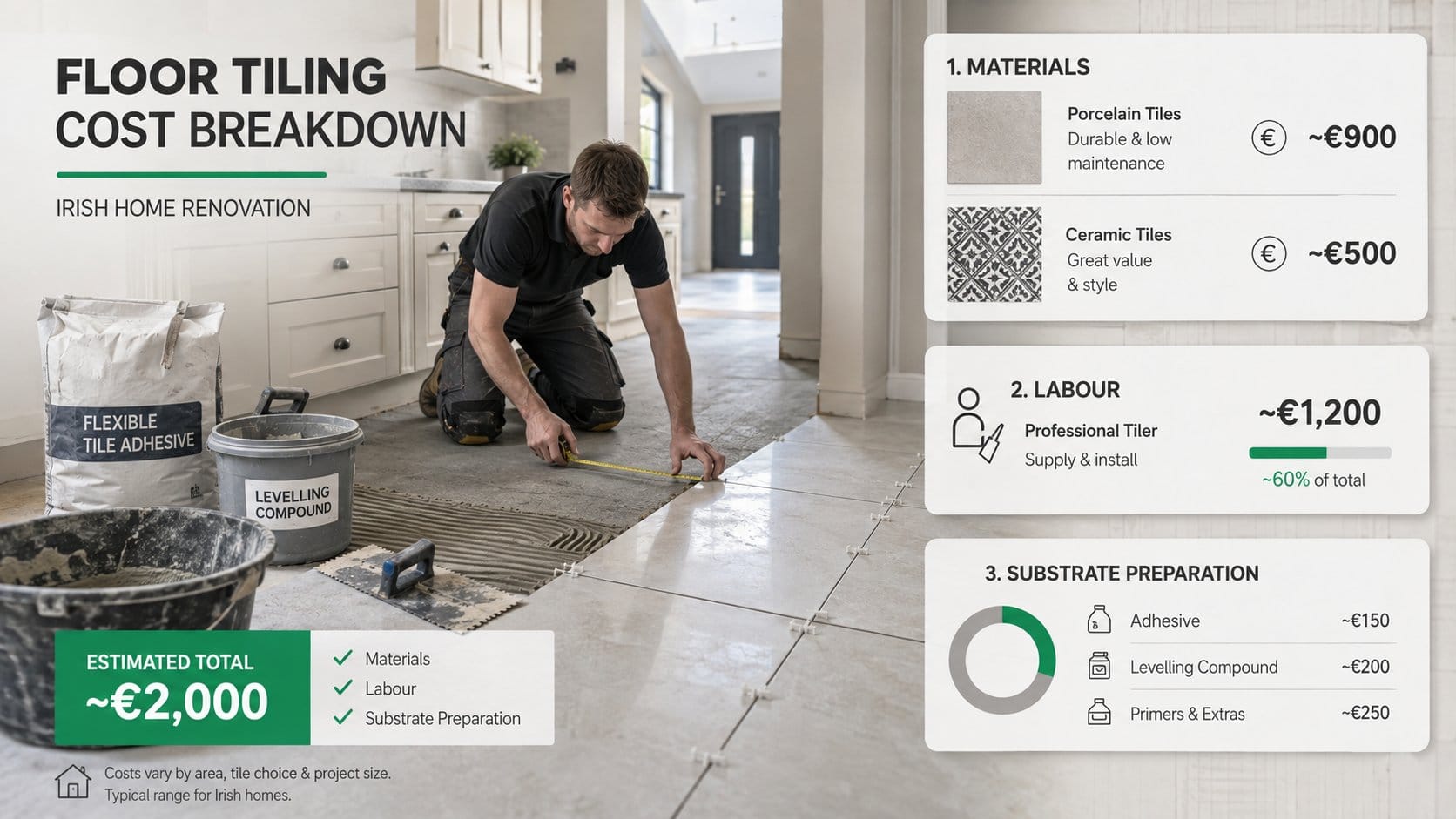
Fixing, joints and finishing
The adhesive is mixed and applied with a suitable notch trowel and bed depth. Cuts around pipes, corners and thresholds should be clean, while trims and movement profiles need to suit the tile and adjoining materials. Movement joints continue through the tile layer and must not be filled with grout, because grout is not a substitute for a designed movement detail.
After the adhesive cures, joints are cleaned and grouted. Specialist or epoxy grout may require particular handling. Natural stone and some grout systems need sealing, while the finished floor should be cleaned and protected during the remaining cure period.
Expert tile prep and layout advice can help homeowners understand why substrate flatness, coverage and layout affect the finished result. The homeowner can also review how ShamFix works when considering how a marketplace routes enquiries to local service providers. ShamFix has no in-house installers and doesn't sell tiles.