
A first fire on a cold Cork evening should feel ordinary, not risky. If smoke lingers, the room smells damp, or the stove hasn't been checked since last season, the chimney needs attention before the heating routine starts again. In Cork City, that matters even more because chimney sweeping is still a fragmented local trade, not a tightly licensed public utility, and homeowners end up relying on local reputation, insurance proof, and practical judgement.
An Irish business directory listed 20 chimney-sweep businesses in Cork County in April 2026, with some covering places like West Cork, which shows a real but very local supplier base for Cork homeowners and landlords who need seasonal maintenance (The Chimney Sweep). That local spread is useful, but it also means the market doesn't behave like gas or electrical work, where registration systems give people an easier shortcut. For chimney work, the homeowner has to ask the right questions.
Why Your Cork Chimney Needs Regular Sweeping
The first autumn fire often exposes problems that stayed hidden through the summer. A chimney that seemed fine in spring can start drawing badly once damp weather sets in, especially in Cork homes where older flues, cold external walls, and long idle periods all work against a clean pull. Regular sweeping clears the soot, but it also gives a practical check on the liner, the pot, and the appliance connection before small faults turn into smoke backing into the room.
Older terraced houses in Cork City often have chimneys that have seen years of mixed use. Some were built for open fires and later adapted for stoves, which means the flue may be narrower, lined differently, or more sensitive to tar build-up than a newer installation. Newer builds usually have a more controlled flue path, but they still need attention if the stove is run on solid fuel or if the chimney has been left unused for long periods. The building style changes the maintenance pattern, but it does not remove the need for cleaning.
Fuel choice makes a real difference. Turf can leave a sticky residue, smokeless coal tends to build a harder soot layer, and wood produces creosote when it burns cool or with poor air supply. That residue clings to the flue walls, and once it starts to harden, the chimney draws less efficiently and becomes harder to keep clear. If the fire is damped down too far, or if the fuel is not seasoned properly, the deposits build faster and the smell usually shows up before the blockage does.
A sweep also matters for safety reasons that are easy to overlook. A chimney that is partially restricted can let smoke and combustion gases spill back into the room, and that includes carbon monoxide risk if the appliance is not venting properly. In practice, the job is not only about removing soot. It is about keeping the whole system working as it should under the fuel and weather conditions common in Cork.
There is also a liability side to it. Ireland does not treat chimney sweeping as a tightly regulated trade in the way some homeowners expect, so the quality of the job depends heavily on the operator, their method, and whether they notice defects rather than just clearing debris. That makes regular sweeping part of sensible home maintenance. It gives the homeowner a cleaner flue, a better draw, and a clearer picture of whether the chimney is safe to keep using through the heating season.
Key Signs Your Chimney Is Due for a Sweep
A chimney rarely fails without warning. The usual signs are visible, smelly, or obvious in the way the fire behaves, and they tend to show up before the flue becomes fully blocked. A good sweep looks for the cause, not just the mess.
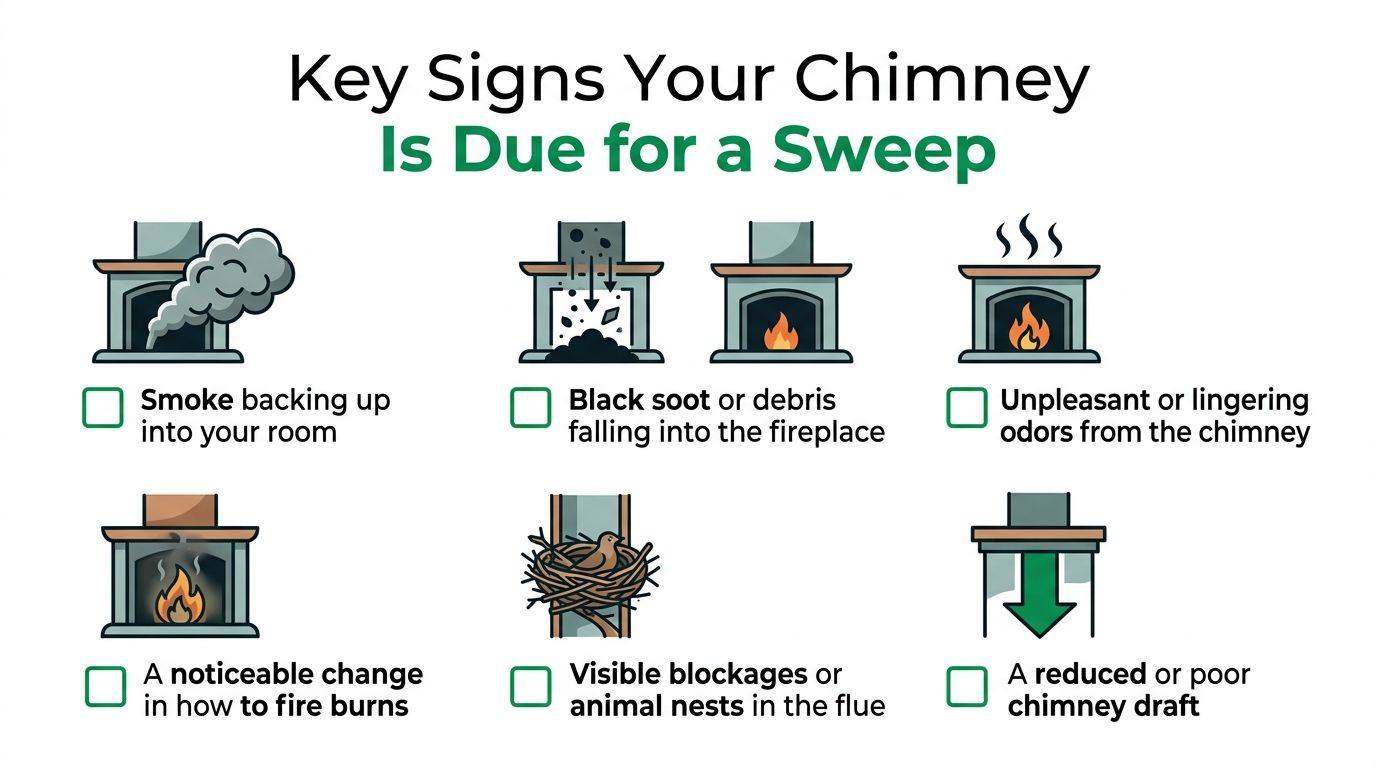
The warning signs that matter
- Smoke backing into the room: this usually points to poor draw or a partial blockage.
- Black soot or debris falling into the fireplace: loose deposits mean the chimney is accumulating residue faster than it's being cleared.
- Lingering odours from the chimney: damp weather often makes soot and tar smells more noticeable.
- A change in how the fire burns: an appliance that used to draw cleanly but now burns sluggishly needs attention.
- Visible blockages or nesting material: birds and debris can obstruct the flue, especially if the chimney has been idle.
- Reduced draft: if the flue pulls weakly, the fire struggles and smoke has nowhere to go.
The reason these signs matter is that they often overlap. A chimney that smells bad may also have a weak draw, and a weak draw can lead to smoke spillage and higher soot build-up. That's why a sweep should not be treated as a cosmetic service. It's a check on how the whole flue system is functioning.
A second issue in Irish homes is fuel. Wet or unseasoned wood lays down heavy tar and glaze, which can harden inside the flue and make ordinary sweeping less effective. If a chimney has been unused over summer, nesting or debris can create a seasonal blockage, and the honest outcome may be inspection rather than a quick brush.
If there's been a chimney fire in the past, the concern changes again. Cracked or distorted liners need proper inspection, because sweeping alone won't put a damaged flue back into safe service.
Safety Standards and Regulations in Cork
Chimney sweeping in Ireland isn't a regulated trade in the way gas or electrical work is. There's no public licence register for a chimney sweep, so the homeowner has to rely on public liability insurance, a written scope, and real customer reviews when choosing who to let into the house. That's normal in this trade, but it does put more responsibility on the person booking the job.

What protects a homeowner in an unregulated trade
The most important safety device is a working carbon monoxide alarm that meets European Standard EN 50291. Irish guidance from the NSAI treats that as the baseline for solid-fuel homes, and it's the only thing that warns of CO between sweeps. A flue can be cleaned perfectly and still become blocked later, so the alarm is not optional in any home with an open fire or stove.
Cork City also sits inside Ireland's smoky-fuel control area, so households should be burning approved low-smoke fuel rather than smoky coal. That matters because fuel choice affects the deposits inside the chimney. Wet fuel and poor-quality fuel create heavier soot and tar, which means more maintenance and a greater chance of a dirty flue.
For local fire-safety queries, Cork City Council's fire and building-control service is based at Floor 2, Central Fire Station, Anglesea Street, Cork, T12 DK52, and the department's published contact details include 021 492 4650 and building@corkcity.ie (Cork City Council). The council also publishes fire-safety and building-control guidance for homeowners and builders, which is the right place to start when a chimney issue overlaps with a building concern.
There's another important distinction that often gets missed. Cleaning a chimney is one thing, but repairs are another. If a sweep finds that the cap, liner, or mortar needs work, that can move the job into repair territory, which may involve different compliance checks. The safest approach is to treat sweeping, inspection, and repair as separate questions until the scope is clear.
The internal building-control page for fire-safety certification matters here too, because not every household project triggers the same paperwork. The relevant local page is the Cork fire-safety certification guidance, and it's worth checking when chimney work sits alongside other building changes.
How to Hire the Right Chimney Sweep
The first question should be about insurance, not price. In a trade without a licence register, public liability cover is the main backstop if something gets damaged or if the work goes wrong. A sweep who can't explain that clearly is not the one to book.
The questions worth asking before booking
- What type of appliance do you work on? An open fire, stove, and insert don't always need the same approach.
- Do you use rods and brushes, or power-sweeping equipment? The answer doesn't need to be flashy, it just needs to suit the chimney.
- What does the price include? Ask whether the quote covers cleaning only, or also an inspection, certificate, and tidy-up.
- Will I get written proof of the visit? Keep that for insurance records.
- Can you explain any problem you find? A good sweep can distinguish between a dirty flue and a damaged one.
The autumn booking issue is real. Online directories usually give only static contact details and no wait-time information, which makes peak-season planning awkward for homeowners trying to get a quick appointment (Golden Pages). That's why it's smarter to book before the heating season starts, rather than waiting for the first smoke-back event or smell.
A reliable sweep should also be able to discuss how the job will be carried out around the house. Period homes, terraces, and higher roofs may need access through the roof or scaffold, while other jobs can be done from inside. The important point is not the method itself, it's whether the sweep explains why the method fits the chimney in front of them.
A clear quote matters more than a cheap one. The low number often leaves out access, making good, or a proper condition report.
One more check is fuel history. If the appliance has been converted, or if the household has changed from turf to wood or from wood to smokeless fuel, the sweep should know that before starting. It affects the deposit pattern and often the amount of work needed.
Preparing for and What to Expect During the Visit
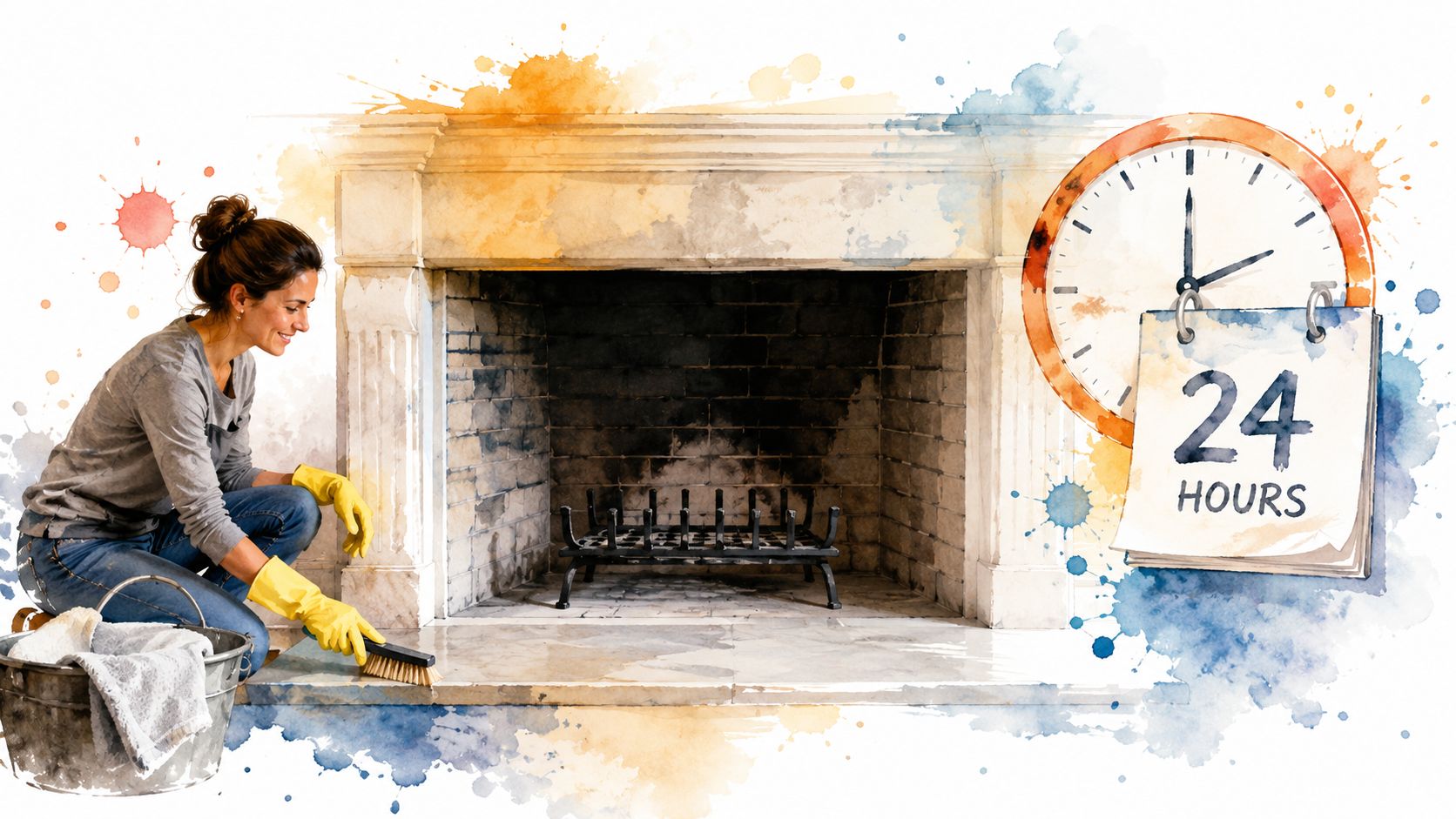
A sweep works better when the fireplace area is ready. The chimney should be fully cold, and the safest rule is to leave it unused for at least 24 hours before the appointment. A warm flue is not a detail, it's a safety issue.
What the homeowner should do first
Move furniture, rugs, and ornaments away from the hearth. A sweep will usually sheet off the opening and manage soot, but clearing the approach makes the job easier and reduces the chance of damage to nearby items. It also helps if the homeowner knows what the appliance normally burns, because wood, turf, and smokeless fuel don't leave the same residue.
During the visit, the sweep usually seals the opening, cleans the flue, and checks that the chimney draws correctly afterwards. A proper tidy job should end with a condition summary, and if something unusual is found, that needs to be spelled out plainly rather than dressed up. If the flue needs further inspection or repair, that should be the next step, not guesswork.
There are a few common difficult jobs a homeowner may face. Heavy tar and glaze from wet wood can be stubborn and may need more than a standard brush. A chimney that has sat unused for months can have nesting or debris inside. If there are signs of a past chimney fire, the outcome may be a recommendation for inspection or relining instead of a routine clean.
The useful habit after the visit is straightforward. Keep the sweep date, hold onto any certificate or written note, and continue using dry fuel. Insurance policies vary, but many householders are asked for proof that the chimney has been maintained, so a dated record is worth keeping even when nothing went wrong.
Find Rated Cork Chimney Sweeps on ShamFix
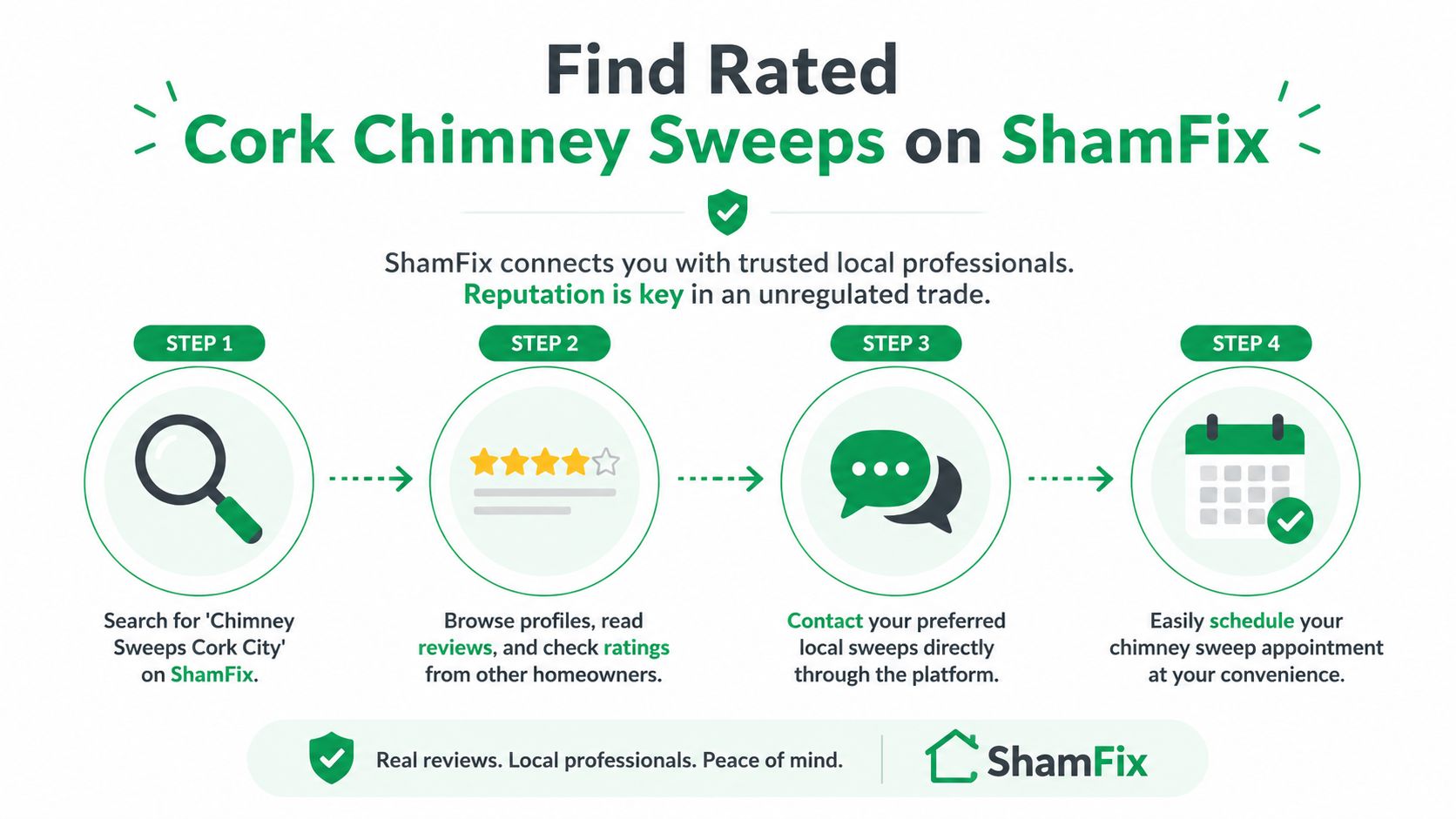
In an unregulated trade, reputation is the practical filter. ShamFix gives Cork homeowners a place to compare local chimney sweeps using public profiles and completed-job reviews, while the platform itself does not carry out the work. For chimney work, this distinction is important because the trade often looks the same from the outside.
Why the review system matters
The two-sided review setup lets both sides rate each other after the job. For a homeowner, that gives a better read on punctuality, communication, and workmanship than a plain directory entry. It also helps separate a tidy contact page from a provider with a visible track record.
That matters in chimney work because two sweeps can both say they cover Cork City, but only one may be set up for stove liners, roof access, or camera inspections. A review trail shows which kind of job a provider handles, based on completed work rather than marketing language. It is a practical way to see whether the sweep is used to the kind of chimney and appliance you have in the house.
The practical steps are straightforward:
- Search for local chimney sweeps in Cork City.
- Read the public reviews and ratings.
- Message the sweep about the appliance and access.
- Book the visit that fits the house and the season.
The relevant category page is ShamFix chimney cleaning and inspection, and Cork homeowners can also check ShamFix Cork County if they need options beyond the city boundary. The platform routes the request and leaves the work to the sweep, so the homeowner still needs to ask about insurance, written scope, and the fuel type being used in the appliance. That matters in Cork, where solid-fuel choices, CO alarms, and clear maintenance records all carry real weight if there is ever a problem with the chimney or stove.