
A standard 3-bed carpet clean in Cork typically lands at €90 to €120, and a single-room job usually starts at €50 to €65. If a quote is well below that without a clear reason, it usually means something has been left out.
Cork homeowners get caught between two bad habits. Some chase the cheapest number and end up paying extra for stains, deodorising, furniture moving, or a return visit. Others accept a lazy all-in quote without checking whether the cleaner understands Cork's damp climate, where a carpet can feel dry on top and still hold moisture underneath.
What Carpet Cleaning in Cork Costs in 2026
A Cork hallway with muddy footprints, a living room full of pet hair, and a stair carpet that looks darker than it should. That is the usual trigger for the phone call, and that is where the quote can go wrong if the homeowner does not know the local numbers.
A single-room job usually starts around €50, roughly the level of a common minimum call-out charge. For a normal household, a 3-bed home typically costs €90 to €120 for all carpets, and a minimum call-out charge of €50 to €150 is common in the Irish market when a cleaner has to travel, bring equipment, and set aside time for a small job. Treat these as general Irish market rates.
Practical rule: if a quote sits far under the local floor, the homeowner should ask what is missing before booking.
For a normal household, a 3-bed home typically costs €90 to €120 for all carpets, and that is the figure most buyers should anchor to. A minimum call-out charge of €50 to €150 is also common in the Irish market, especially when a cleaner has to travel, bring equipment, and set aside time for a small job.
| Job | Typical Cork Price | Notes |
|---|---|---|
| Single room | €50 to €65 | Strong floor for a basic domestic job |
| 3-bed home, all carpets | €90 to €120 | Typical household benchmark |
| Minimum call-out charge | €50 to €150 | Common on small jobs and one-off visits |
The price swings usually come from what the quote includes. Moving light furniture, tackling heavier soil, handling stairs, or dealing with one-off stains all change the time on site. A cleaner who quotes per room and another who quotes per hour can both sound reasonable, but only one may be including the same work.
The safest move is to compare like with like. If one quote covers only the carpet cleaning itself and another includes stain work, deodorising, and protector, the cheaper quote is not cheaper at all. A fair Cork price is clear, itemised, and boring.
Steam Cleaning Versus Dry Cleaning in Cork Homes
A damp Cork winter changes the question. The right method is not the one that sounds more technical, it's the one that leaves the room usable without dragging moisture deeper into the pile.
Hot water extraction, commonly known as steam cleaning, is the better choice for a heavily soiled living room. It pre-vacuums, treats traffic lanes and stains, then sprays and extracts dirty water back out. That deeper rinse matters when the carpet has been lived on hard, especially in family rooms and hallways.
Low-moisture encapsulation suits lighter jobs, rentals, and flats where ventilation is poor. It uses less water and dries faster, which makes it the smarter pick when the priority is quick turnaround rather than heavy soil removal.
In Cork, drying time matters as much as cleaning power, because a room that stays damp too long becomes the real problem.
The local reality is moisture. Generic carpet advice often says carpets can be walked on in a few hours and fully dry later, but Cork homes don't always behave that neatly because indoor humidity and weak airflow slow things down. The safer approach is simple, use the least water needed, extract as much as possible, and keep the room ventilated until the pile is properly dry.
For a family room with traffic lanes, hot water extraction usually wins. For a rental turnover, a small flat, or a room with awkward ventilation, low-moisture cleaning often makes more sense. The question to ask is not, “Do you do steam cleaning?”, it's, “Which method fits this room, and how long will it stay damp in this house?”
How to Prepare Your Cork Home Before the Cleaners Arrive
The cheapest upgrade to any carpet clean is the prep work done before the van parks outside. A cleaner can only work with what's visible and accessible, so a messy room wastes time and leaves dirt where the wand can't reach it.

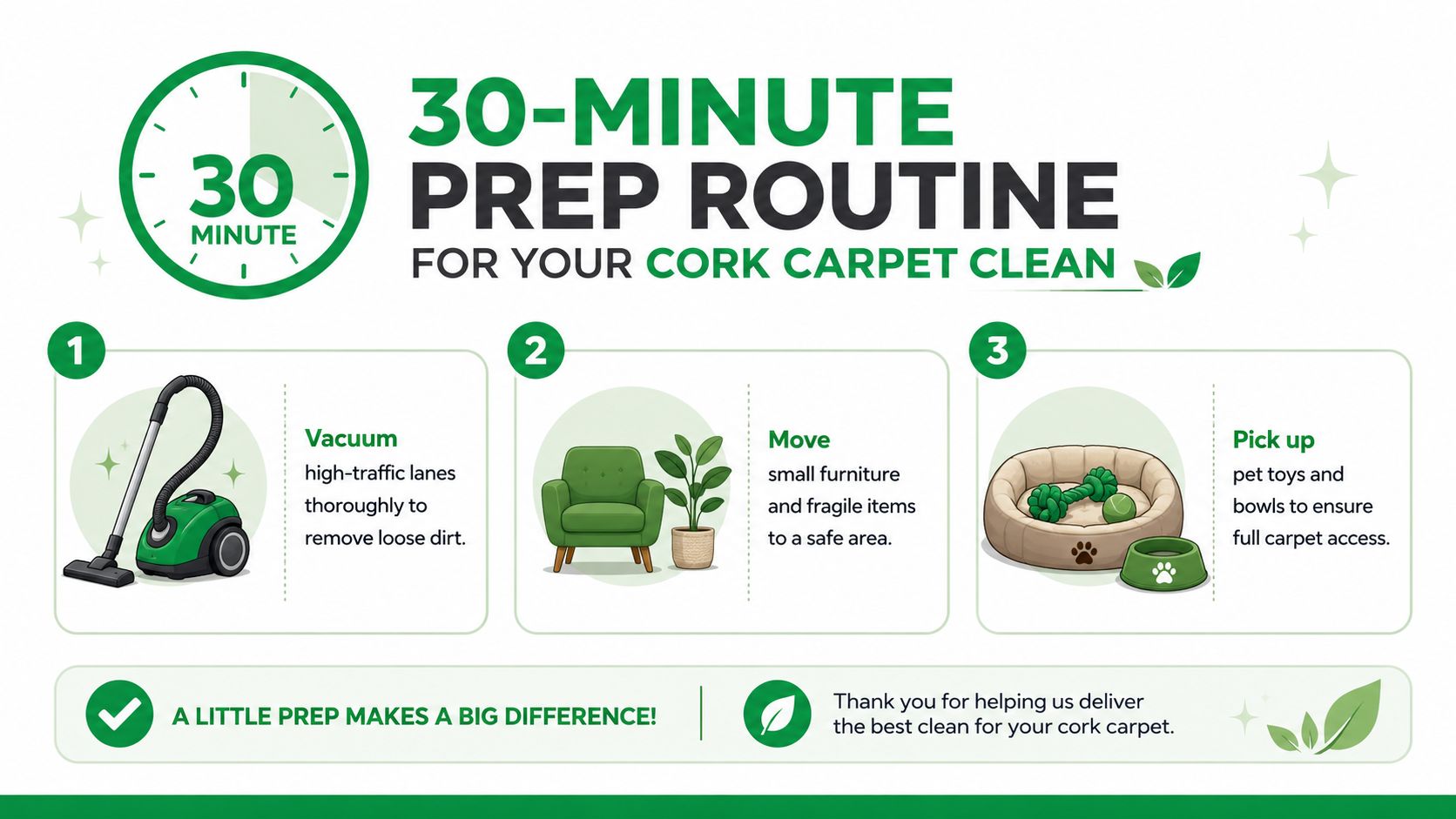
Start with a proper vacuum. Vacuum the high-traffic lanes thoroughly, because dry soil is usually the bulk of what sits in a carpet, and if it stays there the wet clean just turns grit into mud.
Then clear the floor. Small items, toys, cables, and fragile pieces should come off low surfaces, and light furniture should be moved or agreed in advance. If the cleaner is expected to move sofas or beds, that has to be clear before they quote.
Useful habit: name the stains that matter before the job starts, and say what caused them.
That matters more than one might assume. A pet stain, a coffee mark, a wine spill, and a mud patch all behave differently, and the cleaner needs to know what they're dealing with before the machine is turned on.
Access is the last part people forget. A clear hallway, a working power point near the room, and pets kept away from open doors and hoses all save time and reduce mistakes. If a cleaner has to keep stepping around obstacles, the job slows down and the result usually drops.
A competent arrival looks tidy before the first spray goes down. The homeowner who does the prep well gets more out of the same quote, and sometimes avoids the awkward moment when a room gets skipped because it was too cluttered to work properly.
Dealing With Stains, Pet Accidents, and Lingering Odours
A carpet stain is never just a mark. If it comes back after a clean, or still smells when the room warms up, the problem wasn't handled at the right layer.

The right workflow starts before the machine. Standard practice with a fresh spill is to blot liquids with a dry white absorbent cloth or paper towel, scoop semi-solids, and vacuum dried solids, then work any spotter in small amounts with a white cloth from the edge of the stain inward, followed by a clear-water rinse to remove residue. More product is not better, and rubbing spreads the stain and drives soil deeper into the pile.
Pet accidents need a different approach again. Enzyme-based treatment is the right answer because the enzymes break down the organic matter and the odour source instead of masking it. That's the part homeowners smell, not just the visible patch.
A cleaner worth paying will also be honest about limits. Old or repeated pet stains that have soaked into the backing or underlay may improve without fully disappearing, and the smell can return if the moisture source was never fixed. That is not a failure of attitude, it's the fact of what has reached below the pile.
A proper deep clean also includes the rinse. If detergent residue stays behind, it attracts dirt again and the carpet looks tired faster than it should. That is why the cheapest stain job often becomes the most expensive one.
For tougher houses, the best question is not “Can you remove it?”, it's “What part of the stain is surface soil, and what part has gone deeper?” A straight answer tells the homeowner far more than a confident promise.