A homeowner usually starts with a simple search. The roof is leaking, the kitchen needs redoing, or an extension has finally moved from talk to action. Typing Builder Near Me feels like the easy part. Hiring well is the hard part.
In Ireland, that search is no longer a quick comparison of a few names and a handshake over a rough price. It's a proper selection job. The shortage of skilled trades, rising project costs, and uneven quality in online listings mean the homeowner has to do more of the checking personally. Platforms can help a homeowner find options. They can't replace due diligence.
The Challenge of Finding a Good Builder in Ireland Today
The Irish building market is tight, and homeowners can feel it immediately. Ireland is in the middle of a well-documented skilled-trades shortage, and it is directly affecting how easily homeowners can line up a good local builder in places such as Dublin, Cork and Galway. Industry bodies have repeatedly warned that too few tradespeople are entering the sector, which pushes out timelines and leaves the best operators booked well ahead.

That shortage changes the balance of the hiring process. A good builder near home may be booked out. A rushed homeowner may then accept vague answers, skip reference checks, or mistake availability for quality. That's where trouble starts.
Why the search feels harder now
It isn't just a question of finding someone with a van and a phone number. The stronger operators are usually selective about the work they take on. They want clear scope, realistic expectations, and clients who understand that proper pricing takes time.
At the same time, weaker operators often sound very confident at the start. They may promise a quick turnaround before seeing the job properly. They may throw out a broad number without drawings, measurements, or a written breakdown. In a tight market, that can look appealing. It usually costs more later.
Practical rule: A homeowner searching for a builder near home in Ireland isn't buying speed first. They're choosing judgement, organisation, and accountability.
What works and what doesn't
The homeowners who get better outcomes usually treat the hire like a small procurement process. They define the work, shortlist carefully, and compare builders on detail rather than charm.
A poor approach looks like this:
- Calling the first available name: Fast contact doesn't mean the right fit.
- Asking for a ballpark quote before proper details exist: Rough numbers create false expectations.
- Choosing on price alone: A cheap start can hide expensive omissions.
- Skipping written records: Verbal agreements are where disputes breed.
A better approach is slower at the beginning and steadier throughout. The homeowner prepares the brief, filters candidates remotely, insists on written quotes, and only then invites site visits and pricing discussions. In today's Irish market, that isn't being difficult. It's being realistic.
Preparing Your Project and Finding Potential Builders
Most hiring problems begin before any builder is contacted. The homeowner has a clear picture in mind, but the brief given out is vague. “Redo the kitchen” can mean anything from replacing doors and worktops to full structural changes, rewiring, plumbing relocation, plastering, tiling, and certification.
Start with a usable project brief
A builder can only price what's been described properly. Before looking for names, the homeowner should prepare a brief that answers basic questions in plain language.
A useful brief includes:
- Type of job: Extension, bathroom renovation, attic conversion, knock-through, repair, or full refurbishment.
- Location: County, town, parking access, and whether the property is occupied.
- Scope of work: Demolition, carpentry, plastering, plumbing, electrical, decorating, waste removal.
- What's already decided: Drawings, planning status, finishes, fixtures, or engineer input.
- What still needs guidance: Layout, materials, sequencing, or compliance questions.
This doesn't need to read like tender documents. It just needs enough detail to stop builders pricing different versions of the same job.
A homeowner should also gather photos, rough dimensions, and any planning or design paperwork already on hand. If several builders are being approached, every one of them should receive the same core information. Otherwise, quote comparisons become meaningless.
Where to look for possible builders
There are several ways to find a builder near home in Ireland. None is foolproof on its own.
| Method | Strength | Weakness |
|---|---|---|
| Personal recommendation | Often gives honest feedback on conduct and finish | May be based on a different type of job |
| Local visibility | Easy to spot active builders working nearby | Doesn't reveal how they manage paperwork or disputes |
| Trade directories and associations | Useful for initial discovery | Still requires independent checks |
| Online marketplaces | Fast way to view multiple providers | The homeowner still has to assess each one |
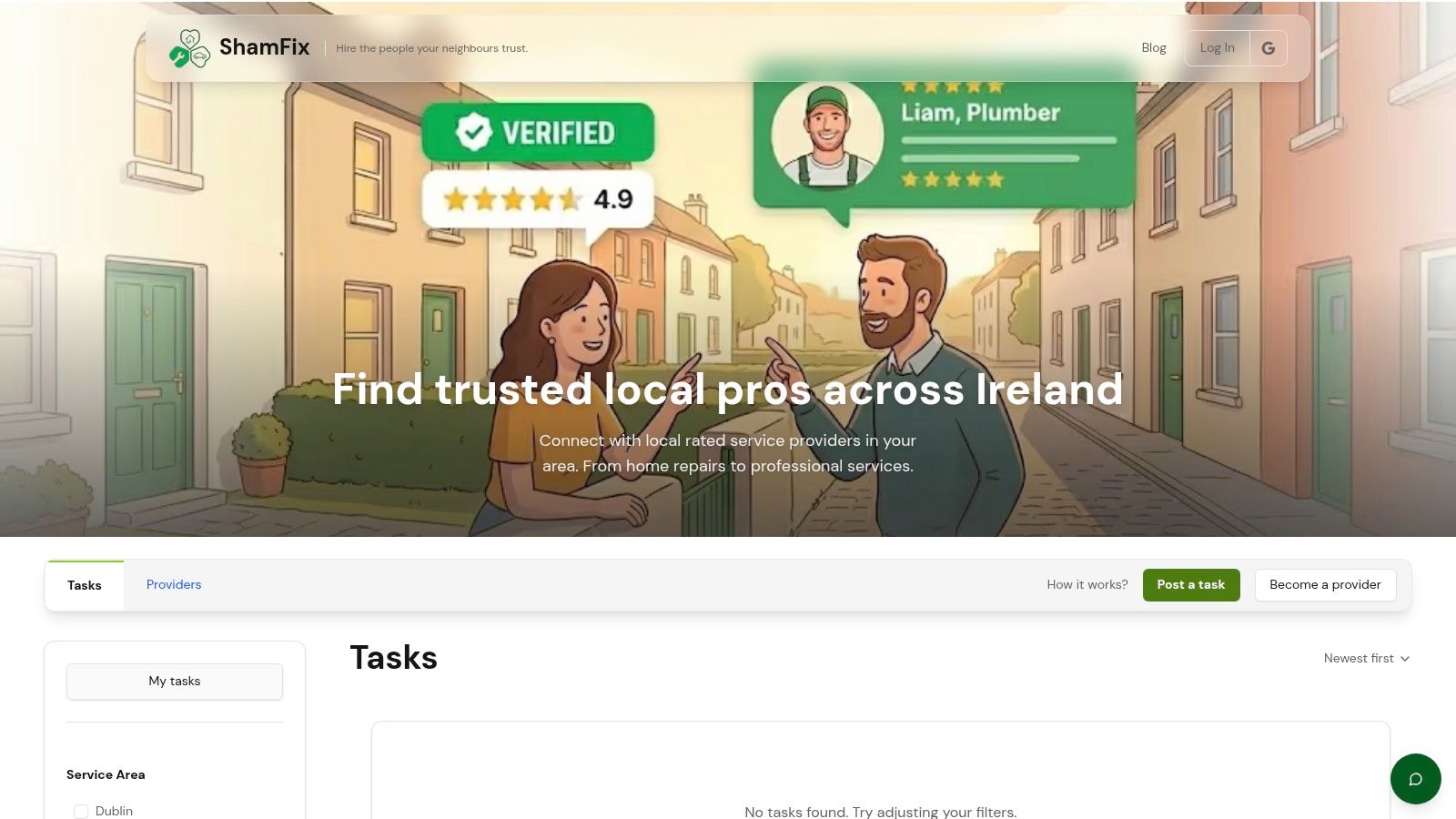
For online searching, some homeowners now use Irish-only platforms rather than broad international directories. One example is posting a job on ShamFix, where the homeowner can post the work for free and local providers who cover the area can respond. That doesn't remove the homeowner's responsibility to check insurance, credentials, reviews, and suitability. It merely creates a more organised starting point for the search.
The best shortlist usually comes from a mix of sources. One personal recommendation, one local operator with relevant work nearby, and one or two online discoveries often gives a more balanced comparison than relying on a single channel.
Shortlist for fit, not just for availability
A homeowner doesn't need ten names. Three to five suitable candidates is usually enough for an initial pass. The right question isn't “Who can do this?” It's “Who regularly does this type of work, communicates clearly, and looks organised before setting foot on site?”
That filter saves time on both sides.
Your Pre-Visit Vetting Checklist What to Verify Remotely
Before inviting any builder to a site visit, the homeowner should do the first layer of checking remotely; a site meeting creates momentum. Once a builder has visited, discussed ideas, and sounded reassuring, many homeowners lower their guard. The smarter move is to test the basics first.
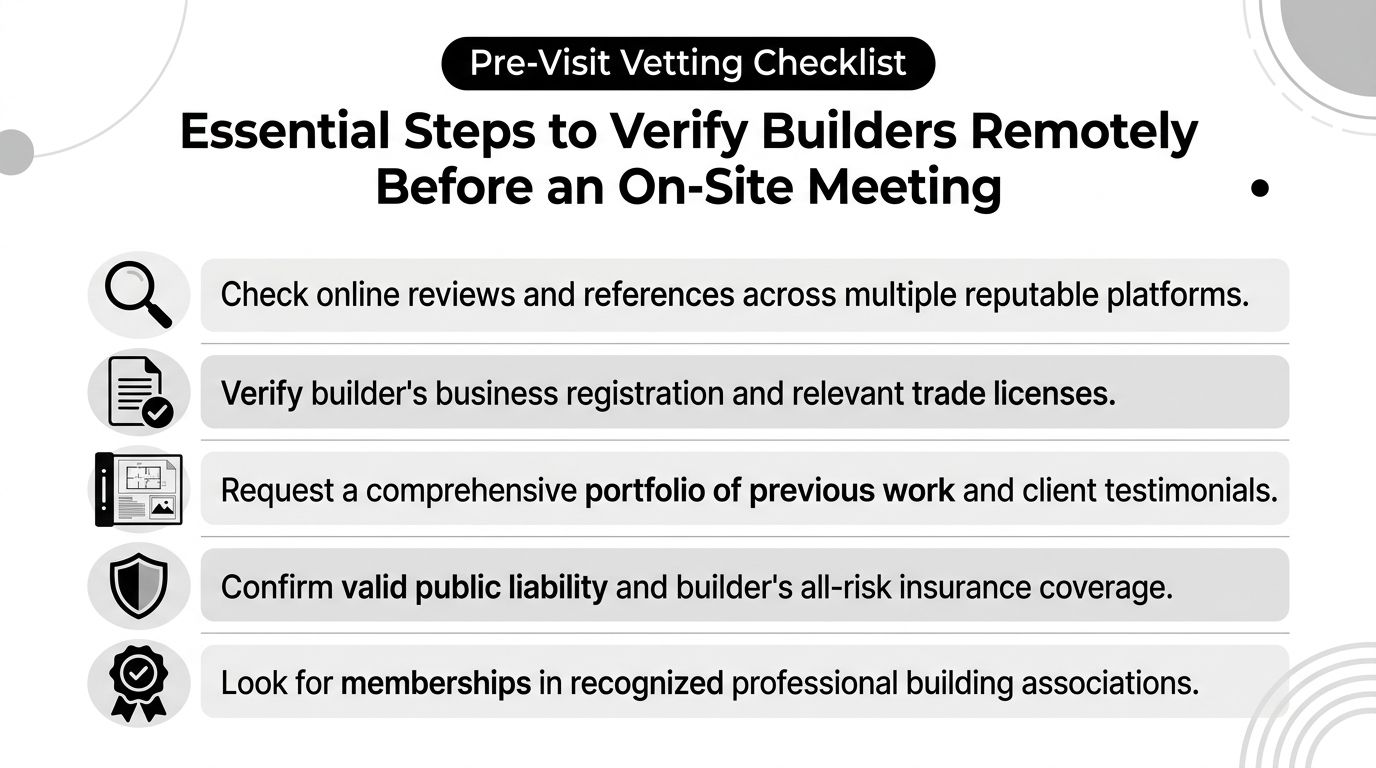
In Ireland, some credentials are not a platform matter at all. Gas installers must hold RGI registration, and electrical contractors must be registered with Safe Electric. Customers must confirm these directly through the official public register, as outlined in this explanation of Irish regulated trade registration.
The remote checks that matter first
A homeowner should ask direct questions before offering an address or arranging a time.
- Insurance first: Ask whether the builder holds public liability insurance and ask to see the certificate. If the response is evasive, that's enough reason to pause.
- Registration for regulated work: If the project includes gas or electrical elements, ask whether the builder or subcontractors handling that part are properly registered. Then confirm those registrations directly with the relevant authority.
- Recent examples: Ask for photos or descriptions of similar completed jobs, not just generic portfolio pictures with no context.
- Reviews with detail: Look for reviews that mention reliability, cleanliness, communication, variations, snagging, and how issues were resolved. Broad praise on its own isn't very useful.
- Basic business clarity: Ask who will be on site. Some builders price the job but pass most of it to others.
A homeowner looking for building oversight can also review related support such as building compliance inspections in Ireland if the project is complex or involves multiple trades.
The questions worth asking before a site visit
A quick phone call or message exchange should establish whether the builder is worth meeting at all.
- Are you insured, and can the certificate be sent over?
- For any gas or electrical work, are the relevant people RGI-registered or Safe Electric registered?
- Can you provide a written, itemised quote if the job proceeds?
- What does your usual payment structure look like?
- Can you show recent reviews and examples of similar work?
- Who will supervise the job day to day?
These aren't aggressive questions. A professional builder should expect them.
A homeowner isn't being awkward by checking documents remotely. They're avoiding wasted site visits and filtering out people who don't run their work properly.
Red flags people miss too often
Some warning signs are obvious. Others get overlooked because the builder seems friendly or keen.
| Red flag | Why it matters |
|---|---|
| No insurance document offered | Suggests poor administration or no cover |
| Verbal-only pricing language | Makes later disputes far more likely |
| Pressure for a large cash deposit | Weakens the homeowner's protection |
| No detail in reviews | Gives little evidence of actual performance |
| Unclear answer on regulated work | Can create safety and compliance problems |
| Refusal to discuss timeline in writing | Usually points to poor planning |
One more point matters. A profile on any platform is only the start of the conversation. Providers list their own credentials and details. The homeowner still has to read, ask, compare, and confirm.
Decoding Quotes and Understanding Project Costs
A quote should answer questions, not create new ones. When a builder sends over a single total with little explanation, the homeowner isn't holding a price. They're holding a future argument.
this overview of Irish renovation pricing and homeowner priorities
The background cost picture matters too. Building and renovation costs in Ireland have risen sharply in recent years, driven by labour shortages and higher material and energy prices, and homeowners increasingly weigh a builder's reputation and reviews alongside the headline price rather than choosing on cost alone. That tells a homeowner two things: prices have moved, and reputation now carries real weight in the decision.
What a solid quote looks like
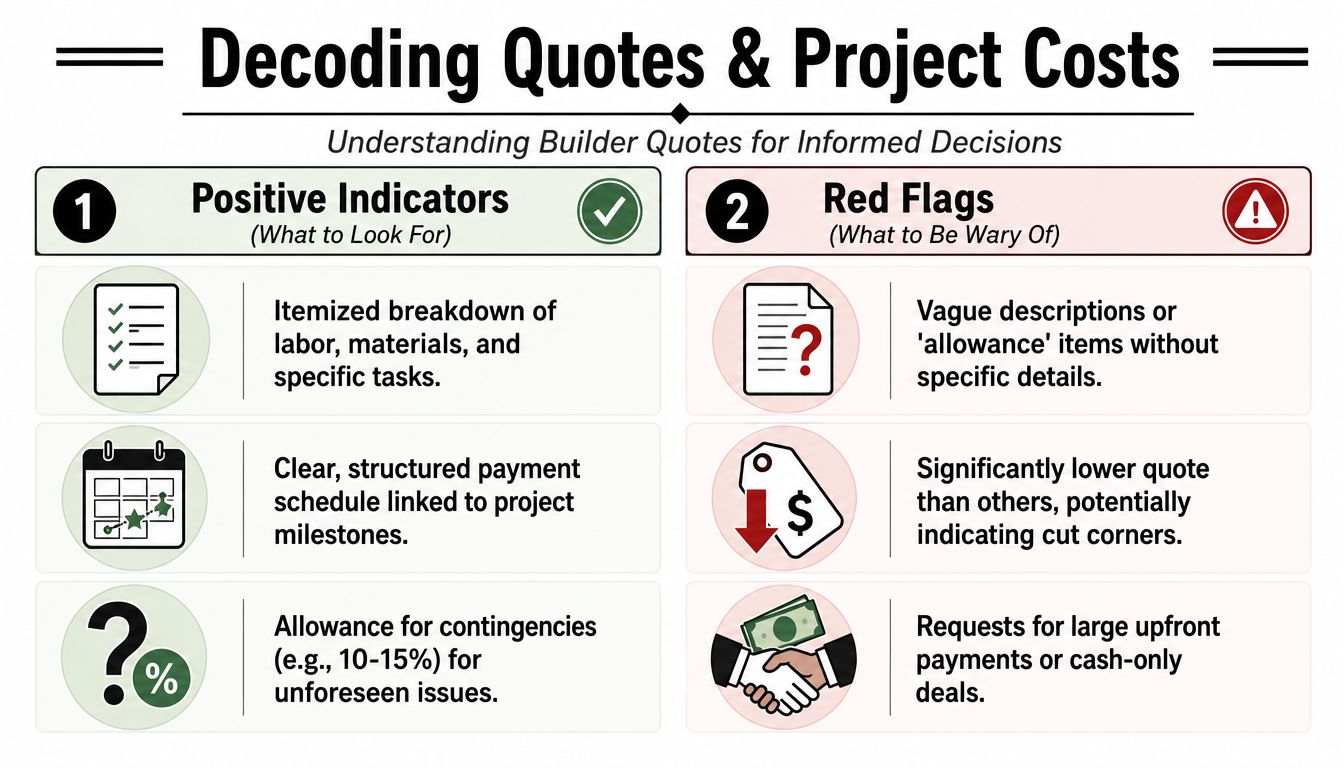
A proper builder's quote should break the job into understandable parts. It doesn't have to be fancy. It does have to be clear.
Good quotes usually include:
- Labour and materials separated clearly: This helps the homeowner see where the cost sits.
- A stated scope: The quote should say what is included, room by room or task by task.
- VAT position: The homeowner should know whether VAT is included or excluded.
- Exclusions: Waste removal, skips, kitchen supply, specialist finishes, engineer fees, and unforeseen remedial works should be stated if they're outside the price.
- Payment structure: Stage payments tied to visible progress are far better than vague upfront requests.
- Indicative timeline: Even if dates may move, the builder should be able to outline sequencing and duration.
What a weak quote tends to hide
A suspiciously low quote often wins attention because it gives the homeowner emotional relief. Finally, a number that feels manageable. The difficulty is that low numbers can be produced by omission just as easily as by efficiency.
Compare the two approaches:
| Better quote | Risky quote |
|---|---|
| Itemised tasks and materials | One lump sum |
| Clear exclusions | Missing exclusions |
| Stage payments linked to work done | Large upfront cash request |
| Written timeline | “We'll see how it goes” |
| Defined VAT treatment | VAT not mentioned |
| Specific finish assumptions | Generic wording like “as agreed” |
Key point: The cheapest quote isn't automatically wrong. It's wrong when nobody can explain why it's cheaper.
How to compare without fooling yourself
Homeowners often compare totals when they should compare assumptions. One builder may include plastering and painting. Another may stop at first fix. One may include waste disposal. Another may leave the skip to the client. If these differences aren't normalised, the comparison is false.
A practical way to review quotes is to mark up each one against the same checklist:
- Scope match: Is each builder pricing the same job?
- Materials quality: Are allowances realistic or vague?
- Payment profile: Does the money schedule reflect actual progress?
- Programme: Does the timing sound organised or improvised?
If a figure is unclear, the homeowner should ask for it in writing. Good builders don't resent that. They'd rather clarify before work starts than defend assumptions later.
Finalising the Contract Before Work Begins
A quote is not a contract. It may form part of one, but it doesn't replace one. That distinction matters because many disputes in Irish domestic building work don't start with obvious bad faith. They start with missing detail, changing assumptions, and informal arrangements that nobody wrote down properly.
In Ireland, a practical method for reducing project failure is clear. Each builder should physically visit the property to submit a price, and the homeowner should obtain at least three written, itemised quotes stating materials, timelines, payment schedules, and exclusions before signing anything, as described by this guide to finding and appointing a builder.
What the contract must pin down
A good contract protects both sides. It protects the homeowner from drift and surprise charges. It protects the builder from unpaid extras, scope creep, and changing instructions.
The contract should cover:
- The agreed scope of work: This should tie back to the accepted quote and any drawings.
- The contract sum or pricing basis: If there are provisional items, they should be obvious.
- Payment schedule: Payments should follow milestones, not pressure.
- Start and completion expectations: Dates, sequencing, and what happens if delays arise.
- Variation process: Any extra work or change should be priced and agreed in writing before it proceeds.
- Dispute route: Even a simple clause on how disagreements will be handled is better than silence.
A homeowner who needs help formalising terms can review support options such as contract drafting for home projects.
Why verbal understanding fails under pressure
At the start, everyone tends to remember the conversation in the most favourable light. Once the house is dusty, the job has opened up hidden issues, and money is moving, memory becomes unreliable.
Common trouble points include:
- The homeowner thought painting was included.
- The builder assumed kitchen units were client-supplied.
- Both sides discussed a finish date, but nobody wrote it as a commitment.
- An extra was authorised on site, then disputed at invoicing stage.
A professional builder usually welcomes a proper written agreement. It reduces confusion, gives the crew a reference point, and limits the chance of personal disagreement becoming a commercial dispute.
Put every material change in writing, even if the relationship is excellent. Good relationships are protected by paperwork, not threatened by it.
Building a Successful Partnership with Your Chosen Builder
A good domestic project doesn't come from mistrust, and it doesn't come from blind faith either. It comes from clear expectations, written decisions, and steady communication once work starts.
The homeowner's role is active. The builder's role is professional. When both sides understand that, projects usually run better. Problems still arise. Hidden defects appear, deliveries slip, weather interferes, and finishes need revisiting. The difference is that organised jobs have a method for dealing with those issues.
The habits that keep the job healthy
A working partnership is usually built on a few simple habits:
- One clear contact route: Messages scattered across calls, texts, and casual chats cause mistakes.
- Written confirmation of changes: Small extras become expensive when they're informal.
- Regular review of progress: A short weekly check is better than silence followed by frustration.
- Respect for sequence: Trades need access, curing time, inspections, and coordination.
- Mutual accountability: The builder should show up and communicate. The homeowner should make decisions on time and pay according to agreed milestones.
Why transparency matters on both sides
Platforms often get described as trust mechanisms, but trust still comes down to behaviour. Reviews matter most when they reflect actual completed jobs and when both parties can leave feedback. That two-sided structure gives homeowners a stronger picture than marketing copy alone, and it also encourages clients to behave reasonably.
The strongest outcomes usually come from the same formula. Careful preparation. Proper remote checks. Clear quotes. A written contract. Then calm communication while the work is underway.
A homeowner who follows that process won't remove every risk. But the odds improve sharply because the decision is being made on evidence, not optimism.
For homeowners in the Republic of Ireland who want a more organised way to start the search, ShamFix is an Ireland-native marketplace founded in 2025. It lets homeowners post a job for free, and local providers who cover the area can respond. Trust on the platform comes from genuine two-sided reviews and ratings, where customers and providers review each other after completed jobs. Providers list their own credentials and remain responsible for holding the correct registration for their trade. Listing on ShamFix is free and there's no commission; a subscription is planned for the future.