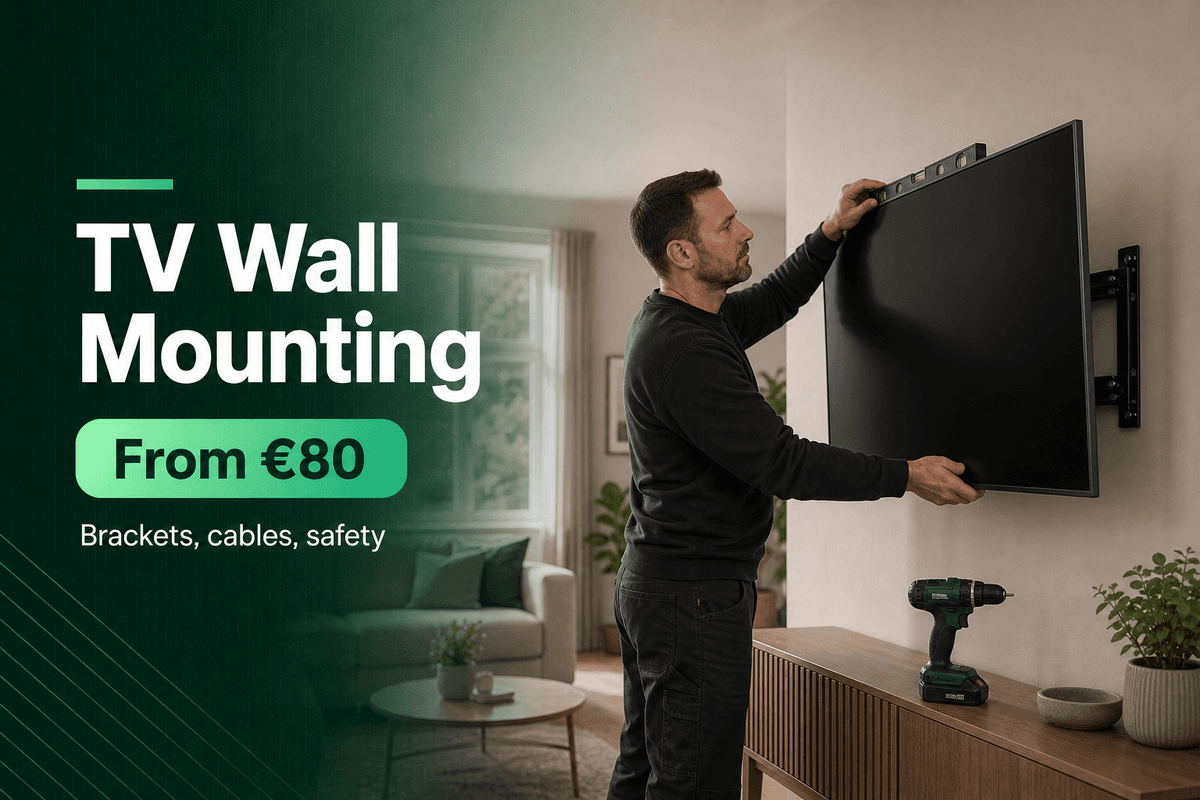
Mounting a TV on the wall in Ireland usually costs €80 to €150 for a TV up to about 50 inches on a solid wall, using a bracket the household already has, as an aggregate Irish market estimate including VAT. Larger screens of 55 to 75 inches usually cost €120 to €220, and very large TVs or full-motion brackets €150 to €300. Hiding the cables inside the wall adds €100 to €250, and a new socket behind the TV, which must be fitted by a registered electrician, adds roughly €120 to €250. A good bracket costs €25 to €150 on top if the installer supplies it. Households who want a TV hung can post the job under handyman services and compare quotes from local tradespeople.
TV wall mounting prices at a glance
The figures below are an aggregate Irish market estimate, VAT included, for labour unless stated otherwise.
| Job | Typical price |
|---|---|
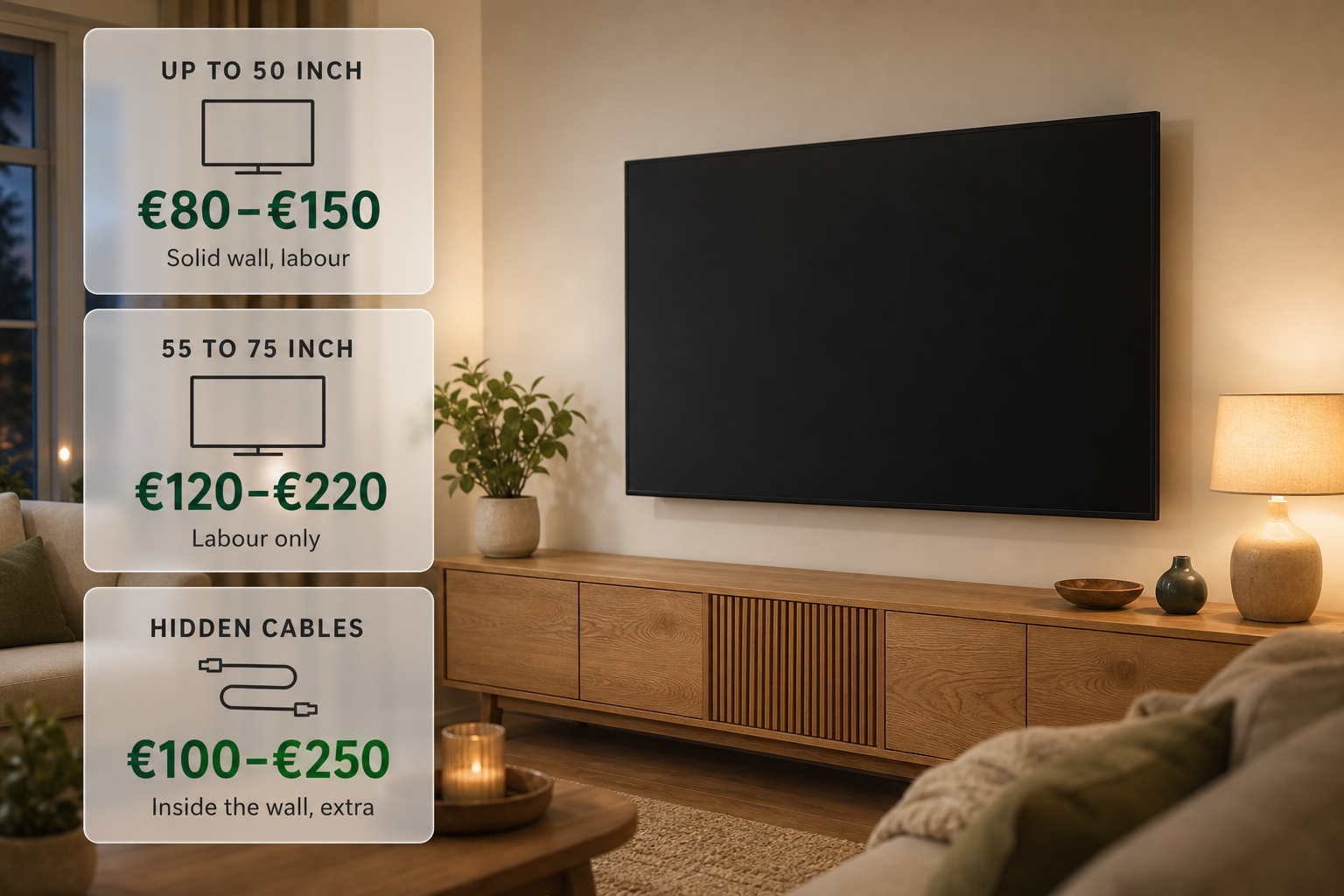
| TV up to about 50 inches, solid wall, customer's bracket | €80–€150 |
| TV of 55 to 75 inches | €120–€220 |
| TV over 75 inches, or a full-motion bracket | €150–€300 |
| Extra fixings for a plasterboard or stud wall | €20–€50 |
| Cables tidied in surface trunking | €30–€80 |
| Cables hidden inside the wall | €100–€250 |
| Mounting above a fireplace or on a chimney breast | €50–€100 extra |
| Soundbar mounted under the TV | €30–€60 |
| New socket behind the TV, by a registered electrician | €120–€250 |
| Bracket supplied by the installer | €25–€150+ |
| Handyman hourly rate | €40–€70 |
Many handymen have a minimum charge of about €60 to €100, so mounting a small TV costs about the same as a medium one. Hanging two TVs on one visit, or adding shelves and pictures to the same job, brings the cost per item down.
A worked example: a household in Limerick wants a 65-inch TV on a full-motion bracket on the plasterboard wall of the living room, with no cables showing and a new double socket behind the screen. Mounting costs about €150 to €220, plasterboard fixings €20 to €50, hiding the cables in the wall €100 to €250, a full-motion bracket €80 to €150, and the new socket by a registered electrician €120 to €250. The total comes to roughly €470 to €920. Running the cables in white trunking and using the existing socket instead would bring it down to about €280 to €500.
What affects the price
- Size and weight of the TV. Large screens need two people, stronger brackets and more fixings.
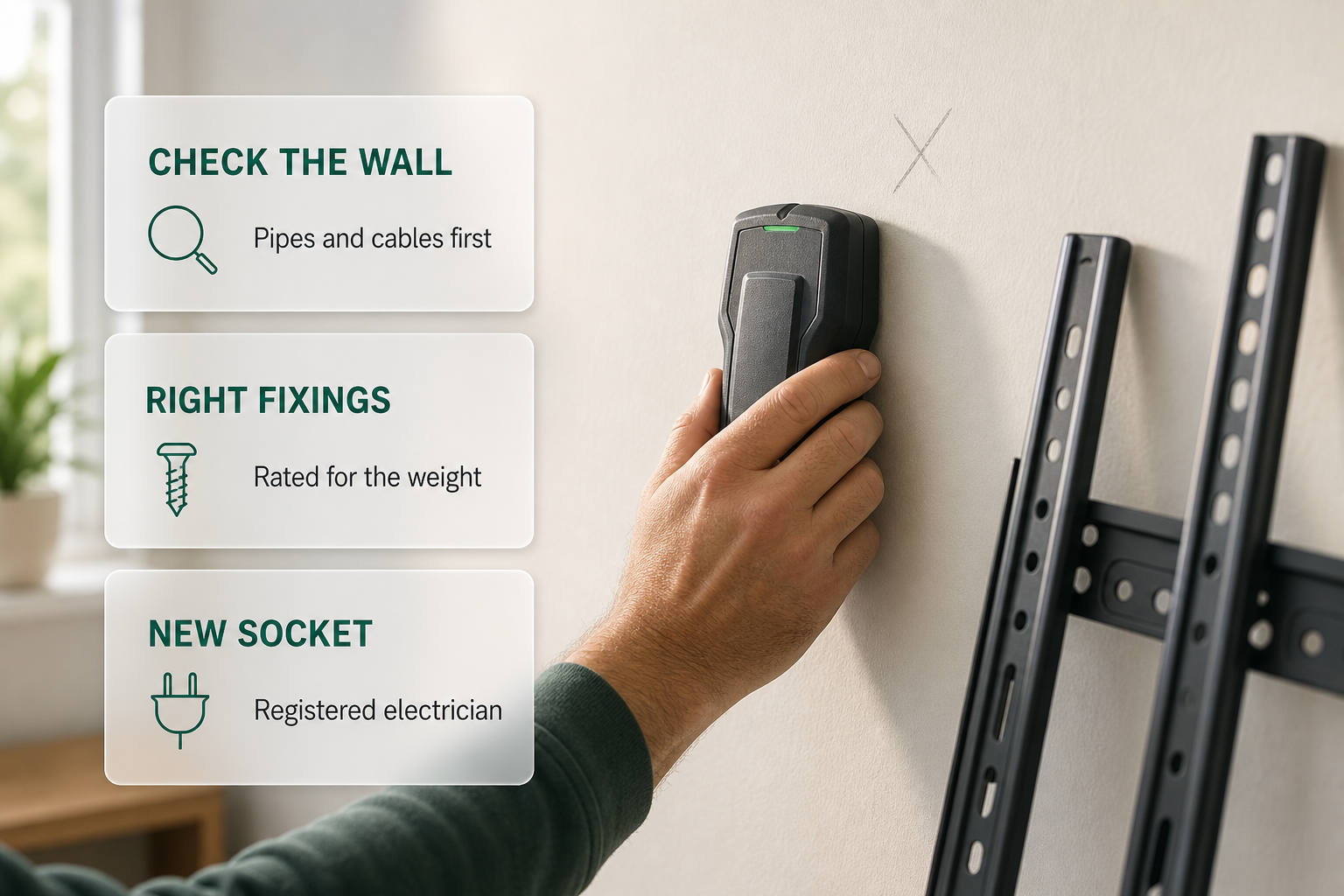
- Type of wall. Brick and block walls are the most straightforward. Plasterboard needs either fixings into the timber or metal studs, or specialist cavity anchors rated for the weight. Old stone walls and soft brick can need resin anchors.
- Type of bracket. Fixed brackets are quickest; tilting brackets take a little longer; full-motion brackets on an arm are heavier and must be fixed more carefully.
- Cable management. Trunking on the surface is cheap; cables in the wall mean cutting, fishing and making good.
- Height and position. Chimney breasts, corners and high walls take more time and care.
- Extras. Soundbars, set-top boxes, games consoles and shelves add time.
- Location. Dublin and the larger cities are usually dearer, and rural addresses can carry a travel charge.
Brackets explained
- Fixed or flat brackets hold the TV close to the wall. They are cheapest, from about €25, and suit a TV at the right height facing the seating.
- Tilting brackets let the screen angle down, which helps when the TV is mounted higher, for example above a fireplace.
- Full-motion or cantilever brackets pull out and swivel. They suit corners and open-plan rooms but put the most strain on the wall, so they need a solid fixing.
Whichever bracket is used, it should be rated for the weight of the TV and match the VESA mounting holes on its back, which are listed in the TV's manual.
Hiding the cables
There are three common options:
- Surface trunking, a slim plastic channel painted to match the wall. It is quick and cheap.
- Cables inside the wall, run through a hollow plasterboard wall between two wall plates. It looks the neatest but takes longer, especially in solid walls, which have to be chased and replastered.
- A new socket behind the TV, so that only short leads are needed. This is electrical work.
According to the Commission for Regulation of Utilities, householders should always use a Registered Electrical Contractor for electrical work in the home, and the contractor must give a Completion Certificate for the work. A handyman can run TV, aerial and HDMI leads, but a new or moved socket should be done by a registered electrician. Running a mains extension lead inside a wall is not a safe substitute.