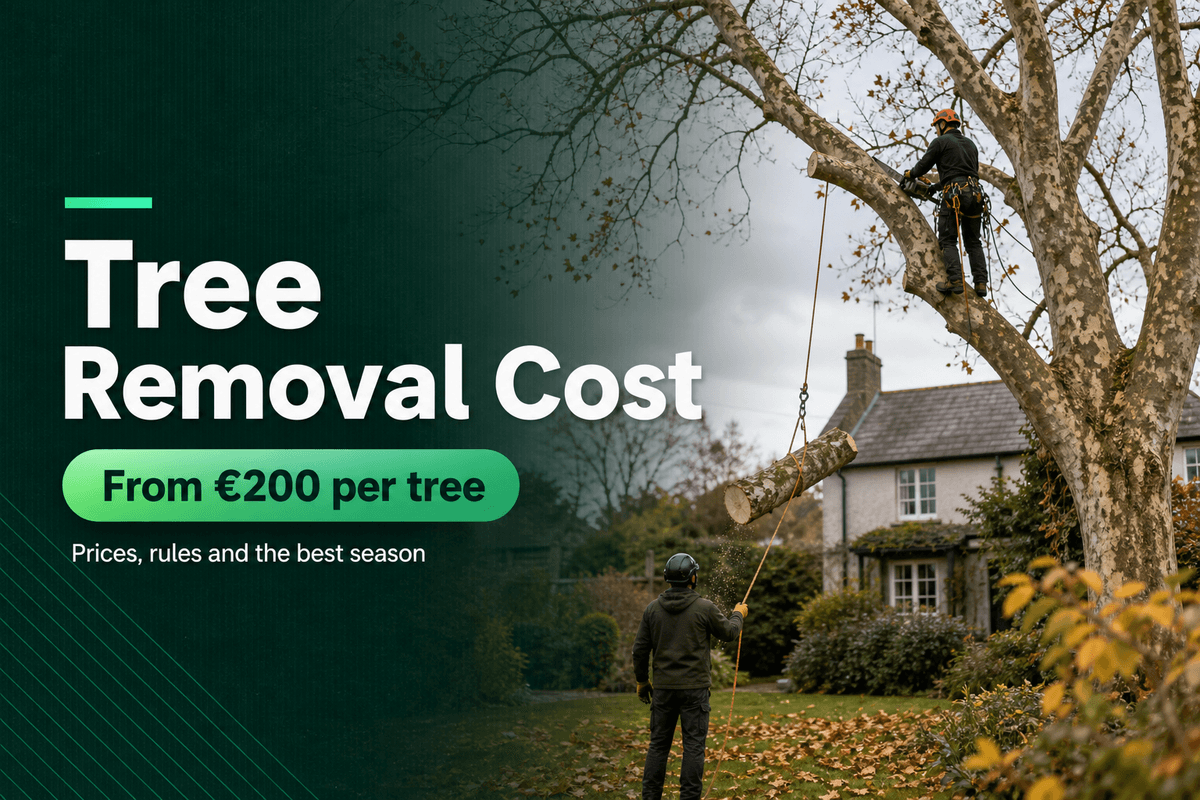
Removing a tree in Ireland usually costs €200 to €500 for a small tree up to about 5 metres, €500 to €1,200 for a medium tree of 5 to 10 metres and €1,200 to €3,000 for a large tree of 10 to 20 metres, as an aggregate Irish market estimate including VAT and taking away the waste. Very large or awkward trees that have to be taken down in sections over a house, a road or power lines can cost €3,000 to €6,000 or more. Grinding out the stump adds €100 to €350. Autumn and winter are the usual time for this work, both because the trees are dormant and because hedge and roadside cutting is restricted between 1 March and 31 August. Homeowners who need a tree taken down or cut back can post the job under tree surgery and compare quotes from local tree surgeons.
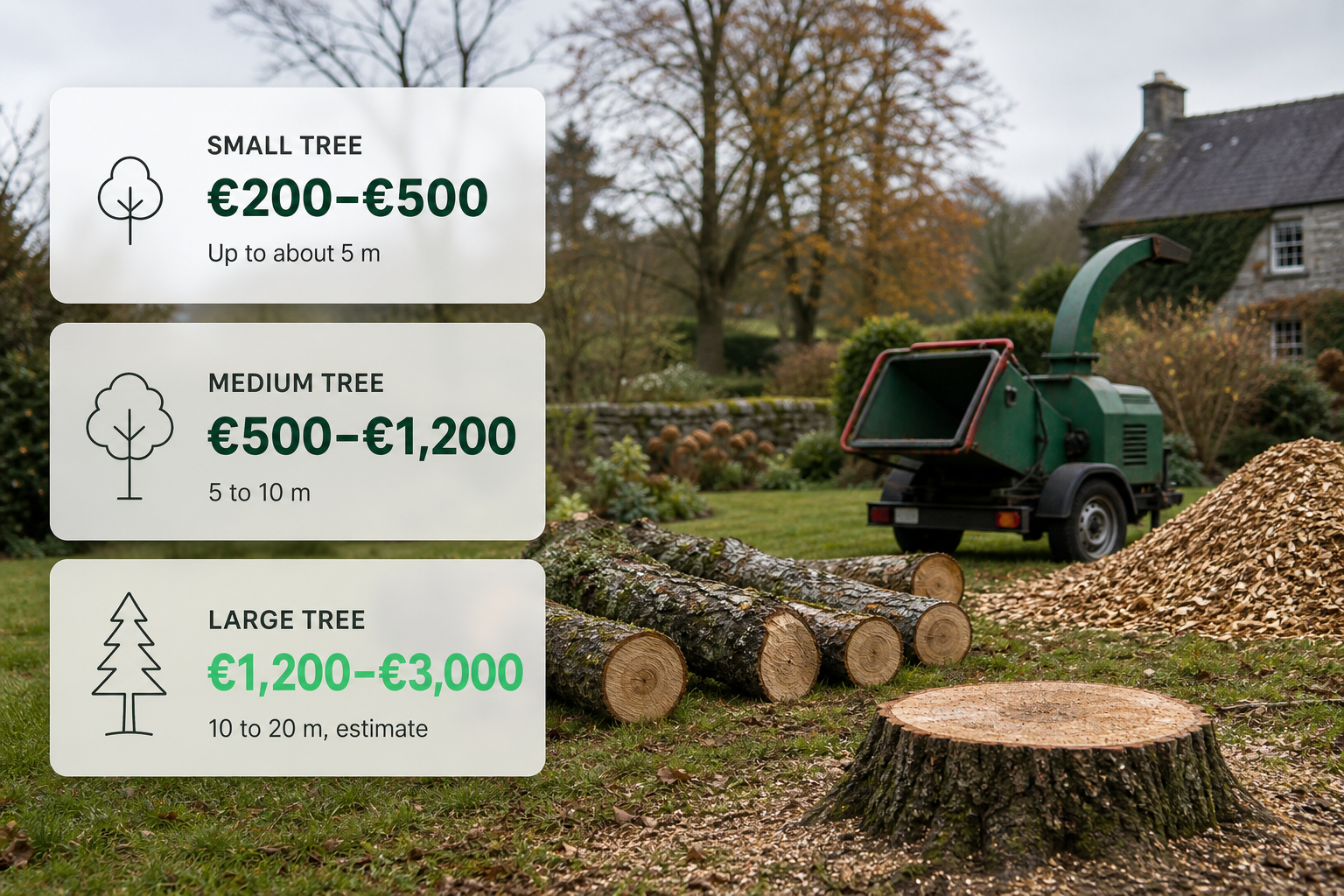
Tree removal prices at a glance
The figures below are an aggregate Irish market estimate, VAT included, for a tree in a domestic garden with reasonable access.
| Job | Typical price |
|---|---|
| Small tree up to about 5 m, felled whole | €200–€500 |
| Medium tree, 5 to 10 m | €500–€1,200 |
| Large tree, 10 to 20 m, usually taken down in sections | €1,200–€3,000 |
| Very large or dangerous tree, sectional dismantling with rigging or a crane | €3,000–€6,000+ |
| Stump grinding, per stump | €100–€350 |
| Crown reduction or thinning of one tree | €250–€800 |
| Removing a row of conifers or a hedge | €20–€60 per metre |
| Emergency call-out after a storm | 50% to 100% above normal rates |
| Removal of logs and branches, if not included | €100–€300 |
The height of the tree is only part of the price. What matters just as much is what is around it. A 12-metre ash in an open field can be felled in one piece in an hour; the same tree beside a house, a glass conservatory or an overhead line has to be climbed and dismantled branch by branch, with each section lowered on ropes.
A worked example: a semi-detached house in Cork with a 14-metre leylandii and a medium sycamore in the back garden, close to a shed and a neighbour's fence. Taking down the leylandii in sections costs about €1,200 to €1,800, felling the sycamore €500 to €900, and grinding both stumps €200 to €450. Chipping and taking away the brushwood is usually included, but taking the logs as well can add €100 to €200. The total comes to roughly €1,900 to €3,350. Leaving the logs cut to length for firewood often brings the price down.
What affects the cost
- Height and trunk size. Bigger trees take longer and produce more waste.
- Access. A tree that can only be reached through the house, or where no chipper can get near, takes far longer.
- What is underneath. Houses, roofs, glasshouses, cars, roads and especially power lines mean sectional dismantling, more staff and more risk.
- Condition of the tree. Dead, rotten or storm-damaged trees can be unsafe to climb, so a cherry picker or crane may be needed.
- Species. Hardwoods such as oak and beech are heavier to handle than conifers; conifers such as leylandii produce large volumes of foliage.
- Waste. Chipping on site and removing everything costs more than leaving logs and chippings for the owner.
- Stumps and roots. Grinding a stump below ground level costs extra; removing large roots entirely is a bigger excavation job.
- Location and timing. Dublin rates are usually higher, and emergency work after a named storm commands a premium.
When is the best time to remove a tree?
Autumn and winter, roughly September to February, is the main season. Deciduous trees are bare, so it is easier to see the structure and there is less weight and waste. It is also outside the bird nesting season.
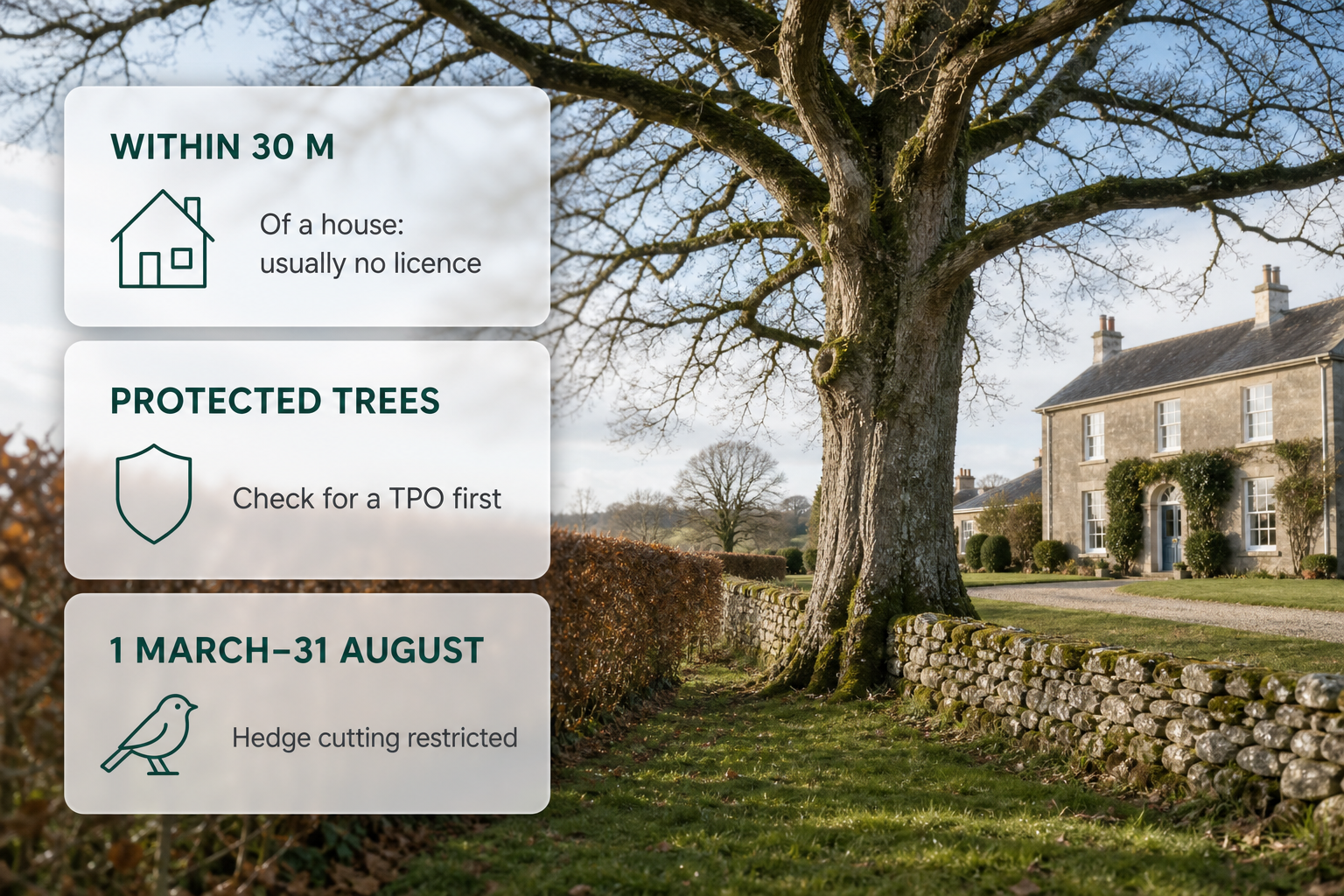
According to the National Parks and Wildlife Service, Section 40 of the Wildlife Act restricts the cutting, grubbing, burning or destruction of vegetation growing on uncultivated land or in hedges or ditches from 1 March to 31 August, with limited exemptions such as work carried out by a statutory body for public health and safety. Meath County Council advises that hedge cutting should only be carried out between 1 September and the end of February.
Trees in an ordinary cultivated garden are not the main target of Section 40, but nesting birds are still protected under the Wildlife Acts, so a tree with an active nest should be left until the young have fledged. A tree that is dangerous can be made safe at any time of year, and a qualified tree surgeon will check for nests and bat roosts before starting.
Do you need a felling licence or permission?
Most trees in a domestic garden can be removed without a licence, but not all. According to Teagasc, a felling licence from the Minister for Agriculture, Food and the Marine is needed to fell trees under the Forestry Act 2014 unless an exemption applies. Exemptions include:
- a tree in an urban area;
- a tree within 30 metres of a building, other than a wall or temporary structure, unless the building was built after the tree was planted;
- a tree within 10 metres of a public road that the owner reasonably believes is dangerous to road users because of its age or condition;
- hawthorn and blackthorn;
- trees whose removal is specified in a grant of planning permission.
The exemptions do not apply to a tree within the grounds of a protected structure, in a special amenity area or landscape conservation area, a tree more than 150 years old, or trees within certain monuments, European sites or Natural Heritage Areas. In those cases a licence or other consent is needed.
Two further restrictions catch people out:
- Tree Preservation Orders. According to Forestry Services, no tree covered by a Tree Preservation Order may be felled, topped, lopped or destroyed without the consent of the planning authority.
- Planning conditions. Many housing estates were granted planning permission on condition that certain trees or hedges are kept. The local council can confirm whether a tree is protected.
Bats are also protected in Ireland. Old trees with cavities, loose bark or ivy can hold roosts, and work that would disturb a roost can require a licence from the National Parks and Wildlife Service.