Most advice about roofing contractors in Dublin starts with the wrong assumption, that the trade is regulated and the paperwork will sort itself out. It won't. In the Republic of Ireland, roofing is an unregulated trade, so the homeowner carries the risk, the checking, and the consequences if the job is poorly specified or poorly done.
That matters more in Dublin than in most places. The market is crowded with small operators, the supply base is fragmented, and the city's roofs are often older, more exposed, and more sensitive to planning rules than a casual quote suggests. The right contractor is not the cheapest number on a list, it's the one who can prove insurance, scope the job properly, and stand behind the work in writing.
Why Roofing in Ireland Is Not a Regulated Trade
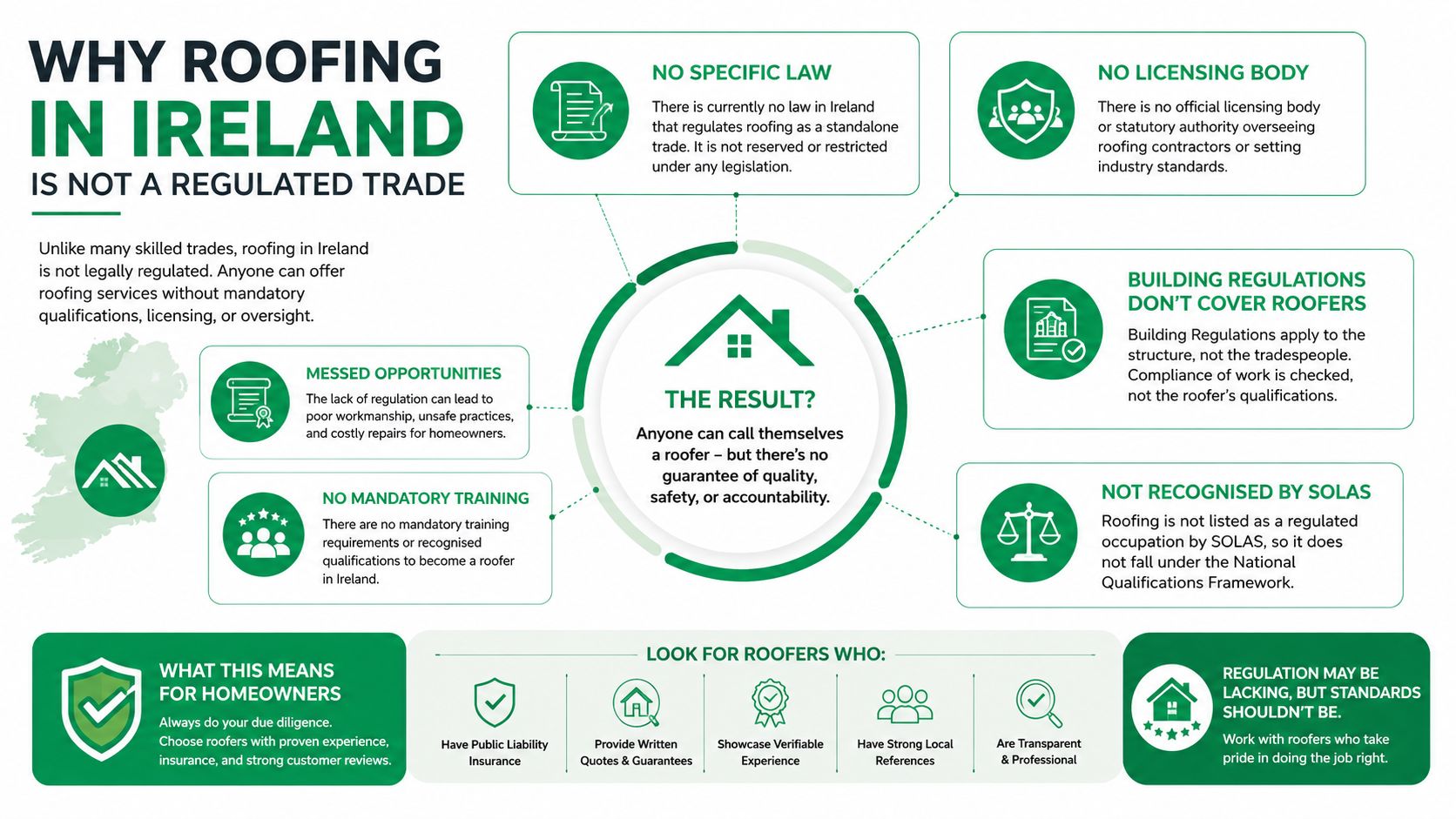
The first thing Dublin homeowners need to drop is the assumption that a roofer has to be licensed the way a gas fitter or electrician does. Roofing is not a regulated trade in Ireland, so there is no statutory register, no mandatory licence, and no government body pre-screening the people who offer to work on a roof. That means anyone can present themselves as a roofing contractor, and the burden of checking falls entirely on the customer.
Ireland roofing contractor dataset
That reality is not theoretical. The Irish roofing market is fragmented and dominated by small operators - many are one- or two-person businesses rather than large firms, and Leinster, including Dublin, is the busiest part of it. In plain terms, a lot of the people quoting for work are solo tradespeople, not big companies with deep bench strength.
What that means in practice
A homeowner should treat every roofing quote as a sales conversation until the paperwork proves otherwise. A logo on a van, a polished website, or a confident phone manner tells very little about whether the contractor is insured, organised, or capable of handling an exposed Dublin roof.
Practical rule: if the roofer can't put the scope, the insurance, and the guarantee in writing, the quote is not ready.
The market structure also explains why capacity can vary so much from one contractor to the next. A solo roofer may be excellent at repair work but stretched thin after bad weather. A larger firm may have more labour on hand but still need tight specification, because the roof itself, not the sales pitch, decides how the job should be done.
Essential Credentials and Insurance to Verify
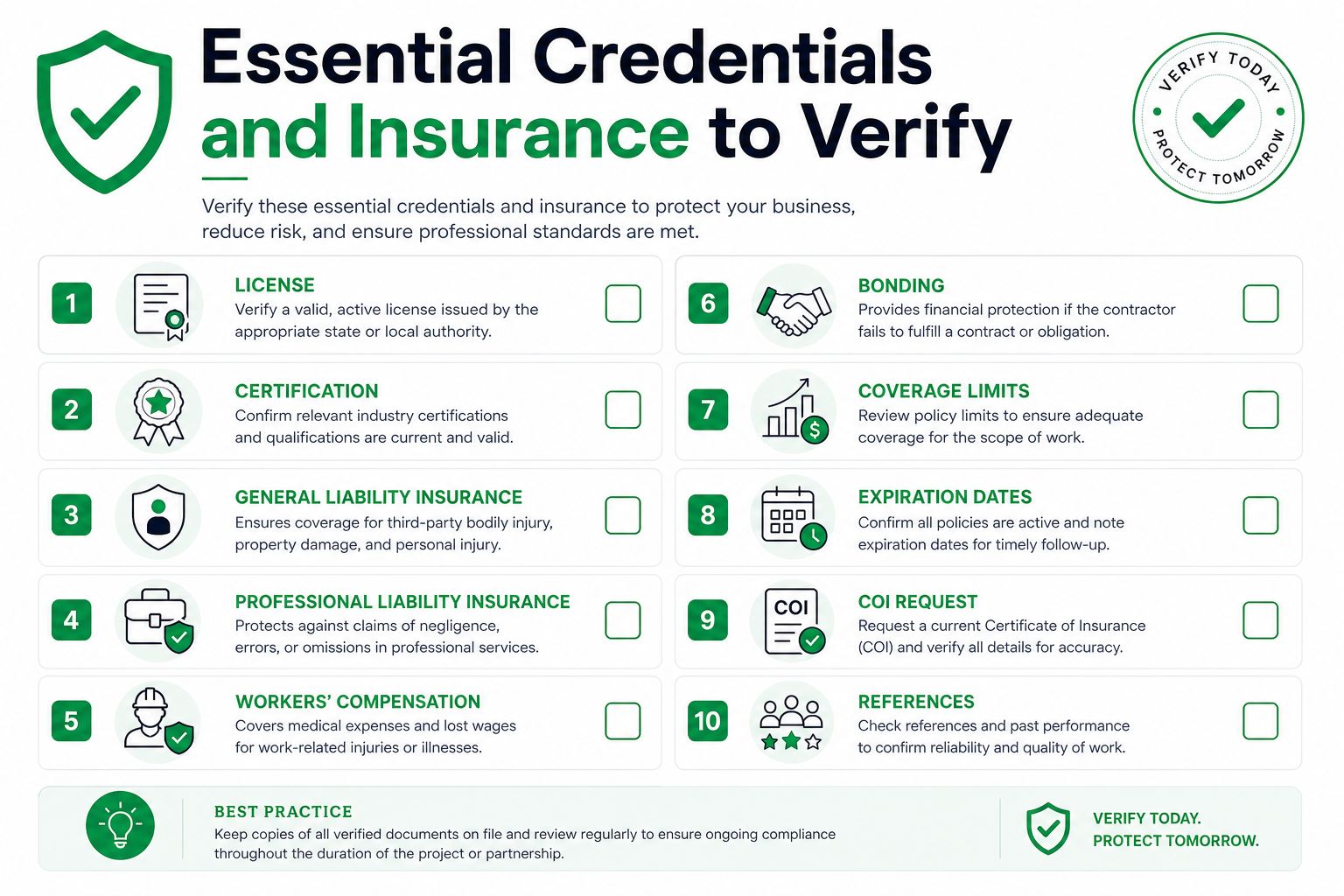
The minimum standard is simple. The contractor should show current public liability insurance, provide a written scope, and give references from similar roofs, not vague promises about “years of experience”. Roofing in Ireland does not have a registration body that checks competence in advance, so the homeowner has to ask for the documents that matter.
The insurance check needs to be direct. A certificate is useful, but the homeowner should still confirm the policy is live and covers the type of work being done. If the contractor uses subcontractors, the policy should cover them too. If that sounds fussy, it isn't. A roof leak or a dropped tile can become an expensive dispute very quickly.
What to ask for before shortlisting
- Current public liability insurance: Ask for the certificate and confirm it directly with the insurer, not just with a PDF sent by text.
- Written workmanship guarantee: Get the term in writing, separate from any material warranty.
- Relevant local references: Ask for recent Dublin jobs of the same type, for example slate, concrete tile, pitched, or flat.
- Trade history: Check how long the business has been operating, because the Irish market has a lot of very young firms.
- Named crew or subcontractors: Find out who will be on site, and whether the people quoting are the people doing the work.
A good guarantee matters because roofing failures are often discovered long after the invoice is paid. A material warranty only covers the product terms. A workmanship guarantee covers the way the roof was installed, which is where many disputes arise.
One useful option for checking a contractor's broader paperwork trail is ShamFix's building compliance inspections page, especially when the project sits close to planning or safety issues. That does not replace a proper insurance check, and it definitely doesn't guarantee quality, but it gives homeowners a place to organise the due diligence.
Ask for evidence, not confidence. A roofer who reacts badly to basic questions is already telling the homeowner how the job will go.
Typical Roofing Costs and Timelines in Dublin
Cheap roofing quotes usually miss the parts that cause extra costs. Dublin homeowners should compare prices by unit, not by headline figure alone, because the covering price and the actual job price are rarely the same. The difference shows up once access, waste removal, and making good are added properly.
The broad Irish market ranges that matter most are these. Natural slate is about €110 to €160/m², concrete tile about €60 to €100/m², and a full roof replacement is broadly €9,000 to €20,000, depending on size, material, and access. Scaffolding is often quoted separately at €800 to €3,000, and VAT on construction and repair work is 13.5%, so the homeowner should confirm whether that is included in the figure being discussed. For Dublin-specific pricing and service details, see our Dublin roofing services page.
| Item | Typical Cost Range | Unit |
|---|---|---|
| Natural slate | €110 to €160 | per m² |
| Concrete tile | €60 to €100 | per m² |
| Full roof replacement | €9,000 to €20,000 | per job |
| Scaffolding | €800 to €3,000 | separate item |
| Minor repairs | €200 to €500 | per job |
| Major repairs | €1,500 to €5,000 | per job |
The hourly and repair figures above help with small leak jobs, but they still need context. A contractor may quote quickly for a patch repair and then need more time if the problem turns out to be flashing, ventilation, or rotten timber. That is why the roof should be inspected properly, not guessed from photographs.
Dublin homeowners should also be sceptical of unusually low quotes that leave out access or waste handling. The cheap price is often only for the outer layer. The final bill grows when the contractor has to bring in scaffold, lift old material off the roof, protect the site, and finish the details properly.
A proper quote separates the roof covering from the hidden costs. If it doesn't, it's not a proper quote.
The simplest way to compare quotes is to insist on the same unit, the same scope, and the same exclusions. Without that, one contractor is pricing a roof and the other is pricing only the visible part of it.
Key Questions to Ask During a Site Inspection
The site visit is where weak contractors usually expose themselves. A competent roofer can explain why a roof needs a certain covering, how the details will be finished, and what happens if the weather turns. A bluffing roofer stays vague, talks fast, and pushes the homeowner toward a decision before the inspection is complete.
Materials and detailing
Ask which covering is being recommended and why it suits that roof. On Dublin's exposed and older roofs, the answer should include mechanical fixing for slates and tiles, not a lazy assumption that bedding alone will hold everything in place. Ridge, verge, valley, and chimney leadwork should be described clearly, because those are the points where persistent leaks usually start.
The underlay and ventilation strategy matters too. If the contractor can't explain how moisture will be managed under the covering, the roof is not being properly specified. The same goes for leadwork around chimneys and valleys, which should be treated as precision work rather than a last-minute add-on.
Labour, access, and protection
The contractor should also say who is doing the work. A homeowner needs to know whether the job is being handled by an in-house crew or shuffled off to subcontractors. That matters for accountability, site cleanliness, and how quickly snags get fixed.
Other questions should be blunt:
- How will the roof stay weatherproof if rain interrupts the job?
- How will old material and waste be removed from site?
- How will gutters, landscaping, and neighbouring property be protected?
- What recent Dublin roofs of the same type can be shown, with addresses or photos?
Then the homeowner should follow up on those references. Look for several similar jobs, not one polished showcase photo. A contractor who can point to terraced slate roofs in Dublin and explain the differences between those and a detached concrete-tile roof is usually more grounded than the one who waves away detail.
The best warning sign is consistency. If the quote, the explanation, the photos, and the references all tell the same story, the contractor is probably organised. If they don't, walk away before the roof becomes a negotiation.
Dublin Planning Rules and Weather Considerations
Dublin roofs sit under two pressures at once, planning rules and weather. That combination catches homeowners out because a roof can be exempt from planning permission and still need to comply with Building Regulations, while a different material choice can suddenly bring the local authority into the picture.
Protected structures and Architectural Conservation Areas are a real issue in Dublin's older stock. Like-for-like re-roofing is usually exempt, but a change in material or appearance can need permission, and that is where a Section 57 declaration from the local authority becomes relevant. For projects near conservation-sensitive properties, ShamFix's planning permission assistance page is one way to organise the paperwork around the issue before anyone starts stripping tiles.
The weather side is just as important. Dublin's roofs face wind uplift and intense rainfall, so ridge, verge, valley, and chimney details have to be done properly. On older roofs, the contractor should spell out how slates or tiles will be mechanically fixed, how leadwork will be shaped, and how the system will cope with repeated wet periods rather than one dry day on site.
A skip on a public road and scaffold over a footpath are not just logistics questions, they're council licence questions. If the contractor treats those as afterthoughts, the project can get delayed and the street can get messy fast. The homeowner should ask who is arranging the licence and who is paying for it, because that should be clear before the job starts.
Planning permission and Building Regulations are not the same thing. A roof can be exempt from one and still need to comply with the other.
The practical takeaway is straightforward. Dublin homeowners should force the contractor to say, in writing, how planning status, access, weather protection, and local authority permissions are being handled. If that conversation is absent, the scope is incomplete.
Red Flags and Common Roofing Scams to Avoid
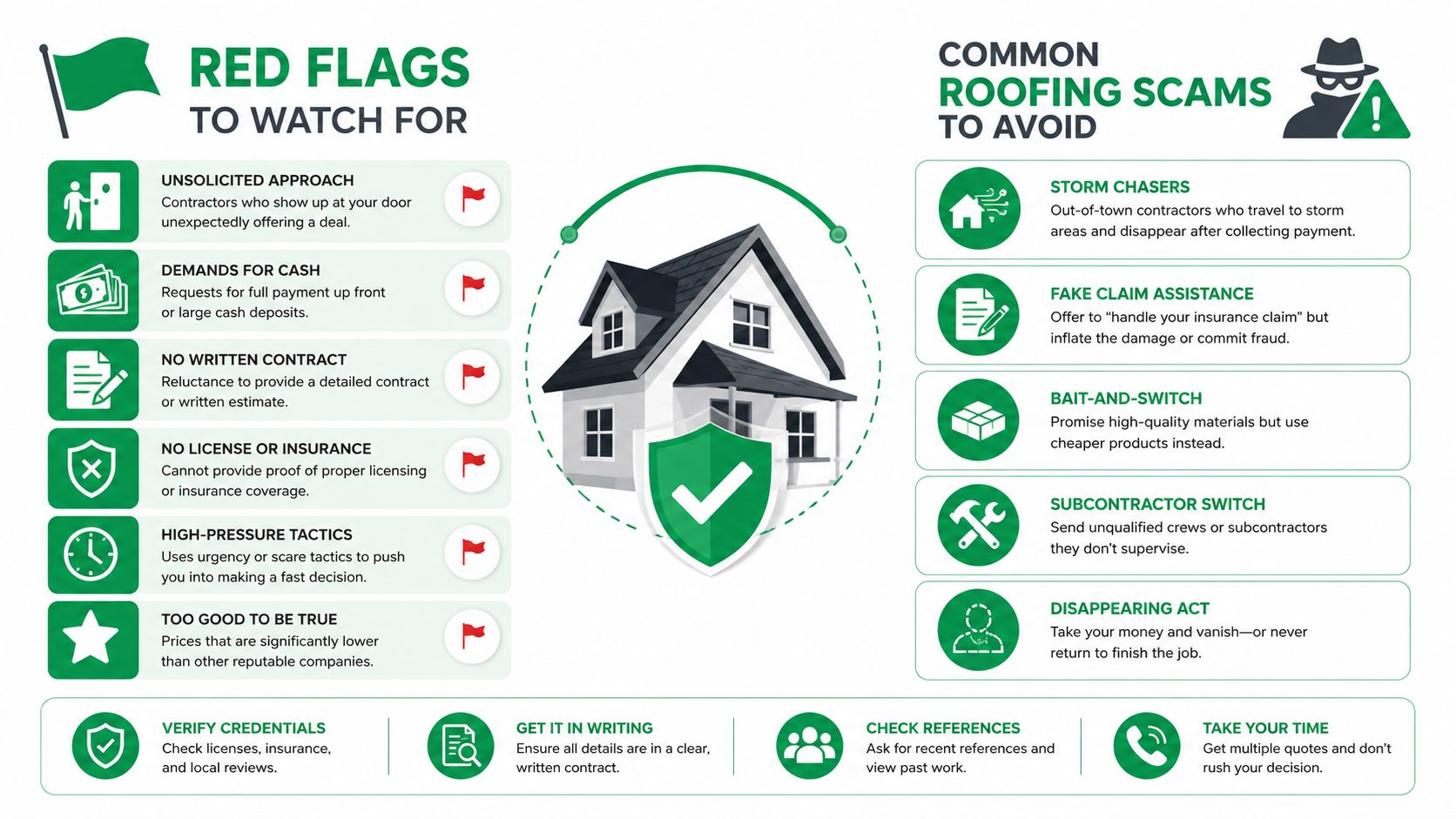
The worst roofing jobs usually start with an easy promise and end with a difficult phone call. The pattern is familiar. The contractor wants money too early, avoids specifics, and leaves the homeowner with no paper trail when the problem shows up later.
| Reliable behaviour | Red flag |
|---|---|
| Written itemised scope | Verbal-only agreement |
| Insurance shown and confirmed | Reluctance to provide documents |
| Staged payments tied to progress | Large cash deposit upfront |
| References from similar roofs | One showcase photo and nothing else |
| Clear guarantee in writing | Vague promises after the job |
A staged payment schedule protects the homeowner far better than a large advance. A deposit for materials can be reasonable, but the balance should track visible progress, and a final portion should be retained until snagging is signed off. That keeps the contractor focused on completion instead of just invoicing.
Online reviews need a hard eye too. One strong rating proves very little on its own. What matters is whether the reviews are consistent across several jobs, whether criticism gets answered professionally, and whether the people being reviewed are the same people who will show up on site.
The same caution applies to pressure tactics. A roofer who pushes for a same-day signature, brushes off insurance questions, or offers a price that is far below the rest without explaining the difference is usually cutting corners somewhere. The homeowner doesn't need to win an argument at the door, only to avoid signing a bad one.
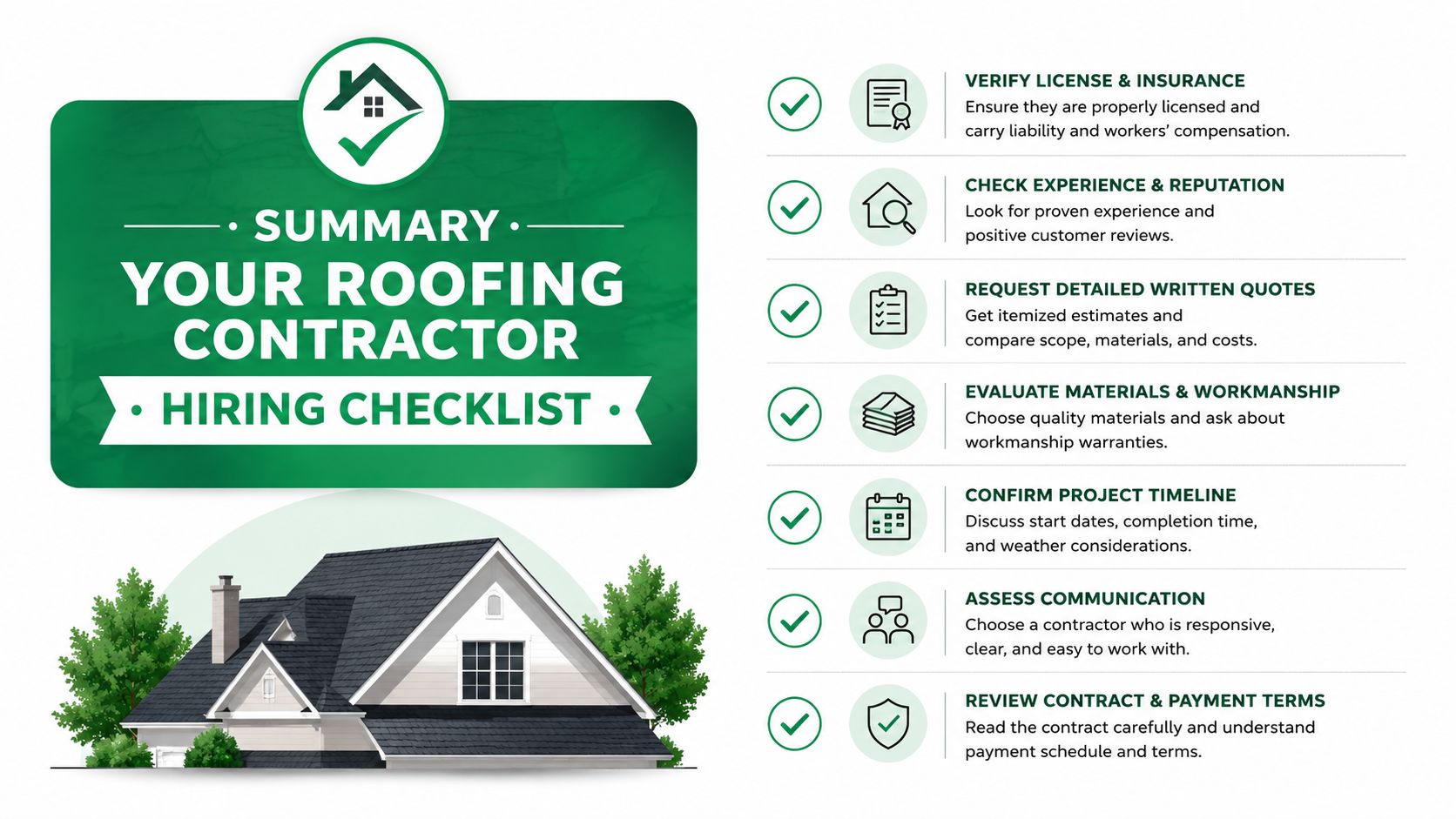
Your Roofing Contractor Hiring Checklist
The right Dublin roofer should pass five tests before any money changes hands. The contractor should show current insurance, provide a written itemised scope, give references from similar roofs, offer a written workmanship guarantee, and agree to a staged payment plan with a final snagging check. If any of those are missing, the homeowner is being asked to trust the wrong thing.
Dublin-specific checks sit on top of that. Protected structure status, conservation area rules, scaffold licences, skip placement, and weather exposure should all be part of the written scope. A contractor who understands those issues and explains them clearly is already ahead of the average quick-quote operator.
ShamFix uses a two-sided review system, so both customers and providers rate each other after a completed job. That gives homeowners another way to compare local providers, alongside insurance, references, and the contract itself, without pretending any platform can replace proper due diligence.
ShamFix brings local roofing contractors into one place, so Dublin homeowners can compare providers without starting from scratch every time. For a roof quote that needs insurance, scope, and proper follow-through, visit ShamFix and start with the contractors who are already in the local market.
Are you a roofing contractor in Dublin?
List on ShamFix during Phase 1 for free, with 0% commission ever and no per-lead credits. There's no promise of lead volume or speed, only a straightforward way to be among the first found as local demand grows. Join at ShamFix free leads.