Post construction cleaning companies take on the clean that follows a new build, extension, renovation or fit-out: the fine mineral dust, plaster splashes, adhesive and silicone residue, offcuts and packaging that a normal domestic clean is not equipped to handle. For an Irish homeowner, the difficulty is rarely finding a cleaner at all, but matching a company's scope, equipment and insurance to the state the property is actually in. The sections below explain what the work covers, how to judge whether a company is suitable, what a proper quote should list, and the safety points to settle before anyone starts, so that post-construction cleaning can be booked with a clear idea of what is being bought.
What post construction cleaning actually covers
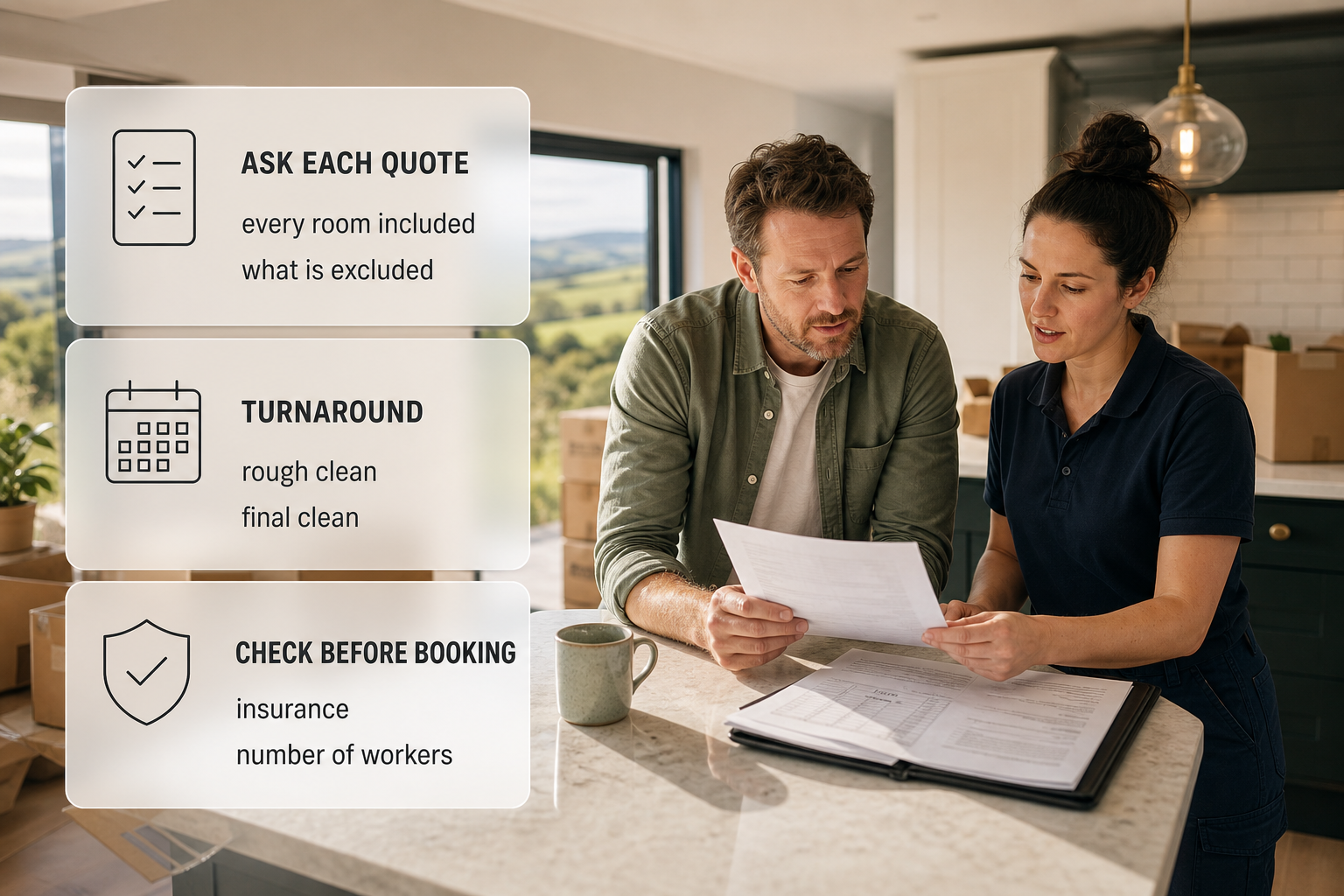
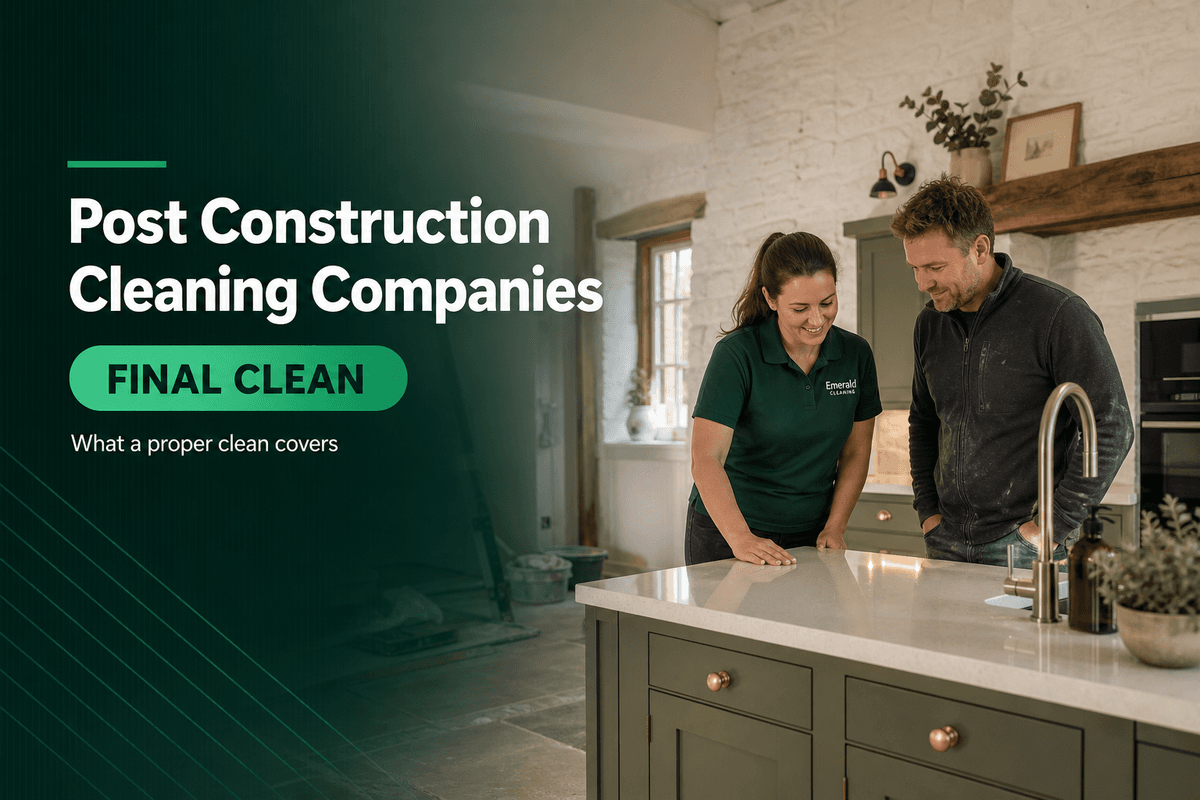
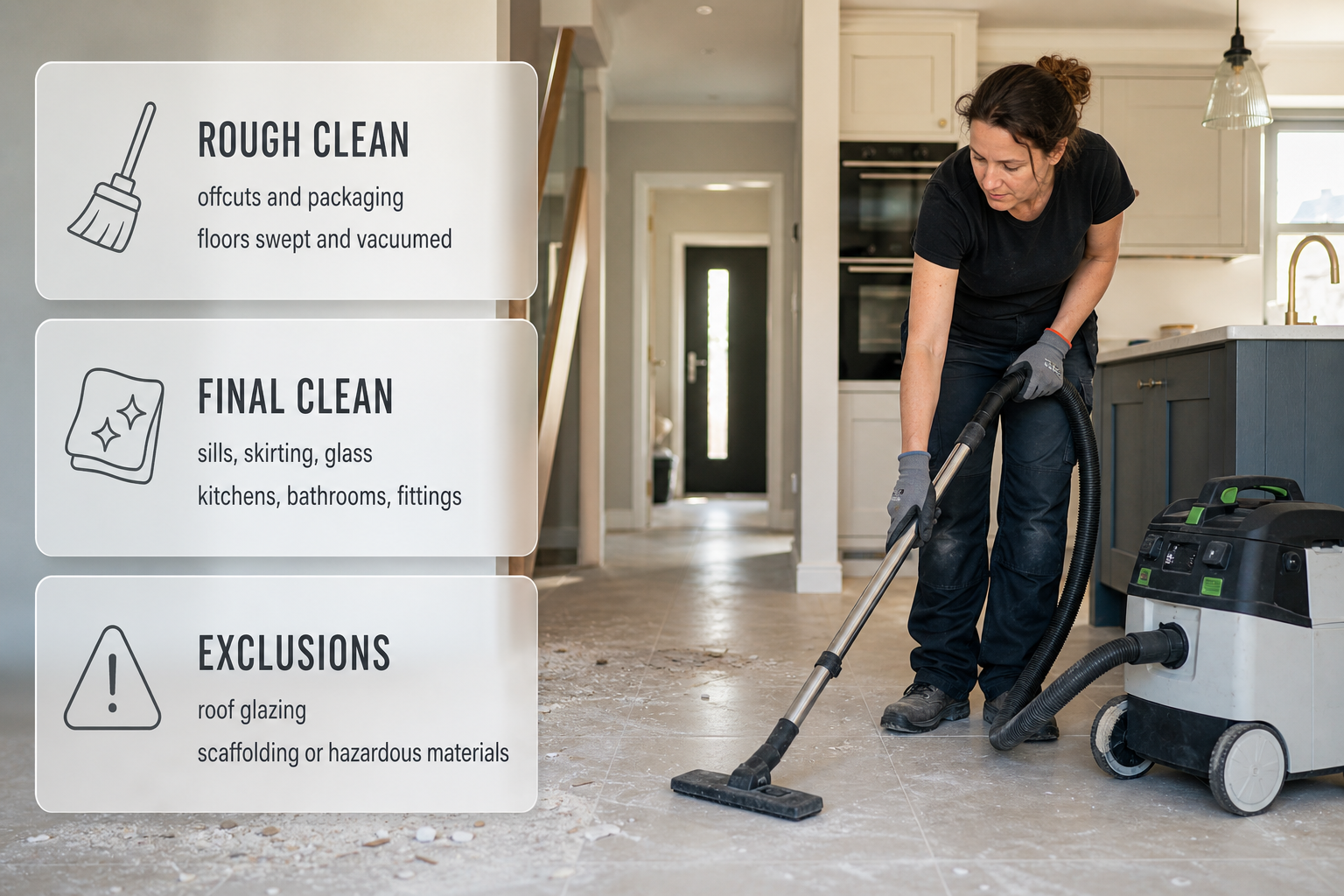
Post-build cleaning is normally split into two stages, and the first thing to establish is which stage a company is quoting for. A builders' clean, sometimes called a rough clean, happens while trades are still in and out: bulk offcuts and packaging are gathered, floors are swept and vacuumed, and the worst of the dust and surplus material is cleared so finishing trades have a workable space. It is not a finished standard, and the dust settles again within hours. The final clean, often called a sparkle clean, is the one that matters to a homeowner, and it usually happens after the snag list has been worked through, because snag repairs generate fresh dust of their own.
A proper final clean typically takes in:
- All horizontal surfaces worked from the top down: tops of units and wardrobes, shelves, sills, skirting, architraves, door frames, stair spindles, radiators, light fittings and extractor vents.
- The insides of fitted units, drawers and presses, once they have been emptied.
- Kitchen and bathroom fittings: sinks, taps, shower trays and screens, tiles and grout lines, sanitary ware, mirrors and splashbacks.
- Glass inside and out, including frames, sills and sliding-door tracks, along with protective film and stickers left on new glazing.
- Residues specific to building work: plaster splashes on floors, cement and grout haze, paint spots on glass and frames, adhesive and mastic smears, and leftover tile spacers.
- Floors cleaned according to their material, using vacuum, damp-mop or machine methods as the surface allows.
- External areas where they are in scope: paths, patios, driveways, boundary walls, external doors and bin stores.
- Removal of the remaining packaging and waste, where the quote includes it.
- A final walk-through with the homeowner before the company leaves.
Typical exclusions are high-level or roof glazing, the insides of ducts and service voids, attic spaces, anything needing scaffolding, and hazardous materials. Those should be named in writing rather than assumed.
How post construction cleaning differs from domestic and commercial cleaning
Domestic cleaning is recurring maintenance in a finished, lived-in home. The soil is household soil, such as grease, soap scum and everyday dust, and the standard is that the place looks tidy again. Post-build dust is different in kind and in volume: it is mineral dust from plaster, cement, timber, MDF and stone, it is abrasive, and it keeps settling out of the air for days after the work stops. A single pass with a domestic kit leaves a fine film on every surface within a day.
Commercial cleaning is a different model again. It is usually a contract for regular rounds in offices, retail, hospitality or industrial premises, staffed and priced around a recurring schedule. A post-build clean is a one-off, intensive job with a defined start, a deadline and a handover standard, and the waste volumes are far higher. Equipment is a fair proxy for the difference: HEPA-filter vacuums, wet-and-dry machines, telescopic dusters, floor scrubbers, glass scrapers and squeegees, dust sheets and barriers, and damp rather than dry methods throughout.
It also helps to know where this sits among other cleaning services, because homeowners often bundle tasks together: a deep clean of an older part of the house, or a regular domestic arrangement running alongside the after-build work. Those are different jobs with different equipment needs, and folding them into one vague request is how quotes end up impossible to compare.
What to look for in post construction cleaning companies
- Experience with after-build dust and debris. Ask how many post-build jobs the company has handled, of what type, whether new build, extension, attic conversion or kitchen refit, and how it deals with fine dust that keeps settling. An answer built on method, sequence and equipment is a better signal than enthusiasm alone. Ask what is brought on the day.
- Public liability insurance. Request the certificate of insurance before work starts and check that the policy is current and covers this kind of work at the property. That cover is the homeowner's protection if a new worktop is scratched, a tap is damaged or a freshly painted wall is marked.
- A clear written scope. The quote should state what is cleaned, what is not, how many visits are involved and what standard counts as finished.
- Waste handling. Ask who removes the waste, whether a skip is included or hired separately, and where anything taken away ends up. Construction-type waste is not household waste and cannot simply be left out for a normal collection, so responsibility for it needs to be agreed in writing rather than decided on the day.
- Safe working around fresh finishes. Ask how newly laid tiles, fresh grout, new paintwork, silicone joints and sealed floors will be cleaned, and whether the company will wait for anything to cure first. A company used to post-build work will raise this before the homeowner does.
- Who will actually be on site. Find out whether the person quoting is the person working, whether it is a crew, and whether the workers are directly employed or subcontracted.
- Reviews and evidence. Read reviews with an eye for after-build work specifically, and ask to see photographs of comparable jobs.
- Environmental claims. If a company sells the job on green or eco-friendly products, ask what backs the claim up. From 27 September 2026, marketing claims about a product's environmental impact must be supported by evidence (CCPC), so a straight answer about which products are used, and why, should be easy to give.