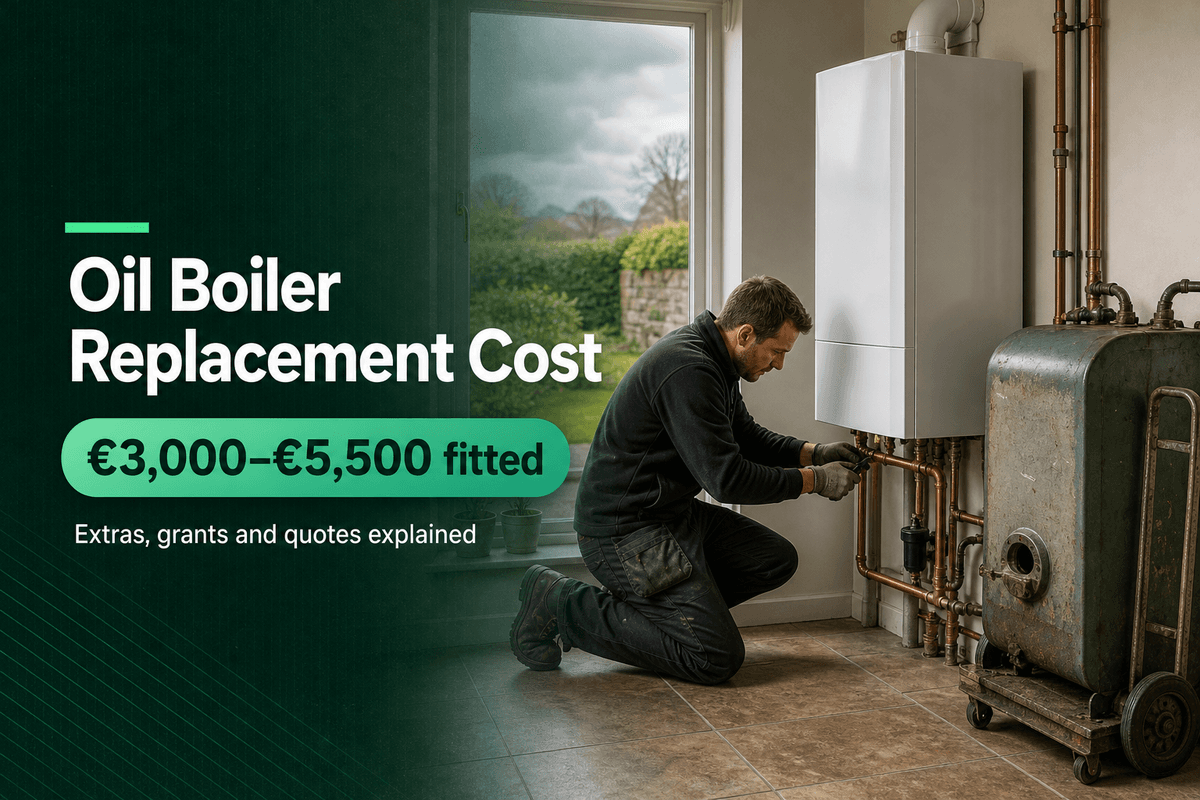
Replacing an oil boiler in Ireland typically costs €3,000 to €5,500 fitted, as an aggregate Irish market estimate including VAT, for a like-for-like swap to a modern condensing boiler in the same position. External boilers and oil combi boilers sit towards the top of that range, and the total can reach €5,000 to €8,700 when the job also needs a new oil tank, a system clean and new controls. There is no SEAI grant for a new oil boiler, but owners of an existing home are still free to replace one. Households comparing quotes for the swap can post the job under heating and water systems and get prices from local heating engineers.
Oil boiler replacement prices at a glance
The figures below are an aggregate Irish market estimate, VAT included, for a typical three or four bed house.
| Work | Typical price |
|---|---|
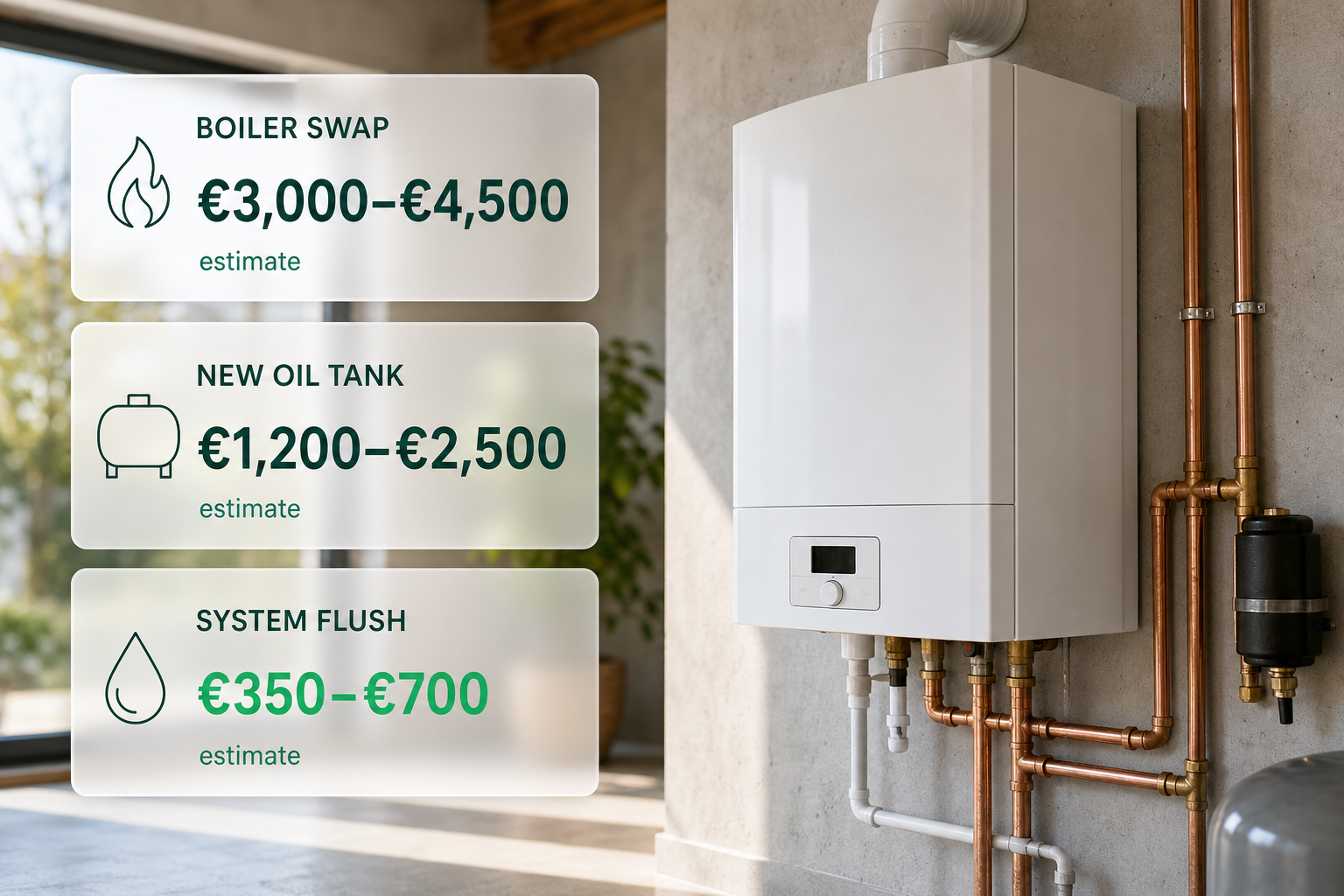
| Like-for-like condensing oil boiler, indoor, same position | €3,000–€4,500 |
| External (outdoor) condensing oil boiler | €3,500–€5,500 |
| Oil combi boiler, replacing a tank and cylinder system | €3,800–€5,500 |
| Moving the boiler or changing the flue route | €500–€1,500 extra |
| New bunded oil tank, supplied and fitted | €1,200–€2,500 |
| Powerflush or chemical clean of the heating system | €350–€700 |
| New heating controls (programmer, thermostats, zone valves) | €400–€1,000 |
| Removal and disposal of the old boiler | Usually included, otherwise €100–€250 |
A worked example shows how the lines combine. A 20-year-old floor-standing oil boiler in a utility room, replaced with a new condensing boiler in the same spot, comes to roughly €3,000–€4,500. If the old single-skin tank also has to go, and the system gets a powerflush and new controls at the same visit, the total rises to roughly €4,950–€8,700. Most of the difference between quotes for the same house comes from these extras, not from the boiler itself.
What is included in a standard replacement
A like-for-like quote normally covers:
- draining down the system and disconnecting the old boiler;
- supplying and fitting the new boiler, flue and condensate drain;
- connecting to the existing oil line, fire valve and filter, or replacing them where they are worn;
- refilling, venting and commissioning the boiler, including a combustion test;
- taking the old boiler away;
- registering the manufacturer's warranty.
It is worth checking that the quote says which of these are included, and whether the oil line, fire valve and filter are being replaced or reused. These parts are cheap but often overlooked, and a worn fire valve or filter can cause the new boiler to lock out in its first winter.
Condensing boilers, efficiency and the rules for existing homes
Almost every oil boiler sold now is a condensing boiler. It recovers heat from the flue gases, so it burns less oil for the same heat than a 20-year-old non-condensing model. It also produces water, so it needs a condensate pipe to a drain, which is one reason the fitting position and pipe route matter. Modern condensing oil boilers are typically rated at around 90 percent efficiency or above.
For new homes the picture is different. The Nearly Zero Energy Building rules introduced under Part L of the Building Regulations in 2019 have effectively phased out fossil fuel boilers in new dwellings, and fewer than 5 percent of new homes had one installed in 2023, according to the Department of Housing. That press release also points to an EU proposal to phase out fossil fuel boilers by 2040. Replacing an oil boiler in an existing home is still allowed, but a new boiler fitted now may well be the last oil boiler the house has, and that is worth weighing against a heat pump.
No grant for oil boilers, but a scrappage grant for switching
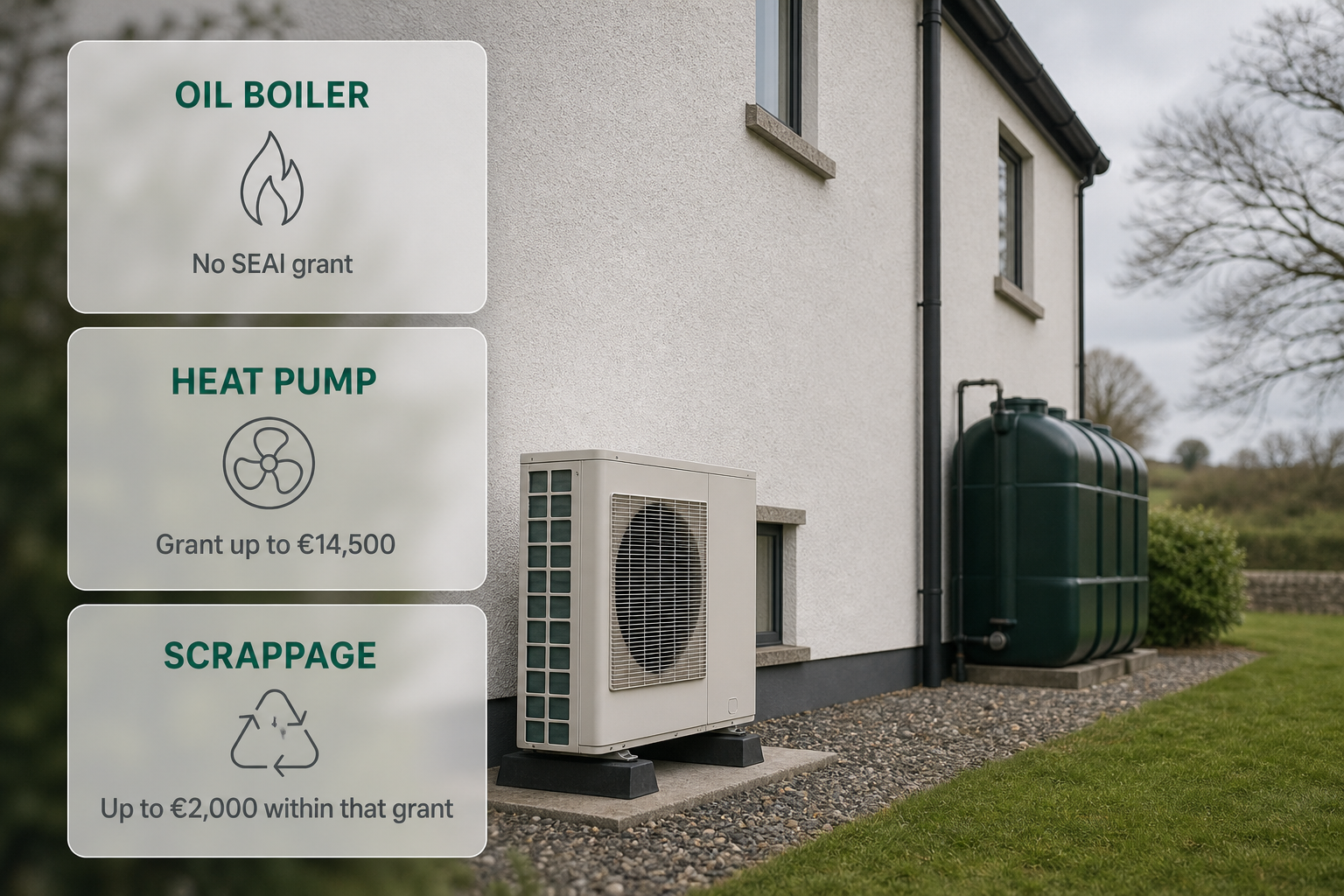
SEAI does not give a grant for a new oil boiler. It does support removing one. Under the SEAI heat pump grant, a house can get up to €14,500 for an air-to-water or ground source heat pump, made up of up to €10,500 for the heat pump, up to €2,000 for central heating upgrades where needed, and up to €2,000 for boiler scrappage when an oil or gas boiler is removed. The home must have been built and occupied before 2021, and homes built before 2007 usually need a technical assessment first, which has its own €200 grant.
That makes the real comparison for many households:
- New oil boiler: roughly €3,000–€5,500, no grant, quick to fit, works with the existing radiators and tank, but keeps the house on oil and exposed to rising carbon tax.
- Heat pump: a higher upfront price before the grant, often needs insulation and larger radiators first, but lower running costs in a well insulated house and no oil deliveries.
A heating engineer can usually say in one visit whether the house is close to heat pump ready. Where it is not, for example in a draughty older house with small radiators, replacing the oil boiler is often the sensible step now, with insulation work planned before the next change.