Mould in Car Interior: Signs, Causes and Safe Steps
Mould in a car means damp is trapped inside. See the warning signs, safe cleaning and drying steps, and when to call a specialist.
/10 min read
Mould in a car interior means the cabin has been wet enough, for long enough, for fungal growth to settle into fabric, foam, leather, carpet or trim — it is a moisture problem first and a cleaning problem second. It keeps coming back because the water that started it is usually still there: a seeping seal, a blocked drain, a saturated carpet, or condensation that reforms every night on cold glass. The safest response is to stop disturbing the growth, dry the cabin out thoroughly, and then deal with the source rather than wiping the same patch every few weeks.
What mould in a car interior means, and the safest first response
Mould needs three things: moisture, a surface it can feed on, and still, humid air. Cars supply all three. The foam under seat covers, the felt backing on carpets, headlinings, boot linings, seat-belt webbing and the film of dust inside vents are all organic enough to support growth once they stay damp. Growth is usually a symptom rather than the problem itself.
The safest first response is restraint. Brushing the growth, beating the upholstery or blowing it out with compressed air lifts spores into the air that the driver and passengers then breathe. The practical order of work is: ventilate the car outdoors with the doors and windows open; put on gloves, eye protection and a mask before touching anything; strip out loose items and mats; dry the cabin; clean the affected surfaces; extract the residue; dry the cabin again fully; and only then sort out the water source. Where a smell or staining keeps returning after that, an interior cleaning service can strip and dry a cabin far more thoroughly than household equipment allows.
Warning signs that damp is already a problem
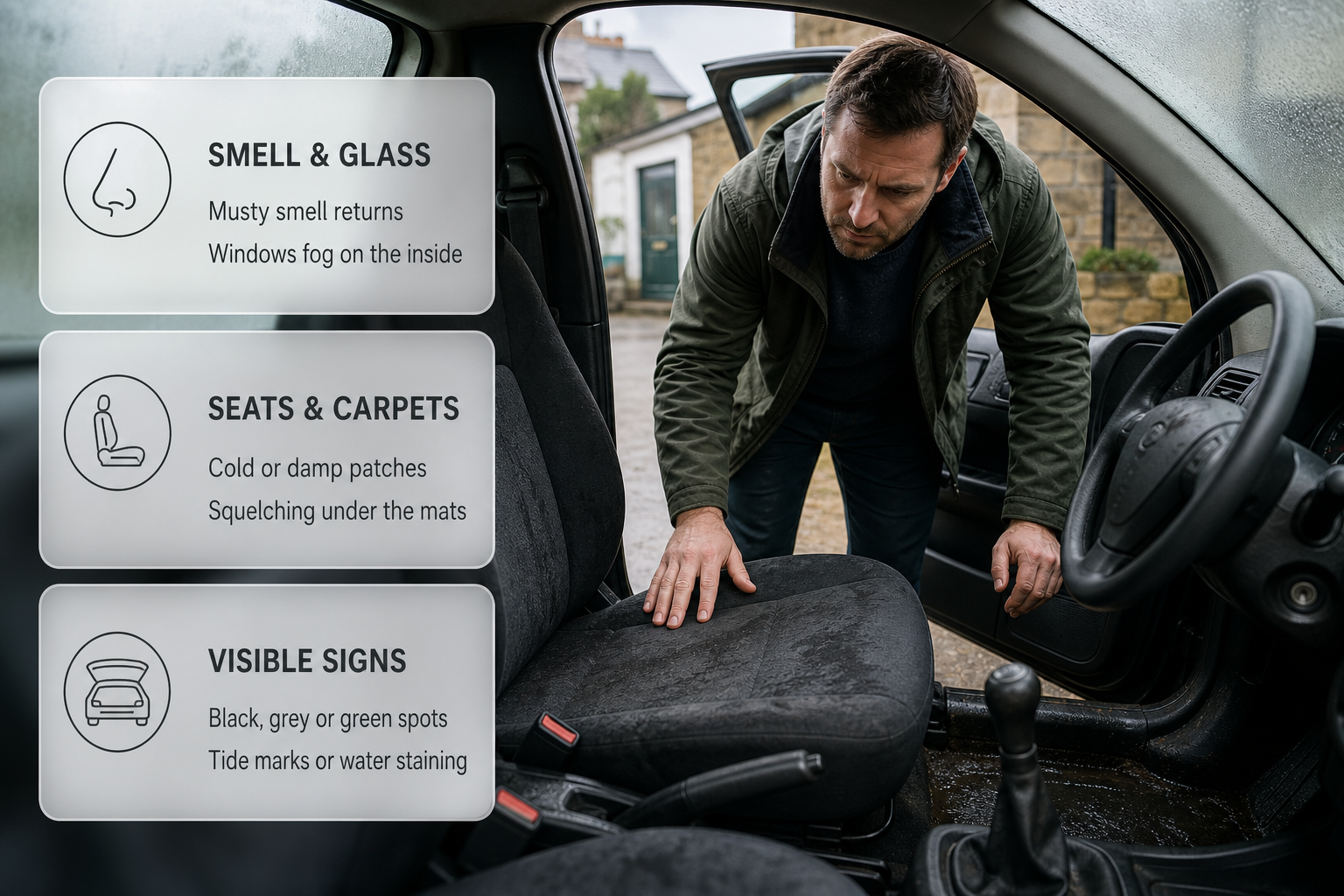
A musty smell that returns after airing, often strongest on the first warm day or when the heater is first switched on.
Windows that fog on the inside, particularly the windscreen and rear screen, and a greasy film that comes back soon after cleaning.
Cold or damp patches on seats and carpets, or a squelching feel under the mats.
Speckled black, grey or green spots along seat seams, headlining edges, the boot floor and the spare wheel well.
Tide marks, water staining or a white powdery bloom on boot linings and door cards.
A headlining that has begun to lift, sag or stain.
Symptoms that fade when away from the car, such as sneezing, a blocked nose or irritated eyes and throat.
Dampness in the boot rather than the cabin, which usually points to rear seals, light clusters or tailgate drains.
Why humidity makes mould in cars so stubborn
A car cabin is a small, sealed space with a lot of cold glass and metal, so it behaves like a badly ventilated room.
Wet mats, damp coats and sports gear, a leaking heater matrix or a soaked underlay all release water vapour into that small volume. Overnight the cabin cools, that vapour condenses onto the coldest surfaces — glass, door frames, seat frames — and the cycle begins again. Short journeys with the windows shut make it worse, because the heater warms the air so it holds more moisture and nothing carries it out. A car left locked for days with a damp interior is effectively a humidity chamber.
Likely causes of damp and mould in a car
Leaks past door, window, boot and sunroof seals, windscreen bonding, grommets, aerials and rear light clusters.
Blocked drains: sunroof drain tubes, the scuttle panel drain, the air-conditioning condensate drain, door bottom drains and tailgate drains. Water then backs up into the cabin or the boot.
Wet carpets and underlay from spilled drinks, wet footwear, wet umbrellas or gear, or a drain that overflows.
Poor drying after a spill or after cleaning, where a shampooed seat or carpet is put back while still damp.
Condensation alone, where nothing is actually leaking but the cabin never dries out.
A clogged cabin or pollen filter and a damp air-conditioning evaporator, which give a musty smell from the vents.
Once the water source rather than the damp itself is the problem, automotive services cover leak tracing, drain clearing, seal replacement and air-conditioning work.
Cleaning and drying a mouldy car interior safely
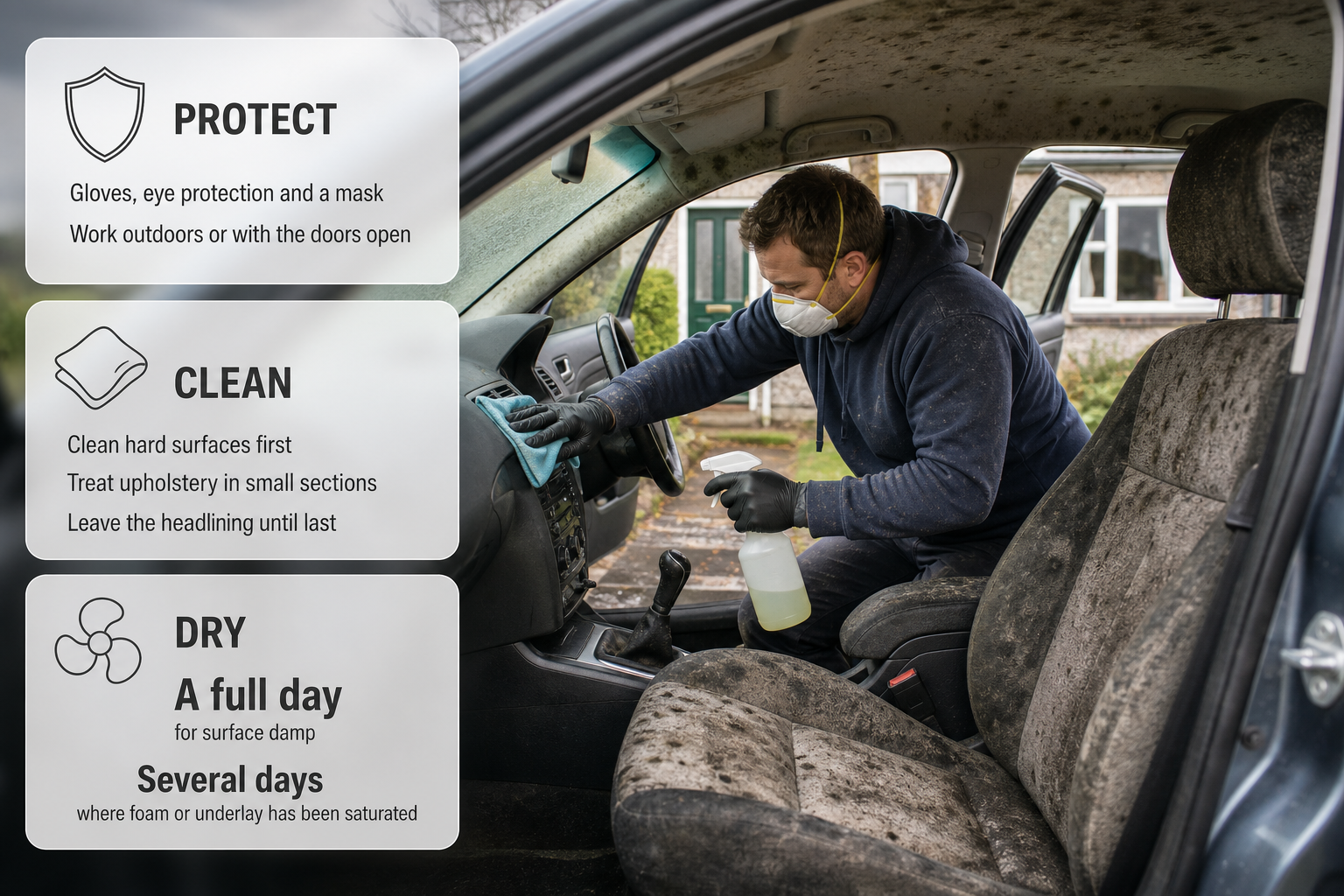
Work outdoors or with the doors open, and wear waterproof gloves, eye protection and a close-fitting particle mask or respirator so spores are not inhaled. Wash hands, forearms and clothing afterwards.
Strip the cabin. Take out mats, the boot liner, the spare wheel cover, child seats that the manufacturer allows to be washed, and anything loose. Bag items that cannot be cleaned and take them out of the car.
Vacuum with care, on dry surfaces only. Use a vacuum fitted with a high-efficiency filter and a brush attachment. A vacuum without that type of filter can blow spores back into the air. Do not beat or scrub the material.
Clean hard surfaces first. Wipe plastic, vinyl, metal and glass with warm water and a mild detergent, or a diluted white vinegar solution, using a microfibre cloth. Wipe again with clean water, then dry. Never use bleach on fabric, leather or headlining: it damages fibres, leaves residue and does nothing about the moisture.
Treat upholstery in small sections. Apply a small amount of upholstery cleaner or shampoo with a soft brush, work it in gently, then extract it with a wet vacuum or blot firmly with a clean cloth. Rinse with a barely damp cloth. The aim is a surface clean, not a soaking — water pushed into foam becomes the next colony.
Handle leather and vinyl gently. Mild soapy water, a soft cloth, then dry and finish with a leather conditioner.
Leave the headlining until last, and keep it light. Use foam cleaner on a barely damp cloth; over-wetting releases the adhesive and causes sagging. A heavily stained or drooping headlining is normally replaced rather than cleaned.
Pull seat belts out fully, clean them with mild detergent, and let them dry completely before retracting, or damp webbing is wound into the reel.
Deal with the air conditioning. Replace the cabin filter and have the evaporator and condensate drain checked if the smell comes from the vents.
Dry the whole cabin properly. Leave doors and windows open in dry weather, use a fan to move air through the footwells and boot, or run a dehumidifier beside or inside the car. Check under the seats, under the carpet and in the spare wheel well, where damp hides. Allow a full day of airflow for surface damp, and several days where foam or underlay has been saturated. Do not seal the car up until everything is dry to the touch, and never leave a heater running unattended.
When a professional is the sensible option
If the smell returns within days of a proper clean and dry, or any surface still feels damp, the moisture is deeper than a household clean can reach. Saturated underlay, standing water in a footwell or boot, or growth across several seats, the headlining and the boot points to padding that needs extraction or replacement rather than wiping.
Finding the leak is a separate skill: hose testing, tracing sunroof and air-conditioning drains, and checking windscreen bonding and seals all take time and equipment. A tailored interior clean, hot-water extraction, drying equipment and treatments are also difficult to justify buying for one car. Interior cleaning specialists handle cleaning and drying; garages and automotive specialists handle leaks, drains, seals and air conditioning.
Repair methods vary between vehicles, so the owner confirms current steps with the responsible garage or specialist, and any decision on whether a car is repaired or written off rests with the insurer and its assessor rather than with a cleaning contractor.
Health risks from mould in a car
The Health and Safety Authority lists moulds among biological agents that can cause ill health, and notes that they may trigger allergic reactions or exposure to toxins Health and Safety Authority. That is what makes a mouldy cabin more than a smell problem: growth that is disturbed releases spores into a small, enclosed space where they are easily breathed in.
It follows that the sensible precautions are the same ones that protect the car — do not brush or beat the growth, wear a mask and gloves, ventilate fully while working, and drive with the windows down and the ventilation on fresh air until the cabin is clean and dry. It is sensible for anyone with ongoing symptoms such as a persistent cough, wheeze or irritated eyes and throat to speak to their GP.
Stopping mould from coming back
Cleaning without stopping the water is temporary, so the source comes first: a leaking seal, a blocked drain or a damp underlay has to be found and sorted. After that, the habits that keep a cabin dry matter more than any product.
Dry anything that gets wet, promptly. Mats out and dried away from the car; wet coats, wetsuits and sports gear never left in the boot.
Air the car regularly, open the windows on dry days and run the air conditioning in fresh-air mode, replacing the cabin filter on schedule.
Keep drains clear — sunroof, scuttle, door bottoms and tailgate.
Use rubber mats in winter, lift them out to dry, and check what is underneath.
A dehumidifier bag in the cabin helps as a support, not as a fix.
Check door and window seals, and check the boot floor and spare wheel well after heavy rain.
After any valeting or spill, give the car a full day of airflow before closing it up.
FAQ
Does mould in a car interior mean the car is ruined?
Not by itself. Surface growth on glass, plastic, leather and hard trim is normally removable, and most fabric can be saved if it is cleaned and dried quickly. The lasting damage comes from water that sat in foam, underlay or the headlining for a long time, which can leave permanent staining, a smell that is hard to shift, and materials that need replacing. How far it has gone is judged by the padding under the carpet and in the seat base, not by what is visible on top.
Why does the musty smell come back within days of cleaning?
Because cleaning removes what can be seen, not what cannot. Spores and moisture remain in the foam under seat covers, in the underlay below the carpet, or in the air-conditioning case, and any remaining water source rewets the surface. A smell that returns quickly is evidence that the cabin is still damp, not evidence of a bad cleaning job.
Can bleach, steam or a household vacuum be used?
Bleach should not go near fabric, leather, headlining or seat belts: it damages fibres, can leave a residue and does nothing about the moisture. Steam is useful on some hard surfaces, but it drives water into padding and adhesive, so it needs immediate extraction and thorough drying. A vacuum without a high-efficiency filter can blow spores back into the cabin, which is worse than leaving the growth alone until it can be tackled properly.
Which part of the interior should be cleaned first?
Work from the driest area to the wettest and finish with the headlining. Dry and vacuum the whole cabin first, then carpets and underlay (or remove them), then seats, then door cards and plastics, and the headlining last so loosened dirt falls onto surfaces already done. The boot and spare wheel well are often the wettest spots and the easiest to forget.
How long does a car interior take to dry?
It depends on how much water is trapped. Surface condensation and damp mats can clear with a day of open doors, moving air and a dehumidifier. Foam, underlay and soaked carpet can take several days of airflow, and may need extraction or removal to dry at all. The test is simple: press a clean dry cloth into the carpet, underlay and seat base — if it comes away damp, keep drying before using the car normally.
Getting help with a damp, mouldy car
Posting a job and listing on ShamFix is free, there is no commission, and a subscription is planned for the future. ShamFix does not check or certify tradespeople, and profiles are filled in by tradespeople themselves, so homeowners should check any registration a trade claims and read reviews before agreeing work. A clear description — the car, where the damp shows, whether the smell returns after cleaning, and any water found in the boot or footwells — helps the right local trade respond on ShamFix.