IKEA's own assembly service starts at €35 per item through TaskRabbit, while independent providers in Ireland typically quote €50 to €150 per item, depending on size and complexity. The difference usually comes down to access, part count, anchoring, and whether the job involves a straightforward shelf or a large wardrobe with awkward doors.
A flat-pack wardrobe in a narrow Dublin hallway, a bed frame delivered to a Cork rental, or a boxed kitchen unit blocking the front door can turn a simple purchase into a full afternoon's work. The sensible choice depends on the item, the room, the tools available, and whether the finished furniture needs fixing safely to a wall. This guide sets out the practical cost of furniture assembly in Ireland, when DIY makes sense, what to prepare before booking, and which safety details shouldn't be left to chance.
The Sunday Box in the Hallway
The delivery van has gone, but the box remains. It leans against the front door of a terraced house, marked with a wardrobe, bed frame, or modular storage unit that looked manageable on a website. Sunday afternoon stretches ahead, and the first question is whether to open the box, call a handy friend, or book a furniture assembly provider. If you'd rather skip the instructions, compare furniture assembly quotes on ShamFix.
In a Dublin rental, the decision can be shaped by access before the first screw is turned. A wardrobe may fit inside the bedroom once assembled but fail to pass through the hall, a stair turn, or the bedroom doorway. In an older Cork property, uneven floors, tight corners, and limited parking can matter just as much as the instructions.
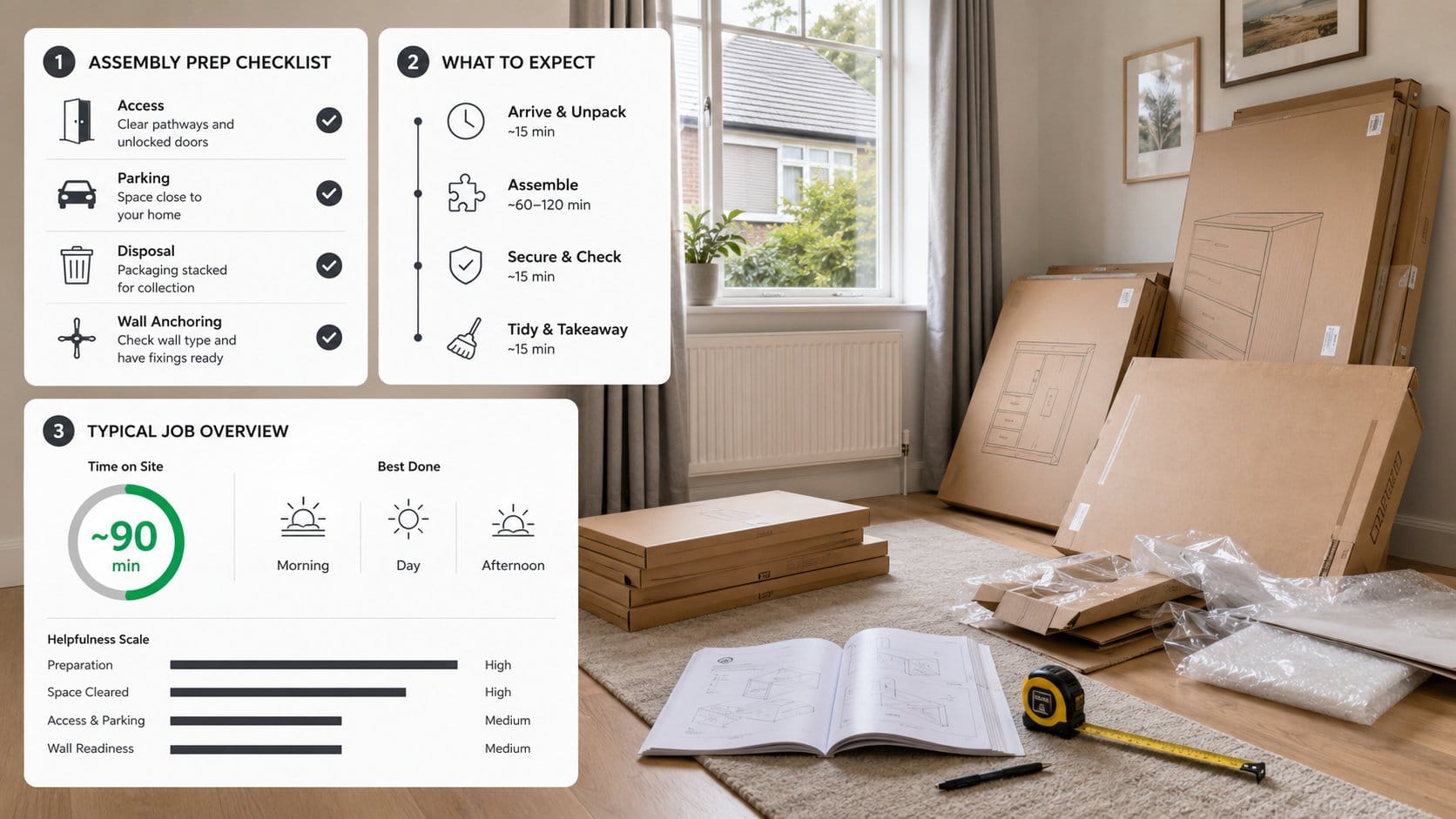
The lowest price isn't always the cheapest outcome. A damaged panel, missing fastener, misaligned drawer runner, or unanchored tall unit can create more work than the original assembly. The right quote should account for the item, the route into the room, disposal, and any wall fixing required.
Practical rule: If the finished item is tall, heavy, or difficult to move once built, the room and access route should be checked before assembly begins.
Large storage jobs also raise space-planning questions. A built-in-looking unit may compete with a radiator, skirting board, or doorway, while under stair drawers and shelving require more careful measuring than a freestanding bookcase.
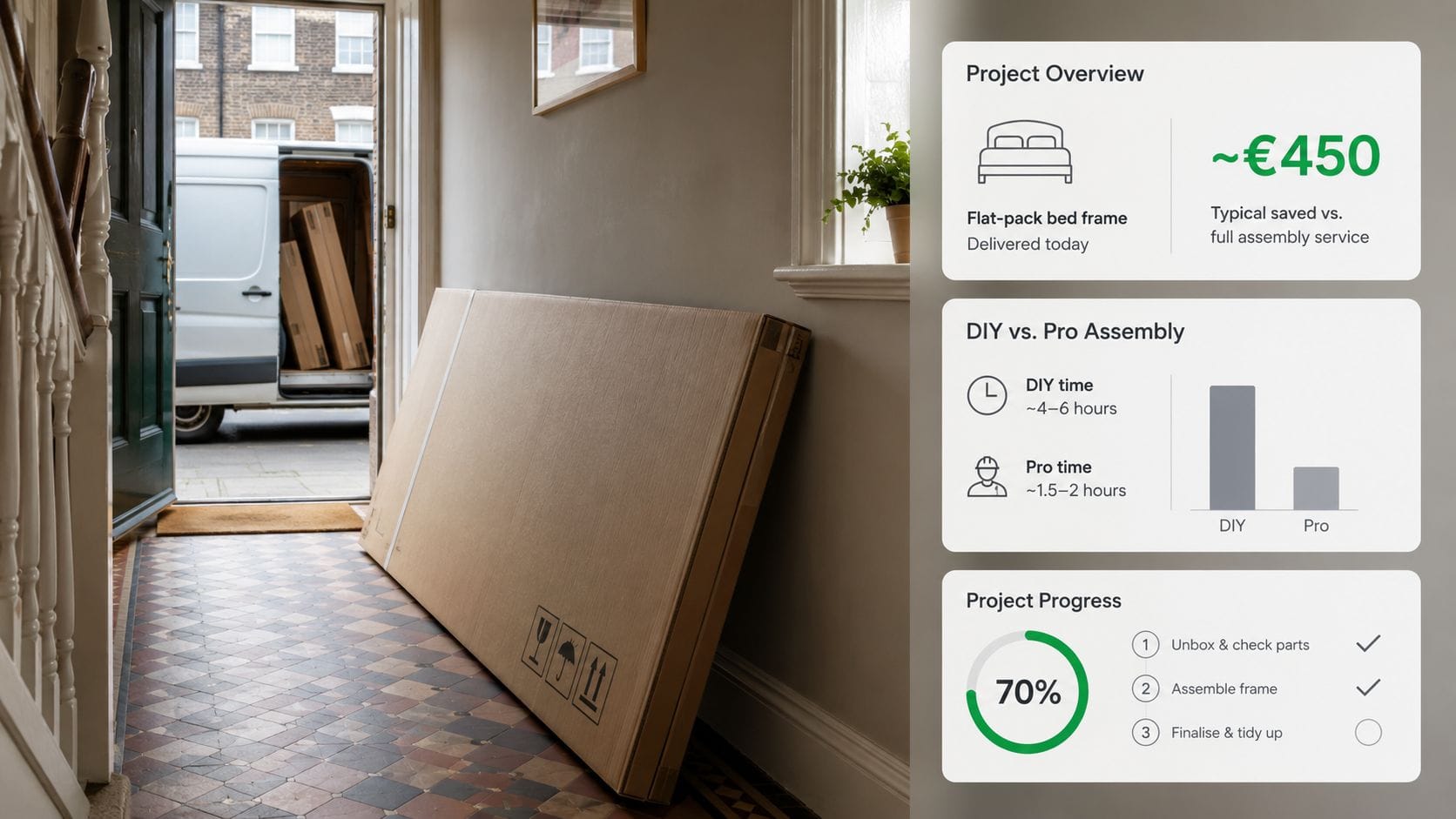
The practical choice is simple. Small, light furniture with clear instructions can suit DIY. Multi-person builds, sliding-door wardrobes, kitchen units, and furniture requiring wall anchoring deserve a proper assessment before the cardboard is cut open.
What Furniture Assembly Services Cover
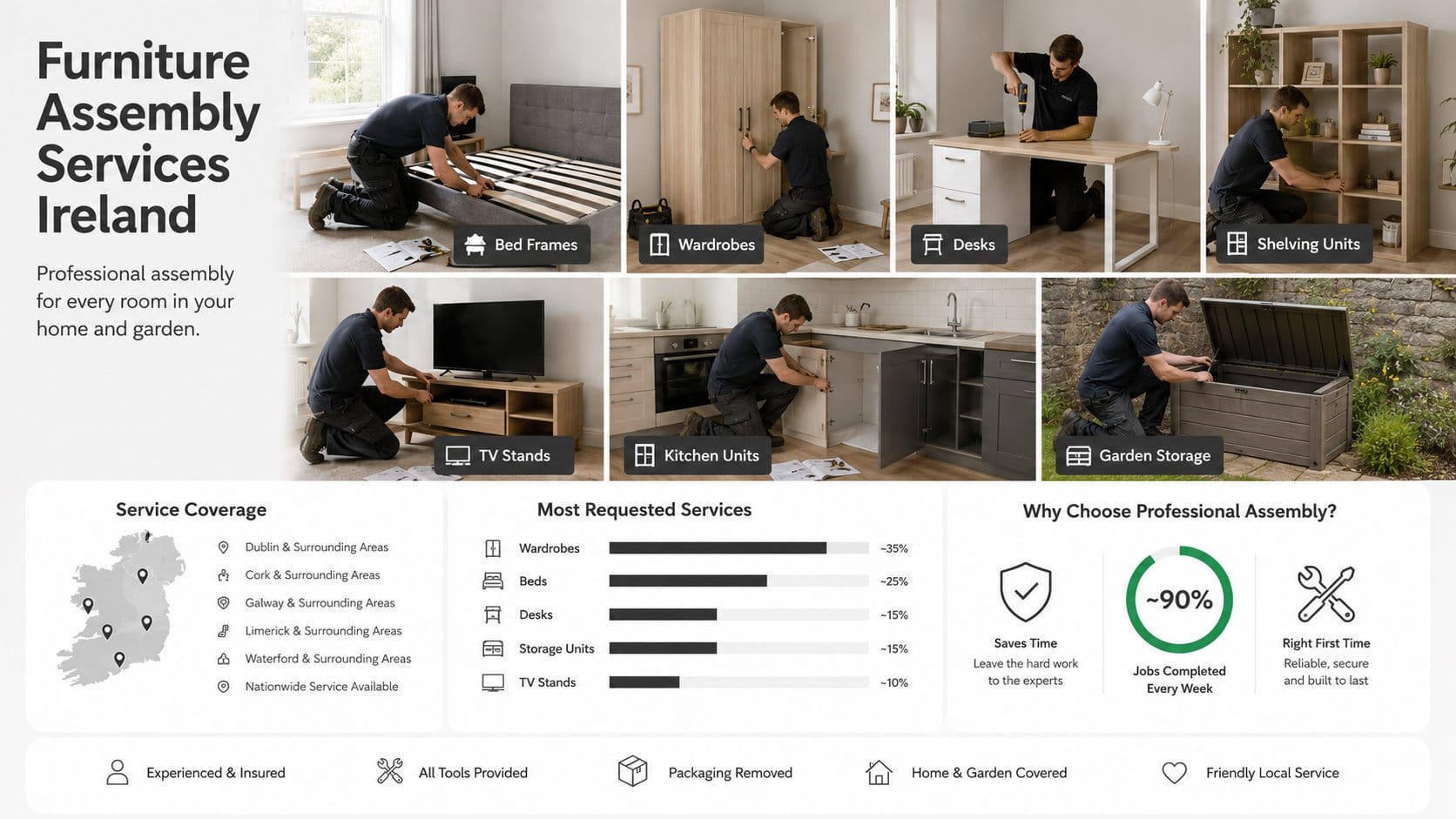
Furniture assembly services in Ireland are generally brand-agnostic. A provider may assemble IKEA wardrobes and beds, but the same type of work can cover flat-pack from Woodies, Harvey Norman, Argos, Wayfair, and other retailers. Some providers also handle ready-to-assemble furniture, solid-pack pieces, and modular systems that arrive in several cartons.
Typical work includes:
Wardrobes and storage: Flat-pack wardrobes, IKEA PAX frames, sliding-door systems, tallboys, modular shelving, and drawer units.
Beds and bedroom furniture: Bed frames, bedside tables, divan bases, storage beds, and IKEA MALM-style furniture.
Kitchens: Base units, wall units, shelving, and worktops, although plumbing, electrical work, and permanent kitchen fitting should be agreed separately.
Home office furniture: Desks, filing units, bookcases, modular storage, monitor shelves, and office cupboards.
Living-room items: TV units, media storage, bookshelves, display cabinets, and coffee tables.
Outdoor pieces: Flat-pack garden furniture and storage units, where the ground and final position are suitable.
The important distinction is between assembly and associated work. A provider may offer old-furniture disassembly, wall anchoring, basic rubbish removal, or minor adjustments for a tight fit. Internal door trimming is a more substantial alteration and should never be assumed to be included. It needs a separate written agreement, particularly in rented accommodation.
A proper service should include checking the hardware, following the manufacturer's sequence, aligning panels, testing moving parts, and leaving the item stable. For tall furniture, the discussion should include the wall type and the appropriate fixing method. For beds with lifting mechanisms, testing must happen before the mattress is loaded.
The work is more than turning a screwdriver. Cam-lock fittings, drawer runners, hinges, sliding tracks, wall brackets, and large panels all demand judgement. That's why assembly is a trade skill, not just a screwdriver job. Further practical reading is available in these home improvement guides for Ireland.
What It Costs in Ireland Right Now
The clearest public starting point is IKEA's own service, which is delivered through TaskRabbit and starts at €35 per item. IKEA's assembly service information should be checked for the current item and booking terms.
For independent furniture assemblers and handymen in Ireland, a realistic general guide is €50 to €150 per item. That is a broad working range, not a guaranteed tariff. A small bedside table may sit near the lower end, while a large wardrobe, complex storage system, or item requiring anchoring can move towards the upper end.
| Furniture type | Typical price range | Main cost drivers |
|---|---|---|
| Small shelf, bedside table, or simple cabinet | €50 to €80 | Part count, parking, and whether the item is already in the room |
| Standard bed frame or desk | €70 to €110 | Weight, alignment, access, and moving parts |
| Large wardrobe or modular storage | €100 to €150 | Panels, drawers, doors, internal layout, and wall anchoring |
| Complex kitchen or office run | €100 to €150 per item, with the full scope agreed in writing | Multiple units, levelling, worktops, access, and associated fitting |
The range is driven by four practical issues. Size and part count affect handling and assembly time. Complexity rises with drawer runners, sliding doors, gas-lift mechanisms, integrated lighting, and multiple adjustment points. Access matters when the provider must work through narrow stairwells, small lifts, or tight doorways. A weekend or short-notice booking may also cost more, depending on the provider's terms.
Some providers use an hourly rate, while others quote per item or apply a minimum call-out. Multi-item jobs may receive a bundle price, but the quote should state whether that reduction covers every item, anchoring, packaging, and disposal. VAT should also be clarified. The customer should ask whether the price includes VAT, travel, parking, wall fixings, rubbish removal, and any making-good work.
A useful quote should name the model, number of items, assembly location, access conditions, anchoring requirement, disposal arrangements, total price, and what happens if parts are missing. More practical guidance appears in these Ireland tradesman hiring tips.
DIY or Hire a Pro
A small three-shelf Billy bookcase is a reasonable DIY job for someone with a clear floor, a suitable screwdriver, and patience. The main risks are putting a panel on backwards, tightening fittings too early, or failing to square the frame before fixing the back. If the instructions are clear and the unit doesn't need structural anchoring, DIY is usually sensible.
A PAX wardrobe frame without doors is a different proposition. The frame needs careful squaring, a level floor, and enough room to work around large panels. An Allen key may handle much of the build, but a drill-driver, spirit level, tape measure, and a second pair of hands make the work more controlled. Cam-lock-and-dowel fittings are fiddly when holes don't line up, and forcing them can damage the board.
Sliding doors change the calculation again. Tracks must sit correctly, panels need careful handling, and the doors must run without binding. A wardrobe that is assembled in the hall may not fit through the bedroom doorway afterwards. In older Dublin properties, doorway and stairwell widths can be tighter than expected, which makes measuring carefully and assembling large items in their final room especially important.
A flat-pack divan base with 12 drawers is also a poor first project. The base is bulky, drawer runners must be aligned repeatedly, and the finished unit needs to carry a mattress without twisting. A helper, rubber mallet, drill-driver, and spirit level can make a difference, but a provider becomes worthwhile when the mechanism or frame is difficult to stabilise.
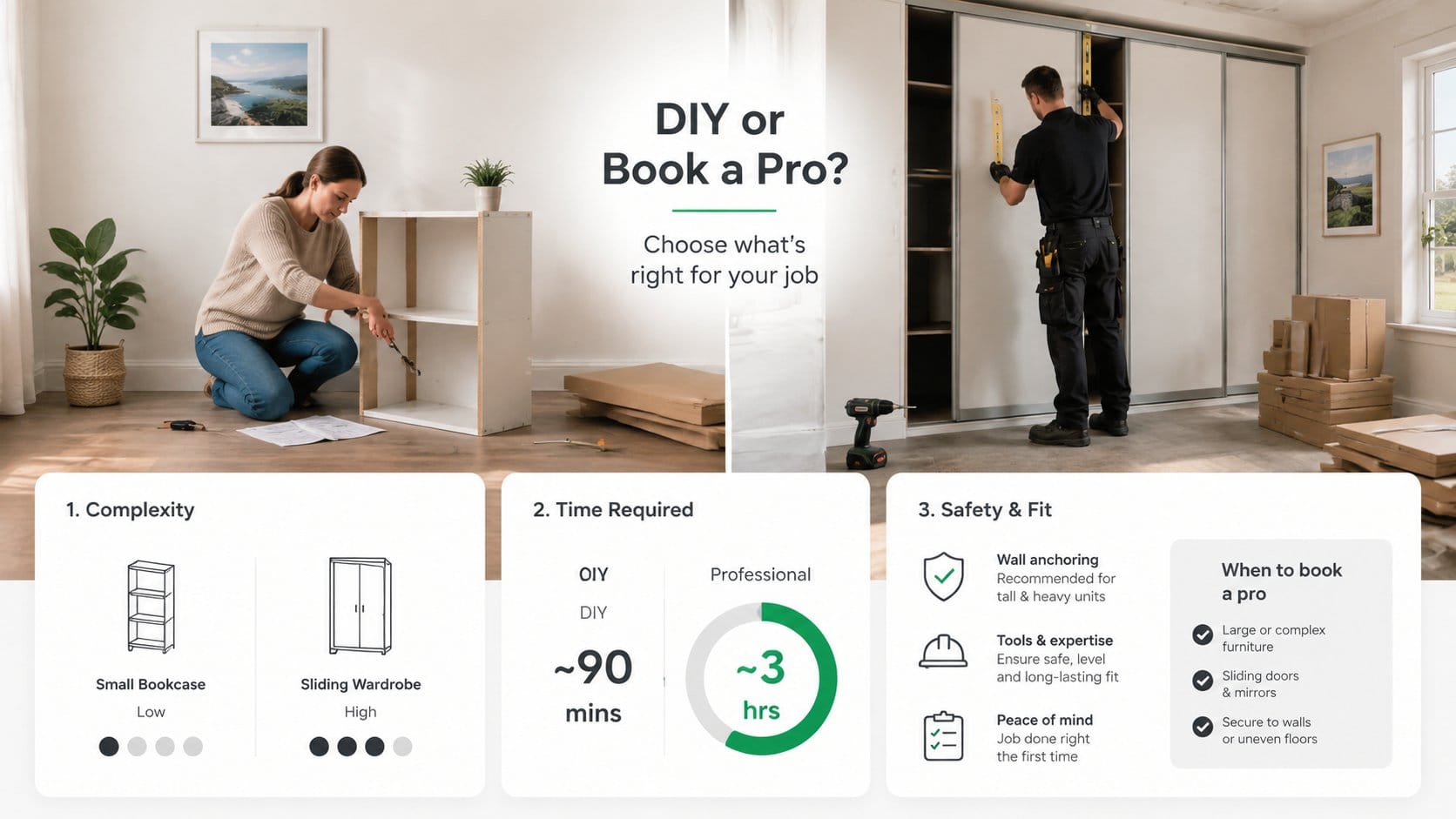
A straightforward decision rule works well:
Choose DIY for a small, light item that should take under 90 minutes, has no structural anchoring, and can be assembled in its final room.
Choose a pro for sliding-door tracks, wall anchoring, gas-lift ottoman beds, kitchen units, heavy panels, or anything requiring two people to hold safely.
Stop the build if a cam-lock won't engage, a drawer runner binds, a panel splits, or the instructions conflict with the parts.
Ask about insurance before booking. A provider carrying public liability cover gives the homeowner clearer protection if accidental damage occurs.
ShamFix explained describes how its marketplace connects customers with independent local providers. It isn't the same as hiring ShamFix to carry out the assembly.