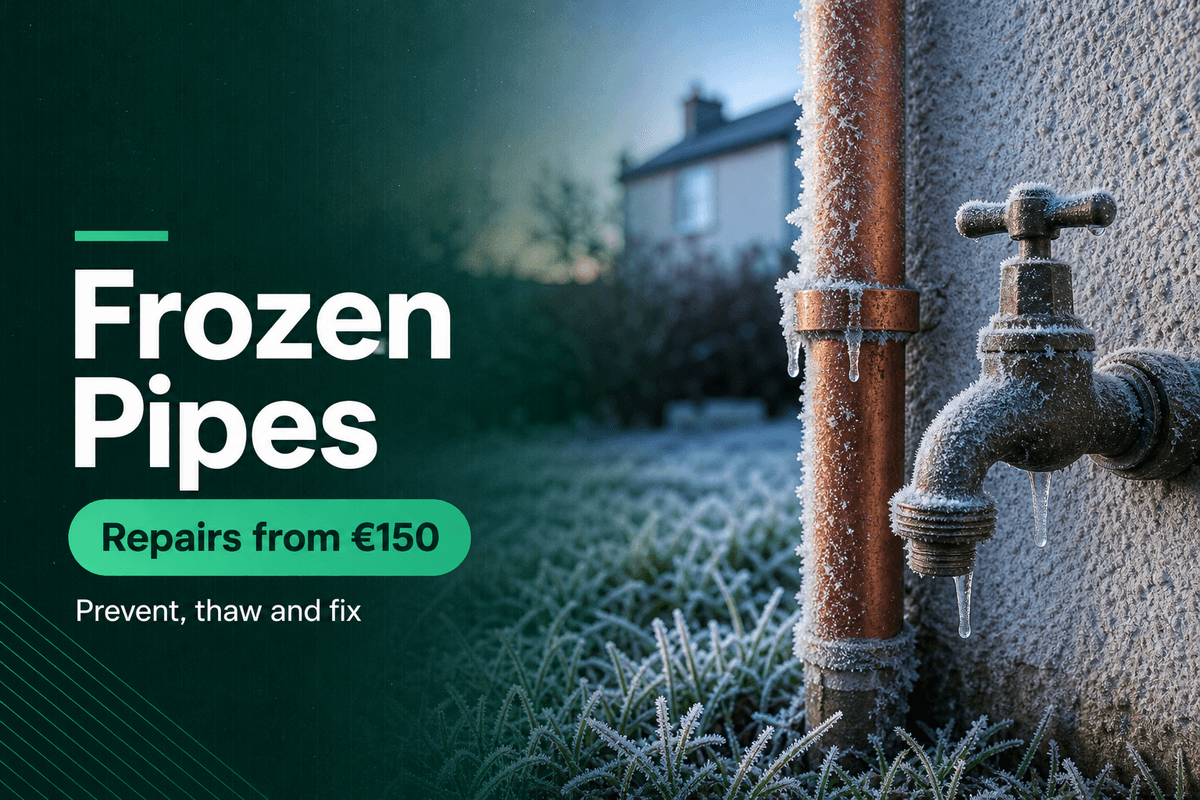
Frozen and burst pipes are one of the most expensive winter problems in Irish homes, and most of them are preventable. Insulating exposed pipes costs from a few euro per metre, while repairing a burst pipe usually costs €150 to €400 for a simple, accessible section and €300 to €900 when the pipe is inside a wall, ceiling or floor, as an aggregate Irish market estimate. The real cost comes from the water: a pipe that bursts in an attic while a house is empty can bring down ceilings and soak floors, with repair bills running into thousands of euro. The key steps are to know where the stopcock is, keep the heating ticking over in cold spells, and lag pipes in the attic and outside. Homeowners who need a burst pipe fixed or pipes insulated can post the job under plumbing and get quotes from local plumbers.
Burst pipe repair prices at a glance
The figures below are an aggregate Irish market estimate, VAT included.
| Job | Typical price |
|---|---|
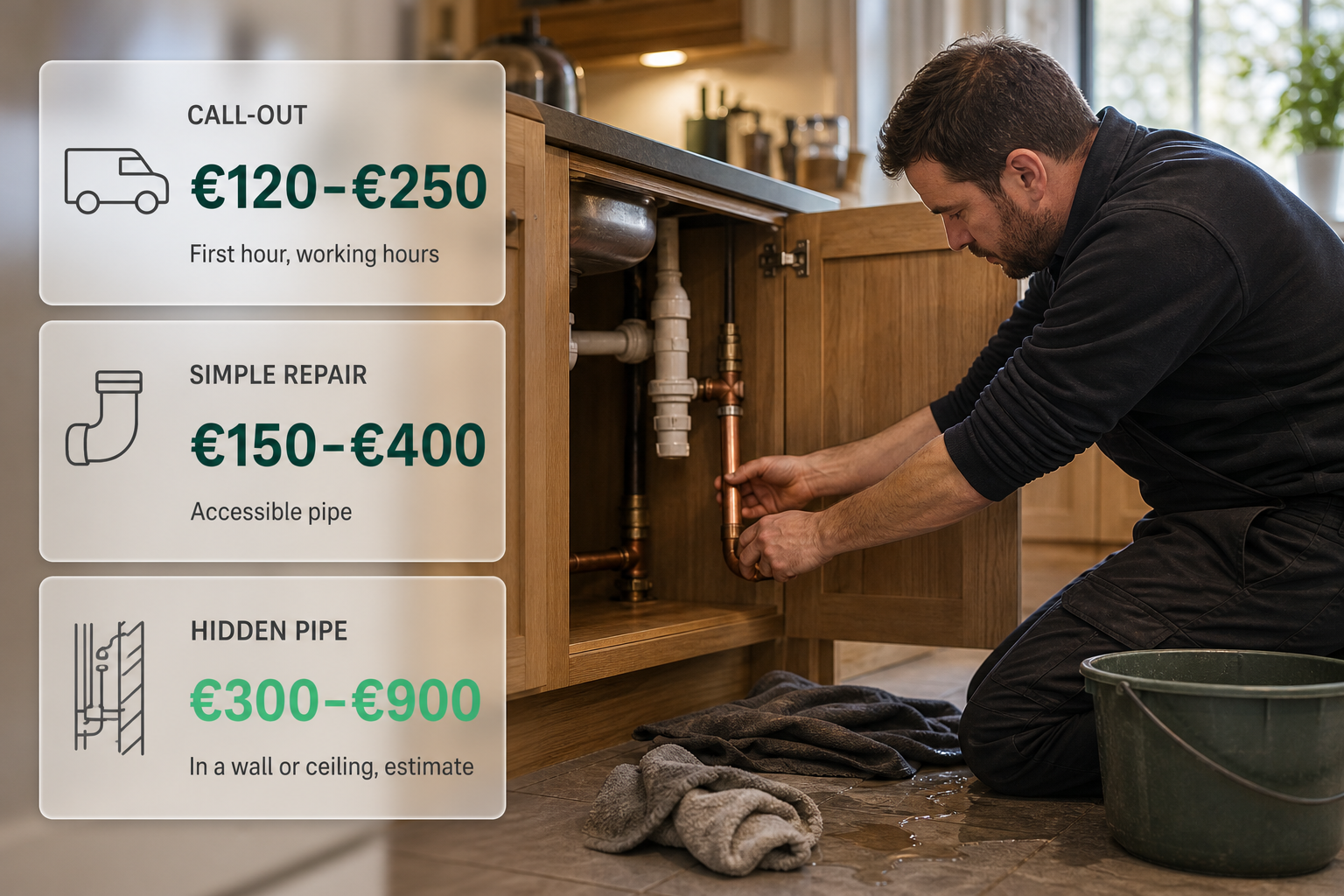
| Emergency plumber call-out and first hour, working hours | €120–€250 |
| Out-of-hours or weekend emergency call-out | €180–€400 |
| Repairing an accessible burst pipe | €150–€400 |
| Repairing a burst pipe inside a wall, floor or ceiling | €300–€900 |
| Leak detection to find a hidden leak | €250–€500 |
| Lagging pipes and tank in the attic, fitted | €150–€400 |
| Fitting a frost-protected outside tap | €100–€250 |
| Repairing a ceiling after a leak | €500–€2,000 |
| Drying out and repairing a water-damaged room | €2,000–€8,000+ |
A worked example: a pipe feeding the cold-water tank in the attic of a three-bed semi in Mayo freezes and splits during a January cold snap while the family is away for the weekend. An emergency call-out on a Saturday and the repair cost about €250 to €450. Water has come through the landing ceiling: taking down and replacing the plasterboard, skimming and painting adds €800 to €1,800, and drying equipment for a week €200 to €400. Carpets and a damaged bed bring the total to several thousand euro, which is where home insurance comes in. Lagging the pipes in advance would have cost under €400.
Why pipes freeze and burst
When water freezes it expands. In a pipe that expansion pushes against a blockage of ice, and pressure builds up between the ice and the closed tap or valve until the pipe splits or a joint gives way. The burst often goes unnoticed until the thaw, when water starts to flow again through the crack.
The pipes most at risk are those in cold spaces:
- pipes and the cold-water storage tank in the attic, especially above loft insulation;
- pipes along outside walls, in garages, utility rooms and under suspended timber floors;
- outside taps and pipes to sheds, polytunnels or animal troughs;
- the pipe where the water supply enters the house.
How to prevent frozen pipes
According to Uisce Éireann, householders should check outside pipes that can freeze and burst, protect outside taps, and know how to turn off the water supply at the stopcock. It also advises against leaving taps running, as this will not necessarily stop pipes freezing, and suggests setting the heating to come on periodically at a lower temperature, or turning off the supply to unoccupied premises.
Practical steps before winter:
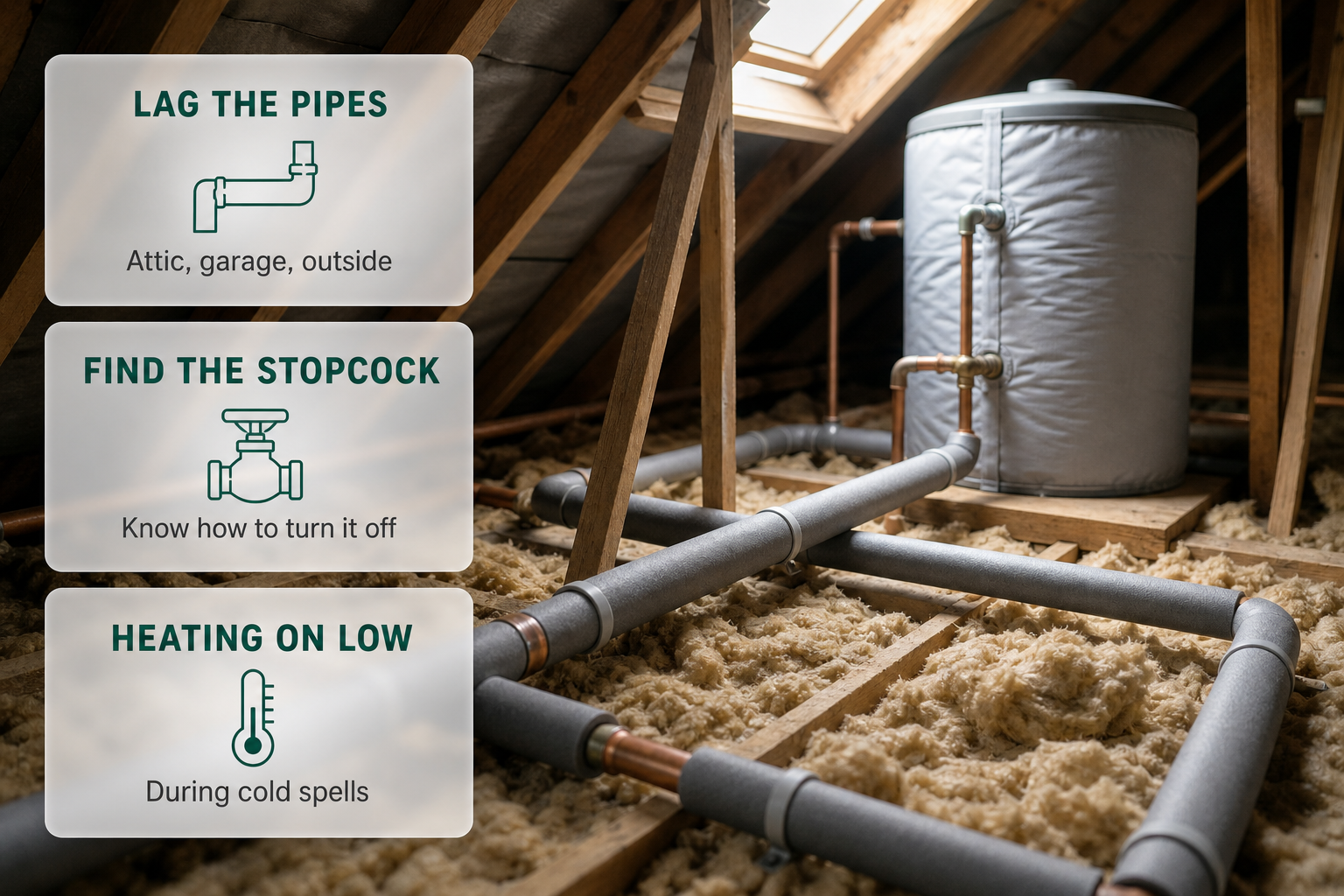
- Lag pipes and the tank in the attic. Foam pipe lagging costs a few euro per metre from a hardware shop. The cold-water tank needs an insulating jacket and a lid, but do not insulate directly underneath it, so some warmth from the house can rise up to it.
- Insulate exposed pipes in garages, utility rooms and under floors.
- Protect or isolate outside taps. Turn off the internal valve feeding the outside tap, open the tap to drain it, and fit a tap cover.
- Fix dripping taps and overflowing cisterns, because water in small overflow pipes freezes quickly.
- Find the stopcock and make sure it turns. It is usually under the kitchen sink, but in older houses it may be in a hot press, under the stairs or in a utility room. Every adult in the house should know where it is.
- Service the boiler before winter, so heating does not fail in the coldest week.
During a cold spell:
- Keep the heating on at a low temperature or on a timer through the night.
- Open the attic hatch on very cold nights to let some warm air into the roof space.
- If the house will be empty for several days, either keep it heated or turn off the water and drain the system.
What to do if a pipe freezes
Signs of a frozen pipe include no water from a tap, a toilet cistern that does not refill, or frost on a visible pipe.
- Turn off the water at the stopcock. This limits damage if the pipe has already split.
- Open the tap the pipe feeds, so water can escape as the ice melts.
- Thaw the pipe gently, starting from the tap end and working back, using a hairdryer, hot-water bottle or warm cloths. Allianz recommends heat from a hairdryer, heat lamp or heating pad and warns never to use an open flame.
- Check carefully for leaks as water starts to flow again.
- Call a plumber if the pipe cannot be reached, keeps freezing, or shows any sign of damage.