An end of tenancy cleaning checklist is a room-by-room plan for leaving a rented home clean enough to hand back without a dispute over the deposit. The standard comes from the Residential Tenancies Board: the property should be left clean and in a similar condition to when the tenant moved in, apart from normal wear and tear, and a landlord can keep all or part of the deposit to cover damage above that wear and tear (Residential Tenancies Board). Tenants who would rather not spend the last weekend of a tenancy scrubbing an oven can post a job for end of tenancy cleaning and let local cleaners handle it.
What "reasonably clean and tidy" means in practice
The phrase that decides most deposit conversations is "reasonably clean and tidy". RTB guidance for landlords and tenants states that if a dwelling is not left reasonably clean and tidy at the end of a tenancy, either the tenant can arrange the cleaning or the landlord can arrange it and deduct the cost from the deposit (Residential Tenancies Board). Two words in that sentence do a lot of work: reasonably, and tidy.
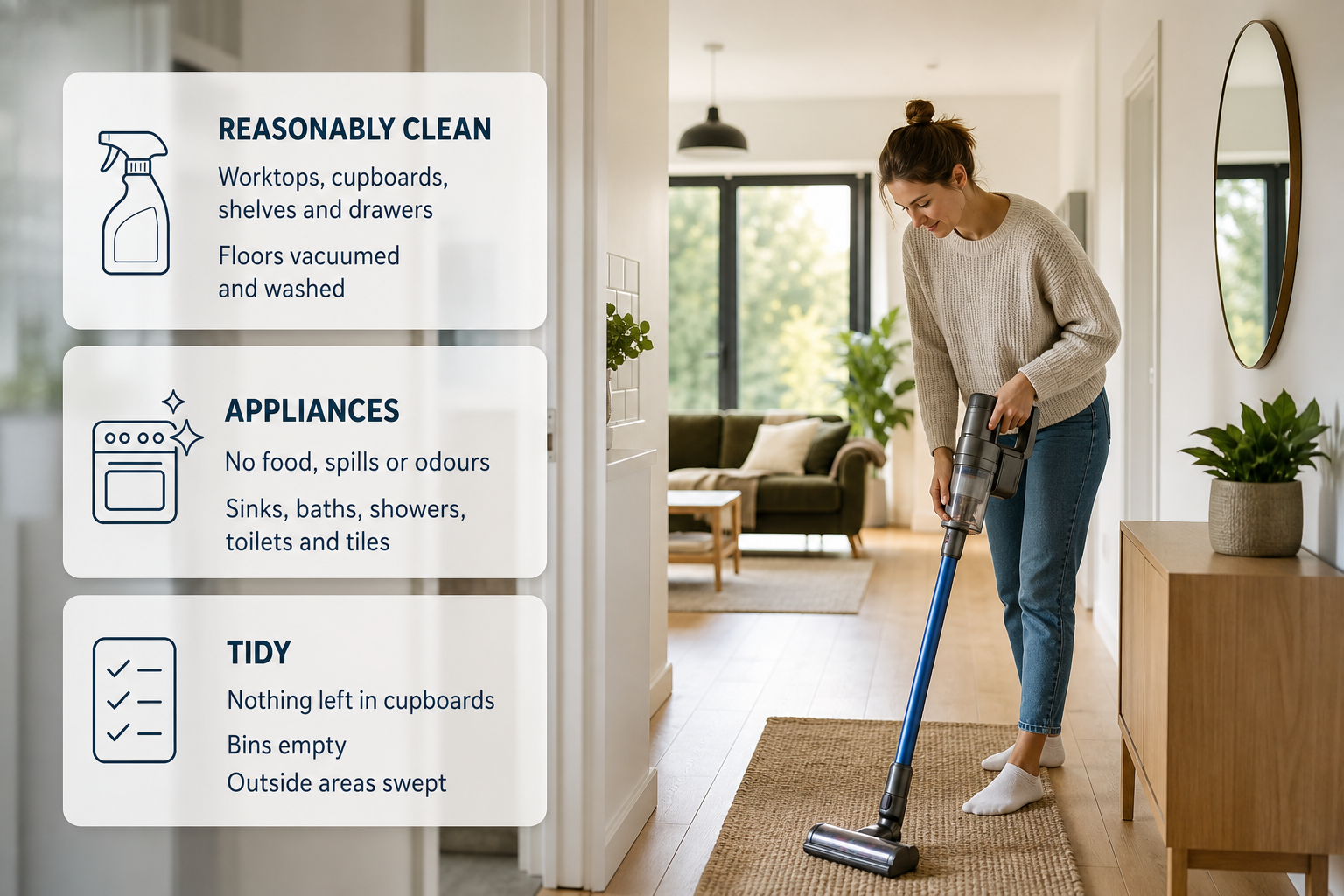
Reasonably clean does not mean showroom clean. It means:
- Worktops, cupboards, shelves and drawers wiped free of grease, crumbs and dust
- Floors vacuumed and washed, including under beds and behind doors
- Sinks, baths, showers, toilets and tiles free of soap scum, limescale and hair
- Appliances and their interiors clean, with no food, spills or odours left behind
- All personal belongings, rubbish and recycling removed from the property and any outside space
- No sticky patches, strong smells or fresh marks that were not there at move-in
Tidy means the home looks cared for rather than abandoned: nothing left in cupboards, nothing piled in the hall, bins empty, outside areas swept. A useful test before handing back keys is to compare each room with the photographs taken at move-in and ask whether anything would stand out as dirty rather than merely older.
Work room by room, cleaning from the top down and finishing with the floors. Warm water with a general-purpose cleaner covers most surfaces, a degreaser is needed in the kitchen, and a limescale remover is needed in the bathroom; leave specialist products on for the time stated on the label, rinse, then dry surfaces so water marks do not set. Gloves protect hands with all three, and a mask helps with mould, burnt-on residue or heavy dust.
Kitchen checklist: the room that decides most handovers
The kitchen carries more weight than any other room because grease and baked-on food are obvious and costly to remove later. Work around it in this order:
- Clear every cupboard, drawer and shelf, then wipe the insides, fronts and handles
- Degrease the splashback, tiles and the wall behind the hob
- Clean the oven, grill pan, racks and the oven door glass, inside and out
- Wash or replace the extractor hood filter and wipe the hood itself
- Empty, defrost and wash the fridge and freezer, including seals and salad drawers
- Wipe the microwave, kettle and toaster, and descale the kettle
- Clean the washing machine drawer, door seal and filter, and the dishwasher filter and door edges
- Scrub the sink, drainer, taps and plughole, then rinse
- Wash the bin inside and out and leave it empty
- Sweep and wash the floor, including under the fridge and oven if they can be moved safely
For burnt-on residue, a paste of bicarbonate of soda left to sit for around twenty minutes softens it enough to lift with a non-scratch pad. Rubber gloves and eye protection are sensible with oven cleaners.
Bathroom checklist: limescale, grout and glass
Bathrooms are judged on limescale and mould more than on dust. Treat the shower screen, tiles, taps and shower head with a limescale remover, then rinse and dry them. Mould on silicone and grout needs a dedicated cleaner, with the window open or the fan running. Clean the toilet inside and out, including under the rim, the hinges, the base and the floor around it, then wash and dry the basin, pedestal, bath and bath panel. Wipe the mirror, cabinet, towel rail and shelves, dust the extractor vent and radiator, remove hair from the shower drain, and wash and dry the floor last.
An old toothbrush is the most useful tool for grout lines and around toilet hinges. Gloves protect skin from limescale and mould products, and eye protection matters when cleaning overhead.
Living areas, bedrooms and floors
These rooms are usually quicker, but they are also where small misses get noticed. Dust skirting boards, windowsills, radiators, light fittings, switches, door frames and the tops of doors. Wipe mirrors and glass, clean wardrobes and drawers inside, and vacuum under the bed and behind furniture once it has been taken out. Curtains should be shaken out or washed if the agreement allows, and blinds dusted.
Floors need both a dry and a wet pass: vacuum or sweep first, then wash. Carpets should be vacuumed thoroughly and any spots treated; wooden floors take a damp mop rather than a soaking one; tiles need the grout lines scrubbed. Where the work goes beyond an ordinary DIY job — a full carpet clean, exterior windows, a heavily soiled oven — tenants can post a job with a local cleaning service instead of doing it all themselves.
Bins, appliances and the jobs tenants forget
The details that most often slip through are the kitchen bin, its lid and the space underneath it; the wheelie bin outside, emptied and rinsed where possible; the washing machine door seal, detergent drawer and filter; the dishwasher filter, spray arms and door edges; the tumble dryer lint filter and condenser; the hair trap in the shower and the plug holes in basins and baths; the vacuum cleaner, emptied and with the filter shaken out; the balcony, yard or garden, swept and free of cigarette ends and rubbish; and any light bulbs that blew during the tenancy.