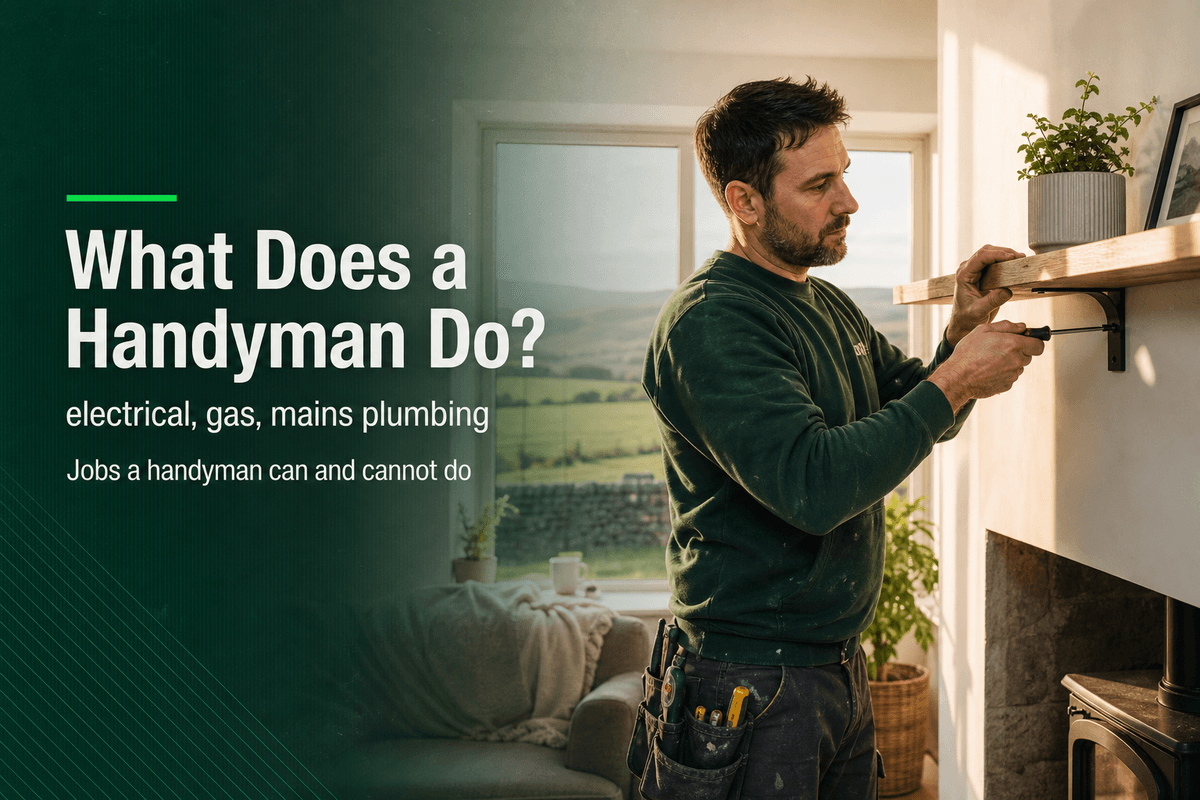
A handyman is a practical tradesperson who handles small, non-specialist jobs around a home. In an Irish home, that usually means minor repairs, flat-pack assembly, sealing, painting, fitting shelves and curtain rails, and general maintenance — the kind of work that does not need a full trade qualification or a building project. Homeowners who would rather not tackle these jobs themselves can post them for local handyman services and compare responses from tradespeople.
What a handyman actually does
A handyman is a generalist. Unlike an electrician, plumber or carpenter, a handyman does not usually hold a single trade qualification. Instead, they build up a wide range of practical skills and carry tools to handle a list of small jobs. They are often the person a homeowner calls when a job is too small for a specialist but too awkward to ignore.
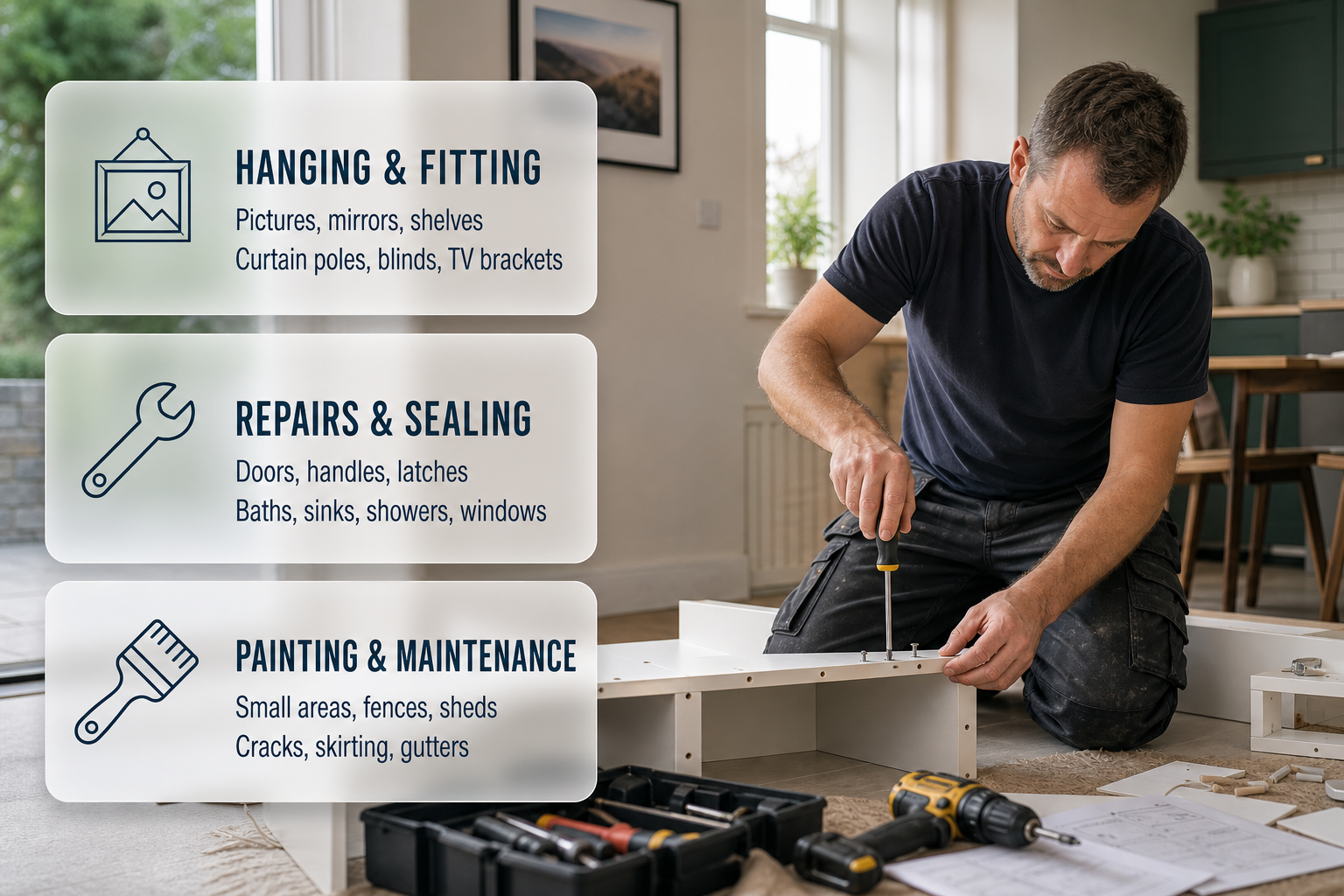
Typical handyman work in Irish homes includes:
- Hanging pictures, mirrors, shelves and curtain poles
- Assembling flat-pack furniture, wardrobes and garden furniture
- Adjusting doors that stick, drop or won't latch
- Replacing door handles, latches, letterboxes and small locks
- Sealing around baths, sinks, showers and window frames
- Painting small areas, fences, sheds and garden gates
- Filling and sanding minor plaster cracks
- Fixing squeaky floorboards and loose skirting
- Draught-proofing windows and doors
- Cleaning ground-level gutters and minor garden repairs
- Fitting blinds, TV brackets and small wall fixings
Handymen often work through a list of jobs in one visit. The scope of the work should be agreed in writing before it starts, so both sides know what is included.
Common small jobs Irish homeowners hand over
These are the jobs that make a home safer, drier and more comfortable. A handyman can often do several in one visit, which is useful if you have a list.
- A back door that has swollen with damp and needs planing so it closes properly.
- A garden gate that has dropped on its hinges and catches on the ground.
- A bathroom seal that has gone black and needs replacing before water gets behind the tiles.
- A set of shelves that needs to go up on a plasterboard wall, with the right fixings.
- A fence panel that blew down in a winter storm and needs reattaching.
- A flat-pack wardrobe or bed that has been sitting in its box for months.
- A hall, stairs and landing that needs painting, or a single room that needs a freshen-up.
- Gutters at ground level that are full of leaves and overflowing.
- A curtain rail that has pulled out of the wall and left a hole.
- A shed door that won't close because the wood has warped.
- A garden bench or deck that needs sanding and sealing before winter.
- A broken toilet seat or a loose toilet roll holder.
These jobs do not usually need a specialist trade. They are practical, small-scale tasks that a careful generalist can complete with the right tools.
Where a general handyman should stop
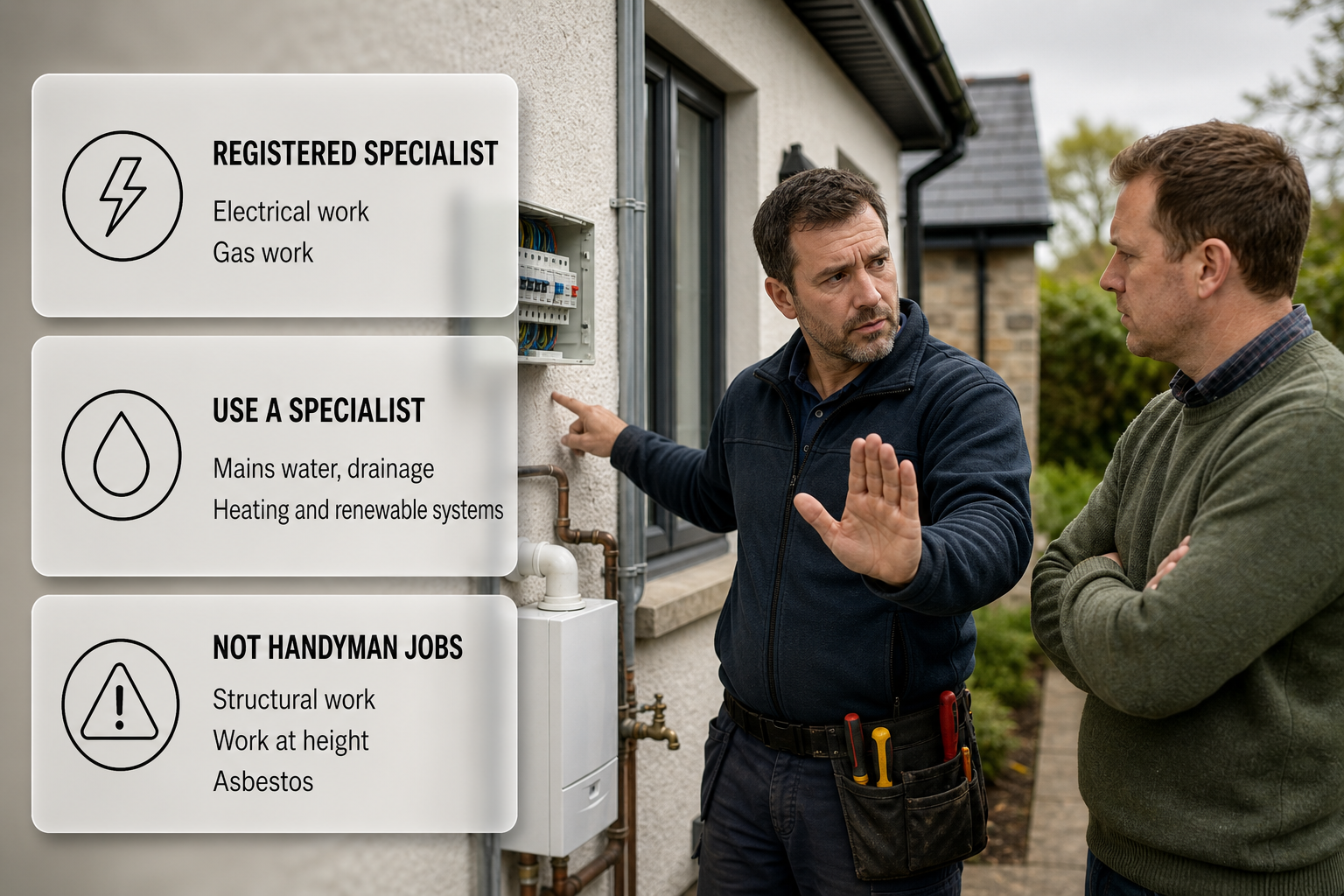
A general handyman should not carry out work that needs a registered specialist, a trade qualification, or certification for insurance or building regulations. The main areas are:
Electrical work. Anything involving fixed wiring, consumer units, sockets, switches, light fittings, outdoor wiring, electric showers or mains-wired smoke alarms should be done by a registered electrical contractor. A handyman may be able to change a light bulb or a lampshade, but not install a new circuit or replace a socket. Registered Electrical Contractors are listed by Safe Electric, and a homeowner can check a contractor there before booking.
Gas work. Boilers, gas cookers, gas fires and gas heating systems must be worked on by a registered gas installer. This is not a job for a general handyman, and it is not a DIY job either. Registered gas installers can be checked with the Register of Gas Installers of Ireland (RGII).
Plumbing and drainage. Some handymen can handle minor plumbing, such as replacing a washer or tightening a connection. But anything that involves opening up the mains water supply, working on drainage, or repairing a leak under a sink is usually safer with a qualified plumber. If the work could cause water damage, use a plumber.
Structural work. Removing a wall, widening an opening, attic conversions, extensions, roof repairs and chimney work are not handyman jobs. They need an engineer, architect, builder or specialist contractor. Some may need planning permission or building regulation approval.
Heating and renewable systems. Heat pumps, solar panels, heating controls and radiators are specialist work. A handyman may help with non-technical parts, but the system itself should be handled by a qualified professional.
Work at height. Cleaning gutters on a two-storey house, repairing a roof, or working on a chimney is specialist work. A handyman may clean ground-level gutters, but anything higher needs the right access equipment and training.
Asbestos. Older Irish homes may contain asbestos in certain materials. If a handyman suspects asbestos, they should stop. Asbestos removal is a specialist job with its own rules.
If a handyman offers to do electrical or gas work without registration, treat that as a warning sign. Ask for proof of registration and insurance.
For larger jobs, homeowners often need to step up to a main contractor or specialist; the construction and home renovation category covers that wider work.
DIY or hire? A simple way to decide
DIY is a good option when you have the right tools or can borrow them, you have the time and patience, the job is not regulated, a mistake would not cause injury or water or electrical damage, and you are comfortable working at the height involved.
Hiring a handyman is better when you lack the tools, time or confidence; the job involves heights, water, electricity, gas or structural elements; you need the work done quickly or to a professional finish; you want a warranty or insurance backing; or the job is part of a bigger project and needs to be sequenced with other trades.
For small jobs, it is often worth comparing what you would spend on tools and materials against hiring someone who already has them. But the bigger question is risk. A handyman who knows their limits is more valuable than one who claims to do everything.