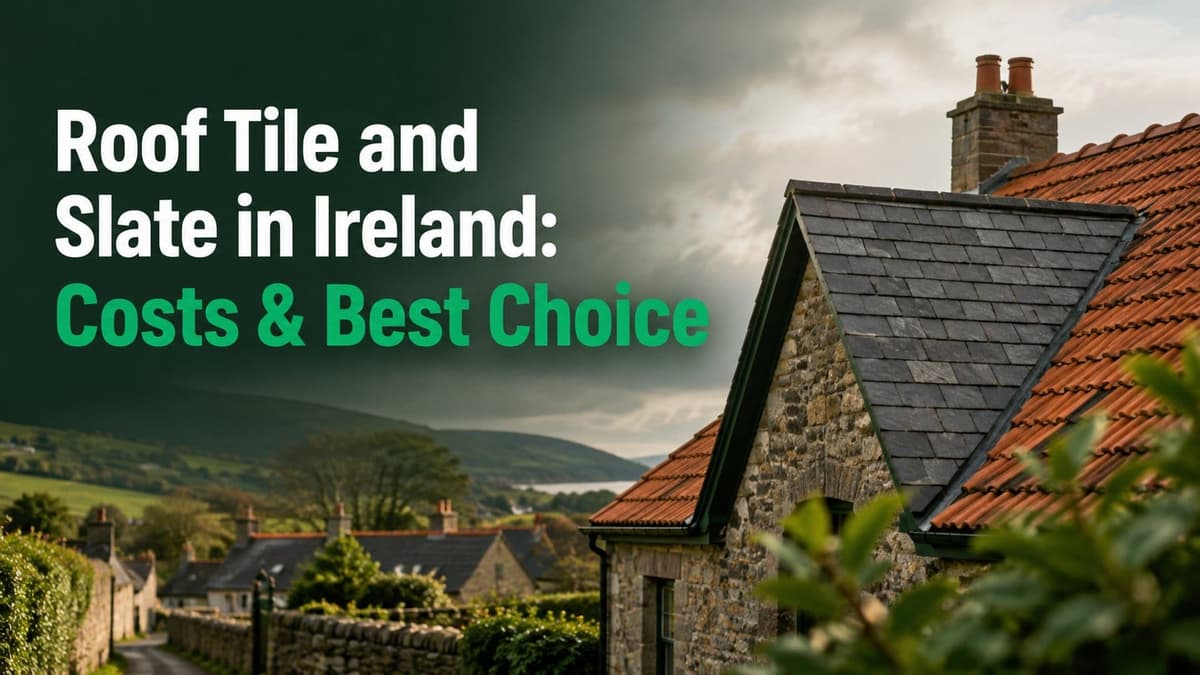
Concrete tile is often sold as the sensible choice because it looks cheaper on the quote. That advice can be backwards in Ireland, especially once scaffolding, repairs, access, and replacement cycles are added in. For a roof that has to stand up to Irish rain, wind, and coastal exposure, the question is not which covering costs less on day one, but which one costs less to own over 30 to 60 years.
Irish homeowners also need to separate the material from the fixing. A roof tile and slate decision is really about pitch, exposure, weight, and workmanship, not just appearance. Ireland's slating-and-tiling code of practice frames roof performance around rain and wind resistance, durability, fire resistance, and workmanship, so the cheapest sheet on paper is rarely the whole story NSAI revised code of practice for slating and tiling.
| Roof covering |
Typical Irish market position |
What usually drives the bill |
| Concrete tile |
Lower upfront cost |
Easier handling, but quote can grow once access and fixing are added |
| Clay tile |
Mid-range |
Material cost rises, installation stays relatively familiar |
| Natural slate |
Highest upfront cost |
Skilled fixing, weight, and more careful detailing |
A useful habit is to price the roof as a whole system, not a pile of units. Anyone trying to budget for maintenance on older roofs should also look at practical guides for maintenance for aging roofs and factor in the access cost before deciding that a lower material price is automatically the cheaper route.
Why the Cheapest Roof Material May Cost You More
A low first quote can be misleading. In Ireland, the roof that looks cheapest on paper often becomes the dearer one once access, repairs, and replacement cycles are counted over the life of the house.
Current Ireland-specific pricing puts natural slate at about €110–€160 per m² installed and concrete tile at about €60–€90 per m² installed. A 60-year comparison estimates total costs at roughly €14,650 for natural slate versus about €20,250 for concrete tile when replacement and maintenance are included Irish roofing materials prices and long-term comparison. Slate is not always the right answer, but a cheaper first invoice does not guarantee a cheaper roof over time.
The hidden costs that distort quotes
Scaffolding is usually the first item people underestimate. Once it is in place, access becomes a fixed cost, so any future repair can be expensive even if the damaged area is small. Waste removal, making good, and weather delays also push the final bill beyond the material line in the quote.
Practical rule: the cheapest quote is often the one that leaves out access, repairs, or finishing work.
That is why homeowners should price the roof as an ownership cost, not just a replacement cost. If you are planning upkeep on an older roof, maintenance for aging roofs is worth reading before you decide another patch is cheaper than a proper renewal.
What matters over 30 to 60 years
Natural slate usually carries more labour at the start because the fixing is slower and more exacting. Concrete tile can look easier on day one, but if the roof needs more frequent intervention, the savings can disappear quickly in repeat call-outs and early replacement.
Ireland's weather makes that difference matter. Wind exposure, driving rain, and coastal salt can shorten the life of a poorly detailed roof, even when the material itself looked like a bargain. The question is which roof keeps disruption lower, holds up better between visits, and avoids a full reset when the house is older.
Understanding the Three Main Roofing Materials
Irish buyers usually talk about “tile or slate” as if those are the only choices. In practice, the decision is between concrete tile, clay tile, and natural slate, and each behaves differently under Irish weather and Irish labour conditions. The weight on the structure, the fixing pattern, and the minimum roof pitch all matter before anyone starts discussing colour or profile.
Concrete tile in everyday Irish roofing
A Roadstone brochure for the Irish market lists a concrete roof tile size of 419 x 334 mm, with a minimum pitch of 25° when nailed and 22.5° when clipped, a maximum pitch of 90°, and increased fixing above 55°. It also gives a minimum headlap of 75 mm at 30° and over Roadstone roof tile brochure. That makes concrete tile a flexible option on many Irish roofs, especially where the structure is sound and the pitch sits within the product's fixing rules.
Clay tile sits between the two
Clay tile usually occupies the middle ground. It carries the classic look many homeowners want on period-style work or on houses where a more traditional finish is needed, but it still needs proper pitch, correct laps, and careful fixing. In price terms, it often lands above concrete and below natural slate, but the labour is not wildly different from other tiled systems when the roof is straightforward.
Natural slate remains the premium finish
Natural slate is still the material many people associate with the strongest visual finish and the most traditional Irish roofscape. It is also the one that asks the most from the roofer, because hand-fixing, matching, and detail work take time. On older houses, slate can be the right answer because it suits the building, the structure, and the local streetscape better than a modern substitute.
Here is a quick comparison for the main practical points.
| Property |
Concrete Tile |
Clay Tile |
Natural Slate |
| Weight on structure |
Moderate to heavy |
Moderate to heavy |
Typically the most demanding |
| Roof pitch tolerance |
Broad, within product rules |
Broad, depending on profile |
Depends on slate type and fixing detail |
| Visual character |
Practical and common |
Traditional and neat |
Heritage-led and premium |
| Usual fit for Irish homes |
New builds and re-roofs |
Mixed domestic and period-style work |
Exposed, heritage, and higher-end roofs |
For homeowners dealing with damaged slates, a practical article on repairing slipped slates in Dublin can help explain why the fault is often less about the slate itself and more about fixing, age, or local exposure.
Comparing Installation and Lifecycle Costs
The first figure on a roofing quote only tells part of the story. In Ireland, the cost can move once scaffolding, access, waste removal, and making good are added, especially on awkward, high, or exposed roofs. A quote that looks neat at first can rise quickly if the job needs extra visits, extra labour, or more hire time than expected.
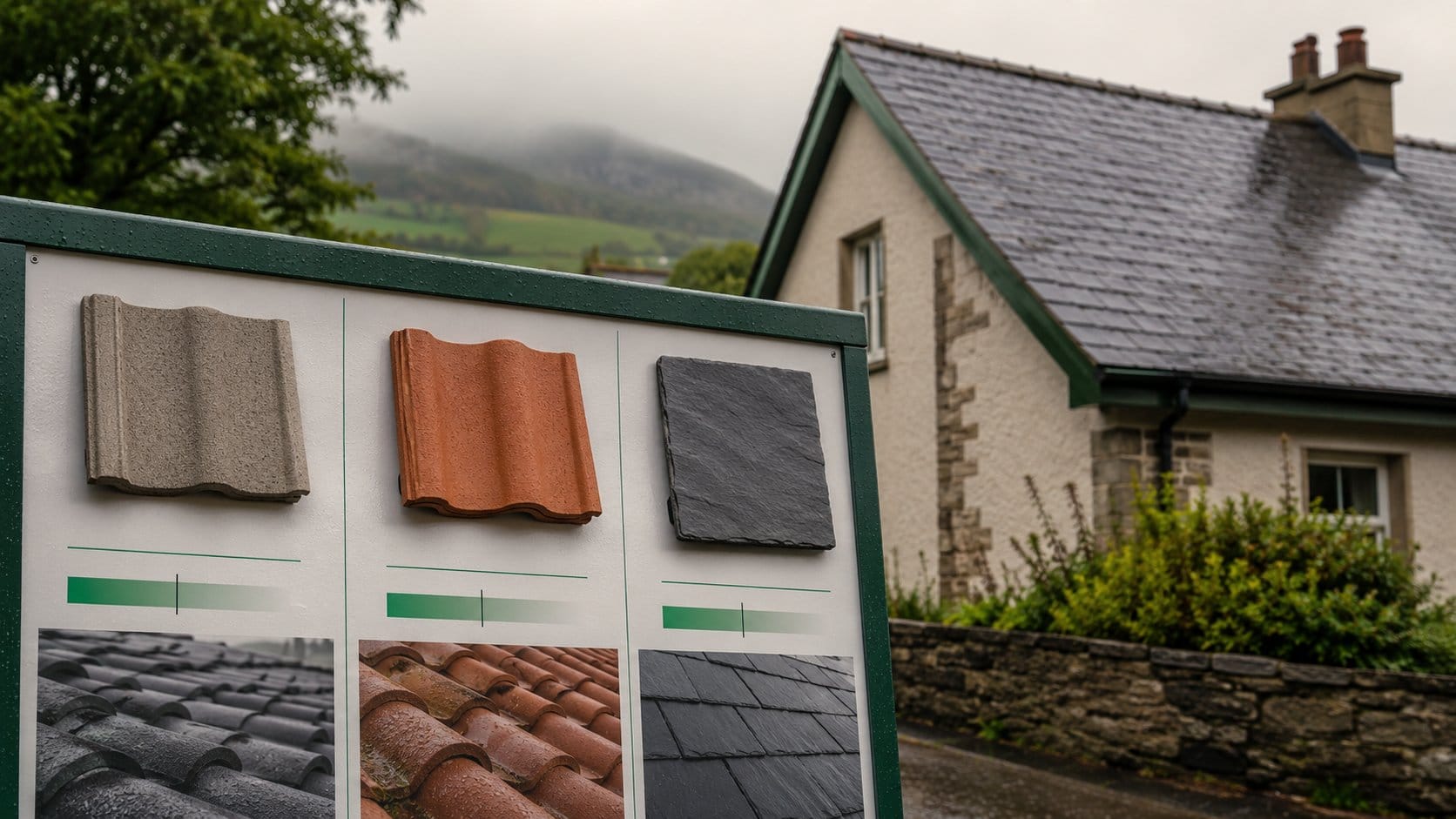
Upfront cost versus full ownership cost
Concrete tile usually comes in cheaper to fit than natural slate on a typical domestic roof. The wider view is less simple. A lower initial outlay on tiles can be followed by more maintenance, more spot repairs, and earlier replacement work, so the gap between the two materials narrows over the life of the roof.
A homeowner should ask for the cost of the whole roof, not just supply and fit.
A roof quote that excludes access is not really a full quote. It is a starting point.
A proper comparison should show what is included and what is left out. That means clear pricing for scaffolding and access, waste removal, making good, and the fixings and underlay that keep the roof sound. On a straightforward job those items are manageable. On a difficult roof, they can change the budget fast.
Why maintenance changes the maths
Concrete tile often wins on entry price, but slate can be the steadier option if the roof is meant to stay in place for decades without repeated intervention. Every call-back has a cost. The roofer still has to get access, set up safely, and spend time getting back to the fault, so even a small repair can carry the same overhead as a larger job.
Irish weather makes that difference more obvious. Wind and driving rain expose weak points quickly, and small defects that might wait elsewhere often turn into repeat work here. A roof that needs regular patching can become the expensive roof long before the covering itself is worn out.
The best way to read a quote is to ask what kind of job it really prices, a repair, a partial re-cover, or a full-life replacement. Those are different jobs with different cost paths, and mixing them is how a cheap number becomes the dearer decision.
Irish Building Standards and Roof Pitch Requirements
A roof covering in Ireland has to suit the house, not just the merchant's sample board. S.R. 82:2017 sets the framework for slating and tiling on pitched roofs and vertical cladding up to 10 storeys, with performance tied to rain and wind resistance, durability, fire resistance, and workmanship. The practical test is simple. A covering that looks fine on paper still has to work at the actual pitch, with the actual exposure, on the actual roof.
Pitch and exposure come first
A sheltered roof gives more room for choice. An exposed roof, especially on the west or near the coast, tightens the options fast. On a low-pitch roof, the published headlap and fixing pattern matter more than the brand name on the tile or slate. If those details do not suit the roof angle and exposure, the system is wrong before the first fixing goes in.
A useful concrete example is a concrete slate product that lists a minimum roof pitch of 22.5° for the Republic of Ireland, 75 mm headlap in moderate exposure and 100 mm in severe exposure, 9.7 tiles/m² at 345 mm gauge, and about 48.7 kg/m² laid weight Condron concrete slate product data. That kind of specification shows why two roofs with the same covering can still need different fixing details.
Older houses bring a different set of limits. On period properties, like-for-like replacement is often the safer path, because a change in covering can affect the appearance, the structure, or the planning position. The conversation starts with what the roof can properly take and what the local area will accept, not with whatever looks cheapest in the yard.
A roof that has carried one covering for decades should be checked against structure, pitch, and conservation expectations before anything is changed.
When a structural check is sensible
Switching from a heavy traditional roof to another system should never be guessed at. Timber ages, earlier repairs vary in quality, and a roof that has survived so far may still need a fresh structural check before a new covering goes on. A roofer who skips pitch, fixings, or exposure is leaving out the parts that keep the roof compliant and serviceable.
The key question is what this roof can legally and physically support, and which option will keep working for the longest period without creating trouble later.
Ireland is hard on roofs. Rain works into laps, wind tries to lift edges, salt air eats at metalwork, and repeated wet-dry cycles expose weak fixings fast. Over a 30 to 60 year ownership window, the material that costs least to buy can be the one that asks for the most scaffolding, patching, and early replacement.
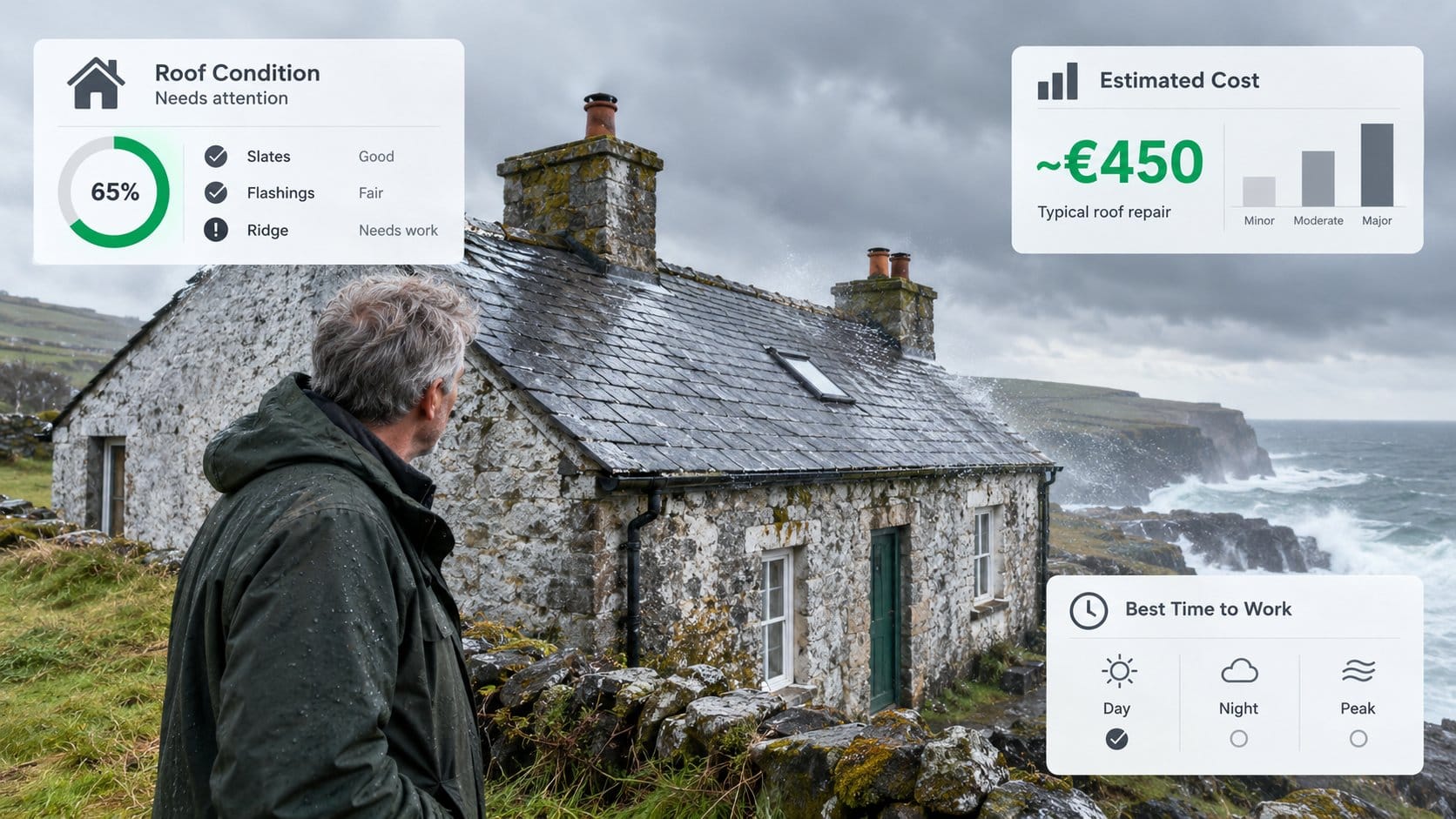
Coastal and exposed locations need stronger fixing discipline
Natural slate has a strong reputation in exposed and coastal settings because it sheds water well and stays stable when it is fixed properly. Concrete tile can perform just as well on the right roof, but the fixing pattern, headlap, and corrosion-resistant components have to suit the site. In a salt-laden area, bargain fixings are a false economy. They usually fail before the tile or slate does, and then the repair bill brings scaffold back to the house.
One Irish concrete slate product lists a minimum roof pitch of 22.5° for the Republic of Ireland, 75 mm headlap in moderate exposure and 100 mm in severe exposure, 9.7 tiles/m² at 345 mm gauge, and about 48.7 kg/m² laid weight Condron concrete slate product data. Those figures show the key point. Weather resistance is not just about the covering itself, it also depends on exposure category, pitch, and fixing detail.
Climate stress changes what a roof needs to do
Irish weather is pushing roofs harder than many older systems were designed for. More rain, stronger wind, UV exposure, and sharper seasonal swings all punish weak edges, tired bedding, and old fixings. Product development has responded to that pressure, including UV-engineered slate designed for Irish conditions Irish Building Magazine coverage on UV-engineered slate.
For homeowners, maintenance matters as much as the material on day one. A roof that needs regular touching-up, loose-fixing checks, or repeat repairs will cost more over time than a roof that stays tight and serviceable. On exposed houses, a well-fixed slate system often keeps that long-term maintenance load lower. On more sheltered properties, a good concrete tile system can still be the sensible choice when the roof geometry and budget suit it.
Choosing the Right Material for Your Property
A 1970s bungalow, a terraced city house, and a coastal detached home do not need the same roof covering. The question is what will cost less over the full life of the roof, not just what looks cheaper on the quote. Scaffolding, repair callouts, repeat maintenance, and the chance of an early replacement all matter on Irish homes that face wind, rain, and salt in different ways.
Different Irish homes point to different answers
A straightforward suburban re-roof often suits concrete tile because it fits common domestic roof forms and keeps the first bill lower. A Georgian townhouse or protected period property may need natural slate because the finish, weight, and heritage expectations match the building better. On a coastal house, the fixing system and corrosion resistance can matter as much as the covering itself, because wind lift and salt exposure shorten the life of poor details.
Budget matters, but it is not the only filter
A cheap roof can become dear if the structure needs extra work, if access is awkward, or if the finish is out of step with the house. Spending more on slate is not always the right call either, especially on a simple sheltered house that does not need heritage-grade materials. Over 30 to 60 years, the better choice is the one that keeps repair visits down and avoids an early strip-off.
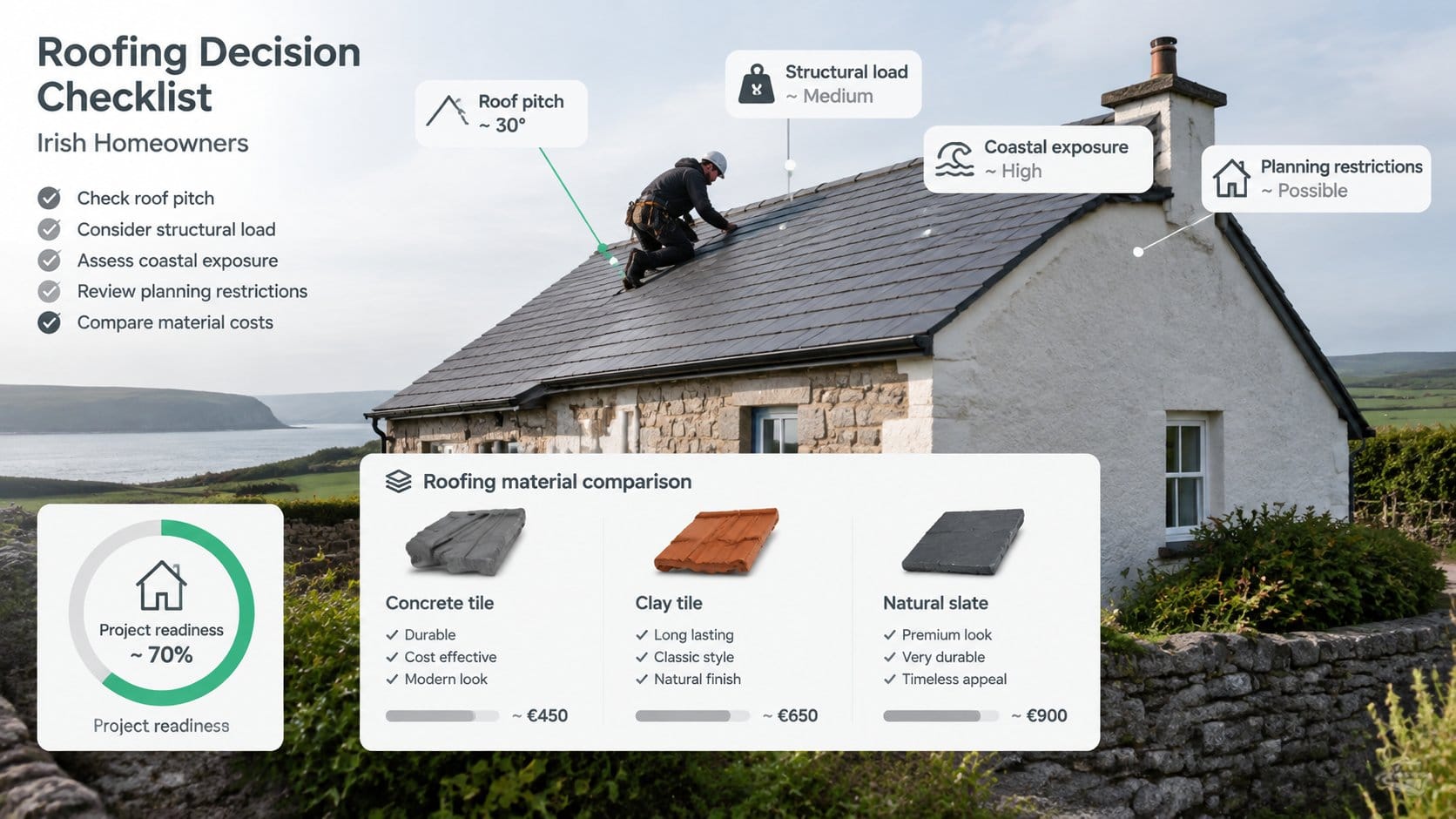
A simple decision check
- Roof pitch: low or awkward roofs limit the product options before style comes into it.
- Structural load: heavier coverings need a structure that can carry them safely.
- Location: coastal and exposed homes need better fixing and corrosion control.
- Planning: conservation areas and period homes can restrict changes to the roof finish.
- Budget: include access, repairs, and later maintenance, not just the first quote.
Local authority guidance can also affect what you are allowed to do on protected and conservation properties, so the right material is not just a technical choice, it is a planning one too. On that point, homeowners should check the rules for the property before they settle on a covering, especially where the roof is visible from the street or part of a heritage area.
Hiring a Roofer and Evaluating Quotes
Roofing is an unregulated trade in Ireland, so the homeowner has to do the checking, not the roofer. That doesn't mean every roofer is careless. It does mean the safest job starts with a written scope, insurance confirmation, and a quote that can be compared fairly with the others on the table.
What a proper quote should show
A usable quote names the covering, the fixing method, the access arrangement, and what happens to old materials. If one roofer prices per square metre and another prices the whole job, the homeowner still needs the same answer underneath: what is included, what is excluded, and what happens if hidden damage turns up once the roof is opened.
The biggest gap to watch for is scaffolding. After that come waste removal, flashing detail, underlay, and making good around chimneys, verges, and valleys. Those are the items that turn a neat figure into a complete one.
How to compare roofers without getting lost
- Ask for the scope in writing. A verbal estimate is too easy to reinterpret later.
- Check insurance directly. Don't rely on a logo or a verbal promise.
- Match like with like. If one price includes scaffolding and another doesn't, the cheaper one isn't cheaper.
- Look for references and reviews. A roof repair is only as good as the last wet week.
- Clarify materials. Confirm whether the quote includes all fixings, battens, underlay, and disposal.
For homeowners already comparing trades online, a practical guide like how to find a good plumber can still be useful because the same basic habits apply across home trades, especially when judging scope, reviews, and paperwork.
The main hiring mistake
The most common mistake is choosing the lowest number and hoping the rest will sort itself out. On roofing, that rarely ends well. The better approach is to choose the quote that shows the roof will be stripped, fixed, and finished properly for the material being used, with no guesswork left hanging over the job.
ShamFix connects Irish homeowners with local roofing tradespeople across the Republic of Ireland, so it can help when you're comparing quotes for tile or slate work and want a cleaner way to line up local providers. Visit ShamFix to see how the marketplace works and start shortlisting roofers for the kind of roof your property needs.